
A suspension clamp is a mechanical fitting used to support and suspend conductors from poles and towers. It holds the conductor in place and allows limited movement due wot wind or thermal expansion. The clamp transfers the mechanical load of the conductor to the support structure. Suspension clamps grip the conductor without damaging it and attaches to an insulator string to a crossarm. The clamps’ design ensures vertical support of the conductor, flexibility, and reduced stress concentration to prevent conductor fatigue. The suspension clamp consists of the clamp body, keeper, bolts and nuts, and insulator linkage. Suspension clamps serve on medium and high-voltage overhead lines, transmission networks, and distribution lines. Utilities and manufacturers enhance quality assurance for the suspension clamp to ensure mechanical reliability, electrical integrity, and durability. It undergoes testing to improve performance under environmental standards.
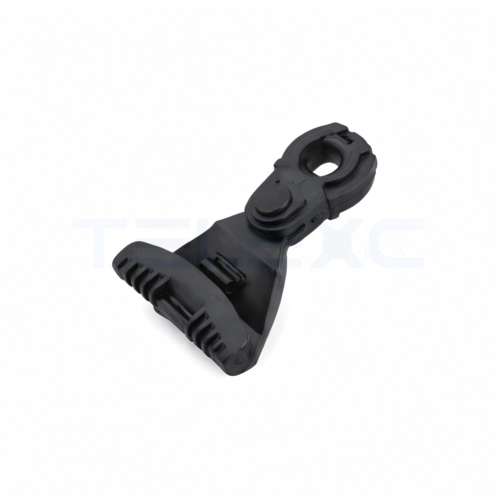
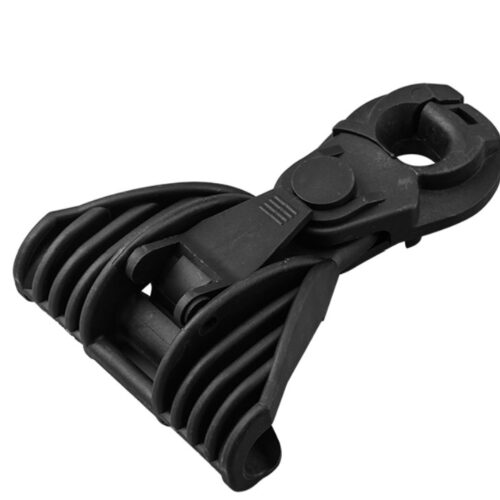
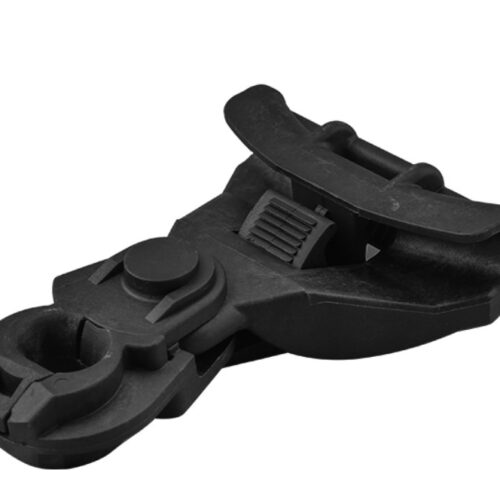
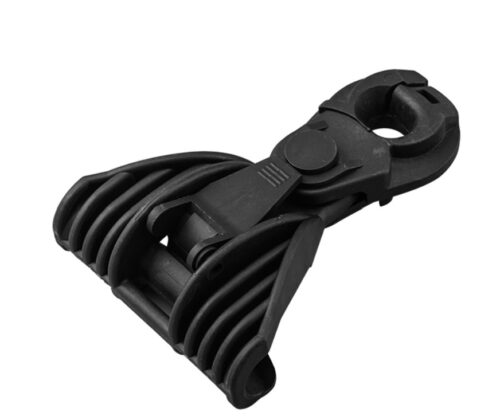
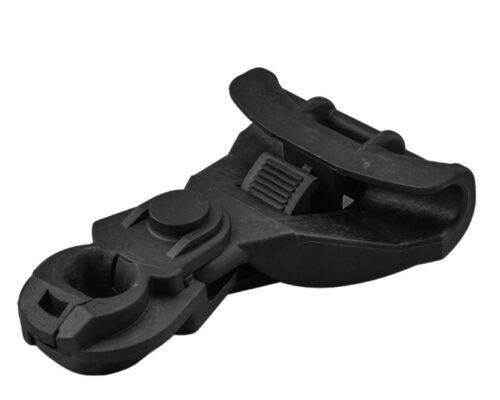
Types of suspension clamps used in power networks
Suspension clamps vary by design, load capacity, and application environment. Each type of clamp is designed for specific mechanical loads, environmental conditions, and voltage levels. It is crucial to select the right suspension clamp to ensure network stability, conductor longevity, and operational safety in the network. These types include:
Standard suspension clamp
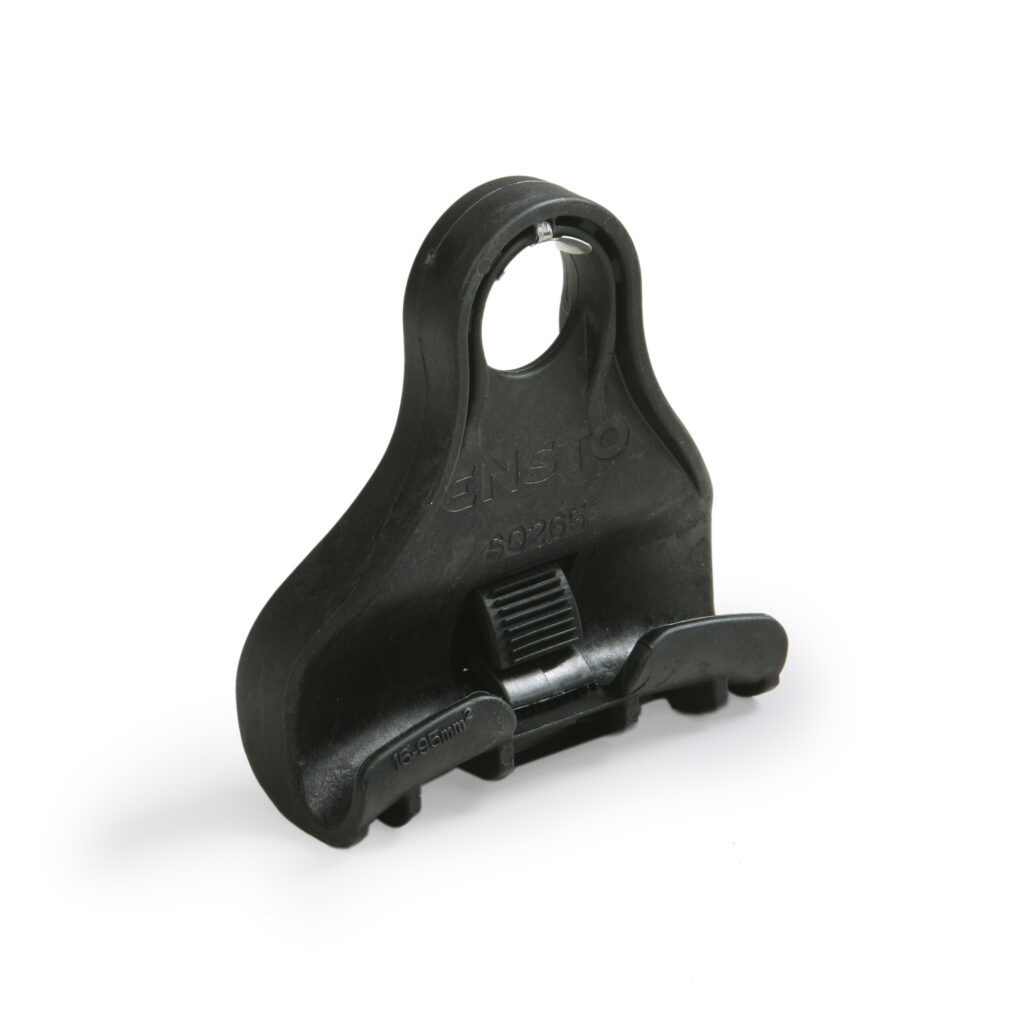
The standard suspension clamp serves in straight-line sections of overhead lines. It supports conductors under normal loads and allow limited movement due to wind or thermal expansion. It is from aluminum alloy that enhances corrosion resistance.
Armor rod suspension clamp
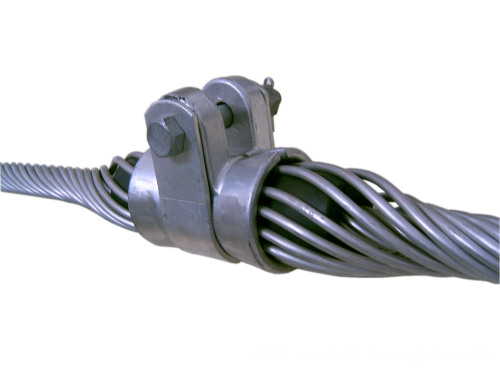
This clamp incorporates preformed armor rods around the conductor. The rods distribute mechanical stress, reduce conductor wear and fatigue, and provide extra protection in high-vibration areas. These clamps protect the conductor from mechanical wear and surface damage to prevent premature failure.
Performed suspension clamp
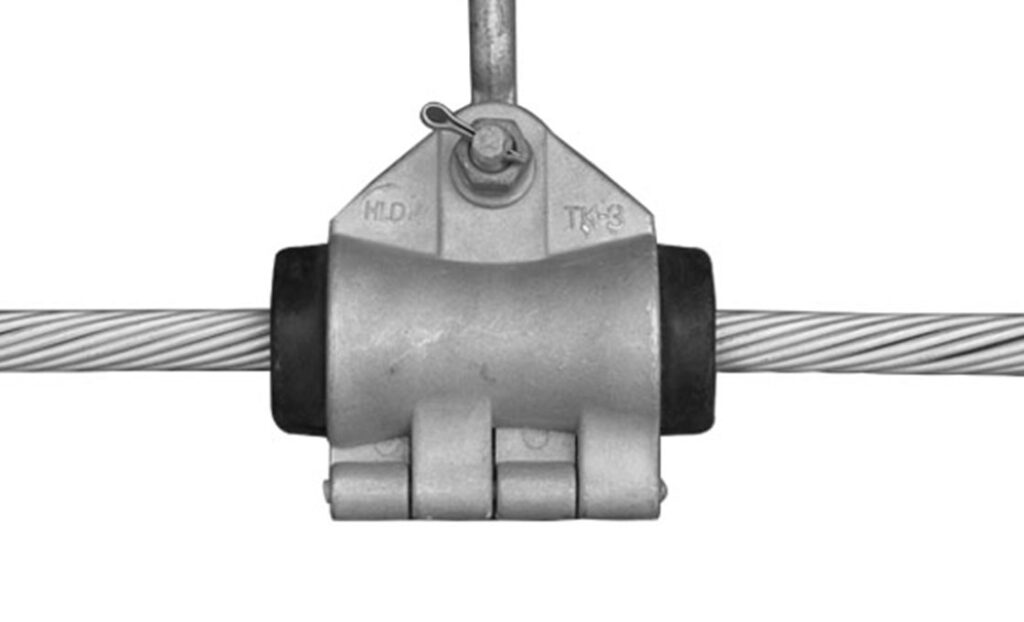
The preformed clamp use preformed helical rods to grip the conductor without use of bolts. The clamp provides uniform load distribution, reduced installation errors, and improved conductor protection. Preformed suspension clamps reduce conductor fatigue and vibration damage to improve conductor lifespan.
Armor grip suspension clamps
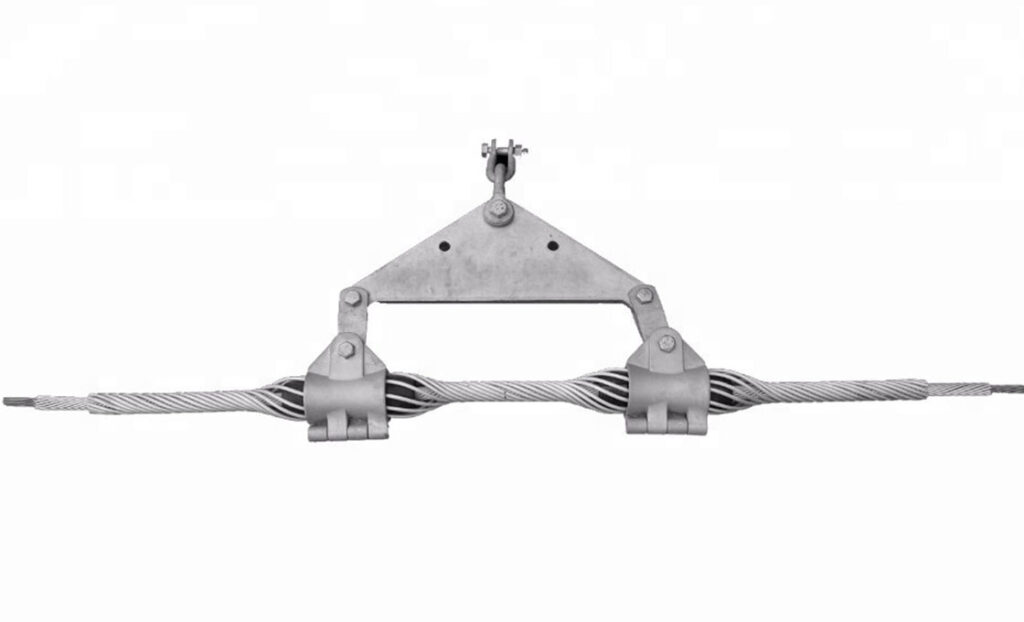
This is a more advanced version of preformed clamps that combine suspension and protection functions. The AGS serves in high voltage transmission lines and areas with high wind or vibration. The superior grip and stress control improves system reliability in high-voltage networks.
Trunnion-type clamp
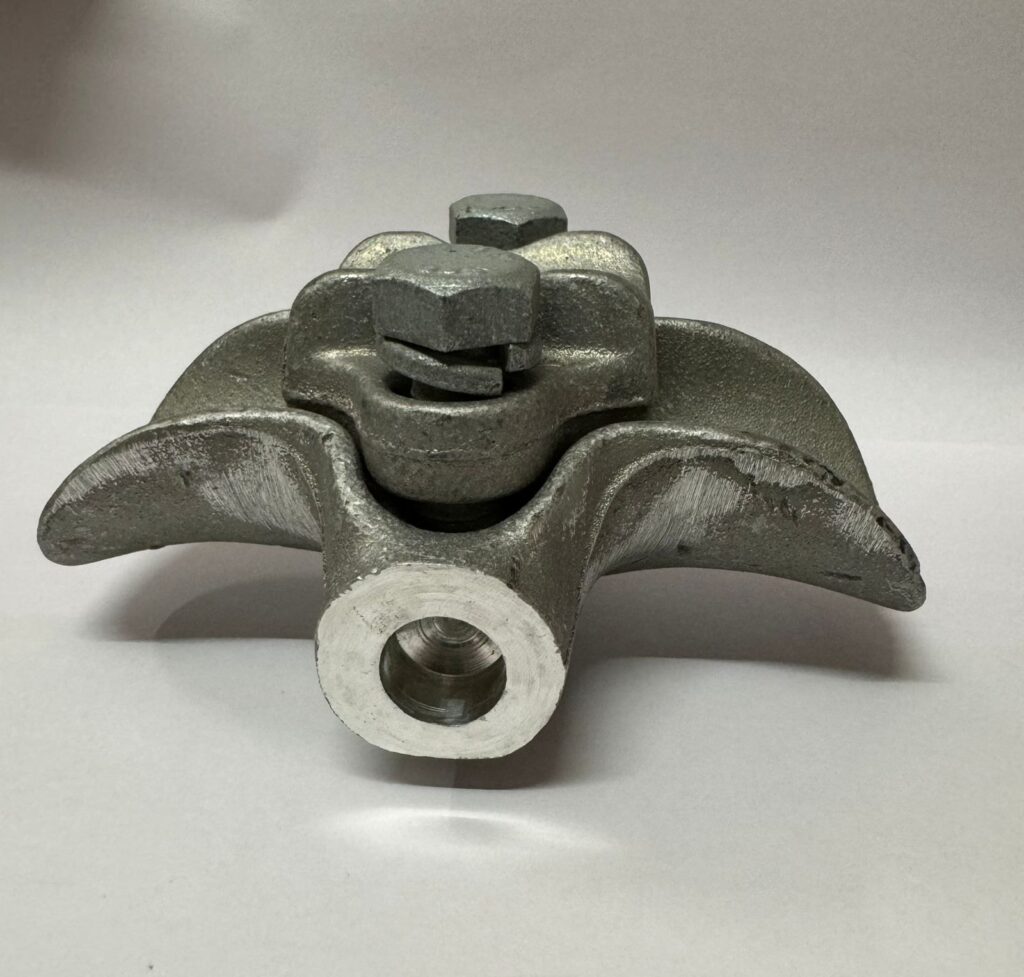
This consists of a pivoting design that allows greater flexibility. It reduces bending stress on conductors and is ideal for long-span transmission lines. The clamps accommodate conductor movement due to thermal expansion and wind. They reduce stress concentrations at suspension points and improve network resilience.
U-bolt suspension clamp
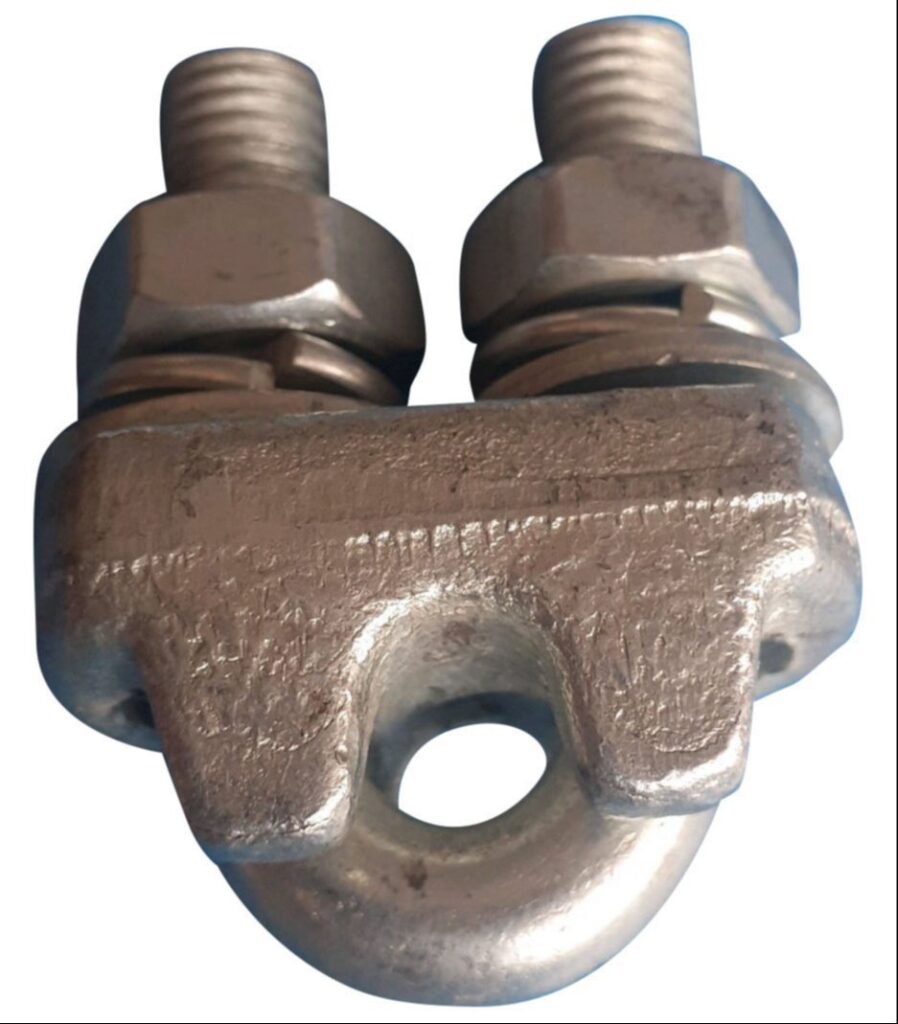
This clamp has a simpler design that uses U-bolts to secure the conductor. It serves in low- to medium-voltage applications and rural installations.
Suspension clamp materials and the roles of quality assurance during manufacture
Utilities and manufacturers should select the right material to ensure their mechanical strength, corrosion resistance, conductivity compatibility, and environmental durability. Conducting quality assurance during suspension clamp manufacture ensures that the clamps meet mechanical, electrical, and environmental performance requirements. Quality assurance begins through material verification and checking dimensional accuracy. The suspension clamp undergoes mechanical testing and surface treatment inspection. The process also ensures the clamps follow standards to ensure interoperability, safety, and acceptance in global power projects. Here are the common materials for suspension clamps.
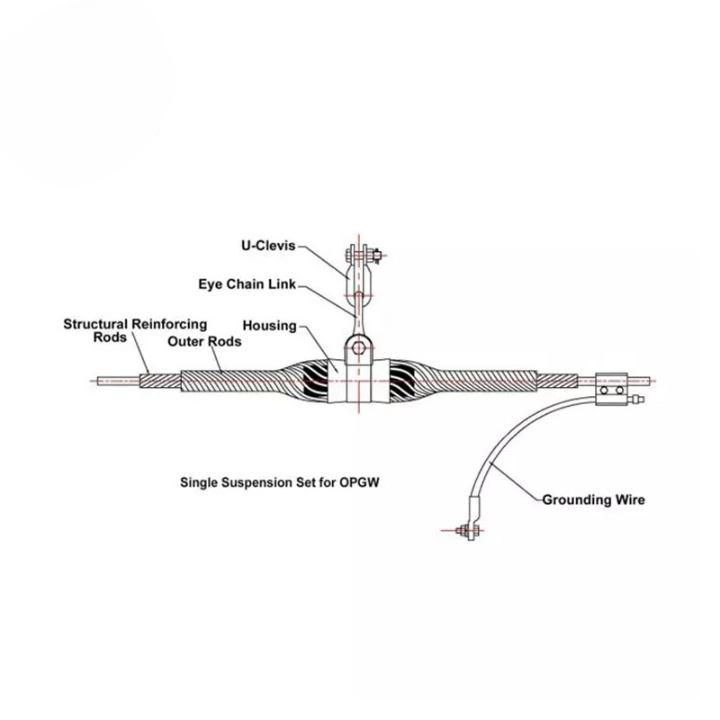
- Aluminum alloys—this is a common material for clamp bodies in medium- and high-voltage systems. The alloys reduce line load while maintaining structural integrity and reducing galvanic corrosion with aluminum conductors.
- Galvanized steel – this is ideal for bolts, nuts, pins, and load-bearing components. Galvanized steel offers high tensile strength and resistance to fatigue. It also provides mechanical robustness and long-term durability under high tension and dynamic loads.
- Ductile cast iron—cast iron is crucial for heavy-duty clamp bodies and offers high impact resistance and strength. This material is ideal for high-load applications that need rigidity and durability.
- Aluminum alloy and aluminum clad steel – these are common materials for preformed armor rods that wrap around conductors in advanced clamp designs. They distribute stress evenly, reduce vibration damage, and protects conductor strands from wear.
- Elastomer or polymer inserts – these are common in modern designs for cushioning. They reduce abrasion and improves grip without damaging the conductor surface.
The role of quality assurance in suspension clamp manufacturing
Quality assurance in suspension clamp manufacturing ensures each unit meets mechanical, electrical, and environmental performance requirements. QA enhances the reliability, safety, and durability of suspension clamps. It helps reduce mechanical failure and network instability in power networks. Here are the roles of quality assurance in suspension clamp during manufacturing.
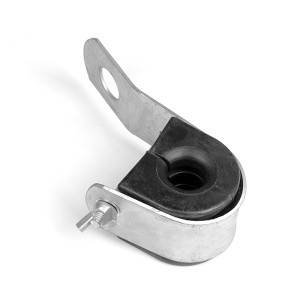
- Maintaining manufacturing precision—the QA process includes monitoring casting, forging, and machining for dimensional accuracy and consistency. This is through conducting tolerance checks to ensure proper fit with conductors and fittings. It helps keep uniform load distribution and prevents localized stress points.
- Verifying mechanical performance—suspension clamps must withstand dynamic loads from wind, conductor weight, and thermal expansion. Quality assurance includes tensile and load-bearing tests, slip strength validation, and fatigue testing under cyclic loading.
- Ensuring material integrity – QA conducts chemical composition analysis to prevent substandard inputs. It also includes material testing to confirm tensile strength and hardness. This helps reduce material defects that could cause cracking, corrosion, or premature failure.
- Corrosion protection and surface treatment—QA inspects protective coatings for thickness and adhesion. This helps ensure durability in coastal or high-humidity environments.
- Risk reduction and cost efficiency—QA reduces field failures and outages, maintenance and replacement costs, and safety hazards.
- Assembly validation – quality assurance verifies that all components fit and function as intended during installation. This includes bolt tightening checks, alignment and flexibility testing. These tests prevent installation errors and ensures secure conductor support.
Application areas of suspension clamps
High-quality suspension clamps work in electrical infrastructure where conductors need support while allowing controlled movement. The use of suspension clamps depends on voltage level, span length, and environmental conditions. Using suspension clamps enable secure conductor support, reduce mechanical stress, improve network reliability, and support efficient power transmission and distribution. Here are the common application areas of suspension clamps.
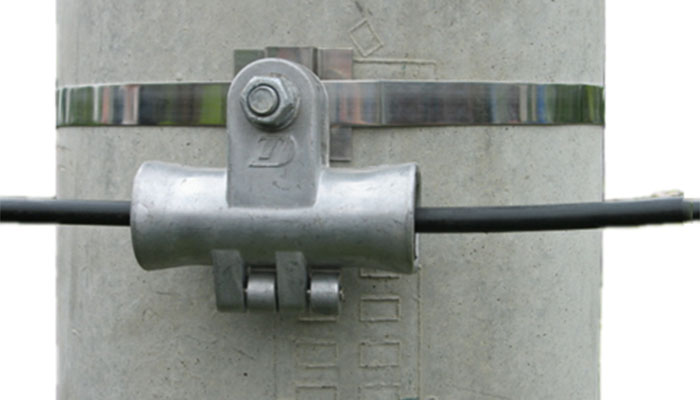
- Overhead distribution networks—the clamps mount on utility poles to carry distribution conductors. They provide reliable support, reduce conductor sag, and prevent mechanical damage in localized networks.
- Renewable energy infrastructure—suspension clamps support transmission lines connecting solar farms and wind parks to substations. They ensure stable power evacuation by maintaining conductor integrity under variable load and environmental conditions of renewable installations.
- Overhead transmission lines – suspension clamps support phase conductors on suspension towers and are installed along straight line spans with minimal angular deviation. The clamps maintain conductor alignment, distribute mechanical loads, and accommodate wind-induced motion.
- Railway electrification systems – the clamps support contact and messenger wires to maintain wire positioning above tracks. They ensure consistent electrical contact and mechanical stability for safe and efficient train operations.
- Substation and switching yards—the clamps support busbars and jumper conductors installed on support structures. Suspension clamps help maintain proper spacing, alignment, and mechanical stability of conductors.
- Long span installations—suspension clamps serve in areas with extended span lengths. They support conductors across large spans and often combine with vibration control devices.
Common quality failures facing suspension clamps in power networks
Lack of proper quality assurance compromises mechanical integrity, safety, and power continuity. Quality failures arise from material defects, manufacturing inconsistencies, or inadequate quality control. These failures affect mechanical stability, conductor protection, and network reliability. These failures include:
- Poor galvanization or surface treatment—this includes inadequate coating thickness and peeling galvanization. This speeds up corrosion which weakens structural components.
- Material deficiencies – this includes use of low-grade aluminum or steel, impurities or incorrect alloy composition. This leads to reduced tensile strength, cracking, and premature mechanical failure under load.
- Insufficient mechanical strength – this arises from failure to meet specified load or slip strength. This increases the risk of clamp slippage leading to conductor drop and power outages.
- Dimensional inaccuracies – this include improper casting or machining tolerances and misalignment between clamp body and keeper. This causes uneven load distribution which leads to localized stress and conductor damage.
- Surface roughness and sharp edges – this stems from poor clamp design and low friction between clamp and conductor. It allows conductor movement beyond acceptable limits which increases wear and reduces line stability.
- Fatigue and vibration failures – this includes lack of resistance to oscillations and poor stress distribution design. It leads to weakening and fracture of both clamp and conductor.
Best practices for selecting the right suspension clamp
It is advisable to follow evaluation of mechanical, electrical, and environmental measures to ensure optimal performance of the clamp. This includes matching the clamp to the conductor type and size to ensure proper fit and grip without causing strand damage. It also includes verifying the mechanical strength ratings which includes ultimate tensile strength and slip resistance to handle loads. Selecting the right material ensures durability of the clamp in harsh environments. Additionally, selecting the right designs reduces stress concentrations for high-vibration areas and ensures compliance with standards. It is also crucial to focus on manufacturers with strong quality assurance systems and consistent manufacturing records. This helps reduce failure risks and ensure network reliability.corrosion,