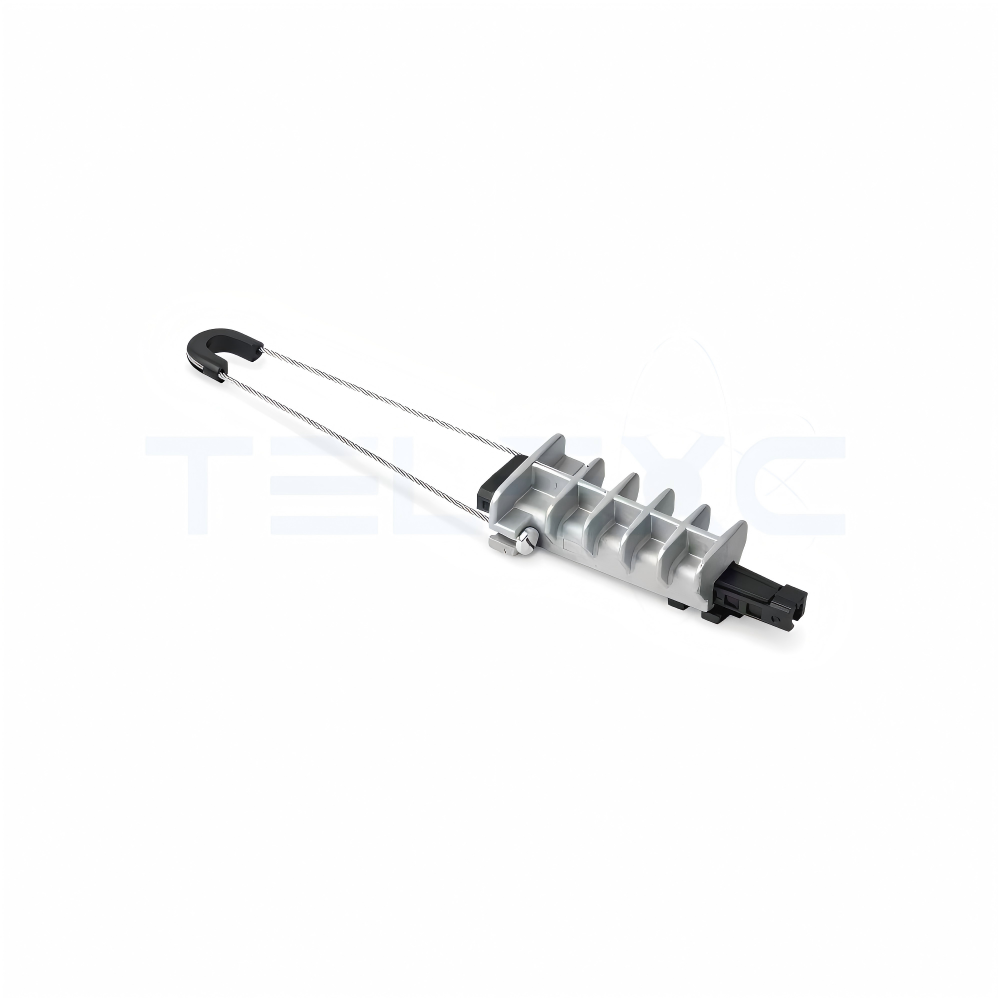
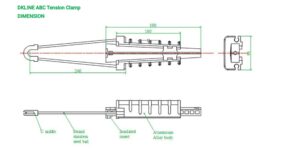
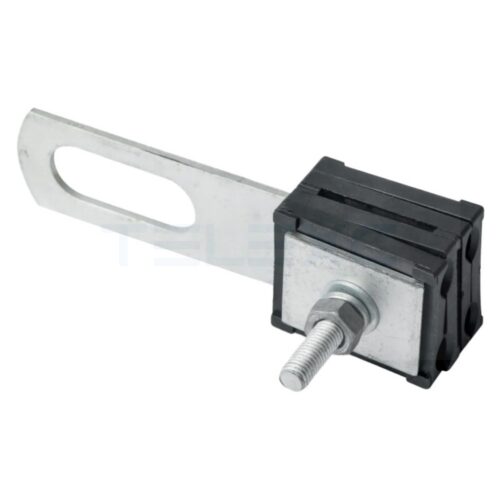
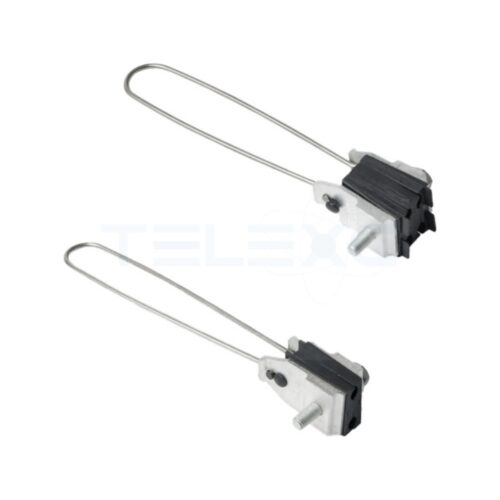
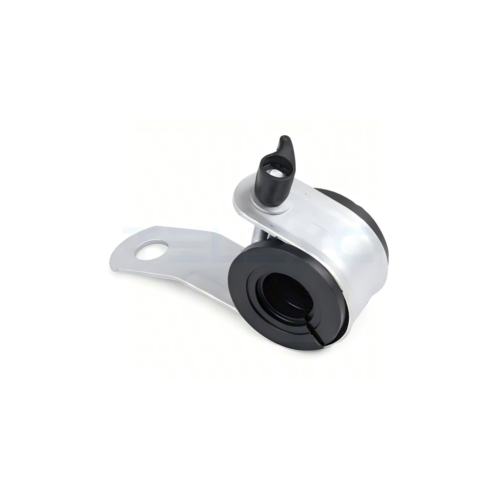
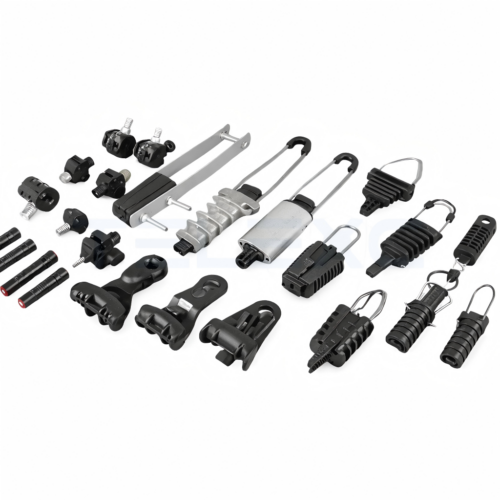
Anchor clamps (also called dead-end clamps or strain clamps) are heavy-duty hardware fittings that securely attach aerial cables to support structures like poles and towers. They transfer mechanical tension from cables to supports while providing superior conductor protection and vibration resistance.
Types of Anchor Clamps
Type
Mechanism
Best For
Wedge Anchor Clamp
Wedge-action compression
ACSR conductors, distribution lines
Cone Anchor Clamp
Cone-based clamping
Heavy transmission lines
Tension Anchor Clamp
Spiral tension grip
Fiber optic cables, ADSS
Suspension Anchor Clamp
Double-bolt fixation
LV ABC cables
Dead-End Clamp
Full tension load
Line endpoints, corners
Material Specifications
Material
Properties
Applications
Aluminum Alloy
Lightweight, corrosion-resistant
Standard power lines
Hot-Dip Galvanized Steel
High strength, weatherproof
Coastal/industrial areas
Stainless Steel
Maximum corrosion resistance
Chemical plants
Engineering Plastics
UV-resistant, insulated
Telecom applications
Standards & Compliance
International Standards: IEC 61284, EN 50483-3, NFC 33041/33042
Quality Assurance: ISO 9001 certified manufacturing
Street Lighting: Cable anchoring for lighting poles
Industrial Plants: Internal power distribution
Renewable Energy: Solar farm cable management
Product Advantages – Anchor Clamps
High Mechanical Reliability Anchor clamps are engineered to safely transfer full mechanical tension from aerial conductors to poles or towers, ensuring long-term line stability even at dead-ends, corners, and high-load sections.
Wide Range of Clamp Types Available in wedge, cone, spiral tension, suspension, and dead-end designs, allowing precise selection for ACSR conductors, LV ABC cables, ADSS fiber, and heavy transmission lines.
Superior Conductor Protection Optimized clamping geometry distributes pressure evenly, preventing conductor damage, slippage, or insulation degradation while maintaining secure grip.
Excellent Vibration & Wind Resistance Designed to withstand wind-induced vibration, galloping, and dynamic loads, improving line safety and reducing maintenance frequency.
Durable Materials for Harsh Environments Manufactured using aluminum alloy, hot-dip galvanized steel, stainless steel, or UV-stabilized engineering plastics to ensure corrosion resistance in coastal, industrial, and high-humidity areas.
Standards-Compliant Performance Fully compliant with IEC 61284, EN 50483-3, and NFC 33041/33042, ensuring compatibility with global utility specifications and tender requirements.
Easy and Safe Installation Simple installation process using standard tools reduces labor time and on-site errors, improving overall project efficiency.
Customizable Solutions Clamp dimensions, materials, coatings, and load ratings can be customized to meet specific project or utility requirements.
Long Service Life & Low Maintenance High-quality materials and strict quality control result in extended service life, minimizing operational costs and downtime.
Proven Quality Assurance ISO 9001-certified manufacturing, regular load testing, and third-party verification ensure consistent and dependable product performance.
Anchoring Clamp – (FAQs)
Q1. What is an Anchoring Clamp? The Telexc Anchoring Clamp is a fundamental electrical hardware component designed to securely attach aerial cables—both insulated and non-insulated—to a supporting structure. Its primary function is to transmit the necessary mechanical load (or strain) from the cable directly to the support or conductor. This clamp is also commonly referred to as a dead-end clamp or a strain clamp.
It is predominantly used in overhead and distribution power lines. A key advantage of the Telexc anchoring clamp is its versatility; it can be used to support conductors in straight wire sections as well as twisted sections, including applications for four-core cables. Furthermore, when supporting a conductor on a twisted section, it can create an angle of 90 degrees or less.
Q2. What are the Benefits of an Anchoring Clamp?
Lightweight and compact design.
Provides easy and safe dead-ending.
Very quick installation (takes only a few seconds).
Its bail provides extra safety to the wires.
Q3. What is the Use of an Anchoring Clamp? The anchoring clamp serves several critical functions in the electrical and telecommunication industries:
Conductor Protection: The design of the anchoring clamp ensures maximum protection for the conductor at the installation point, especially under mechanical load.
Strong Connection: Its primary use is to create a mechanically robust and safe connection. It effectively handles longitudinal anchoring and can withstand maximum loads without failure.
Conductor Movement Limitation: Overhead transmission lines are exposed to environmental stresses like strong winds, storms, and rain, which can cause conductors to shift position. This movement can lead to faults and transmission failures. The anchoring clamp not only provides a connection but also significantly limits the conductor’s movement, ensuring a smooth and steady flow of electricity and preventing electrical failures.
Q4. What are the Applications of an Anchoring Clamp?
Provides a dead-end at the ends of poles.
Offers double dead-ending on jointing poles.
Provides double anchoring at poles located in hilly areas.
Q5. What are the Various Types of Anchoring Clamps? Telexc offers a range of anchoring clamps designed for specific applications and performance needs:
Wedge Anchoring Clamp: This is a common sight at substations, distribution lines, and overhead lines. It is termed “wedge” because it uses a wedge action mechanism. This action converts the conductor’s anchoring load into a compressive clamping force. As the anchoring load increases, the wedge moves longitudinally, which in turn increases the clamping force and grip strength. Friction can be reduced through lubrication, ensuring a more powerful grip. These clamps may or may not include a jumper connection and feature forged bodies connected with screws.
High-Temperature Tolerant Anchoring Clamp: This type retains the standard body and features of a Telexc anchoring clamp but is engineered with materials that allow it to withstand significantly higher temperatures without compromising its conductive properties or mechanical integrity.
Cone Anchoring Clamp: The working principle of this clamp is similar to the wedge type. The key difference is that the clamping force is applied through a cone mechanism instead of a wedge. Like the wedge clamp, it may be used with or without a jumper connection.
Q6. How to Install an Anchoring Clamp Accurately? Installing a Telexc anchoring clamp is a straightforward process:
Begin by opening the screws of the anchoring clamp.
Carefully pass the cable through the grooves of the clamp. The number of grooves can vary, but there are typically four, corresponding with four screws.
Using a socket wrench, tighten all the screws securely.
After tightening, manually check the nuts to ensure they are tight.
It is crucial to apply adequate torque while tightening the nuts to ensure a safe and reliable connection.
The product arrives with a detailed installation manual and user guide for further assistance.
Q7. How is the Breaking Load for an Anchoring Clamp Determined?
The breaking load of an anchoring clamp is a critical specification that indicates the maximum tensile load it can withstand before failure. It is not a single value but is determined by the clamp’s design, construction, and materials. The table below summarizes the key determining factors and their impact on the breaking load.
Determining Factor
Description & Impact on Breaking Load
Variation
Clamp Type & Design
The fundamental design dictates how force is distributed and absorbed.
A Wedge-Type clamp may have a different load capacity than a Cone Type clamp, even for the same cable diameter.
Material of Construction
The strength and yield point of the base material directly set the maximum possible load.
A clamp made from High-Strength Aluminum Alloy will have a higher breaking load than one made from standard aluminum or a PA66 Fiber Glass composite, which is chosen for insulation instead of pure strength.
Model / Series
Different product series are engineered for specific load classes and applications.
The JNSSeries might be rated for distribution lines (e.g., up to 70 kN), while the NXL Series could be for heavier transmission lines (e.g., over 100 kN).
Intended Conductor Size
The clamp is designed to match the mechanical strength of a specific range of conductors.
Model A for conductors 50-80 mm² might have a breaking load of 50 kN. Model B for conductors 150-200 mm² might have a breaking load of 90 kN.
Manufacturing Standard
Compliance with international standards (e.g., IEC, ANSI) ensures the clamp is tested to meet minimum load requirements for its class.
A clamp compliant with IEC 61284 will have a verified and certified breaking load for its designated application.
In short, to determine the correct breaking load for your application, you must select a Telexc anchoring clamp whose type, material, and model series are specifically designed and tested to meet or exceed the maximum expected tensile load in your system. Always refer to the technical data sheet for the exact breaking load value for a specific clamp model.
Q8. What are the Parts of an Anchoring Clamp? While it may appear as a single unit, the Telexc anchoring clamp is composed of several key components, each with a specific role:
Main Body: This is the primary component that holds the overhead line cables.
Washers: Positioned adjacent to the main body, washers protect the surface of the conductor from damage when the screws are tightened.
Thread Inserts (Threaded Bushes): These small, fastening components are inserted into threaded holes in various objects to secure the clamp.
Straps: This is an essential part of the clamp assembly that helps in securing the cable.
Nuts and Bolts: These standard fasteners are vital for completing and securing the connection between the different parts of the clamp.
Anchor Clamp
Q9. Can You Use an Anchoring Clamp for an Earth Wire? Yes, absolutely. The Telexc anchoring clamp is an excellent choice for use with earth wires. The primary purpose of an earth wire is to provide a path for electrical current to flow safely into the ground, neutralizing the circuit and protecting people from electrical shocks in case of a fault.
Telexc anchoring clamps are suitable for earth wires bearing loads from 1kV up to 10kV. Their design and jumper connection provide ample area for the earth wire, preventing any slippage. Using these clamps ensures the earth wire functions reliably and remains stable without unwanted vibrations, making them a highly effective solution for linking earth conductors and wires.
Q10. Are Anchoring Clamps and Preformed Anchoring Clamps the Same? No. An anchoring clamp is a power fitting that typically uses a wedge, nuts, and bolts. A preformed anchoring clamp is a cable accessory that is twisted onto the wires and does not contain nuts, bolts, or a wedge.
Q11. Which Materials are Used to Manufacture Anchoring Clamps? Telexc anchoring clamps are manufactured from high-quality, durable materials to ensure rigidity and reliability:
Aluminum Alloy: This material provides a high-quality, corrosion-free body for the clamp. It is known for being pliable and thermally stable, offering excellent stature and longevity.
PA66 Fiber Glass: A weather-resistant thermoplastic that offers protection against UV radiation. It is lightweight and provides good insulation. The wedges made from this material are thermoplastic and securely locked.
Mild Steel, Nylon, and Fiber Glass PA66 combination results in a material with high ductility and exceptional impact strength. The iron content in mild steel can provide magnetic properties. When mixed in the right proportion, these materials enhance the overall malleability and strength of the clamp.
Q12. Are Waterproof Anchoring Clamps Available? Yes. Telexc anchoring clamps are 100% waterproof and are unaffected by rain and humidity, making them safe for use in various climatic conditions.
Q13. Can You Use an Anchoring Clamp for Overhead Lines? Yes, they are ideal for overhead line applications. They are used on distribution lines, substations, and aerial bundled cables (ABC), supporting both straight and twisted conductors for telecommunication, utility, and power lines.
Q14. How Do You Choose the Correct Anchoring Clamp? Selecting the right anchoring clamp can be simplified by focusing on a few key characteristics:
Appropriate Design: Choose a design that matches your specific application (e.g., wedge, cone, high-temperature).
Materials of Manufacturing: Ensure the clamp is made from materials suitable for your environment (e.g., corrosion-resistant for coastal areas, high-temperature tolerant for hot climates).
Dimensions: Analyze the physical dimensions of the clamp to ensure it fits your cables and support structure.
Standard Compliance: Always verify that the product meets relevant industry standards for safety and performance.
Before purchasing, always consider the specific application and, most importantly, measure the diameter of your wires and cables to select a clamp of the appropriate size.
Q15. What Type of Conductors is the Anchoring Clamp Suitable For? The wedge anchoring clamps are ideal for all types of aluminum conductors and ACSR (Aluminum Conductor Steel Reinforced) conductors.
Q16. What is the Application of an Anchoring Clamp? Different types of Telexc anchoring clamps have specific applications:
Dead-end Anchoring Clamp: This type is used to suspend conductors on string insulators. At average temperatures, it can also function as a suspension clamp, and during electrical failures, it acts as an anchoring clamp.
Wedge Anchoring Clamp: It is applicable for anchoring all types of ACSR, AAAC, and AAC conductors on overhead power lines.
Compression Anchoring Clamp: This variant is specifically suitable for providing anchoring to ACSR conductors.
A key advantage is that Telexc anchoring clamps are versatile and can also be used for earth wires, shield wires, and both insulated and non-insulated wires.
Q16. What is the Application of an Anchoring Clamp?
Dead-end Clamp: Used to suspend conductors on string insulators.
Wedge Clamp: Provides anchoring for ACSR, AAAC, and AAC conductors on overhead lines.
Compression Clamp: Suitable for anchoring ACSR conductors.
They can also be used for earth wires, shield wires, and both insulated and non-insulated wires.
Q17. How to Determine the Design of an Anchoring Clamp?
The design is determined by your specific application and the diameter of the cable. Telexc offers clamps in various specifications suitable for loads from 1 kV to 10 kV.
Q18. Is the Anchoring Clamp Weather-Resistant?
Yes. Telexc anchoring clamps are 100% weather-resistant. The hot-dip galvanized aluminum acts as a perfect barrier against water and corrosion. Weatherproofing can be further enhanced with oxide inhibitor grease.
Q19. Is it Reliable to Use an Anchoring Clamp for Fiber Optic Cable?
Yes, it is highly reliable. Fittings for fiber optic cables are crucial for connecting wire lines, building facades, and facilitating the shift to self-supporting lines. Telexc anchoring clamps are ideal for constructing fiber optic networks.
These clamps are designed to estimate and withstand the load of the cable’s anchoring under both normal and severe weather conditions (cold/wet climate). They ensure that the cable’s termination strength is at least 90% of its calculated breaking strength.
The working principle involves tightening the wire using the clamp’s wedge mechanism. This provides a robust and reliable connection that is both weather-resistant and durable. A significant benefit is that the anchoring clamp secures the cables effectively without the need to strip off the cable’s outer peel, preserving its integrity.
Q20. Can You Use an Anchoring Clamp for ADSS Cables? Yes, Telexc anchoring clamps are perfectly suitable for ADSS (All-Dielectric Self-Supporting) cables. The clamp’s lashing mechanism securely holds the ADSS cable around the spans, with its straps providing a prominent and secure endpoint. The detachable nature of ADSS cables makes them ideal for use with these clamps on various support structures.
Q21. Can You Use an Anchoring Clamp for a Shield Wire? Yes, you can use an anchoring clamp for shield wires. It is important to note that shield wires do not bend or twist to the same degree as non-shielded conductors. Despite this, Telexc anchoring clamps are engineered to provide a reliable and strong connection for shield wires, ensuring system safety and integrity.
Q22. Is an Anchoring Clamp for Low Voltage Aerial Bundled Cables Available? Absolutely. Telexc supplies premium quality anchoring clamps specifically designed for Low Voltage (LV) Aerial Bundled Cables (ABC). These clamps are fast, efficient, and feature an easy installation process that requires only simple tools. They are commonly used to support LV ABC cables on concrete, wooden, and metal poles across transmission lines, overhead lines, and telecommunication lines.
Q23. For Which Altitude is a Wedge-Shaped Anchoring Clamp Suitable? The wedge-shaped anchoring clamp, known for its reasonable shape and structure, is designed for easy installation at height. It is ideal for aerial and power lines, typically located 8 to 18 feet above ground level, a standard maintained for public safety. Furthermore, Telexc anchoring clamps are fully capable of operating efficiently at even greater altitudes required for main power transmission lines.
Q24. What Should be the Appropriate Cable Diameter for an Anchoring Clamp? Telexc anchoring clamps cover a broad range of cable sizes, from 1.6mm² to 240mm². The appropriate clamp model depends on the specific cable diameter, as different clamps are designed for different ranges. The cable grooves and overall design ensure safe and effective clamping for both earth wires and shield wires.
Table 2: Approximate Cable Diameter Range for Anchoring Clamps
Clamp Type / Application
Approximate Cable Cross-Section Range
Small Conductors / Earth Wires
From 1.6 mm²
Standard Range Clamp
16 mm² – 35 mm²
Large Conductors / Main Lines
185 mm² – 240 mm²
General Overall Range
1.6 mm² to 240 mm²
Q25. Is the Anchoring Clamp Fireproof? Yes, Telexc anchoring clamps are fireproof, a critical safety feature for electrical networks. They offer total protection to connections, enhancing the safety of overhead lines. The hot-dip galvanization process not only makes the clamp water-resistant, preventing moisture ingress, but also significantly reduces the risk of sparking—a primary cause of fire explosions. It is important to note that while the clamp is easily removable after use, it is designed for single use and should not be reused.
Q26. What is the Failure Load of an Anchoring Clamp? The failure load (or breaking load) is the maximum load that causes the structural failure of the clamp. Telexc anchoring clamps are built to bear high failure loads, absorbing mechanical stress and heat to allow for smooth current flow. Each clamp series has a specific failure load value, which is clearly provided in the product specifications. For example, the model HWA 16-35/4has a documented breaking load value. Always consult the technical data sheet for the exact failure load of the specific clamp model you are using.
Q27. Why is Hot-Dip Galvanization Important? This process provides a thick, robust zinc coating that offers superior corrosion resistance, smooth finishing, and enhances the clamp’s overall lifespan and fireproof qualities.
Q28. Is the Clamp Reusable? No. For safety and performance integrity, Telexc anchoring clamps are designed for single use. They should be replaced with new clamps after being removed.
Our Services
Rich experience in ODM & OEM production
Excellent one-stop solution for telecom and power hardware
High-quality precision casting and forging capabilities
Factory-direct pricing with fast delivery
Strict quality control and inspection at every stage
Warm welcome to visit our factory for cooperation opportunities
About Us
Telexc is a high-tech enterprise specializing in the manufacturing of hardware equipment for the telecommunications and electric power sectors. With production and sales centers in Tianjin and Hebei, China, our products are successfully operating in over 30 countries and have been trusted in power systems for more than 20 years. We are an approved and certified supplier to major telecom companies worldwide and have earned excellent references from numerous utility departments. Our facilities are equipped with modern machinery, advanced testing equipment, and a skilled engineering team. TTF TELE is certified under:
ISO 9001(Quality Management)
ISO 14001(Environmental Management)
ISO 45001(Occupational Health & Safety)
With innovation, reliability, and customer satisfaction at our core, Telexc continues to lead the way in transmission and telecommunication line hardware manufacturing.
Why Choose Telexc
Over 20 years of experience in power and telecom line hardware
Trusted supplier to major global utilities and telecom operators
Strong ODM & OEM production capabilities
Advanced precision casting and forging technology
Strict quality inspection at every manufacturing stage
Factory-direct pricing with fast and reliable delivery
Products successfully deployed in 30+ countries worldwide
Telexc delivers reliable, standards-compliant anchoring solutions engineered for safe and long-term operation.