
ADSS Fiber Optic Cable

Key Features:

  • All-Dielectric Self-Supporting (ADSS) design, no metal required

  • Dual-layer sheath for higher crush resistance and tension

  • Lightweight and suitable for long-span aerial installations

  • Water-blocking loose tube construction for superior protection

  • Resistant to UV, wind, ice, and temperature fluctuations

  • Supports single-mode (SM) and multi-mode (MM) fibers

  • OEM/ODM customization available with logo printing

  • Ideal for telecom, power utilities, and rural broadband networks

Durable ADSS fiber optic cable for self-supporting aerial installations, ideal for telecom, utilities, and outdoor networks.

ADSS Fiber Optic Cable: Complete Guide

A. Introduction

ADSS (All-Dielectric Self-Supporting) cable is a type of fiber optic cable specifically designed for aerial deployment without the need for metallic support or grounding, making it ideal for use near high-voltage power lines. Unlike conventional cables, ADSS cables are lightweight, durable, and capable of spanning long distances without external support. They are widely used for telecommunication networks, broadband distribution, and utility applications, offering a reliable solution for both urban and rural deployments.

Key Advantages:

  • Self-supporting, no need for metallic messenger wires

  • Safe near high-voltage transmission lines

  • Lightweight and easy to install over long spans

  • Low maintenance and long lifespan

B. Design & Construction

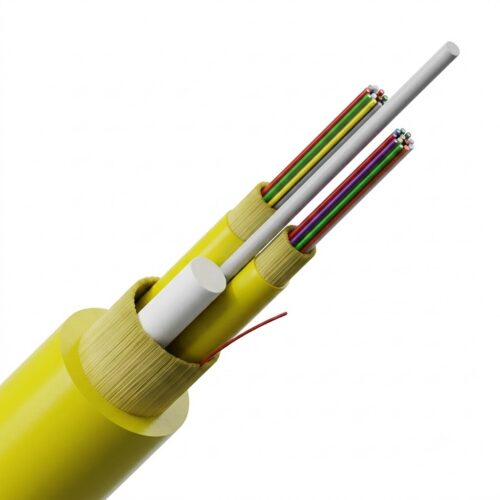
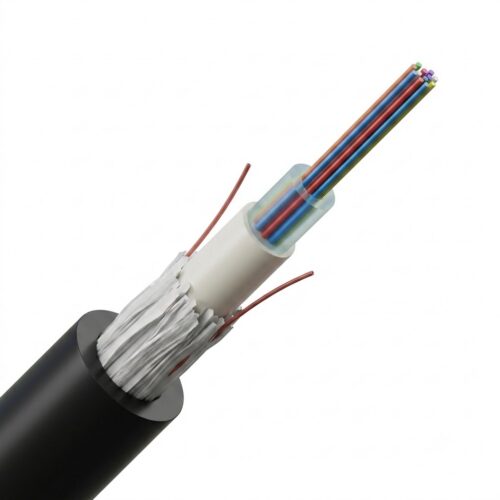
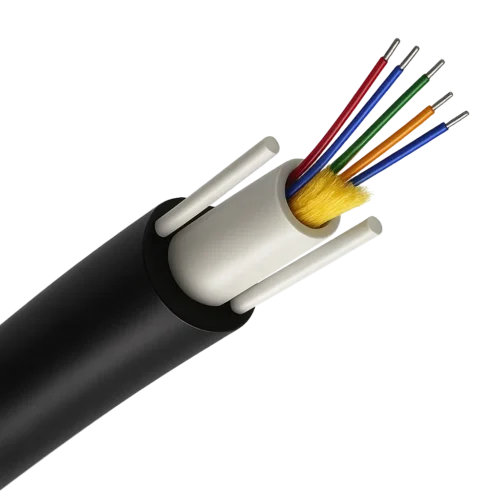
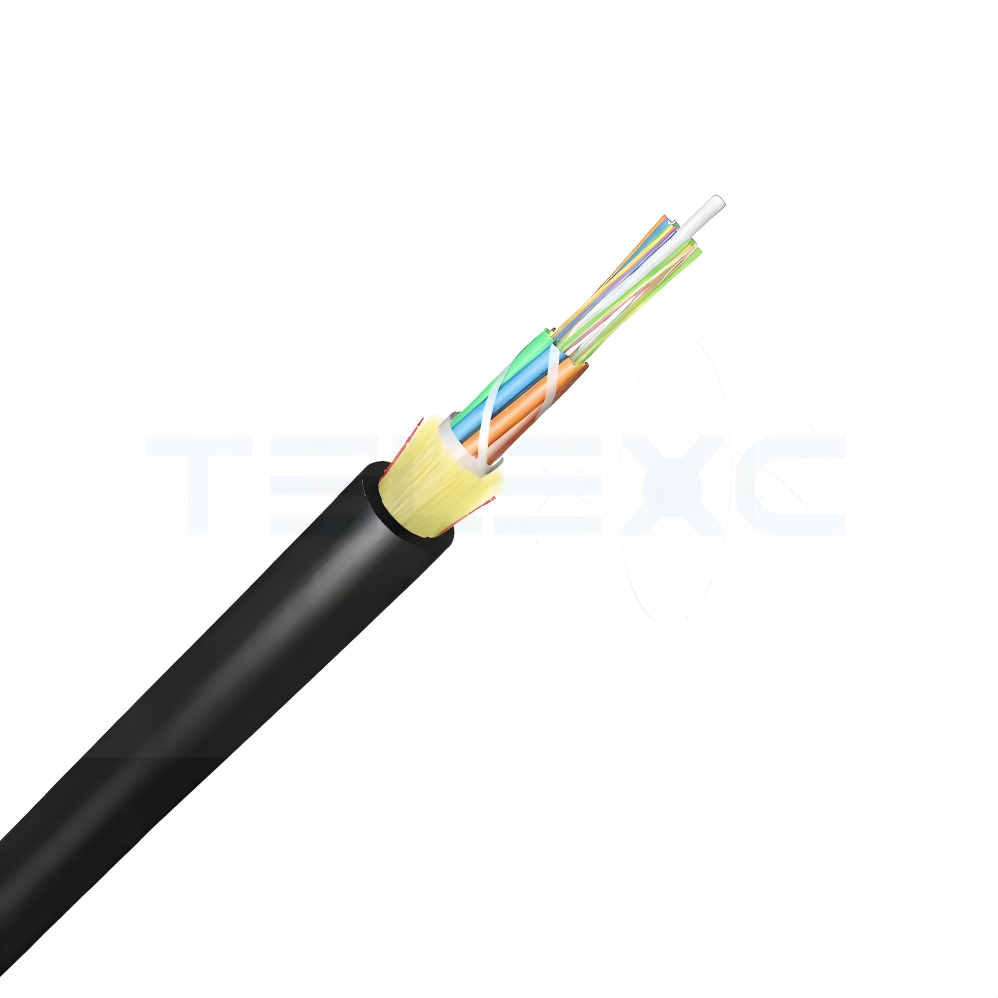
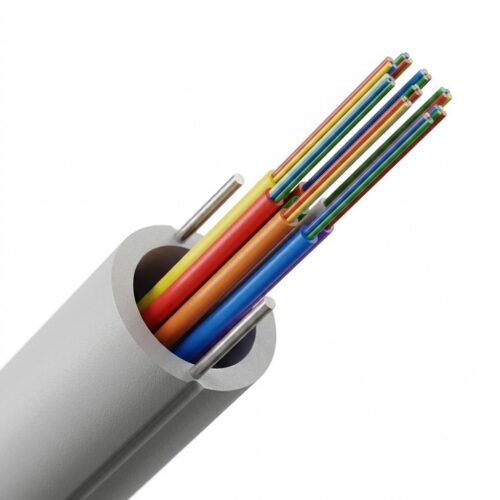
ADSS cables feature an all-dielectric structure, meaning they contain no metal components. Their construction typically includes:

  1. Loose Tube Fiber Core: Fibers are housed in gel-filled or dry loose tubes to protect against moisture and physical stress.

  2. Aramid Yarn Reinforcement: Provides tensile strength, allowing the cable to span between poles without sagging.

  3. Outer Sheath: Single or double polyethylene sheath offers UV resistance and mechanical protection.

  4. Core Design: Cables may have a central tube (with fibers in one core) or a stranded structure (with fibers distributed in multiple tubes) for flexibility and strain relief.

This combination of components ensures mechanical durability and optical stability, even under harsh environmental conditions.

C. Mechanical & Optical Performance

ADSS cables are engineered for long-span aerial installations and harsh weather conditions:

  • Self-supporting Capability: Can span 80–120 meters (typical), depending on fiber count and tension.

  • Environmental Resistance: Designed to withstand wind, ice loading, and UV exposure.

  • Low Optical Loss: Uses high-quality single-mode or multi-mode fibers for efficient data transmission.

  • Mechanical Protection: Resistant to crushing, impact, and rodent damage.

  • Strain Management: Fiber strain is minimized by loose tube and reinforcement design.

D. Safety & Installation Context

ADSS cables are safe for installation near high-voltage power lines due to their non-conductive design:

  • No grounding required

  • Reduced risk of electrical hazards

  • Simplified installation, fewer accessories needed

  • Compatible with standard aerial installation hardware like suspension clamps, tension clamps, and vibration dampers

E. Types / Variants

1. Single-Sheath ADSS Cable:

  • Lightweight, cost-effective

  • Suitable for moderate environmental protection

2. Double-Sheath ADSS Cable:

  • Provides extra protection against abrasion and rodents

  • Recommended for harsh environments or long spans

3. Core Designs:

  • Central tube: Simpler design, ideal for lower fiber counts

  • Stranded: Flexible, better strain management for high fiber counts

F. Applications & Use Cases

ADSS cables are versatile and used in:

  • Outdoor aerial networks (urban and rural)

  • FTTx deployments for broadband access

  • Corporate or municipal fiber networks

  • Rapid-deployment and military communication systems

G. Hardware & System Components

Key accessories include:

  • Suspension Clamps: Hold the cable without damaging fibers

  • Tension Clamps: Maintain cable tension over long spans

  • Armor Rods & Thimbles: Protect against bending and abrasion

  • Downlead Clamps & Splice Closures: Enable secure connections and transitions

  • Vibration/Spacer Dampers: Reduce wind-induced oscillations
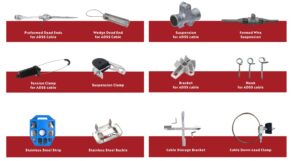
Each component ensures long-term stability and performance of ADSS installations.

H. Selection & Engineering Parameters

Choosing the right ADSS cable depends on:

  • Span Length: Maximum distance between poles

  • Fiber Count: Number of fibers required for network capacity

  • Fiber Type: Single-mode (SM) or multi-mode (MM), e.g., G.652.D

  • Mechanical Loads: Wind, ice, and installation tension

  • Environmental Conditions: Temperature extremes, UV exposure, humidity

  • Cable Size & Weight: Compatibility with existing poles and hardware

I. Technical Parameters

  • RTS (Rated Tensile Strength): Maximum safe tension for long-term use

  • UTS (Ultimate Tensile Strength): Maximum failure tension

  • MAT (Maximum Allowable Tension): Installation tension limit

  • EDS (Every Day Strength): Fatigue strength under normal operation
ADSS Fiber Optic Cable FAQs

Q1: What is an ADSS Fiber Optic Cable?

A1: ADSS stands for All-Dielectric Self-Supporting cable. It is a non-metallic fiber optic cable designed for aerial installations where electrical interference is a concern or messenger wires are undesirable. Its all-dielectric construction ensures safety in high-voltage areas and resistance to electromagnetic interference.

Q2: What does “All-Dielectric” mean in ADSS cables?

A2: “All-dielectric” means the cable contains no metallic components. This non-conductive design allows safe deployment near electrical lines and eliminates the need for grounding or bonding.

Q3: How is the ADSS cable self-supporting?

A3: ADSS cables are engineered for long spans, eliminating the need for additional structural support like messenger wires. This reduces installation time, costs, and complexity while allowing deployment on towers and utility poles.

Q4: Where are ADSS cables typically installed?

A4: ADSS cables are widely used in:

  • High-tension tower crossbars

  • Utility pole distributions

  • Data carrier lines and telecommunication networks

Q5: Are ADSS cables cost-effective?

A5: Yes. Their self-supporting nature eliminates special hardware and reduces installation and operational costs, making them an economical choice for aerial fiber deployments.

Q6: Can ADSS cables withstand adverse weather conditions?

A6: Absolutely. ADSS cables are designed to be:

  • UV-resistant

  • Wind load tolerant

  • Ice and temperature fluctuation resistant

  • Mechanically reinforced with aramid yarn or similar protective stranding

Q7: Who typically uses ADSS cables?

A7: ADSS cables are commonly used by:

  • Power companies

  • Telecom operators

  • Corporate networks

  • Municipal broadband systems

Q8: What accessories come with ADSS cables?

A8: Standard ADSS accessories include:

  • Suspension clamps

  • Tension clamps

  • Armor rods

  • Thimbles

  • Vibration dampers

  • Splice closures

Q9: How do I choose the right ADSS cable?

A9: Selection depends on:

  • Span length between supports

  • Fiber count and type

  • Environmental exposure

  • Mechanical load requirements

Q10: How should ADSS cables be maintained?

A10: Minimal maintenance is required. Regular inspections for sagging, clamp integrity, and environmental wear are recommended to ensure long-term reliability.

Our Services

  • Rich experience in ODM & OEM production

  • Excellent one-stop solution for telecom and power hardware

  • High-quality precision casting and forging capabilities

  • Factory-direct pricing with fast delivery

  • Strict quality control and inspection at every stage

  • Warm welcome to visit our factory for cooperation opportunities

About Us

Telexc is a high-tech enterprise specializing in the manufacturing of hardware equipment for the telecommunications and electric power sectors. With production and sales centers in Tianjin and Hebei, China, our products are successfully operating in over 30 countries and have been trusted in power systems for more than 20 years. We are an approved and certified supplier to major telecom companies worldwide and have earned excellent references from numerous utility departments. Our facilities are equipped with modern machinery, advanced testing equipment, and a skilled engineering team.

Telexc is certified under:

  • ISO 9001 (Quality Management)

  • ISO 14001 (Environmental Management)

  • ISO 45001 (Occupational Health & Safety)

With innovation, reliability, and customer satisfaction at our core, Telexc continues to lead the way in transmission and telecommunication line hardware manufacturing.