
OPGW Stranded Stainless Steel Tube Optical Ground Wire

Key Features

  • Combined grounding and fiber communication

  • High short-circuit current capacity

  • Excellent lightning protection performance

  • Stable fiber excess-length control

  • Superior tensile and mechanical strength

  • Suitable for UHV transmission lines

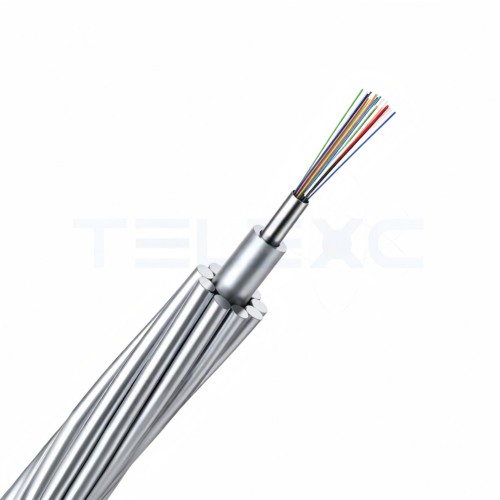
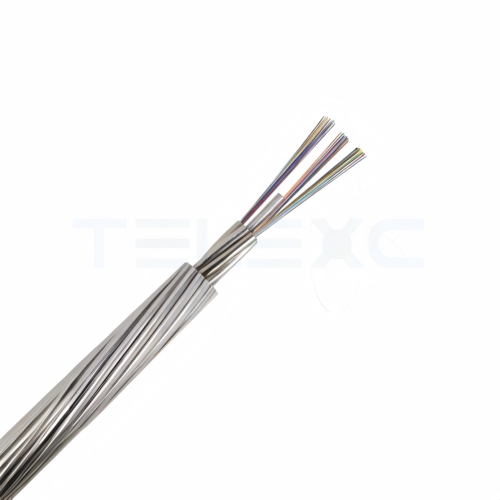
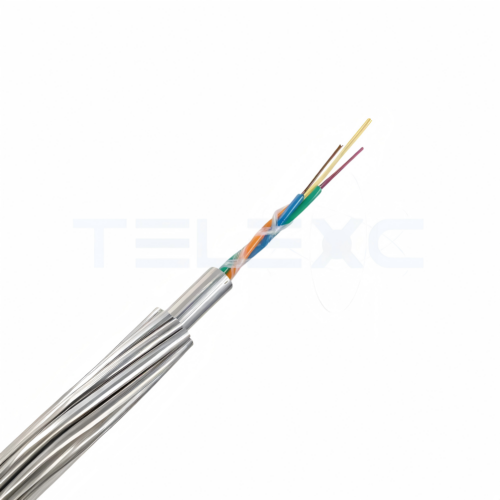
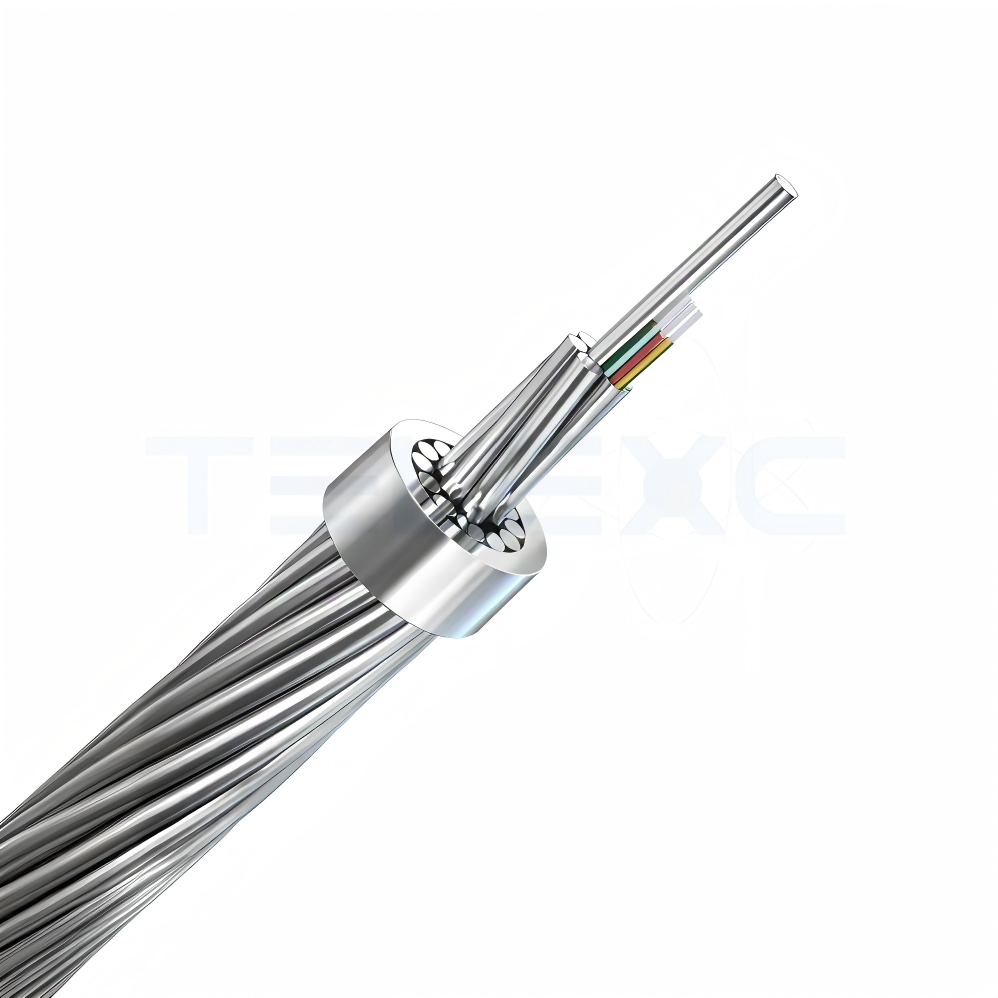
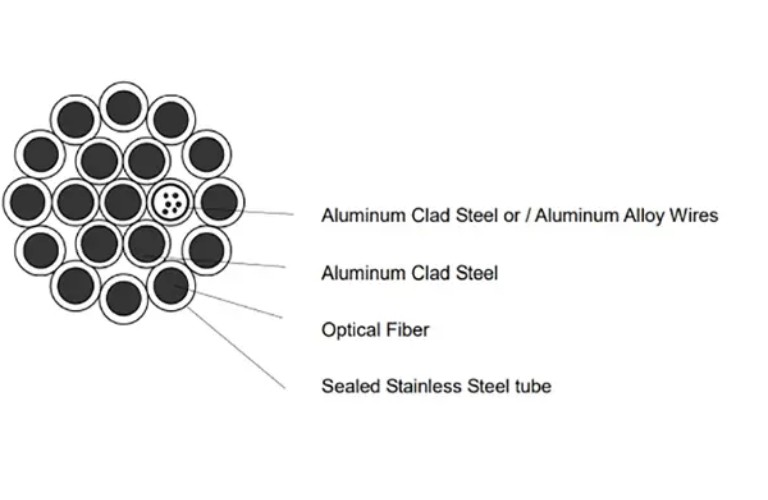
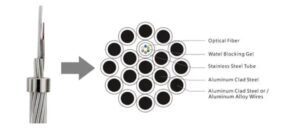
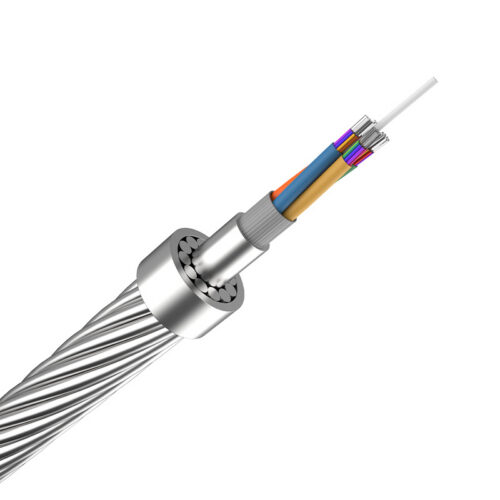
OPGW Optical Ground Wire is a dual-function overhead cable combining electrical grounding, lightning protection, and high-speed optical communication in a single structure. The OPGW series features optical fibers housed inside a stainless steel tube, surrounded by multiple layers of aluminum-clad steel and aluminum alloy wires for superior mechanical strength. This design ensures stable optical performance, high short-circuit current capacity, and reliable operation under extreme electrical and environmental conditions. Ideal for high-voltage and ultra-high-voltage transmission lines, OPGW supports power line communication, relay protection, and grid monitoring while replacing conventional ground wires. Its robust construction allows long-term outdoor deployment with minimal maintenance, making it a cost-effective and safe solution for modern power transmission networks.

Model Numbers (OPGW Series)

  • OPGW-DL (Double Layer)

  • OPGW-TL (Three Layer)

  • OPGW-24 / 36 / 48 / 96 / 144

International Standard Compliance

  • IEC 60794-4-10 (OPGW specification)

  • IEC 60794-1-2 (Test procedures)

  • IEEE 1138-2009 (OPGW performance & testing)

  • ITU-T G.652 / G.655 / G.657

  • IEC 61232 (Aluminum-clad steel wire)

  • IEC 60104 / IEC 6108 (Overhead conductors)
OPGW Optical Ground Wire | OPGW Stainless Steel Tube | Telexc

Construction & Materials

  • Optical Unit: Stainless steel tube with optical fibers

  • Fiber Types: G.652.D, G.655, G.657A1, OM1/OM2/OM3/OM4

  • Stranding Layers: Double or triple concentric layers

  • Outer Wires: Aluminum-clad steel (ACS) and aluminum alloy wires

  • Design: Central optical tube with metallic strength layers

Installation Guide

  1. Replace the conventional ground wire during line construction

  2. Use approved OPGW tension and suspension clamps

  3. Control sag and tension per line design parameters

  4. Avoid fiber over-strain during stringing

  5. Perform optical testing after installation
Technical Parameters Design for Double Layer

Model Fiber Count Diameter (mm) Weight (kg/km) RTS (kN) Short Circuit (kA²s)
TX-OPGW-89 24 12.6 381 55.4 62.9
TX-OPGW-110 24 14.0 600 90.0 86.9
TX-OPGW-127 36 15.0 537 79.0 129.5
TX-OPGW-145 48 16.0 719 98.6 162.3

Typical Three Layer Design

Model Fiber Count Diameter (mm) Weight (kg/km) RTS (kN) Short Circuit (kA²s)
TX-OPGW-232 28 20.15 1696 343.0 191.4
TX-OPGW-347 48 24.7 2157 366.9 687.7
TX-OPGW-282 96 22.5 1938 358.7 372.1


Applications

Overhead Power Transmission Lines

Installed on HV and UHV lines for grounding and communication.

Power Grid Communication Systems

Supports SCADA, relay protection, and monitoring.

Lightning Protection

Safely conducts fault and lightning currents to ground.

New Line Construction Projects

Ideal replacement for traditional earth wires.

Smart Grid Infrastructure

Enables high-speed data transmission for grid automation.

Product Advantages

Dual Function Design

Combines optical communication and grounding in one cable.

High Electrical Capacity

Handles large fault currents without performance degradation.

Mechanical Reliability

Designed to withstand wind, ice load, and high tension.

Long-Term Stability

Stainless steel tube protects fibers from compression and moisture.

Reduced Maintenance

Eliminates separate communication cable infrastructure.

FAQs

Q1: What is an OPGW cable used for?

OPGW is installed on overhead power lines to perform grounding and lightning protection while simultaneously carrying optical fibers for communication.

Q2: How does TX-OPGW differ from conventional ground wire?

TX-OPGW integrates optical fibers inside a stainless steel tube, enabling data transmission in addition to electrical grounding.

Q3: What voltage levels are suitable for TX-OPGW?

TX-OPGW is suitable for high-voltage and ultra-high-voltage transmission lines, depending on the selected mechanical design.

Q4: Why is a stainless steel tube used for fibers?

The stainless steel tube protects fibers from compression, moisture, vibration, and mechanical stress during line operation.

Q5: What fiber types are supported?

Single-mode fibers such as G.652.D, G.655, and G.657A1 are standard; multimode fibers can also be supplied if required.

Q6: What is the maximum fiber count available?

TX-OPGW can be supplied with up to 144 optical fibers, depending on the cable structure.

Q7: Can TX-OPGW handle lightning and fault current?

Yes. The aluminum-clad steel layers are designed to safely conduct lightning strikes and short-circuit currents.

Q8: What is RT,S and why is it important?

RTS (Rated Tensile Strength) indicates the maximum mechanical load the cable can withstand during installation and operation.

Q9: Is TX-OPGW suitable for coastal or polluted environments?

Yes. Metallic components are corrosion-resistant and suitable for harsh outdoor conditions.

Q10: Can TX-OPGW be installed on existing power lines?

Yes. It can replace existing ground wire during line upgrade or maintenance projects.

Q11: Does TX-OPGW support dry core designs?

Yes. Dry core or semi-dry core structures are available on request.

Q12: What installation fittings are required?

Dedicated OPGW suspension clamps, tension clamps, vibration dampers, and down-lead clamps must be used.

Q13: How is optical performance maintained under tension?

Excess fiber length is carefully controlled inside the tube to prevent strain during mechanical loading.

Q14: What is the typical service life of TX-OPGW?

Designed service life exceeds 30 years under standard operating conditions.

Q15: Is customization available for project-specific needs?

Yes. Fiber count, wire composition, short-circuit rating, and mechanical strength can be customized.

Q16: Does TX-OPGW meet international utility standards?

Yes. It complies with IEC, IEEE, and ITU-T standards relevant to OPGW cables.

Q17: Can TX-OPGW be used for smart grid communication?

Yes. It supports high-speed data transmission for grid automation and monitoring systems.

Why Choose Telexc

Power-Grade Engineering

Designed specifically for utility transmission environments.

International Compliance

Fully aligned with IEC and IEEE OPGW standards.

Flexible Customization

Fiber type, count, and structure are configurable per project.