
Conductor hardware is the mechanical and electrical components used to support, connect, protect, and manage electrical conductors in overhead power networks. The hardware ensures that conductors are properly installed on structures such as towers and poles. This is while maintaining electrical clearance, mechanical strength, and system reliability. Conductor hardware forms the interface between the conductor and the supporting infrastructure. It allows the power line to withstand environmental loads such as wind, temperature variation, ice accumulation, and mechanical tension. Conductor hardware distributes loads to the supporting structure and prevents conductor slippage. Conductor hardware used includes suspension clamps, dead-end clamps, armor rods, and preformed grips. These components help maintain electrical continuity and reduce losses at connection points. Conductor components stabilizes the line configuration and ensures proper spacing between phases. Using high-quality conductor hardware improves grid reliability, transmission efficiency, equipment lifespan, and safety of electrical infrastructure.
Main types of conductor hardware used in transmission and distribution networks
Conductor hardware consists of mechanical and electrical fittings used to secure and protect conductors in power networks. The components ensure the conductor remains stable and continuous along spans and varying environmental conditions.
Suspension hardware
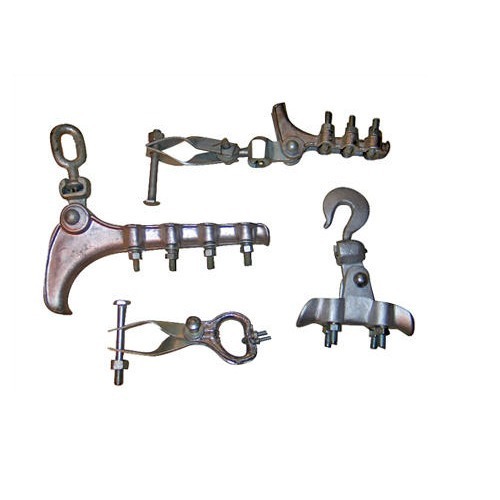
Suspension hardware supports conductors along straight-line sections of transmission and distribution lines. The hardware allows limited conductor movement caused by wind or thermal expansion. This is while maintaining proper alignment and electrical clearance. Suspension hardware components include suspension clamps, armor rods, and suspension insulator fittings. The hardware supports conductor weight, reduces localized mechanical stress, and maintains conductor positioning on towers.
Tension hardware
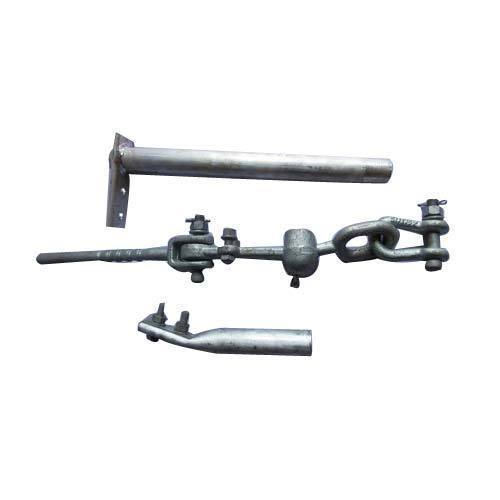
This is also called dead-end hardware and is used where conductors must be firmly anchored. The hardware serves at locations where the line terminates, changes direction, or experiences high mechanical tension. Key components of the hardware include deadend clamps, preformed deadend grips, strain clamps, and anchor shackles. These components transfer mechanical tension from the conductor to the support structure, prevent conductor slippage, and maintain line stability.
Splicing and connecting hardware
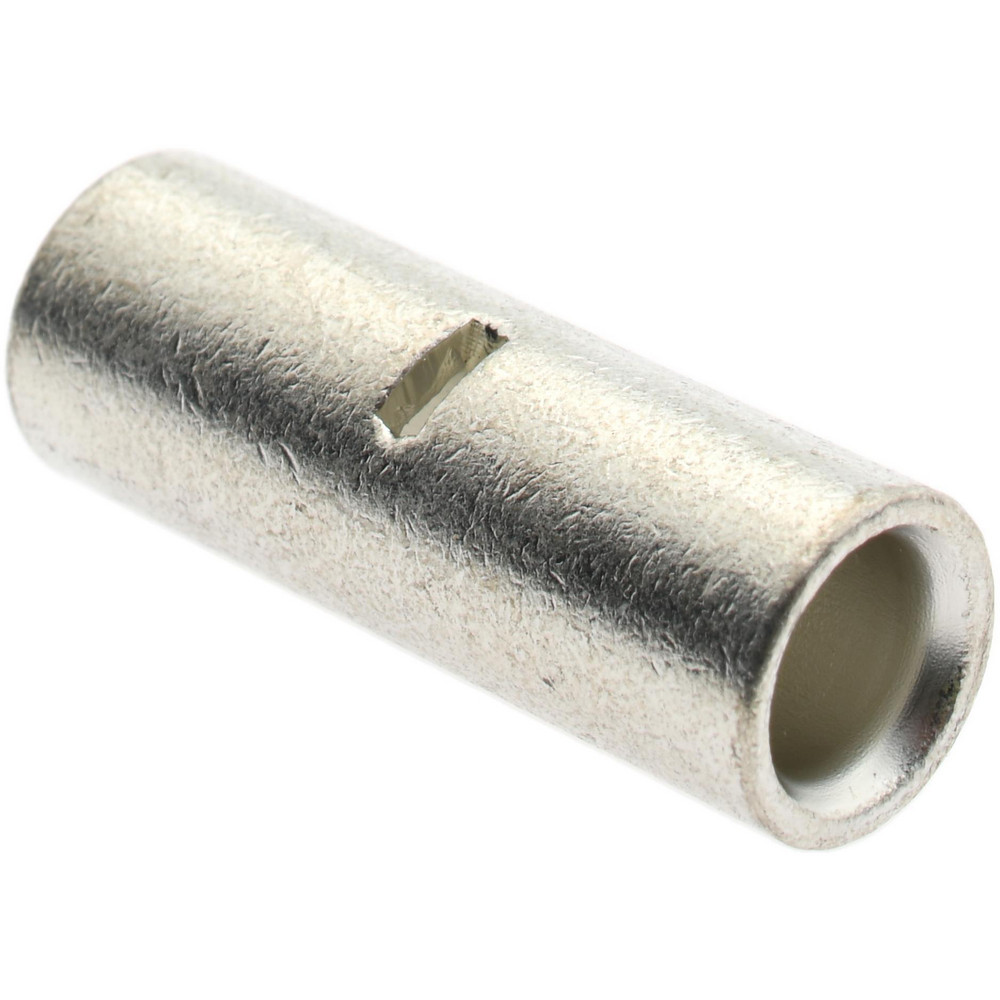
This hardware ensures electrical continuity between conductor sections. Reliable connectors help maintain conductivity and mechanical strength. Common hardware includes compression sleeves, splice connectors, parallel groove clamps, and bolted connectors. These components maintain electrical conductivity, reduce resistance and overheating at connection points, and ensure mechanical strength.
Protective hardware
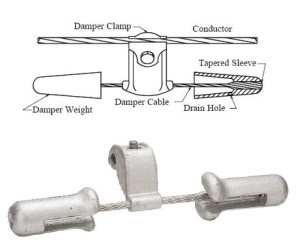
Protective hardware prevents mechanical fatigue and environmental damage to conductors. They protect conductors from wind-induced vibrations, temperature changes, and weather conditions. These components include vibration dampers, spacer dampers, armor rods, and corona rings. Protective hardware reduces conductor vibration, protects strands from fatigue and abrasion. This helps improve the durability of power lines.
Spacing and bundling hardware
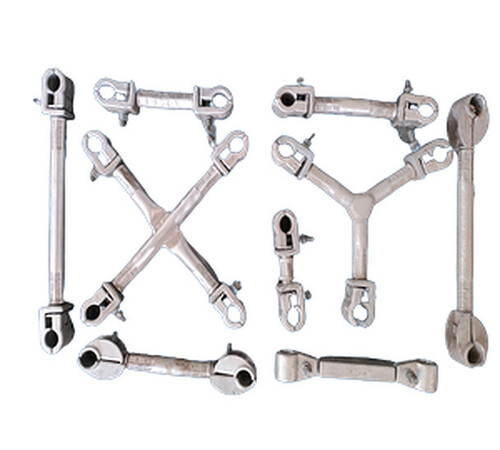
Bundling conductors together increases capacity and reduces electrical losses in high-voltage transmission lines. This hardware includes bundle spacers and interphase spacers. They maintain uniform spacing between bundled conductors, prevent conductor clashing, and improve electrical performance.
Supporting and anchoring hardware
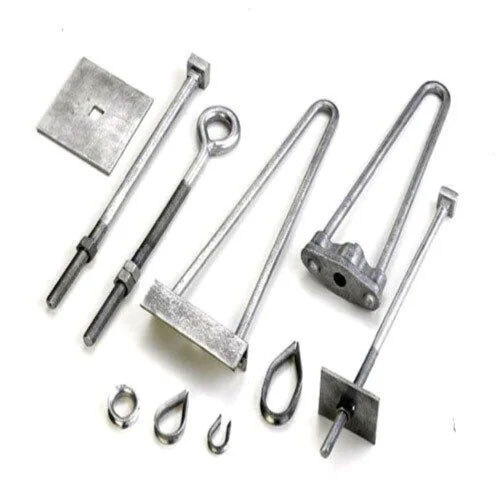
Conductor hardware provides extra structural support for the entire line system. These include guy grips, anchor rods, crossarm fittings, and pole line hardware. They stabilize structures and ensure that conductors remain tensioned.
Materials used for conductor hardware and the role of quality assurance during manufacture
Conductor hardware must withstand high mechanical loads, electrical stress, and harsh environmental conditions. Material selection influences their strength, conductivity, corrosion resistance, and service life. Conducting quality assurance during production ensures the hardware meets international performance standards. Common materials used include:
- Aluminum and aluminum alloys—these materials are lightweight, corrosion resistant, and compatible with aluminum conductors such as ACSR and AAAC cables. These materials are ideal for suspension clamps, parallel groove clamps, spacer dampers, and compression sleeves. The materials offer mechanical strength while maintaining good electrical conductivity.
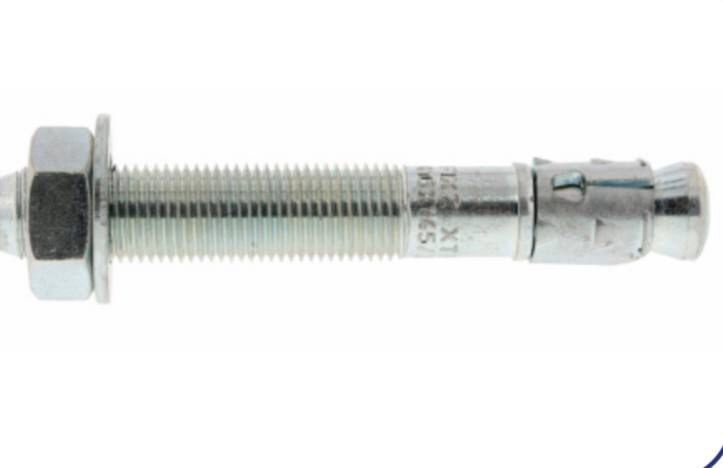
- Galvanized steel—this is ideal for components that should withstand high tensile loads and structural stress. Galvanization protects it from corrosion caused by moisture, chemicals, and atmospheric exposure. This steel is ideal for dead-end clamps, anchor shackles, fasteners, and structural support fittings.
- Ductile iron and cast steel—this is best suited for heavy-duty hardware components that need high mechanical strength and impact resistance. The materials are mostly used for strain clamps, suspension clamp bodies, and structural fittings.
- Copper and copper alloys—these alloys provide corrosion resistance for electrical connectors, splice fittings, and grounding hardware.
- Polymer and composite materials—these materials offer insulation capability and resistance to environmental degradation. This is crucial for protective coverings, insulator housings, and non-conductive fittings.
Roles of quality assurance in conductor hardware manufacturing
Quality assurance in conductor hardware manufacturing ensures the hardware meets the mechanical, electrical, and environmental performance requirements of transmission and distribution systems. Here is the role of quality assurance in conductor components manufacturing.
- Material verification—this involves verifying the chemical composition and mechanical properties of raw material. The process includes tests such as chemical composition analysis, tensile strength testing, and hardness testing.
- Dimensional and design inspection—precise dimensions ensure that hardware components fit with conductors, insulators, and tower fittings. Quality checks include dimensional measurement using precision tools, thread and fitting inspection, and surface finish examination. Proper control prevents installation issues and reduces mechanical stress on conductors.
- Mechanical performance testing – conductor hardware must withstand high loads during installation and operation. Conducting mechanical tests confirms the strength and reliability of components. These tests include ultimate tensile strength tests, slip strength tests, and load cycle testing.
- Corrosion resistance testing—quality assurance includes galvanization thickness inspection, salt spray testing, and environmental exposure testing.
- Electrical performance testing—these tests are crucial for components carrying current or maintaining electrical continuity. These tests include resistance testing, temperature rise testing, and conductivity verification.
- Compliance with international standards—manufacturers should ensure their conductor hardware complies with recognized standards. These standards include IEC standards, ASTM standards, and ISO quality management systems.
Applications of conductor hardware in energy infrastructure
Conductor hardware serves in the construction, stability, and operation of energy infrastructure. They ensure that conductors are securely installed, connected, and protected from mechanical and environmental stresses. Conductor hardware supports reliable electricity delivery from generation facilities to end users. The key application areas are as discussed below.
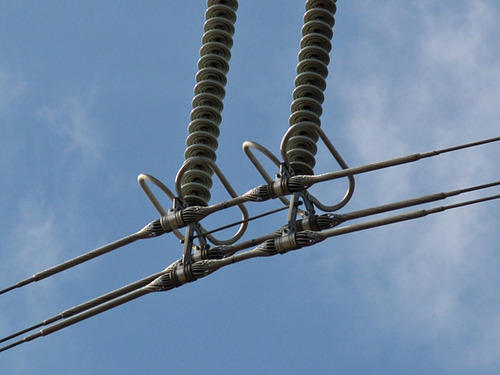
- Overhead transmission lines—conductor hardware supports conductors on transmission towers and maintains proper conductor spacing and alignment. They ensure that transmission lines maintain stability and electrical continuity across long spans.
- Power distribution networks—the components support conductors on utility poles, anchoring conductors at corners, and connecting branch circuits within the network. Conductor components helps maintain reliable and safe electricity distribution.
- Substation infrastructure—conductor hardware connects conductors to electrical equipment and maintains structural stability. They connect conductors to transformers and switchgear, support busbars, and provide tension support.
- Renewable energy installations—solar power plants and wind farms rely on conductor components to integrate generation assets into the grid. Conductor hardware supports transmission lines connecting wind turbines to substations. They also connect solar farm output circuits to transmission networks and anchor overhead conductors in collector systems.
- Power interconnection—conductor hardware maintains conductor stability over long spans and challenging terrains. They serve high-voltage interconnection lines, cross-border transmission networks, and large-scale grid expansion projects.
Common quality failures of conductor hardware
Conductor hardware operates under mechanical tension, electrical loading, and environmental exposure. The components can develop defects that compromise the reliability and safety of the power network. Utilities and manufacturers must understand these failures to put in place stronger inspection and quality control procedures. Here are the most common quality failures facing conductor hardware.
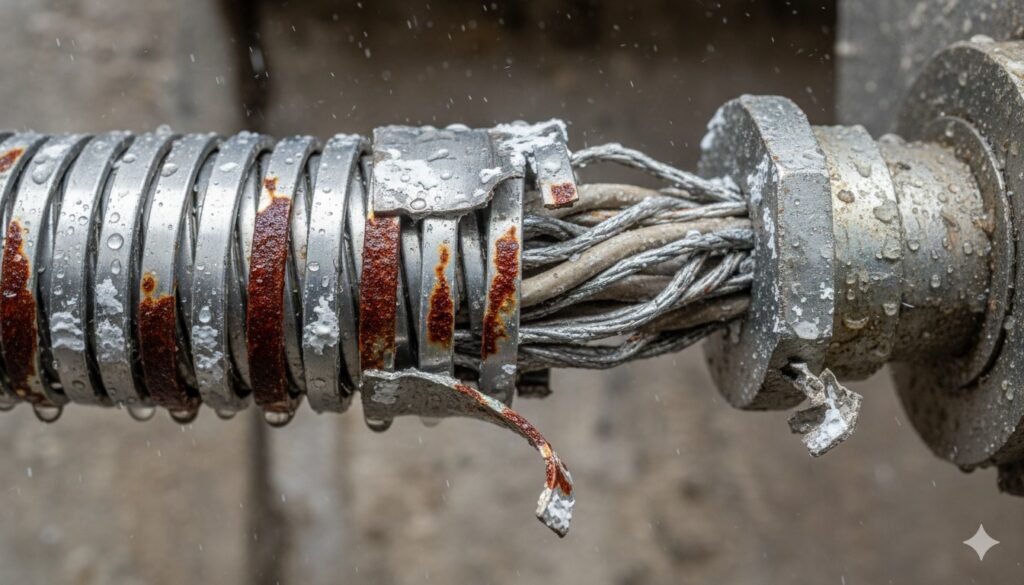
- Material defects—material defects occur when the raw materials used during manufacturing do not meet required specifications for strength, conductivity, and corrosion resistance. Material issues include low tensile strength in steel components, poor alloy composition in aluminum fittings, and impurities in cast metal parts.
- Poor galvanization and corrosion protection—failures include thin or uneven zinc coating, peeling of protective layers, and rust formation on steel components. Corrosion on conductor components weakens structural integrity and may cause hardware breakage.
- Dimensional inaccuracies—poor manufacturing can lead to incorrect clamp groove size, misaligned bolt holes, and improper threading on fasteners. These errors can cause improper conductor grip, slippage, or uneven load distribution.
- Weak mechanical strength—improper mechanical strength may cause poor heat treatment, improper forging, or inadequate material thickness. These failures can occur in dead-end clamps, suspension clamps, and tension fittings.
- Conductor slippage in clamps—slippage of the conductor within clamps occurs when the clamp does not provide enough gripping force. This failure occurs from improper clamp design, incorrect groove size, and poor manufacturing tolerances.
- Electrical contact failures—poor manufacturing quality can result in high electrical resistance at connection points. These failures include poor contact surfaces, inadequate compression in connectors, and oxidation at electrical joints.
Best practices for selecting conductor hardware
Proper selection of the conductor hardware ensures the mechanical stability, electrical reliability, and durability in power systems. Utilities and engineers must apply technical criteria when choosing hardware for energy infrastructure. The selection ensures compatibility with the specific conductor type and size used in the line. It is crucial to consider conductor diameter and strand configuration, conductor material composition, and rated mechanical strength. The hardware must handle the tensile forces and mechanical loads present in the power line. Engineers should verify the ultimate tensile strength and load rating to ensure the component withstands operational stresses. Applying these practices enables utilities and engineers to deploy conductor hardware. This ensures safe operation, improved durability, and reliable power transmission and distribution across modern energy networks.