
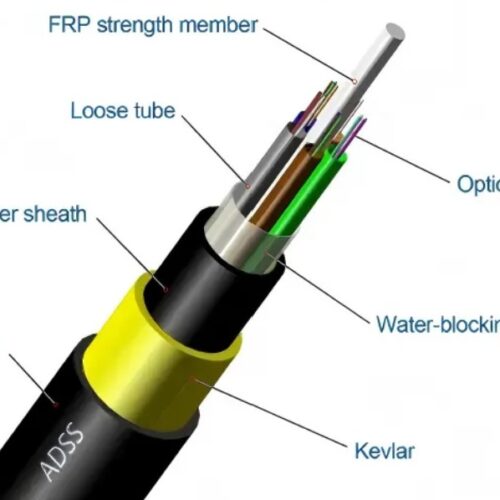
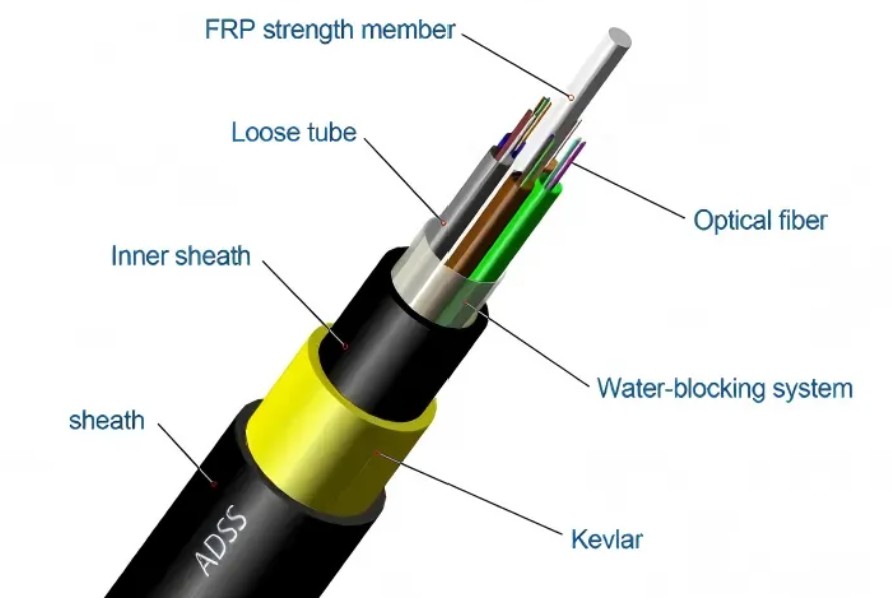
All-dielectric self-supporting (ADSS) cable is a type of fiber optic cable used in aerial installation and deployment. It is all dielectric because it requires no metallic component to support the cable. The ADSS cable consists of non-metallic materials such as aramid yarn, fiberglass-reinforced plastic, and polyethylene jackets. It is highly resistant to electrical interference. The self-supporting aspect shows that the optic cable’s reinforcing member can withstand its weight and external load. It also has high mechanical strength and can withstand the strong electric environment’s impact. ADSS cables on telecommunications towers provide an efficient and optimal solution for aerial cabling deployments. The cables are easy to install and need minimal maintenance. When selecting the ADSS cable, it is crucial to verify fiber count requirements, span length capability, tensile strength rating, and UV and weather resistance.
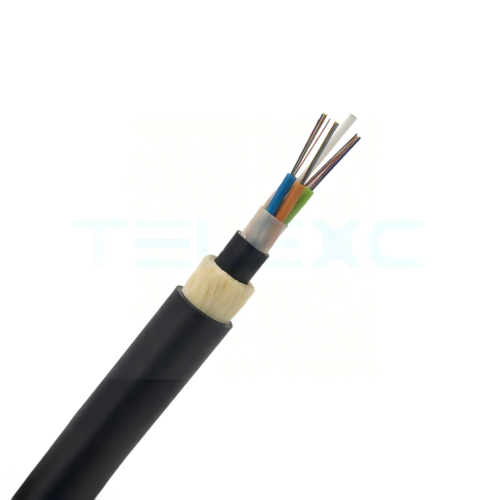
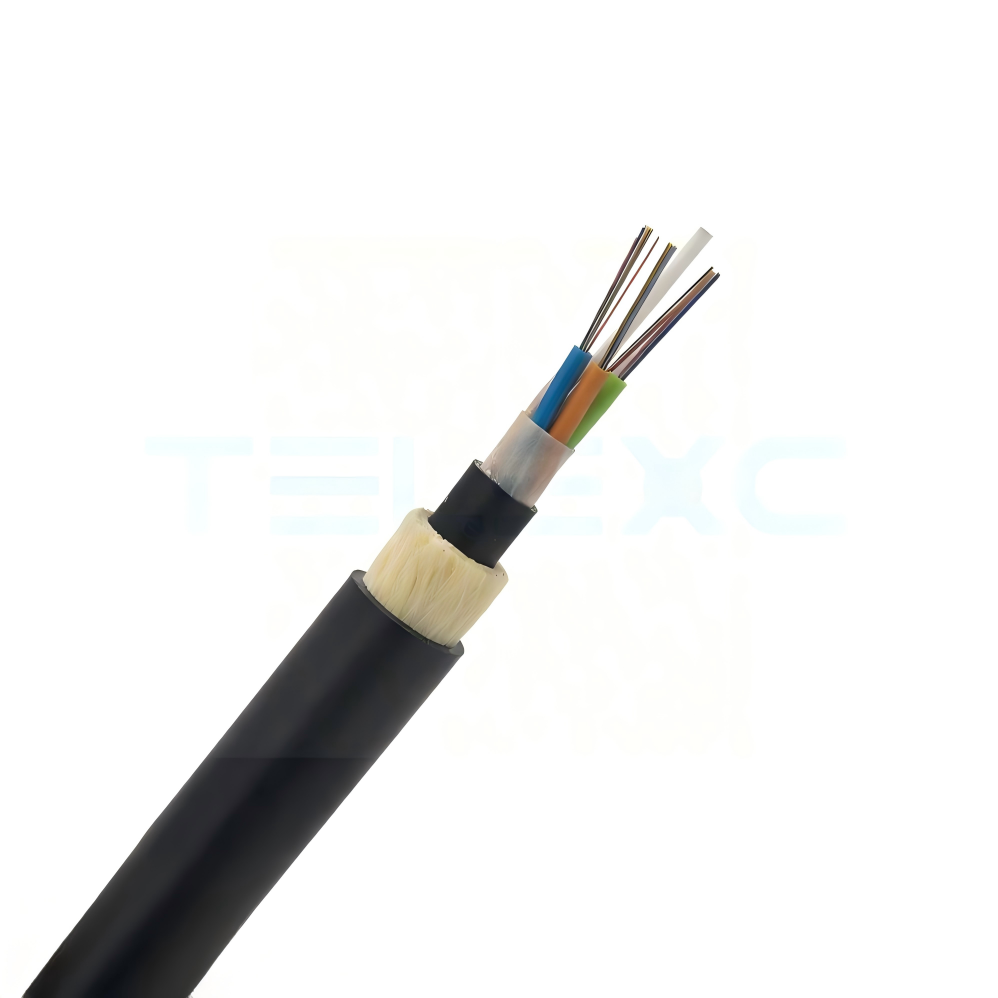
ADSS All-Dielectric Self-Supporting Fiber Optic Cable
Key Features
-
Fully dielectric, non-metallic construction
-
Self-supporting design without messenger wire
-
Optimized tensile performance using aramid yarn strength members
-
UV-resistant and moisture-protected outer sheath
-
Suitable for installation on energized power lines

Configuration of the ADSS cable
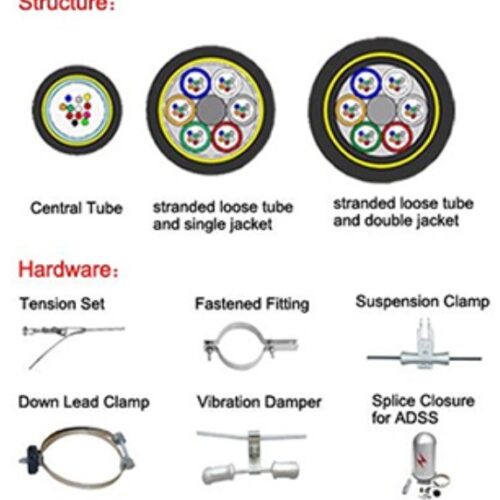
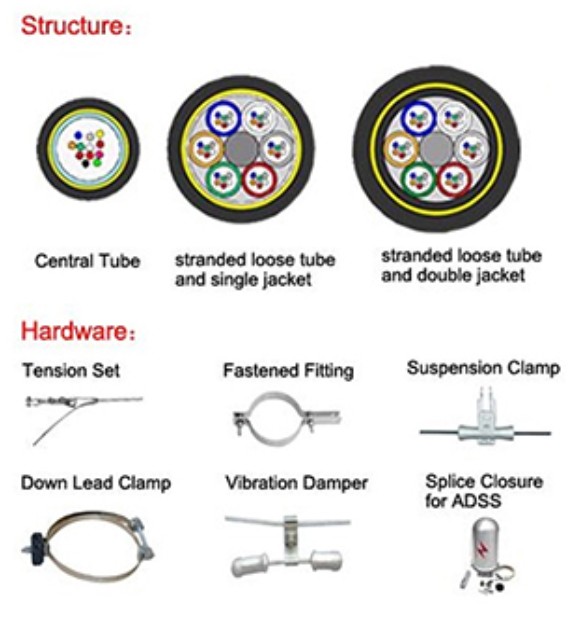
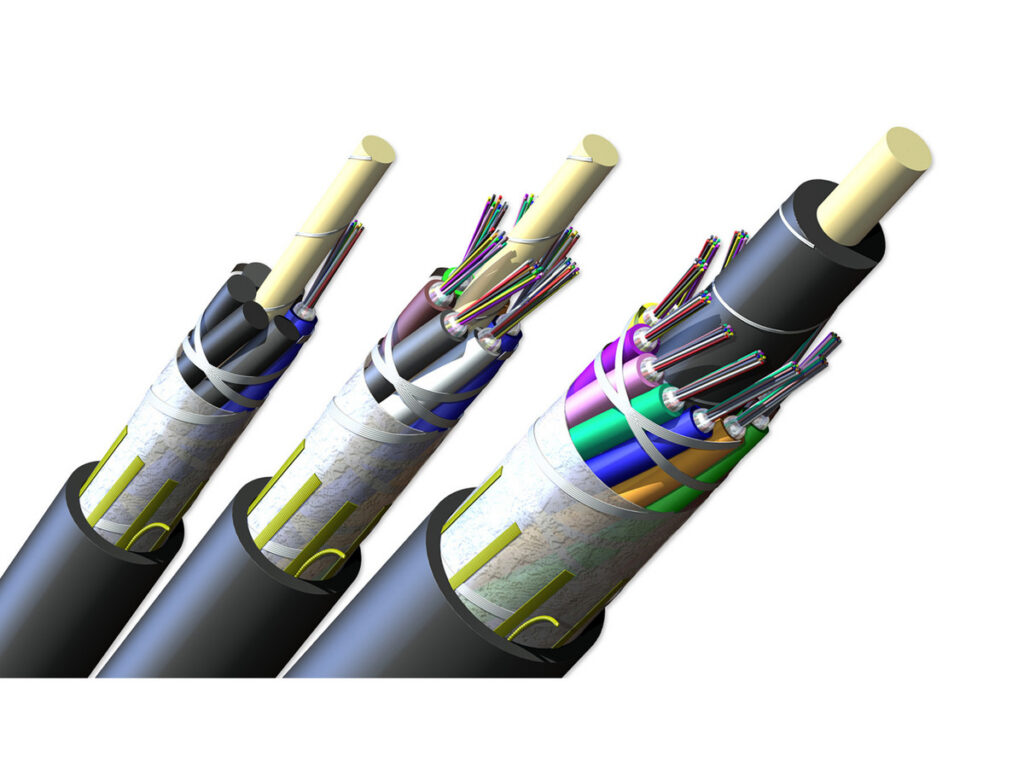
The ADSS cable’s structure is designed to provide optical communication, mechanical strength, and environmental protection. The configuration is classified into two types of optical fiber.
Central tube design
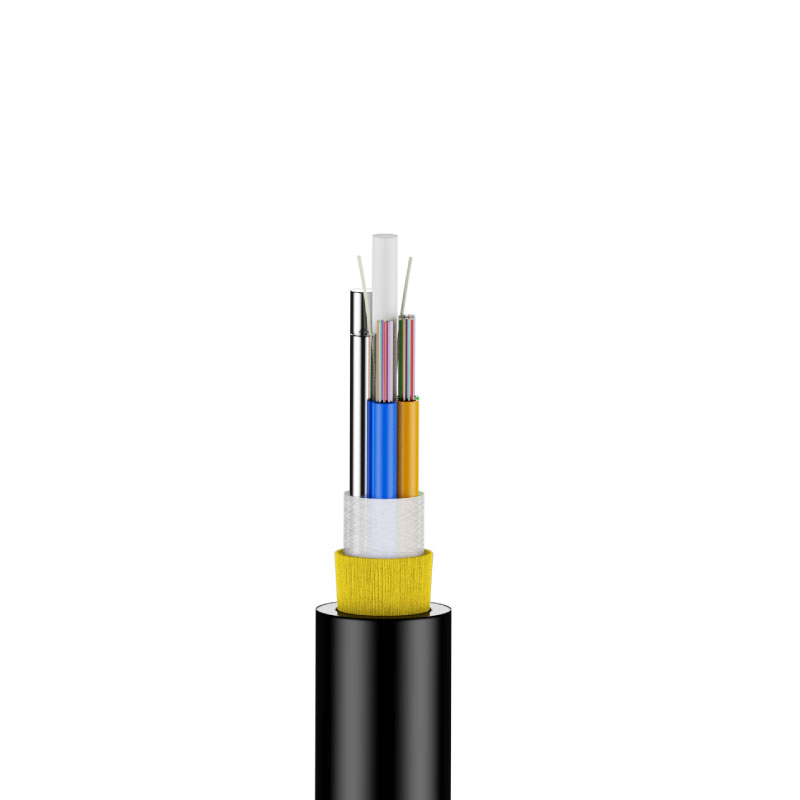
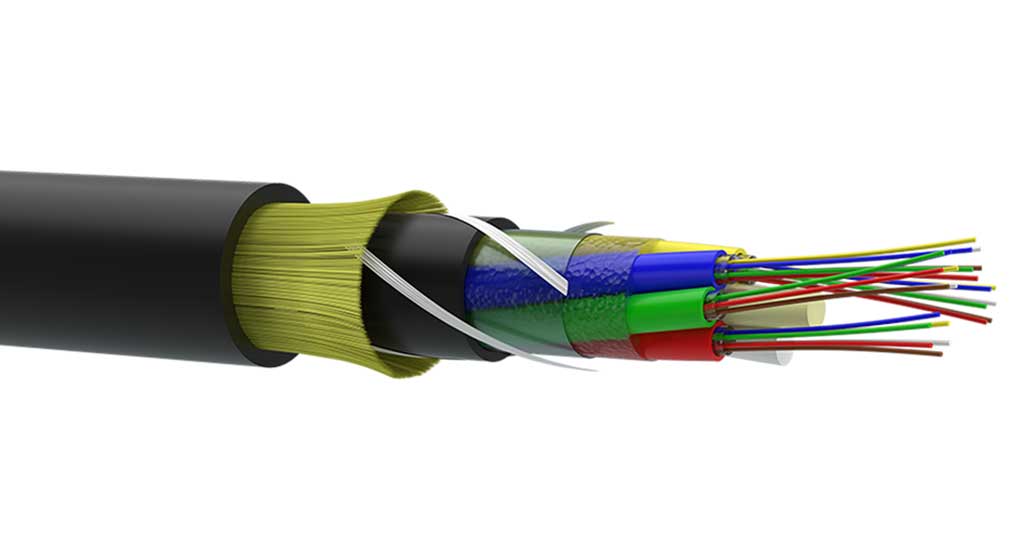
In this design, the fiber network is placed in a PBT loose tube filled with water-blocking material. It is then wrapped in aramid yarn and extruded with a PE or AT sheath. This structure has a small diameter, and it is light in weight. This design is lightweight, has a small diameter, has good waterproof performance, has a lower price, and is easy to install.
Stranded structure design
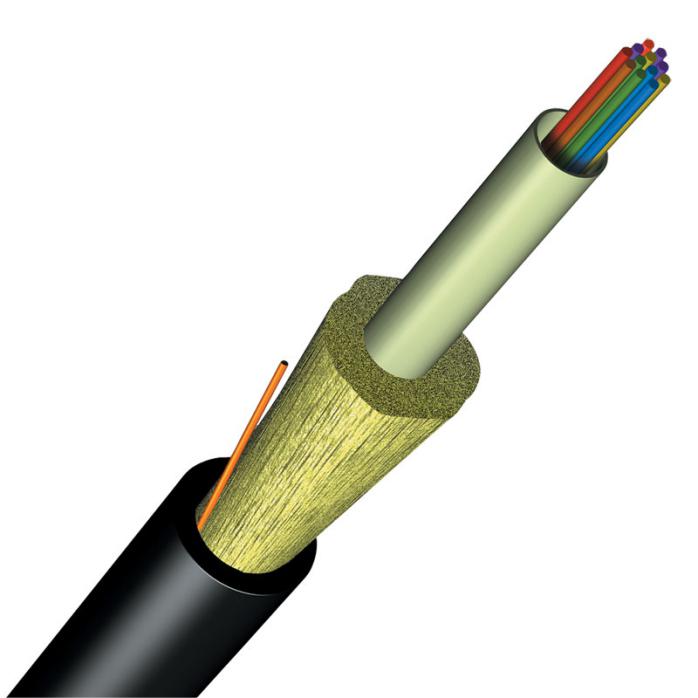
In this design, the water-blocking grease and inner optical fibers are added to the loose fiber tube, and different loose tubes are coiled around the central reinforcement. This design consists of a single layer of protective jacketing material made of polyethylene. This structure has more laying methods suitable for overhead, direct buried, pipeline, and underwater applications.
Types of All-dielectric Self-supporting Cables (ADSS)
Single-jacket ADSS cable
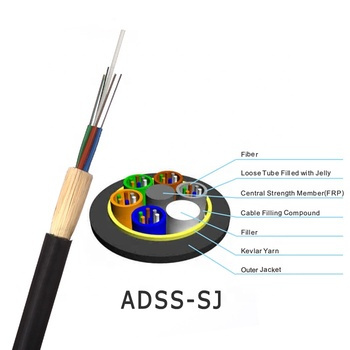
This type of cable features one outer protective jacket over the strength members and cable core. It has lightweight construction, is a cost-effective solution, and is suitable for low- and medium-voltage distribution lines. Single-jacket ADSS cables serve in telecommunications networks, distribution power lines, and rural broadband projects.
Double-jacket ADSS cables
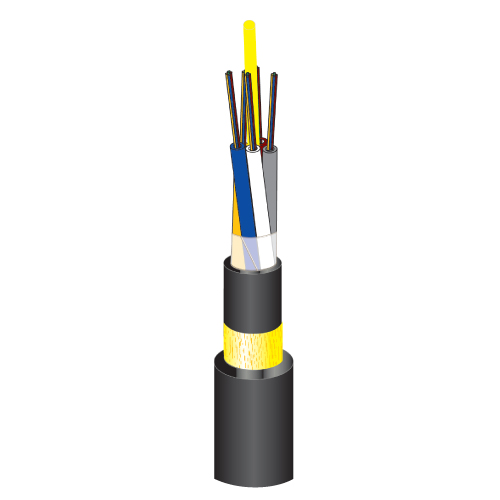
This type of cable includes an inner and outer jacket providing extra mechanical and electrical protection. It has higher tensile strength, improved resistance to tracking, enhanced protection against environmental stresses, and is suitable for harsher operating conditions. The cables serve in high-voltage transmission lines, long-span installations, and areas with severe weather conditions.
ADSS cable installation guide
ADSS fiber optic cable installation affects the cable’s mechanical performance, optical integrity, and service life. Proper installation prevents excessive stress, fiber damage, and premature failure. The installation uses accessories such as tension assemblies, optical distribution frames, outdoor junction boxes, and optical termination boxes. The installation process includes:
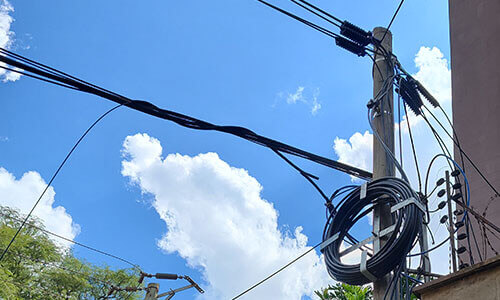
- Cable stringing—this is pulling the ADSS cable through the installation route. The process includes installing stringing blocks, running a pilot rope through the route, attaching the cable to the pulling line, and pulling the cable using controlled tension equipment.
- Sag and tension adjustment—after stringing, the cable must be tensioned according to the design specifications. This prevents excessive sag, maintains needed ground clearances, and reduces mechanical stress.
- Attachment to poles and towers – the ADSS cable is secured using suspension and deadend assemblies. They serve at suspension locations and dead-end locations to transfer tensile loads to the support structures.
- Splicing and jointing—splicing using fusion splicing techniques protects fiber joints, prevents moisture ingress, maintains optical performance, and provides mechanical protection.
- Post-installation testing—testing verifies that the cable was installed without damaging the optical fibers. Common tests include optical time domain reflectometer testing and insertion loss testing.
How an all-dielectric self-supporting cable (ADSS) Works
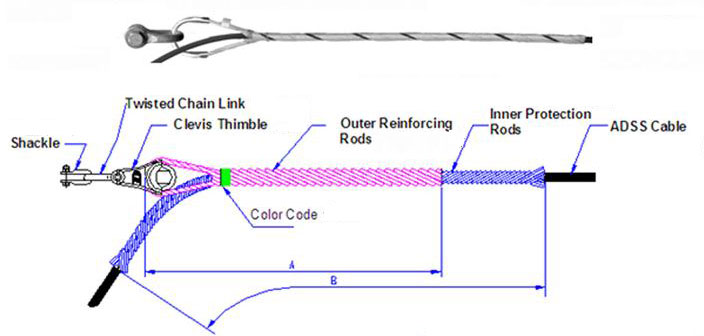
An ADSS cable works as an aerial fiber-optic communication system that provides data transmission and mechanical self-support across power line infrastructure. Its operation depends on optical signal transmission inside glass fibers and mechanical load support through non-metallic strength members. ADSS cables transmit data via optical fibers. They have a self-supporting mechanical structure, operate near high-voltage lines, and have an end-to-end operational cycle. ADSS cables work by combining optical physics, mechanical engineering, and electrical insulation. This allows them to operate alongside high-voltage power lines while delivering high-capacity, interference-free communication for utility, telecom, and smart grid systems.
The advantages of ADSS cables
The all-dielectric construction and self-supporting design of the cables are crucial in power transmission, distribution, telecommunications, and smart grid networks. Their advantages include:
- Self-supporting design—this offers reduced installation complexity, lower hardware requirements, faster deployment, and reduced infrastructure costs. The cable’s aramid yarn strength members provide enough tensile strength to support its own weight across long spans.
- Live-line installations—ADSS cables can serve on power infrastructure without major interruptions to electrical service. This reduces service outages, lowers operational disruptions, and improves network expansion efficiency.
- High mechanical strength—the aramid yarns and fiber-reinforced plastic strength offer high tensile strength, span capability, resistance to mechanical loading, and reduced risk of structural failure.
- Weather resistance—the cable materials are resistant to UV radiation, rain and moisture, wind loading, ice accumulation, and temperature fluctuations.
- High fiber capacity—ADSS cables support high-bandwidth communication, enable future network expansion, and support broadband and utility communication systems. Fiber counts range from 12 fibers to over 144 fibers depending on network requirements.
- Enhanced network reliability—fiber optic communication provides reliable data transmission for power infrastructure. ADSS cables serve in SCADA systems, grid monitoring, protection and control systems, telecommunication networks, and renewable energy facilities.
Technical specifications for ADSS cables
The technical specifications for the ADSS cables define their mechanical strength, optical performance, environmental resistance, and installation limits. The characteristics vary depending on span length, voltage class of nearby power lines, and network design requirements. Key specifications for the ADSS include:
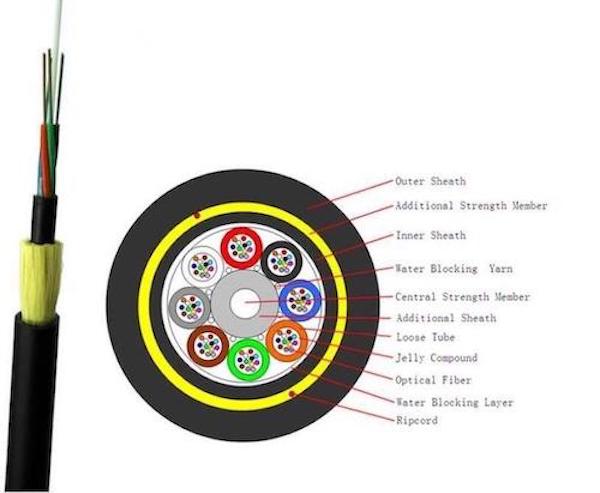
- Optical fiber specifications—the optical fibers meet international telecommunication standards. Key parameters include fiber types like single-mode, fiber count from 12 up to 288 fibers, 0.35 dB/km, 0.22 dB/km attenuation, and bandwidth.
- Mechanical strength—their strength depends on the aramid fibers and buffer tubes that can withstand tension and bending using fibers of different diameters. The parameters include 6 kN to 40 kN rated tensile strength (RTS), working tension typically 20%-50% of RTS, crush resistance, span capability, and sag performance.
- Temperature range—ADSS cables can withstand a -20°C to +50°C installation temperature, a -40°C to +70°C operating temperature, and a -50°C to +70°C storage temperature.
- Dielectric strength—ADSS cables are fully dielectric, which makes them suitable for installation near high-voltage transmission lines. They serve in 11 kV to 500 kV environments depending on design.
- Sagging preventions—the ADSS cables use non-sagging materials or gel-filled tubes that do not allow moisture penetration.
- Low attenuation—the cables use optical fibers that maintain signal quality over long distances.
How to select the right ADSS cables
Selecting the right ADSS cable is crucial to prevent excessive sag, jacket damage, or premature fiber degradation. Proper selection depends on mechanical loading, electrical environment, span geometry, and communication requirements. Here is how to select the right ADSS cables.
- Define the application environment—different environments impose different mechanical stress and electrical field exposure. ADSS cables serve in distribution networks, transmission lines, urban utility poles, rural long-span crossings, and renewable energy sites.
- Determine span length requirements—the cables serve in short spans, medium spans, and long spans. Short spans need lower tensile strength cables, medium spans need balanced mechanical design, and long spans need high RTS cables with reinforced aramid layers.
- Evaluate electrical field intensity—it is crucial to consider line voltage level, phase-to-ground spacing, tower configuration, and pollution level.
- Select fiber count based on network demand—fiber count for the ADSS cables determines capacity and scalability. 12-24 fibers are ideal for basic telecom links, 48-72 fibers are ideal for communication systems, 96-144 fibers are ideal for smart grid networks, and 144+ fibers are ideal for high-capacity metro systems.
- Assess mechanical load requirements—key factors include cable self-weight, ice loading conditions, wind pressure, and span geometry. Common RTS ranges are light duty 6-10 kN, medium duty 10-25 kN, and heavy duty 25-40 kN.
- Appropriate cable construction—ADSS cable structure varied depending on application severity. Common options include single jacket, double jacket, loose tube, and track-resistant designs.
- Match hardware compatibility—cable selection must align with suspension clamps, deadend fittings, vibration dampers, and span tension hardware. Incorrect matching leads to jacket crushing, uneven load distribution, and reduced lifespan.
In summary,
An ADSS cable is a non-metallic fiber optic cable designed for aerial installation along power transmission and distribution lines. It combines optical communication capability with mechanical self-support. This enables data transmission without the need for a grounding wire. Its structure ensures mechanical stability, signal integrity, and resistance to environmental stress. Common types of ADSS cables categorize based on design and application needs. These include single-jacket and double-jacket designs. Each type of the cable is selected based on span length, voltage exposure, and environmental conditions. ADSS cables offer a self-supporting aerial design, lower installation, high mechanical strength, and resistance to UV, corrosion, and harsh weather.
Choosing the right ADSS cable depends on span length requirements, voltage level of lines, required fiber capacity, mechanical loading conditions, environmental exposure, and jacket type. Incorrect selection leads to sag issues, jacket damage, or reduced lifespan. The effectiveness of ADSS cables depends on correct design selection, proper installation practices, and environmental matching. This ensures long-term performance and operational stability.