
A downlead clamp in fiber optic networks is a fastening device that secures and guides fiber optic cables as they transition along poles, towers, or buildings. Downlead clamps serve where a fiber cable drops from an aerial span on a utility pole and runs down a telecommunication tower. It also helps transition from overhead to underground infrastructure. The clamp maintains controlled cable routing while preventing mechanical stress and damage. Downlead clamps in ADSS and OPGW systems prevent excessive movement caused by wind, vibration, or thermal expansion. The clamps help distribute the cable’s weight along the structure to reduce strain on suspension or anchoring points. Downlead clamps are from UV-resistant polymers or corrosion-resistant metals and often include rubber inserts or cushioned linings to protect the cable jacket. Selecting the right downlead clamp with quality assurance helps enhance signal integrity, network reliability, and durability of the cable infrastructure.
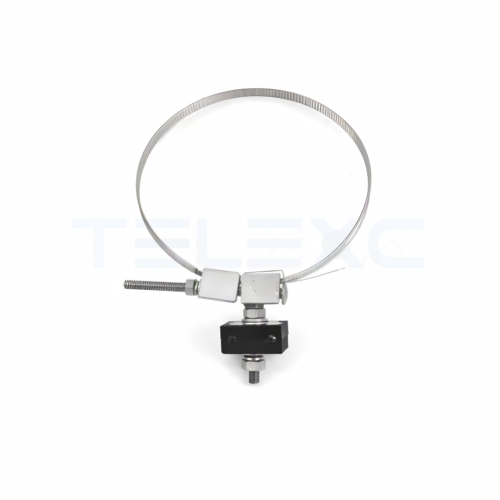
ADSS/OPGW Down Lead Clamp for Pole and Tower
Key Features

Common types of downlead clamps used in fiber optic networks
Downlead clamps used in these networks vary by mounting methods, structural interface, and cable protection design. Selecting the right clamp type ensures proper cable protection, compliance with bend radius limits, and network reliability. The selection process should check cable type, diameter and weight, structure type, environmental exposure, and required spacing and routing geometry. These types include:
Banding-type downlead clamps
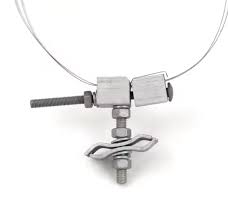
These clamps are installed using stainless steel straps, are compatible with round poles, and offer fast installation. They serve in aerial fiber drops transitioning down utility poles. Banding-type clamps offer flexible positioning and easy retrofitting.
Bolt-on downlead clamps
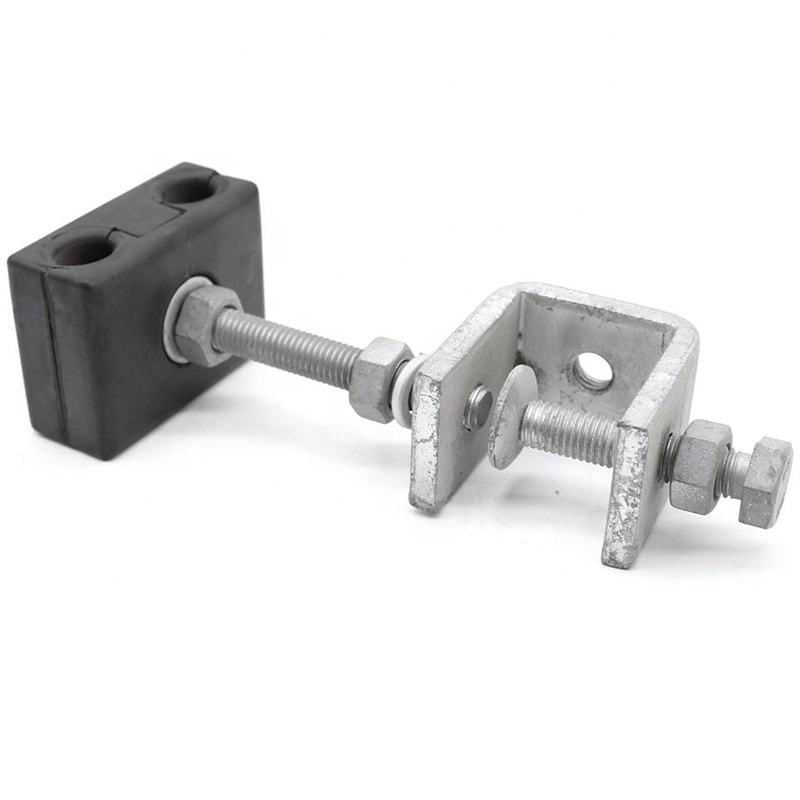
These are fixed directly using bolts or lag screws into the pole and provide a more rigid and permanent installation. These clamps serve in long-term infrastructure with minimal expected modifications. Bolt-on clamps provide higher mechanical stability compared to banding clamps.
Multi-cable downlead clamps
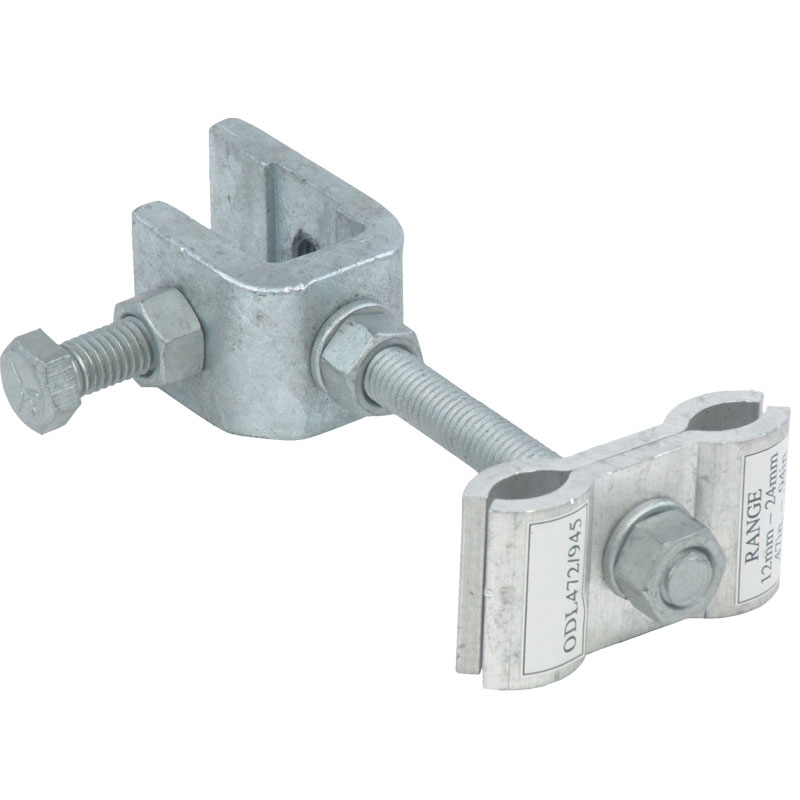
These clamps are designed to hold multiple fiber cables in parallel, and they include separators to prevent cable collision. The clamps serve in high-density urban fiber deployments and offer efficient cable management and reduced clutter.
Angle steel clamps
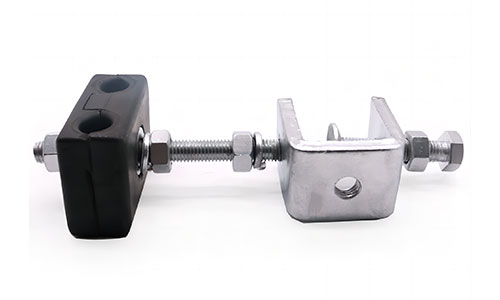
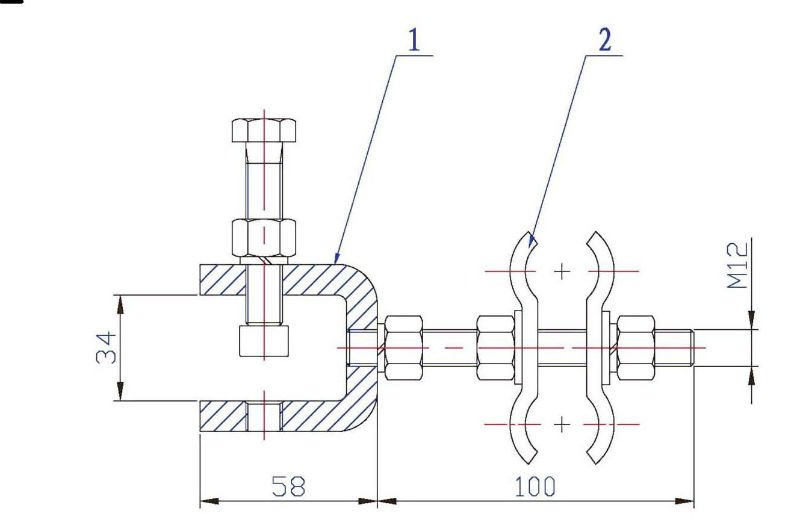
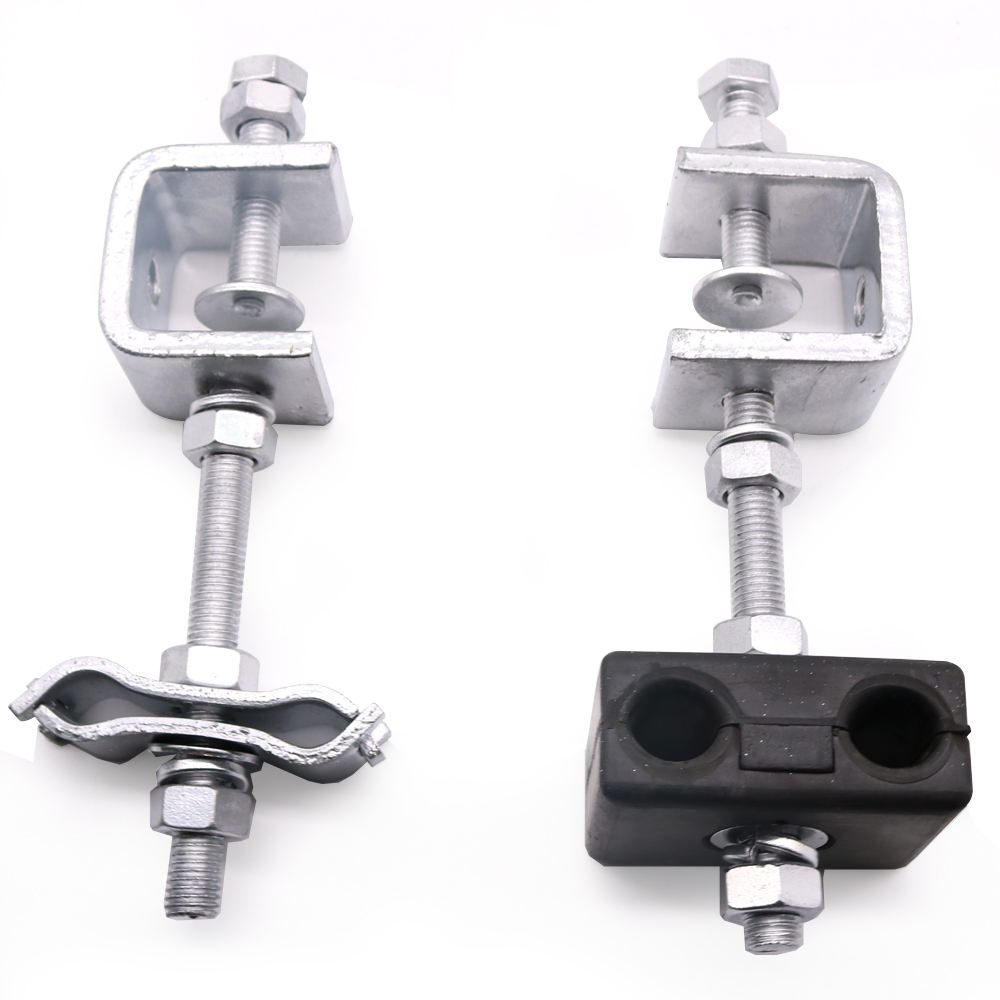
These are mounted on angle sections of lattice towers and are bolted with adjustable brackets. The clamps serve in telecom and power transmission towers. Angle clamps offer a strong grip on angular steel members.
Round member pipe clamps
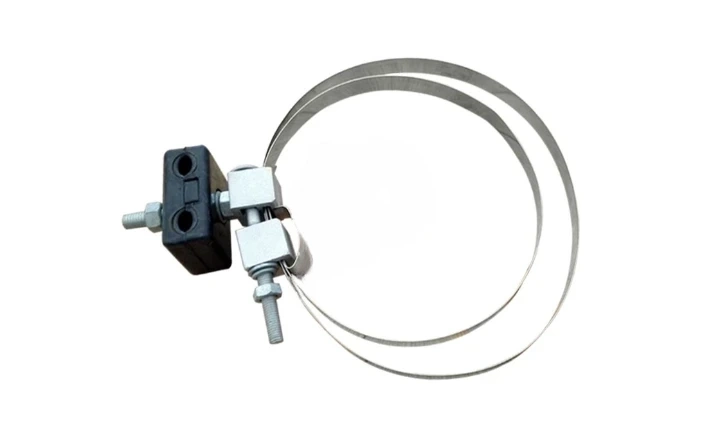
Round clamps are designed for tubular tower legs or monopoles and often include curved saddles for full contact. They are ideal for monopoles and round tower structures. Pipe clamps offer even load distribution around curved surfaces.
Adjustable tower clamps
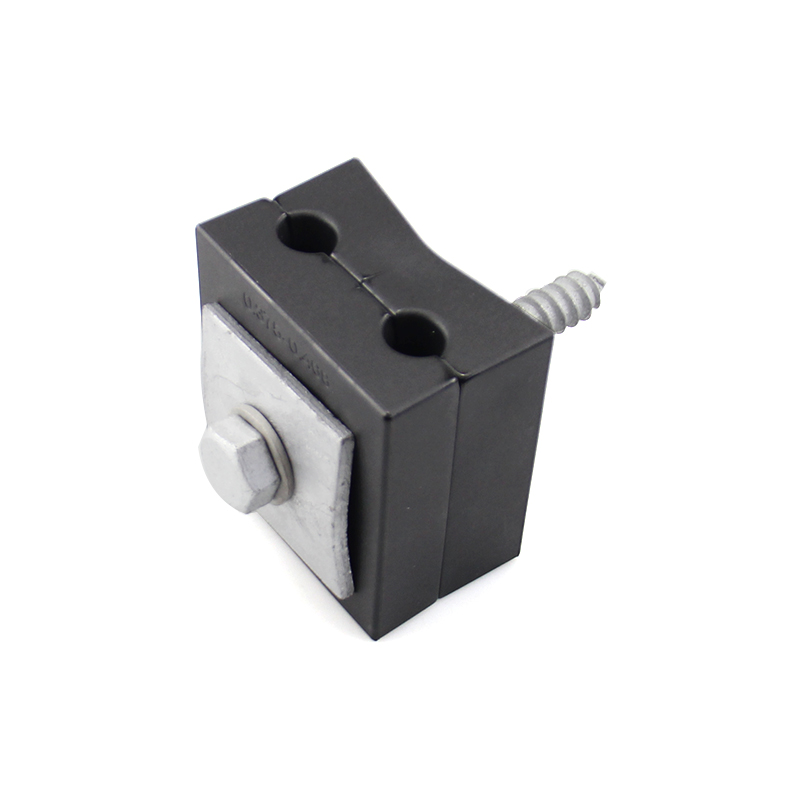
These have adjustable brackets or slots with modular designs to fit various structural profiles. They serve in uncertain mounting geometries. They are adaptable across many tower designs.
Heavy-duty downlead clamps
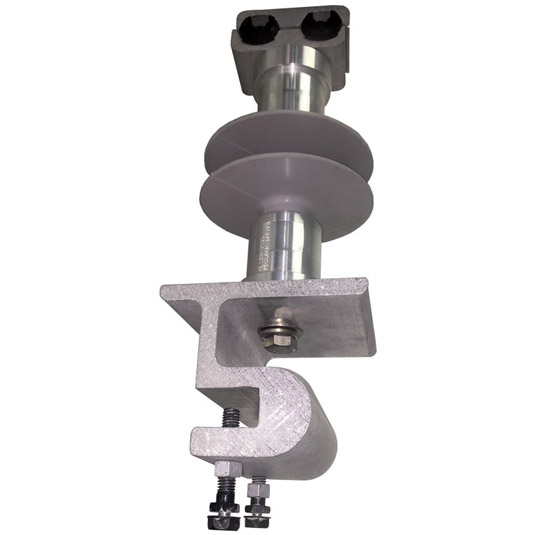
These clamps have a reinforced construction for large-diameter or high-load fiber cables like ADSS and OPGW cables. They include anti-slip and vibration damping features ideal for high-wind or high-tension environments. These downlead clamps offer enhanced mechanical strength and durability.
Specialized downlead clamps
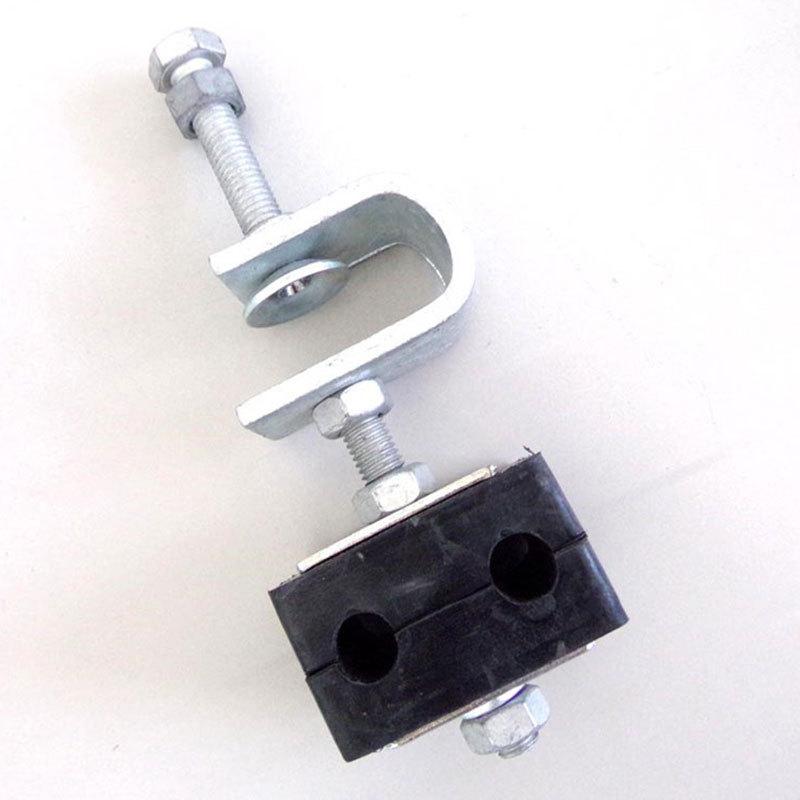
These are clamps used on poles and towers depending on system requirements. They include cushion-type clamps, stackable clamps, and openable clamps.
Downlead clamp materials and the role of quality assurance during its manufacture
Selecting the right material for the downlead clamp depends on mechanical strength, environmental durability, and cable protection requirements. Conducting quality assurance for the clamp during manufacture determines field reliability, lifecycle cost, and network uptime. The process includes raw material verification, dimensional control, coating inspection, mechanical performance testing, and aging tests. Quality assurance ensures the material selected performs reliably in service. Poor quality assurance can lead to cable damage, structural failures, and increased maintenance and network downtime. Common materials for downlead clamps include:
- Stainless steel – this is common for bands, bolts, brackets, and tower interfaces. Stainless steel offers high tensile strength, corrosion resistance, and fatigue durability. It is ideal for coastal or high-humidity environments due to resistance to chloride-induced corrosion.
- Galvanized carbon steel – this is ideal for clamp frames and mounting hardware. It provides high strength with zinc coating for corrosion protection.
- Aluminum alloys – this material is crucial for lightweight clamp bodies and brackets and offers a good strength-to-weight ratio and corrosion resistance. It is common in tower applications where weight reduction is crucial.
- UV-stabilized thermoplastics—this material serves in clamp bodies or inserts. It is lightweight, non-conductive, and UV-resistant. It prevents direct metal-to-cable contact.
- Elastomer liners – this is ideal for inner cushioning layers and offers flexibility, shock absorption, and weather resistance. These liners maintain a minimum bend radius and prevent microbending losses.
- Hybrid construction—most downlead clamps combine metal for structural integrity and polymer for cable protection. This helps to balance mechanical performance with optical cable safety.
The role of quality assurance in downlead clamp manufacturing
Conducting quality assurance in downlead clamps ensures that each clamp meets mechanical, environmental, and cable protection requirements before use. Its role covers design validation, material control, process monitoring, and final verification. It helps reduce failure modes such as slippage, corrosion, and fiber damage. Its roles are as discussed below.
- Design validation and risk mitigation – this includes verifying that the clamp geometry and materials meet load cases, cable interface constraints, and installation methods. The process includes finite element analysis, prototype testing, and design failure mode analysis.
- Material quality control – quality assurance checks material grade verification, tensile strength, and corrosion resistance. It does this through spectrometric analysis, hardness testing, and supplier certification audits. This reduces variability that leads to premature corrosion, cracking, or deformation.
- Process quality control – QA ensures process capability and repeatability through dimensional tolerances, forming and machining accuracy, surface treatment, and polymer molding parameters. It does this through statistical process control and control plan inspections.
- Mechanical and functional testing – this ensures that the clamps meet performance specifications through tensile strength tests, slip resistance tests, vibration tests, and torque verification.
- Cable protection verification – QA ensures the clamp does not damage the fiber through testing compression force limits, bend radius compliance checks, and liner integrity inspection.
- Assembly integrity and fitment checks – quality assurance verifies proper alignment of bolts, brackets, and inserts. It also verifies ease of installation without inducing damage and secure locking mechanisms.
Application areas of downlead clamps in energy infrastructure.
Downlead clamps are crucial in cable routing and protection across energy infrastructure where conductors transition along structures. Downlead clamps serve in power transmission, renewable energy systems, and substation environments to ensure mechanical stability and reliability. Here are the common application areas for downlead clamps in energy infrastructure:
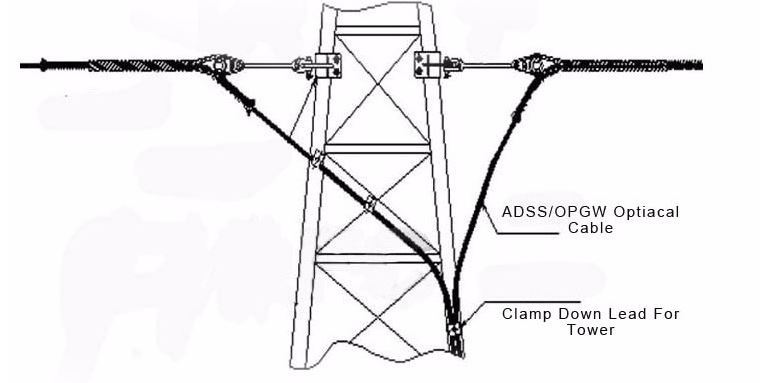
- Power line transmission lines—downlead clamps serve on OPGW and ADSS cables as the cables run down the tower body. The clamps maintain controlled routing to joint boxes or grounding points and prevent wind-induced oscillation and mechanical fatigue.
- Substations and switchyards – the clamps serve on gantries, support structures, and control frames. They route fiber optic and control cables from overhead entries to protection relays, control panels, and SCADA systems.
- Renewable energy installations—the clamps in wind power plants guide fiber optic and power cables from the nacelle down to the base. They also protect cables from vibration and tower movement to ensure continuous data transmission and power control. In solar power plants, downlead clamps secure DC and communication cables running between arrays and combiner boxes.
- Distribution networks—downlead clamps support fiber-to-the-grid communication cables and guide service drop cables from aerial lines to underground points. They enable the integration of smart grid technologies, including real-time monitoring and fault detection.
- High-voltage direct current systems—they serve in converter stations and transmission line structures. The clamps manage fiber optic cables used for protection, signaling, and control communication.
- Railway electrification systems—downlead clamps route fiber optic and control cables along masts and gantries. They support signaling systems, communication networks, and operational safety.
Quality failures in downlead clamps
These failures arise from material defects, process deviations, or design non-conformance. They manifest as loss of mechanical integrity of compromised cable protection. These failures affect fiber performance, structural safety, and maintenance cycles. Common failures include:
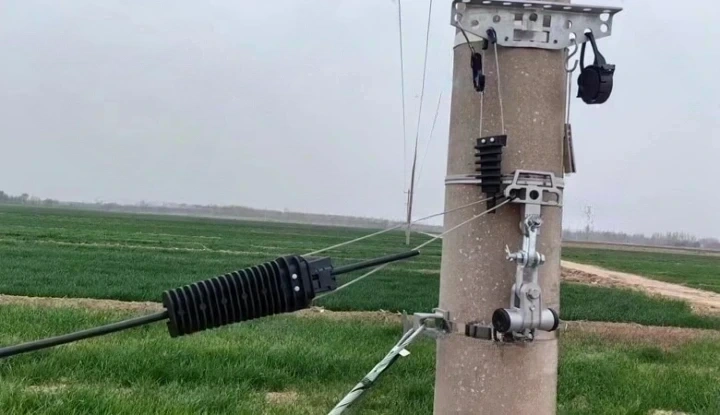
- Corrosion and oxidation – this occurs in low-grade stainless steel or poorly galvanized components. It manifests as rust formation that leads to reduced cross-sectional strength and fracture. This leads to the clamp loosening or complete detachment from the pole.
- Polymer degradation – this occurs from the use of non-UV-stabilized plastics or low-grade elastomers. It shows as cracking, embrittlement, or discoloration under UV exposure.
- Manufacturing defects – this includes dimensional inaccuracy, poor surface treatment, and improper assembly. These failures lead to fiber damage, reduced service life, and clamp loosening under vibration.
- Mechanical performance failures—these include insufficient load capacity, fatigue and vibration failure, and slippage failure. These lead to sudden cable drops, weakening leading to failure, and stress concentrations.
- Environmental failures – these include thermal expansion mismatch and moisture ingress. They lead to material breakdown and reduced clamp effectiveness over time.
Best practices for selecting the right downlead clamp
Selecting the right downlead clamps ensures proper fit and mechanical stability. The selection depends on cable type, diameter, and load requirements. It is also crucial to match the clamp to the structure geometry for secure mounting. Utilities should also use corrosion-resistant materials suited for the environment. They should also verify cushioning quality to protect against abrasion and maintain least bend radius. Before using the clamps, it is essential to check load ratings and slip resistance against project specifications. This will ensure the selection of the right clamp that allows easy installation and maintenance while reducing over-tightening risk and fatigue failure.