
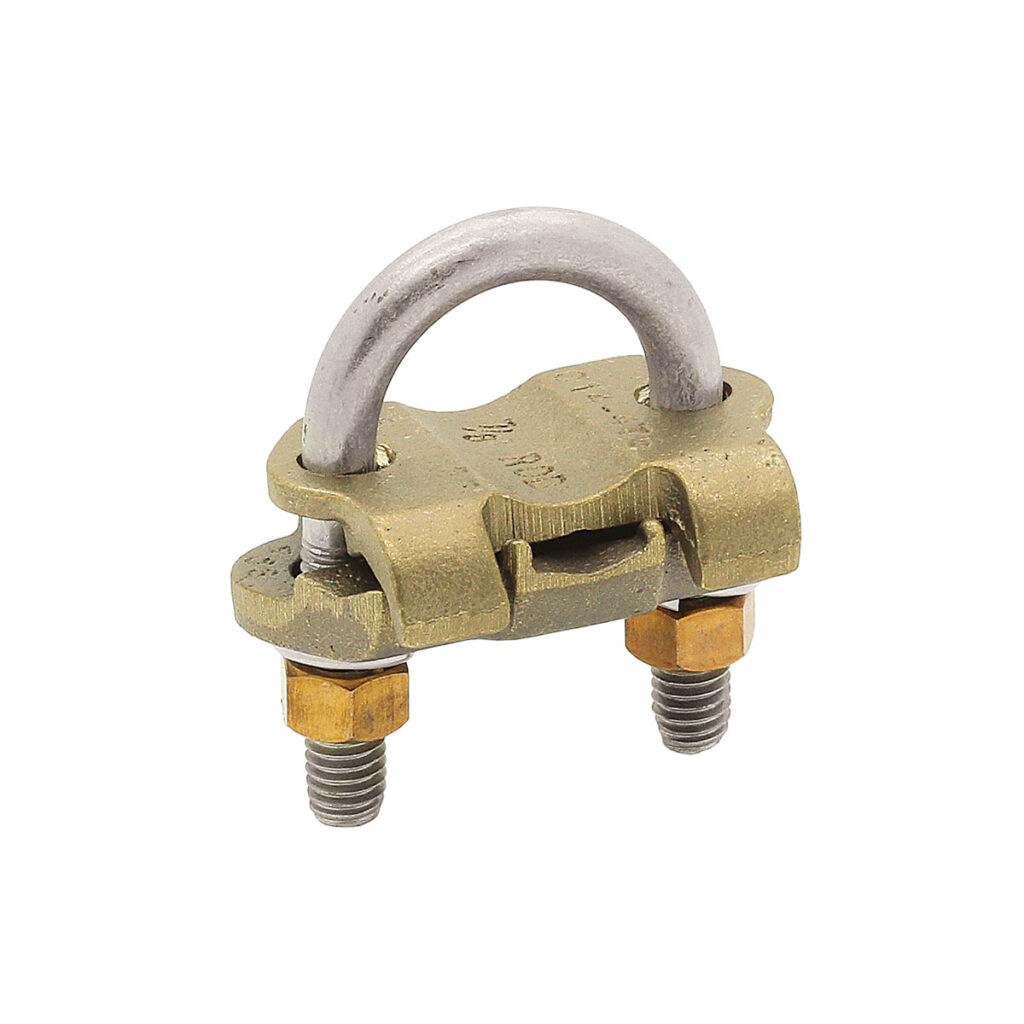
A ground rod clamp is a mechanical connector used to attach a grounding conductor to a ground rod in an electrical grounding system. It creates a low-resistance electrical path between the conductor and the ground rod. It ensures that fault currents, lightning surges, or excess electricity are dissipated into the earth. The ground rod clamp consists of the clamp body, fastening mechanism, and contact surfaces. Ground rod clamps are made of copper for use with copper rods to prevent galvanic corrosion. The clamps‘ materials should provide corrosion resistance and mechanical strength to maintain tight contact. The clamp serves in electrical grounding systems, power transmission and distribution networks, lightning protection systems, and renewable energy setups. Ground rod clamps undergo quality assurance from manufacture to installation to prevent faults. Low-quality ground rod clamps can lead to increased resistance in the grounding path, ineffective fault current dissipation, and higher risk of equipment damage.
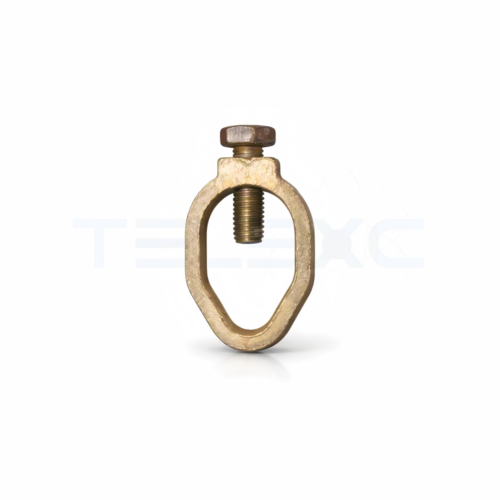
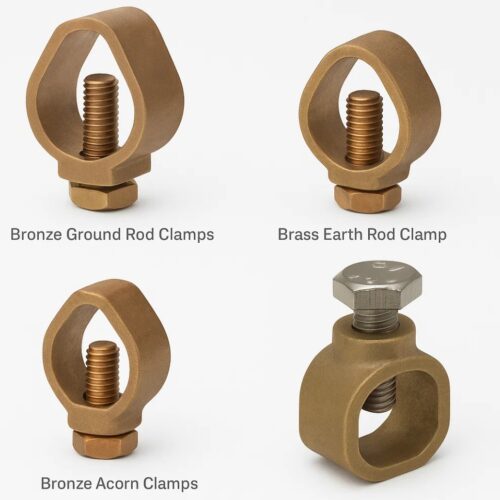
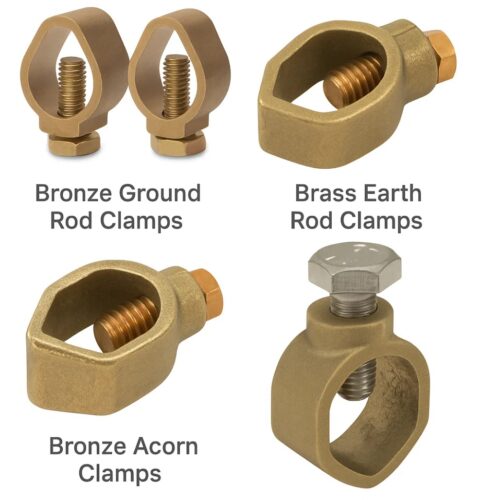
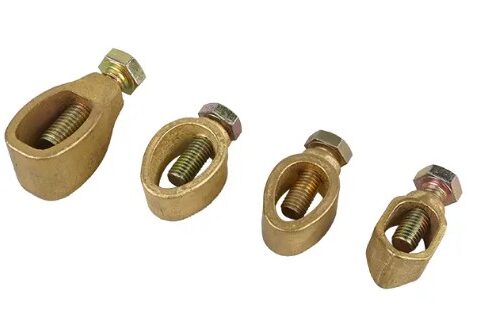
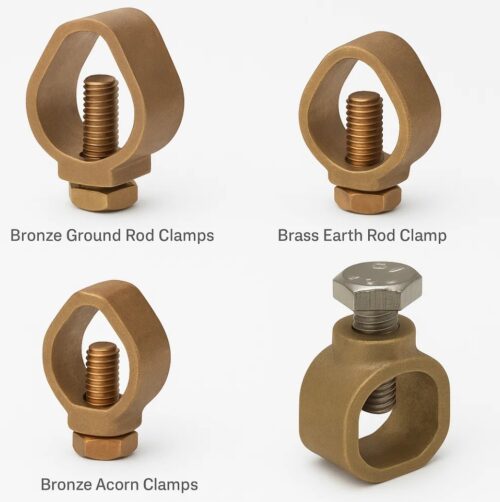
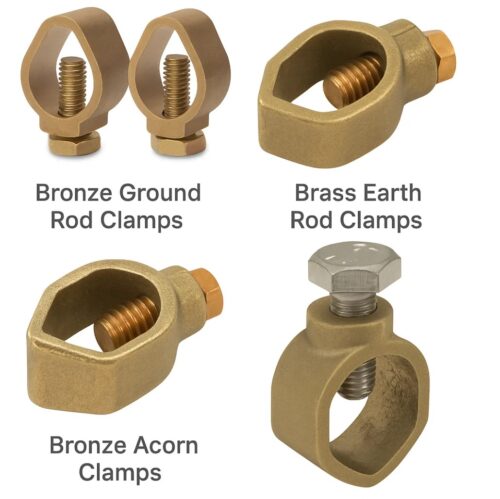
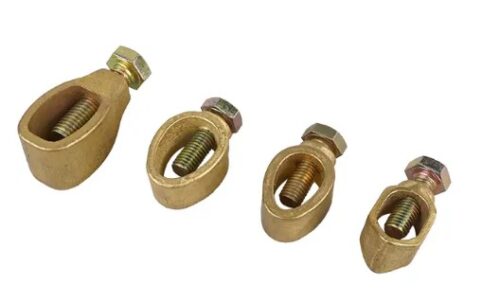
Bronze Ground Rod Clamps & Brass Earth Rod Clamps
Key Features
-
Low electrical resistance for effective grounding
-
Excellent corrosion resistance in harsh soil conditions
-
Strong mechanical clamping force
-
Compatible with copper-bonded and solid copper rods
-
Direct burial suitable without additional protection
-
Precision threads for secure long-term tightening
-
Non-sparking fastener options available
Types of ground rod clamps used in power networks
Ground rod clamps in power networks vary based on conductor type, installation environment, and performance requirements. Selection of the clamp depends on electrical conductivity, mechanical integrity, and corrosion resistance. During selection, utilities should check fault current capacity, soil conditions, compatibility, and standards compliance. Here are the common types of ground rod clamps used in power networks.
Parallel groove ground clamps
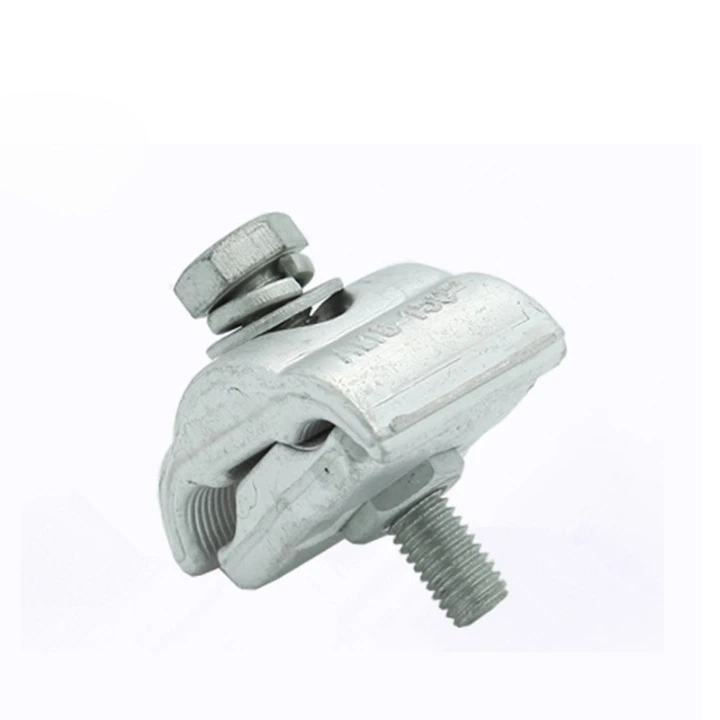
These clamps have two parallel grooves for the ground rod and for the conductor. It is suitable for bare copper or aluminum conductors, provides a large surface area for low resistance, and is bolted for high mechanical compression. The clamp serves in distribution grounding systems and pole earthing and where conductors run parallel to the rod.
U-bolt ground rod clamps
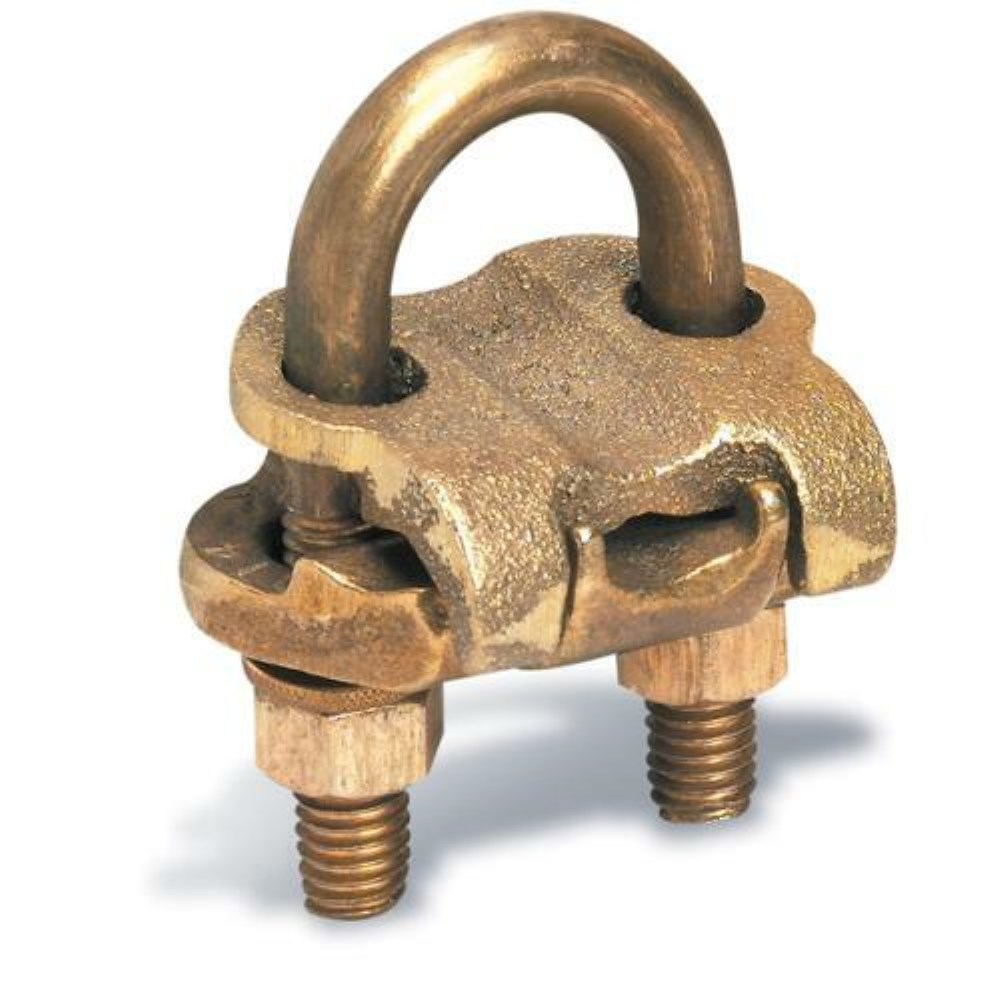
This clamp has a simple design with a U-shaped bolt and saddle to secure the conductor to the rod. It has moderate contact pressure compared to compression types. It is also available in copper alloy or galvanized steel. U-bolt ground clamps are common in light-duty grounding applications and low-voltage distribution systems.
One-bolt clamps
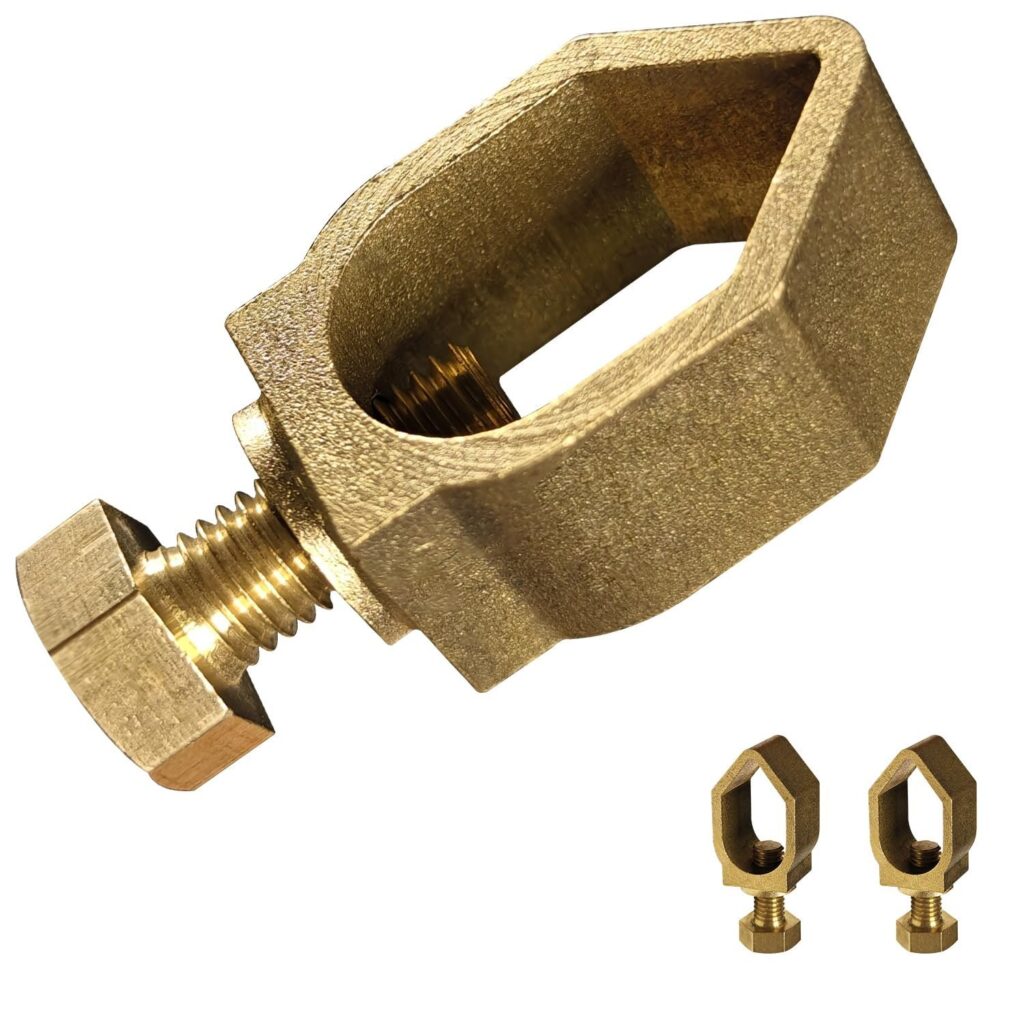
These clamps have a single-bolt tightening mechanism and are designed for direct burial. It serves in utility grounding and lightning protection systems. One-bolt clamps are ideal for copper grounding conductors for simplicity, durability, and conductivity.
Compression ground clamps
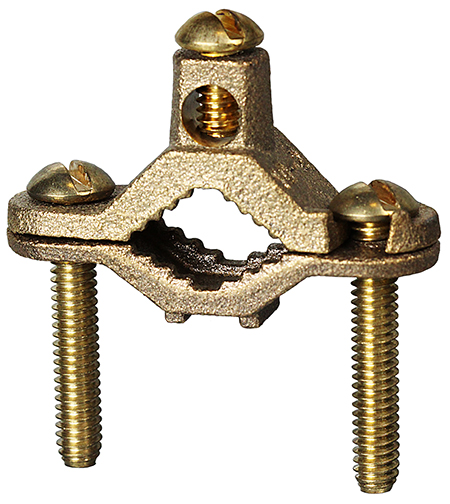
Compression clamps use a crimping method to bond the conductor to the rod. It is installed using hydraulic compression tools, creating a permanent and low-resistance connection. It serves in substations and high-voltage networks and environments that need minimal maintenance.
Exothermic weld conditions
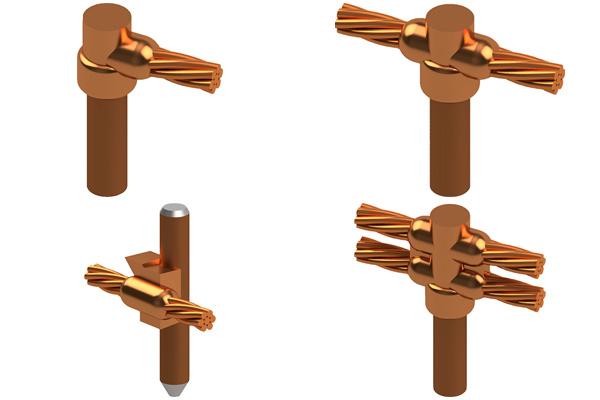
These clamps use a chemical reaction to weld the conductor to the rod and produce a molecular bond rather than mechanical contact. These clamps serve in high-reliability grounding systems in transmission substations and lightning protection.
Pipe clamps
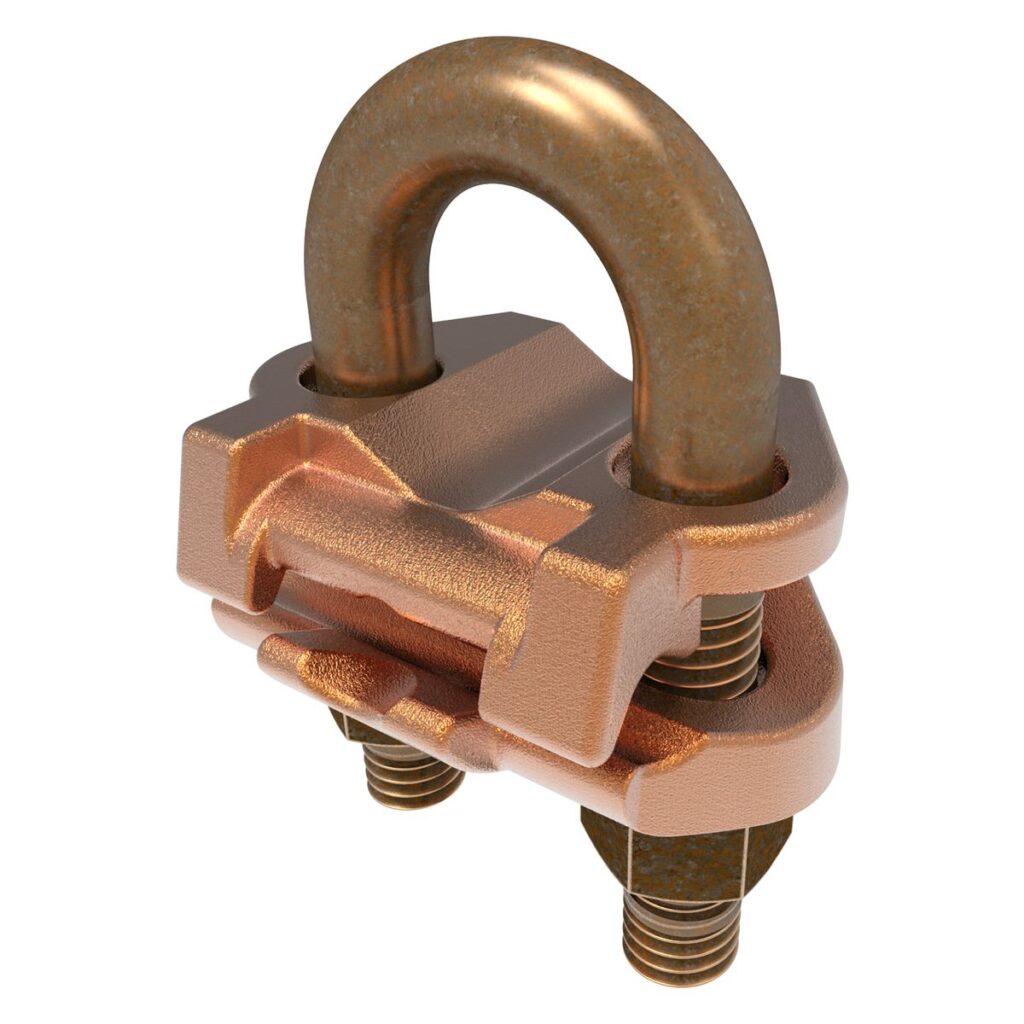
These are designed for ease of installation without disconnecting the conductor. It has a lay-in design that allows conductor placement without cutting. It helps in the upgrade of existing grounding systems and industrial facilities and substations.
Materials for ground rod clamps and the role of quality assurance during their manufacture
The performance of the ground rod clamp depends on material selection and quality assurance during its manufacture. The clamps must maintain low electrical resistance and mechanical integrity under aggressive environmental conditions. Quality assurance determines whether the clamp will maintain low resistance and mechanical stability. The process includes material verification, mechanical integrity testing, electrical performance testing, corrosion resistance testing, and dimensional accuracy. Here are the materials for ground rod clamps.
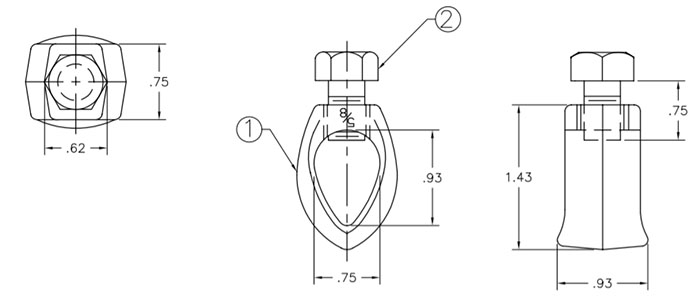
- Copper and copper alloys – copper and its alloys offer high electrical conductivity, strong resistance to soil corrosion, and good mechanical strength with ductility. Copper ground clamps are ideal for use in substations, transmission grounding, and lightning protection systems.
- Aluminum alloys – these materials are lightweight and conductive compared to copper alloys. Aluminum ground rod clamps work with aluminum grounding conductors in distribution systems. However, they are susceptible to galvanic corrosion if paired with copper or dissimilar metals.
- Galvanized steel – Galvanized steel has high mechanical strength, and the zinc coating provides sacrificial corrosion protection. Steel clamps serve in grounding systems using steel rods and temporary or cost-sensitive installations.
- Stainless steel – this offers corrosion resistance in harsh environments and moderate conductivity. It is ideal for coastal, chemical, or high-moisture environments. It is also suitable for specialized grounding systems.
- Bimetallic clamps—this includes the use of two metals, like a copper body with an aluminum interface. This helps prevent galvanic corrosion between dissimilar conductors.
The role of quality assurance in ground rod clamp manufacturing
Conducting quality assurance for the ground rod clamps ensures electrical continuity, mechanical reliability, and durability of the clamps. Quality assurance influences system protection against fault currents, lightning, and transient overvoltages. QA prevents failures such as corrosion, mechanical failure, and unreliable grounding systems. Here are the common roles of quality assurance in ground rod clamp manufacturing.
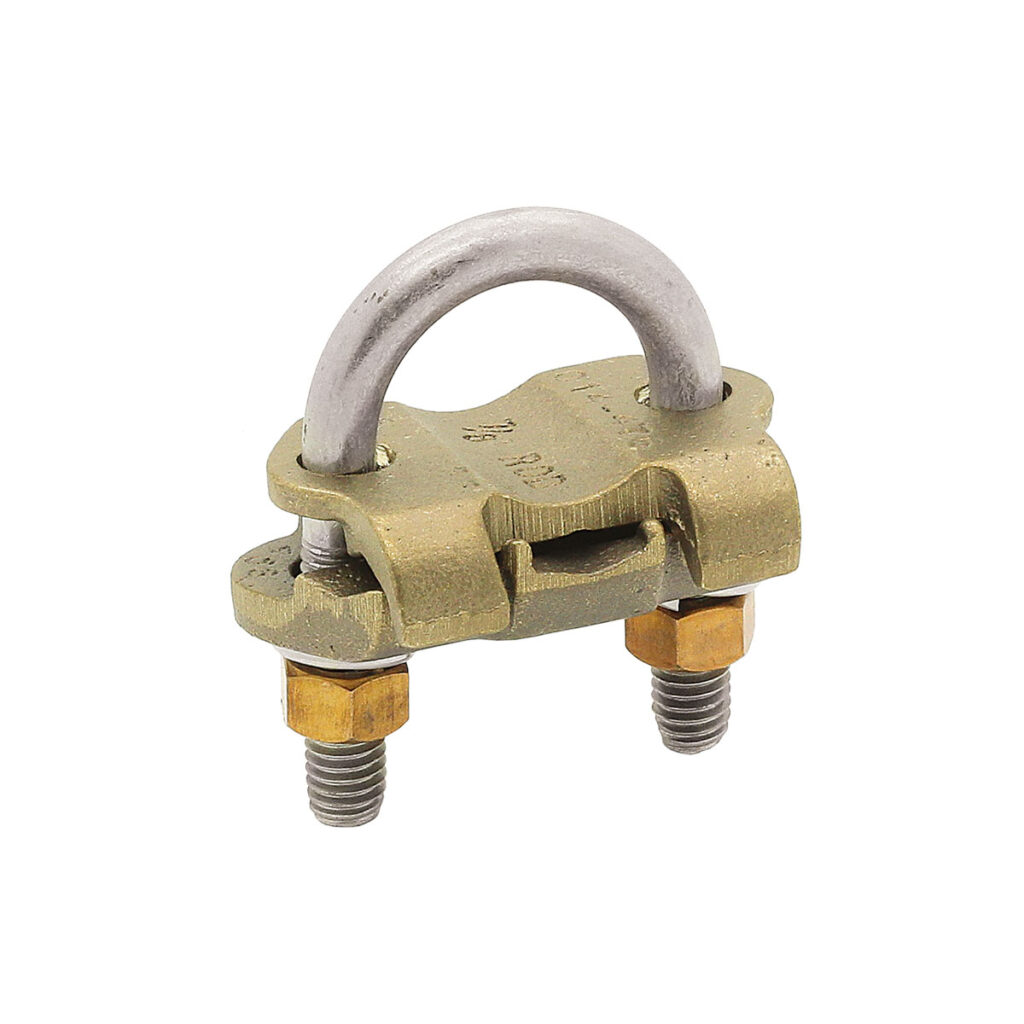
- Ensuring electrical performance—quality assurance offers contact resistance testing, verification of surface finish and contact geometry, and inspection for oxides, contaminants, or casting defects. This ensures a low-impedance path for fault current dissipation and reduced risk of overheating.
- Verifying material integrity – material properties influence conductivity, corrosion resistance, and strength. Quality assurance tests chemical composition analysis, mechanical property validation, and batch traceability from raw material to finished clamp. This prevents substandard alloys that degrade performance and ensures compatibility with grounding conductors.
- Guaranteeing mechanical reliability—to maintain consistent clamping force, QA conducts torque testing of bolts and threads, thread fit and machining accuracy inspection, and vibration testing. These tests maintain contact pressure under thermal cycling and fault events.
- Controlling manufacturing processes—casting, forging, and machining—affect product integrity. Quality assurance conductors perform process monitoring, non-destructive testing for cracks, and dimensional tolerance verification. These ensure uniform product quality across production batches.
- Corrosion resistance validation – QA offers salt spray and environmental simulation testing, coating thickness measurement, and inspection for coating adhesion and uniformity.
- Reliability under fault conditions—conducting quality assurance offers short-circuit current testing and thermal rise. This ensures the clamps remain intact and conductive during extreme electrical stress.
Applications of ground rod clamps in energy infrastructure
Ground rod clamps serve in generation, transmission, distribution, and emerging energy systems. They offer operational grounding and protective earthing to the systems. Ground rod clamps enable fault current dissipation, voltage stabilization, and lightning protection in power systems. Their effectiveness in energy infrastructure depends on proper installation torque and contact pressure, material compatibility with conductors and rods, and resistance to corrosion. Here are the application areas of the round rod clamps in energy infrastructure.
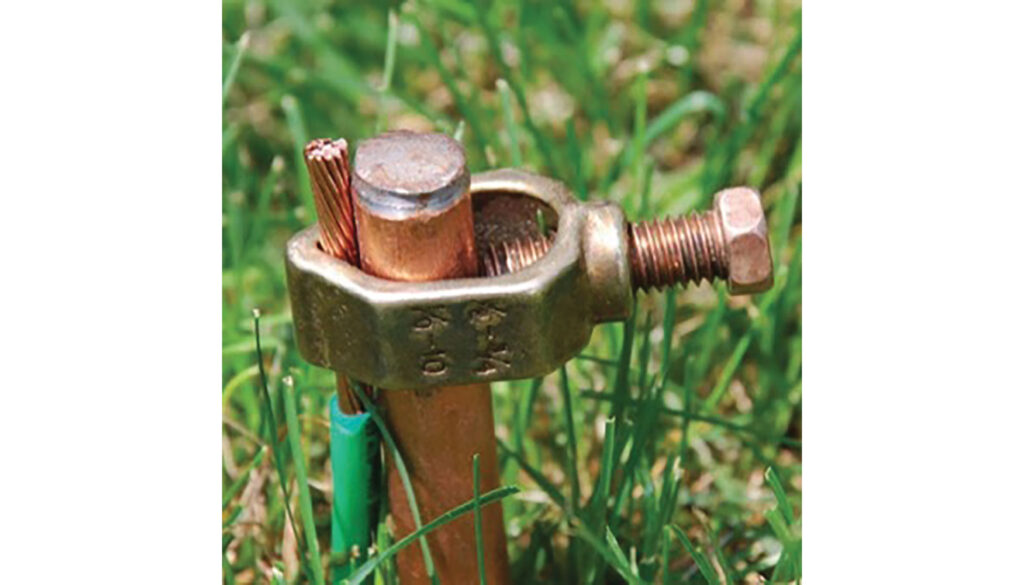
- Power generation facilities – ground rod clamps serve in thermal, hydro, nuclear, and renewable energy plants. They ensure equipotential bonding to reduce voltage gradients that could damage equipment and provide durable grounding continuity in remote environments.
- Transmission networks—the clamps serve at transmission tower footings and shield wire in high-voltage transmission lines. They reduce flashover risk and improve line reliability. In substations, round rod clamps bond ground rods to copper grounding conductors, equipment earthing, and touch voltage control systems.
- Distribution networks – ground rod clamps serve in utility poles and transformers and urban and rural electrification. They help enhance system reliability by providing a discharge path for surge currents and stabilize system voltage during faults.
- Lightning protection systems – ground rod clamps connect down conductors to ground rods and bond grounding electrodes together. This ensures fast dissipation of high-energy lightning currents into the earth.
- Energy storage systems – the clamps ground battery racks, enclosures, and inverters. They ensure fault current paths and mitigate stray voltages.
- Telecommunications and smart grid infrastructure – ground rod clamps ground communication towers and control cabinets. They also earth SCADA and protection systems.
Quality failures in ground rod clamps
Failures in the ground rod clamps arise from deficiencies in materials, design, manufacturing, installation, and environmental resistance. Quality failures compromise grounding integrity that leads to elevated resistance, unsafe touch voltages, and unreliable fault current dissipation. Common failures include:
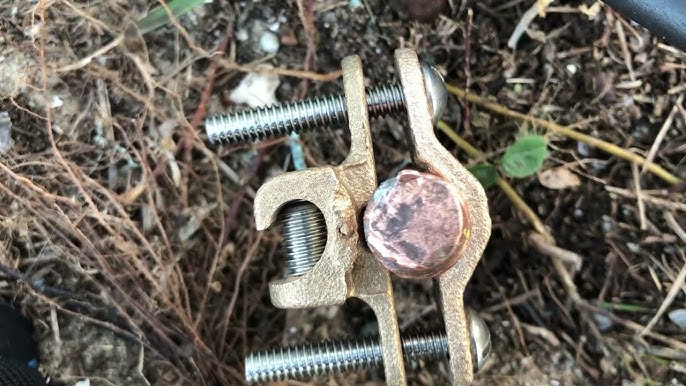
- Material-related failures—these failures include the use of incorrect alloys and galvanic incompatibility. These failures lead to increased contact resistance, reduced corrosion resistance, and premature degradation in service.
- Corrosion and environmental degradation—these include soil-induced corrosion, moisture and chemical exposure, and coating failure. These lead to rapid corrosion progression, increased grounding resistance, and oxidation.
- Mechanical failures—these include insufficient clamping force, fatigue, and vibration damage. These lead to loose connections, gradual loosening, and micro-gaps forming at contact surfaces.
- Manufacturing defects – these include casting and forging defects, poor machining and tolerances, and surface imperfections. These lead to higher initial resistance, localized heating during current flow, and reduced mechanical strength.
- Electrical performance failures – this includes high contact resistance and inadequate fault current capacity. These result in localized heating, deformation under high current, and loss of grounding continuity at critical moments.
Best practices for selecting the right ground rod clamp
Selecting the right ground rod clamp depends on material compatibility, electrical performance, and environmental durability. It is crucial to select clamps made of copper or copper alloys for copper conductors to avoid galvanic corrosion. It is also crucial to apply bimetallic options for mixed materials for the clamps. Utilities should ensure the clamp meets the needed fault current capacity and provide low contact resistance. Additionally, it is crucial to ensure proper fit with the rod diameter and conductor size. It is also critical to select designs with high mechanical strength and secure fastening, for instance, bolted or compression types.