
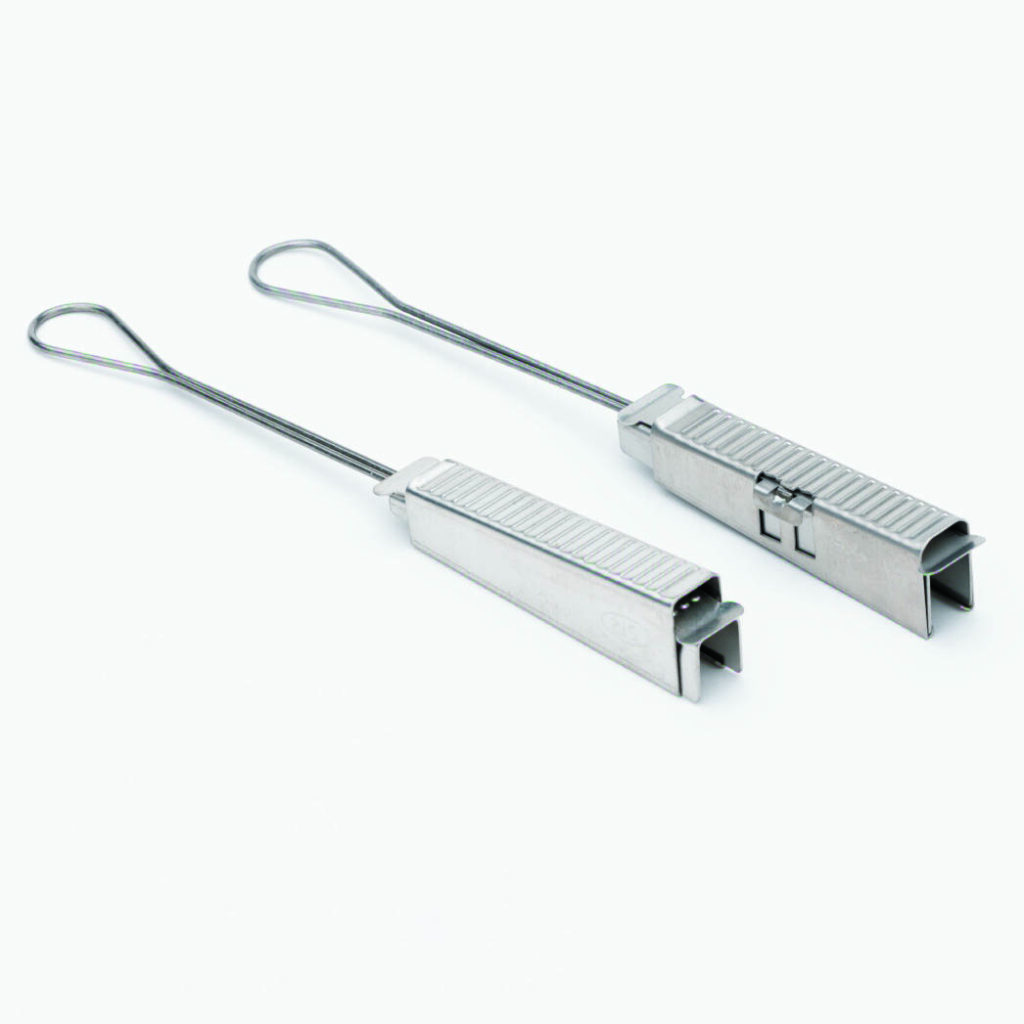
Drop wire clamps are fastening devices used to secure and anchor a drop wire from the main line to a connection point. A drop wire clamp provides tension retention and mechanical support for low-voltage service conductors in power and telecom distribution systems. The clamps anchor drop wires to poles and maintain controlled mechanical tension to prevent conductor sag. They also transfer mechanical load from the conductor to the support structure. Drop wire clamps are designed to grip the conductor without damaging insulation or conductor strands. A drop wire clamp consists of the clamp body, wedge, and hook or bail. Most of the clamps use a self-adjustingwedge system, where the wedge tightens when tension is applied to increase friction and prevent conductor movement. Drop wire clamps serve in low-voltage power distribution networks, aerial bundled cable systems, and fiber optic drop installations.
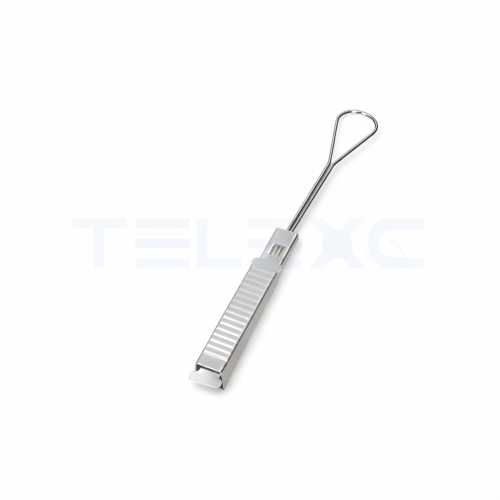
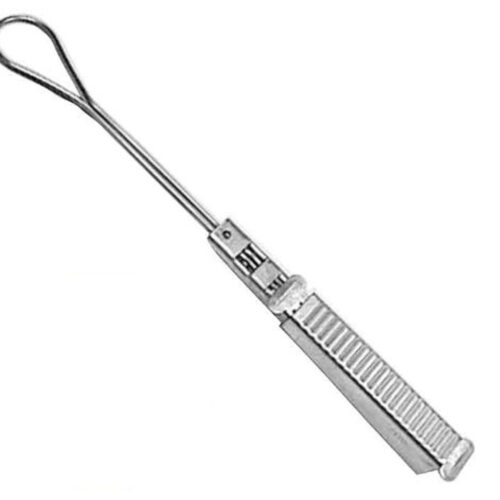
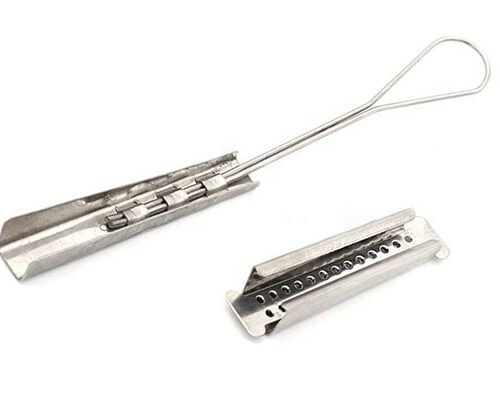
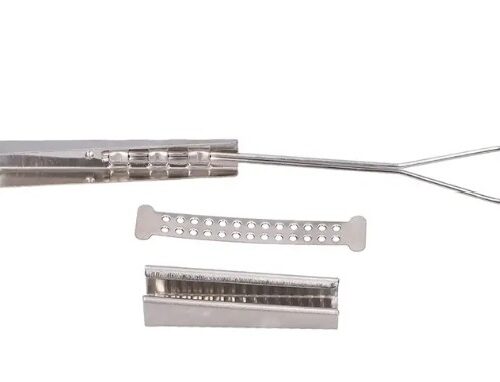
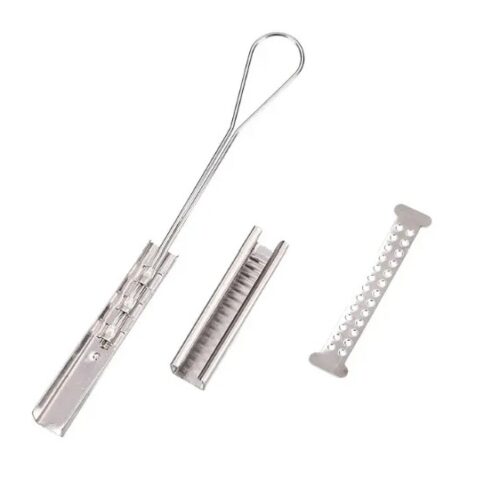
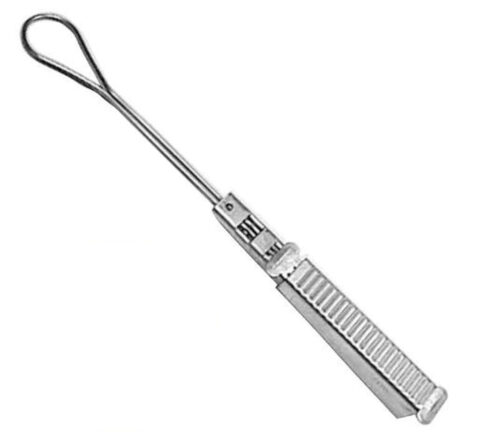
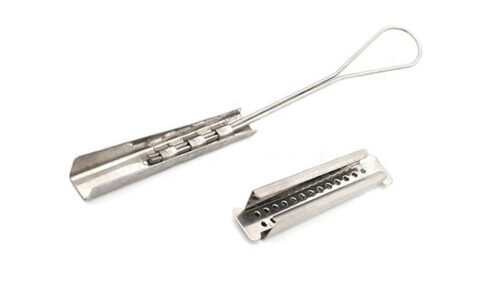
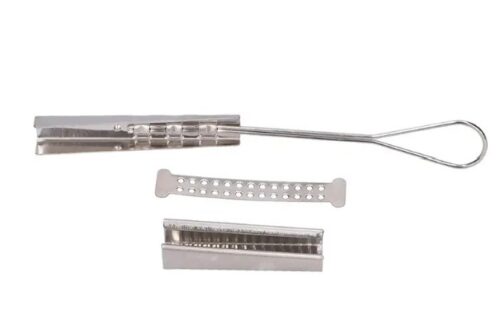
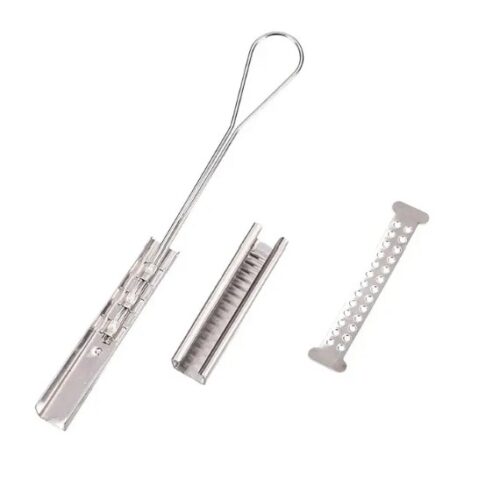
Drop Wire Clamps / Aerial Drop Cable Clamps – Telexc
Key Features
- Multi-Cable Compatibility
Supports 1-pair and 2-pair telephone wires as well as fiber optic drop cables for versatile telecom use. - High Load Capacity
Designed to handle a 500–700 lbs load, ensuring strong and reliable aerial cable support. - Heavy-Duty Construction
Built with a three-piece stainless steel design for superior strength and long-term durability. - Corrosion & Weather Resistance
Fully resistant to rust, moisture, and harsh outdoor conditions for extended service life. - Reusable Design
Fully removable and reusable structure allows easy maintenance and flexible reinstallation. - Cable Protection Performance
Reduces mechanical stress on cables while maintaining stable signal transmission quality.

Types of drop wire clamps used in power and telecom networks
Drop wire clamps anchor devices engineered around cable construction, load profile, and installation environment. The clamps used in power distribution and telecom networks depend on how they grip the cable and how much mechanical load they can carry.
Wedge-type drop wire clamp
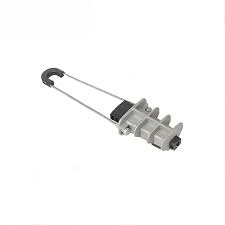
Wedge-type clamps have a polymer body with internal wedges and a stainless steel bail. When tension is applied on the cable, the wedges fold inwards to increase clamping force. Wedge-type clamps serve in aerial bundled cable service drops and fiber optic and telecom drop cables. These drop wire clamps offer automatic tension adaptation, minimal-tool installation, good insulation protection, and load capacity constrained by the polymer body and wedge design.
Fixed jaw clamps
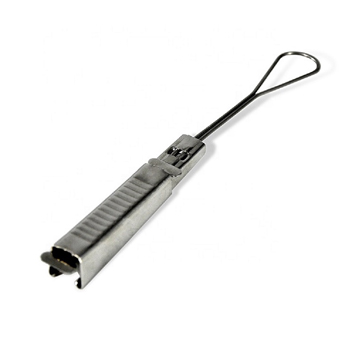
These have a metallic body with bolted or crimped jaws. It uses mechanical fastening components that apply a fixed clamping force. These clamps serve heavier service conductors in power distribution and situations that need higher clamping force. Fixed jaw clamps offer higher mechanical strength and stability under vibration and cyclic loading.
Insulated bail wire clamp
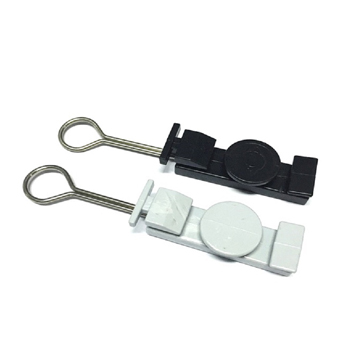
These clamps feature a polymer-coated clamp body with smooth gripping surfaces. They function using fastening components that are optimized to avoid conductor damage. They function in insulated service cables and urban and residential connections. Insulated clamps prevent abrasion and electrical faults and have UV and weather-resistant materials.
Stainless steel wire clamps
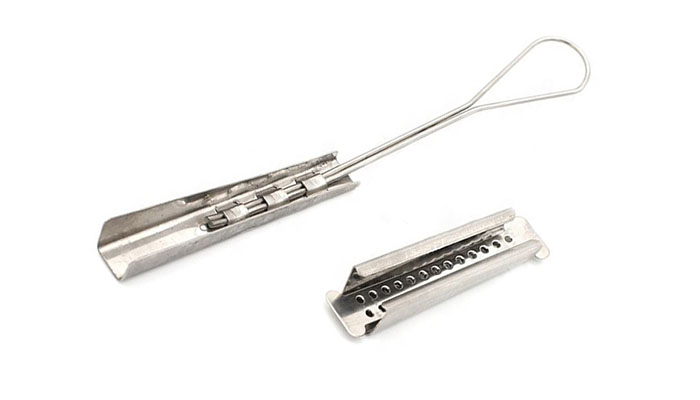
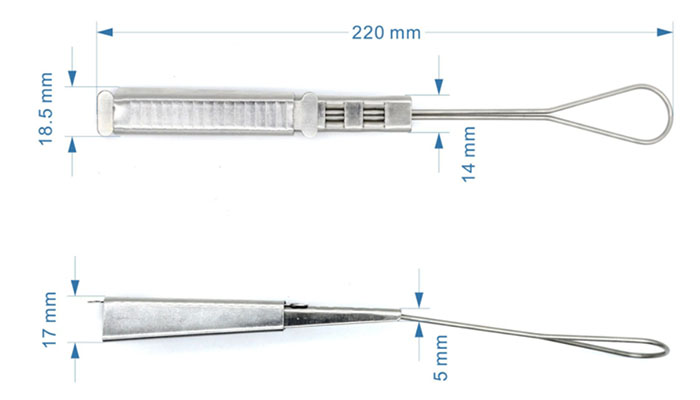
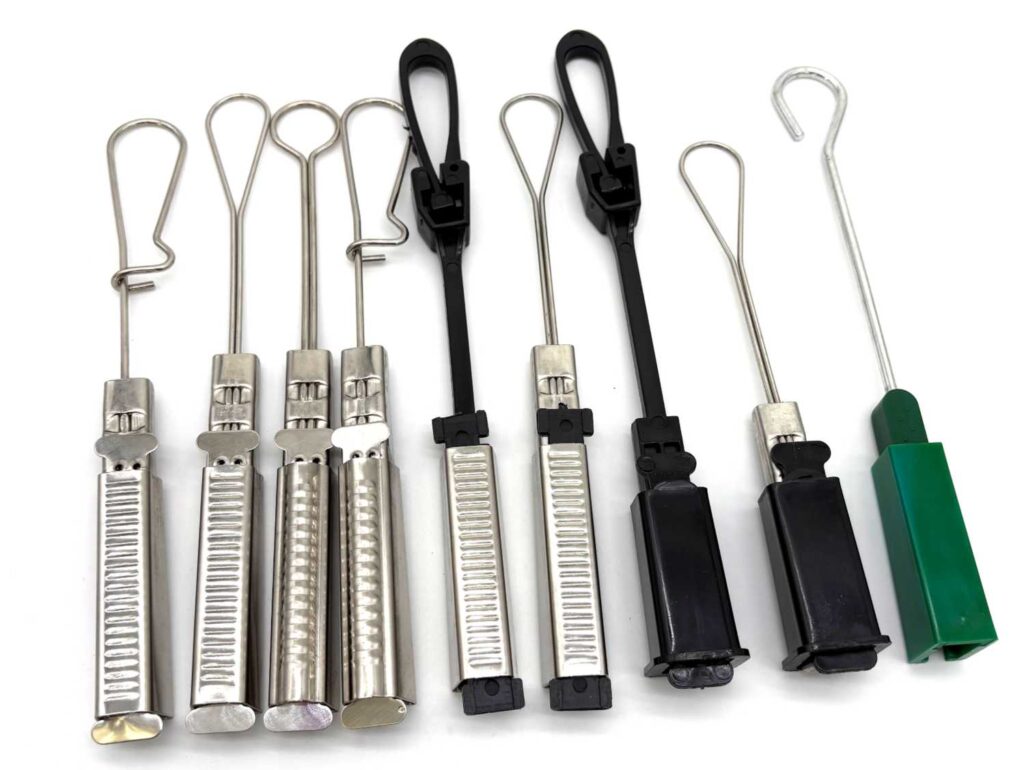
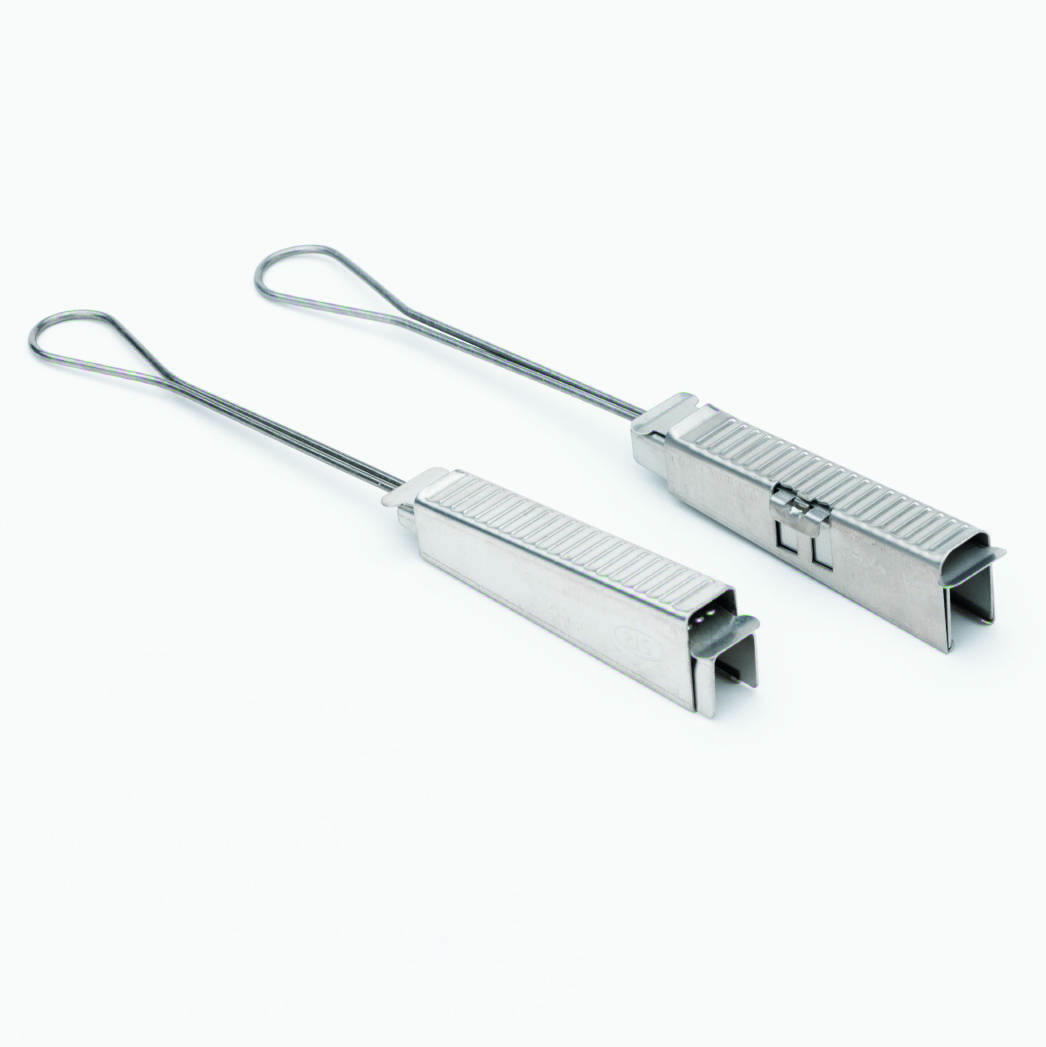
Stainless steel drop wire clamps have a simplified clamp body paired with a high-strength stainless steel wire bail. The bail distributes load and enables flexible attachment to hooks or brackets. They serve in telecom drops and light-duty service connections. Stainless steel clamps offer corrosion resistance and flexible installation geometry.
Figure-8 cable bail clamps
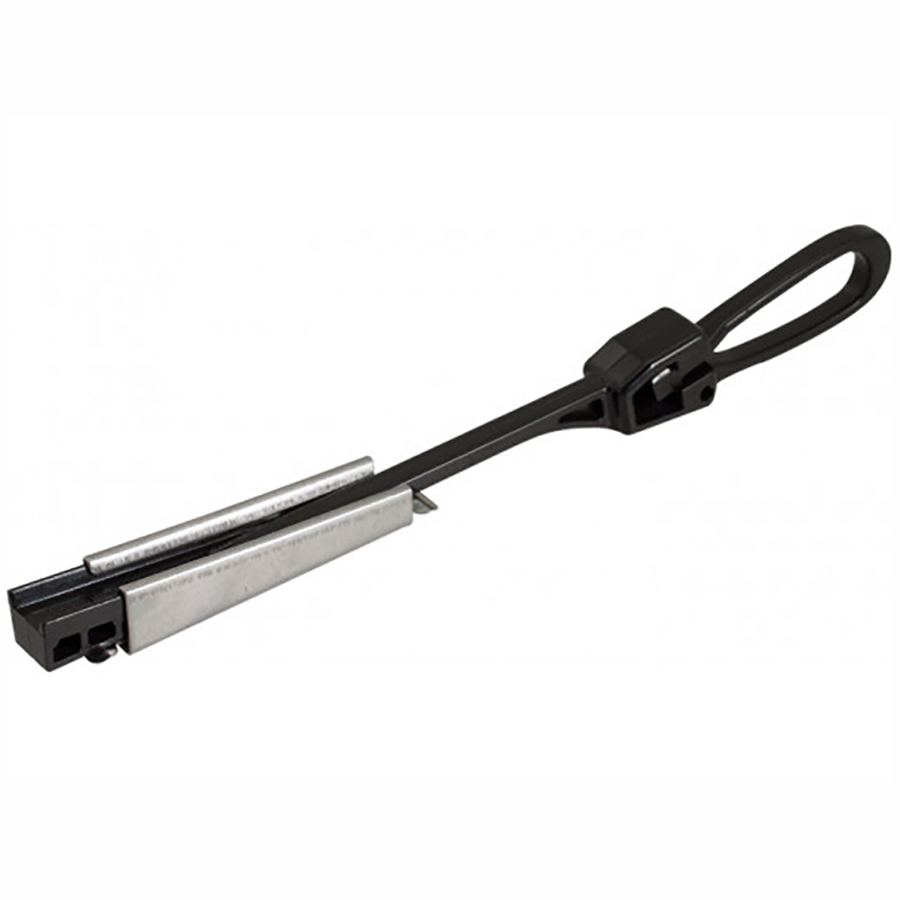
These are designed for figure-8 cables, which include a messenger and insulated cable bonded together. The clamp grips the messenger portion while supporting the cable. These clamps are ideal in telecom and hybrid fiber-copper distribution. They maintain correct load transfer and prevent stress on the core.
Deadend drop clamps
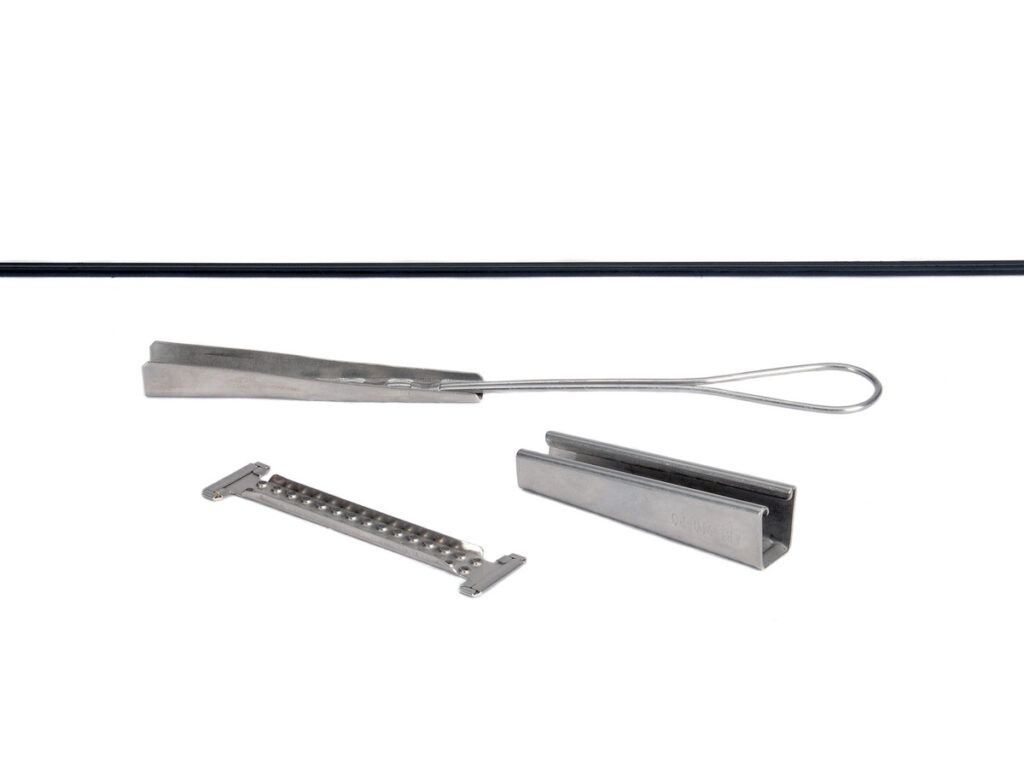
These have reinforced wedge or jaw-type clamps designed for termination points. Deadend clamps anchor the cable at the end of a span and handle a full tensile load. They are ideal for final connection at buildings and short-span service drops with defined end points. The clamps have high holding strength and reliable long-term anchoring.
Materials for drop wire clamps and how quality assurance protects them
Drop wire clamps consist of materials that help maintain mechanical grip, corrosion resistance, and insulation integrity. Quality assurance ensures the operability and functionality of the clamp from raw material verification and manufacture to the final product. Quality assurance for the drop wire clamp begins with material verification, mechanical performance testing, environmental durability testing, and dimensional and fit verification. It also conducts coating and surface quality control and standards compliance. These tests help prevent corrosion and structural failure and ensure the clamp maintains grip and structural integrity. Common materials for the clamp include:
- Polymers – these include U-stabilized polyamide and glass-fiber-reinforced polymers. It is ideal for wedge-type clamps for ABC and telecom drop cables. Polymers have a high strength-to-weight ratio, electrical insulation, and resistance to UV, moisture, and temperature cycling. However, if poorly controlled, they experience UV embrittlement, creep deformation, and reduced impact strength.
- Aluminum alloys – these include die-cast or forged aluminum alloys. Aluminum alloys are crucial for clamp bodies for use in power distribution. Aluminum alloys offer good corrosion resistance and are lightweight with enough mechanical strength.
- Galvanized steel – this is the use of hot-dip galvanized carbon steel for use in high-load clamp bodies, bolts, or structural elements. Galvanized steel has high tensile strength and load capacity and a zinc coating that provides corrosion protection.
- Stainless steel – this is ideal for bails, springs, and fasteners. Stainless steel is corrosion resistant in humid or coastal zones. It also has high fatigue resistance for cyclic loading. However, it faces stress corrosion cracking, and costs are higher.
- Elastomer inserts – this is crucial for protective liners to prevent insulation damage. Elastomer inserts offer flexibility and cushioning and are resistant to UV, ozone, and weathering. It faces hardening or cracking over time and loss of grip if degraded.
The function of quality assurance during bail wire clamp manufacturing
Conducting quality assurance during drop wire clamp manufacturing ensures that each clamp delivers consistent mechanical holding strength, environmental durability, and safe interaction with insulated conductors. Quality assurance spans design validation, material verification, fabrication, assembly, and final release. Effective QA prevents clamp slippage, brittle fracture, corrosion-induced failure, and insulation damage leading to electrical faults. Here are the roles of quality assurance during drop wire clamp manufacturing.
- Design validation and qualification – QA ensures that the clamp design meets functional requirements before production. This process includes type testing, environmental validation, and material compatibility checks.
- Incoming quality control – this screens all raw materials and components before use. It includes chemical composition analysis, polymer verification, coating inspection, and supplier audits. This prevents variability at the source to prevent downstream defects.
- Process quality control – QA ensures that each process remains within defined tolerances. It includes metal forming and casting, polymer molding, machining, and finishing. This helps maintain consistency and prevents underlying defects that could reduce mechanical strength.
- Assembly quality control—QA checks fit and alignment, component integrity, and functional testing of the body, wedge, and bail. This ensures the clamp performs correctly as a system.
- Mechanical and functional testing – each production batch undergoes tensile load tests, slip tests, and proof load testing. This confirms that the manufactured clamps match design specifications.
- Environmental and durability verification – QA revalidates performance under simulated field conditions. The process includes UV aging tests, thermal cycling, and corrosion testing to protect against failure in outdoor service environments.
- Final inspection – before release, QA performs visual inspection, dimensional verification, marking, and traceability. This ensures only compliance products reach the field.
Applications of drop wire clamps in energy infrastructure
Drop wire clamps serve as the interface between main distribution lines and end-user connections. They offer mechanical stability, insulation integrity, and fast installation. Drop wire clamps function in low-voltage power systems and telecom infrastructure that share the same poles. Here are their key uses in energy infrastructure.
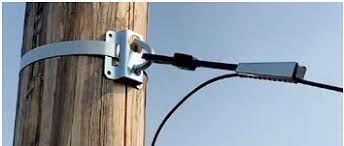
- Service drop anchoring – the clamps anchor service conductors from a pole to a customer’s service point. They hold the service line under controlled tension, prevent sag, and transfer mechanical load to poles.
- Aerial bundled cable terminations – drop wire clamps anchor insulated conductors without damaging insulation, maintains bundle integrity, and support short-span connections.
- Pole-to-pole building connections – the clamps secure the transition from utility infrastructure to private premises. They function on wall-mounted brackets on buildings and service mast anchor points.
- Telecom and fiber co-deployment – energy infrastructure supports telecom lines on the same poles. They anchor fiber optic or copper drop cables and enable shared infrastructure models to reduce deployment costs.
- Renewable and distributed energy connections—the clamps serve in small-scale solar PV connections to local grids and microgrid service drops in rural electrification.
Quality failures facing bail wire clamps
Quality failures in drop wire clamps arise from material degradation, manufacturing defects, or design-application mismatch. Small deficiencies in the clamps can lead to service interruptions or safety risks. These failures include
- Insufficient gripping force – the clamp fails to hold the conductor under rated tension, which allows slip. This arises from incorrect wedge geometry, contaminated gripping surfaces, or polymer creep under sustained load.
- Polymer degradation and embrittlement – this includes cracking of polymer clamp bodies. This may be from inadequate UV stabilizers, poor-quality raw polymers, or thermal cycling causing microcracks.
- Corrosion of metallic components—this includes rusting of steel parts or surface degradation of aluminum. It arises from insufficient galvanization thickness, use of low-grade steel, or exposure to coastal and industrial environments.
- Casting and manufacturing defects—this arises from porosity in die-cast aluminum, microcracks from poor process control, and improper cooling rates during casting.
- Improper wedge performance—this is where the wedge does not self-tighten correctly or jams during installation. This may be rooted in dimensional inaccuracies, rough surface finish causing friction, and assembly misalignment.
- Insulation damage to the conductor—this shows as clamp cuts, abrades, or compresses cable insulation. It arises from sharp edges, over-tightening in bolted clamps, or incompatible clamp designs for cable types.
- Coating and surface protection failure—this shows as peeling or thinning of protective coatings. It arises from poor galvanization or coating adhesion and mechanical damage during transport.