
Anchor brackets serve in aerial bundled cable systems (ABC) to secure and end insulated conductors at poles, walls, or other structural supports; anchor brackets serve as the load-bearing interface between the support structures and the anchoring hardware. The brackets hold the tensioned ABC line at angle points, distribute tensile forces from the cable to the pole, and prevent conductor sag. It consists of high-strength materials, corrosion resistance, mounting holes, and high tensile capacity. These features allow flexible installation configurations and withstand mechanical loads. Anchor brackets ensure mechanical integrity and long-term reliability of ABC systems under diverse environmental conditions. The anchor brackets undergo quality assurance to check for tensile strength, corrosion resistance, dimensional accuracy, and surface finishing. This helps prevent premature failure and salt spray and ensures compliance with international standards.
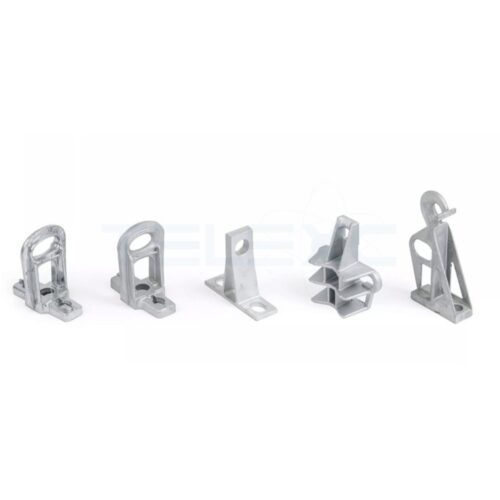
Anchor Brackets for Outside Palnt Fiber Optic Cable | Quality You Can Trust
Key Features
- High Mechanical Strength: Provides excellent tensile and bending strength for complex overhead cable spans.
- Corrosion Resistance: Features a hot-dip galvanized finish or corrosion-resistant materials to withstand rain, humidity, and salt spray for outdoor use.
- Stability and Reliability: Offers secure support in extreme weather and heavy stress, preventing fiber attenuation and micro-bending losses.
- Ease of Installation: Lightweight design allows for quick installation with minimal tools on poles or walls using bolts or stainless steel strapping.
- Wind and Weather Resistance: Maintains reliable operation during extreme weather, protecting essential fiber optic links.
- Superior Protection: Shields fiber optic cables from abrasion and stress, ensuring signal integrity.

Common types of anchor brackets for ABC cables
Anchor brackets for aerial bundled cable systems vary by mechanical load capacity, installation configuration, and application. Each type of bracket accommodates specific network geometries and tension requirements.
Single anchor brackets
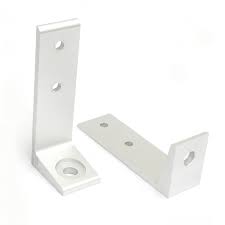
This anchor bracket is designed to support one anchor clamp, and it mounts on poles using bolts or stainless steel bands. It serves in dead-end terminations of a single ABC line and straight-line sections with minimal directional change.
Double anchor brackets
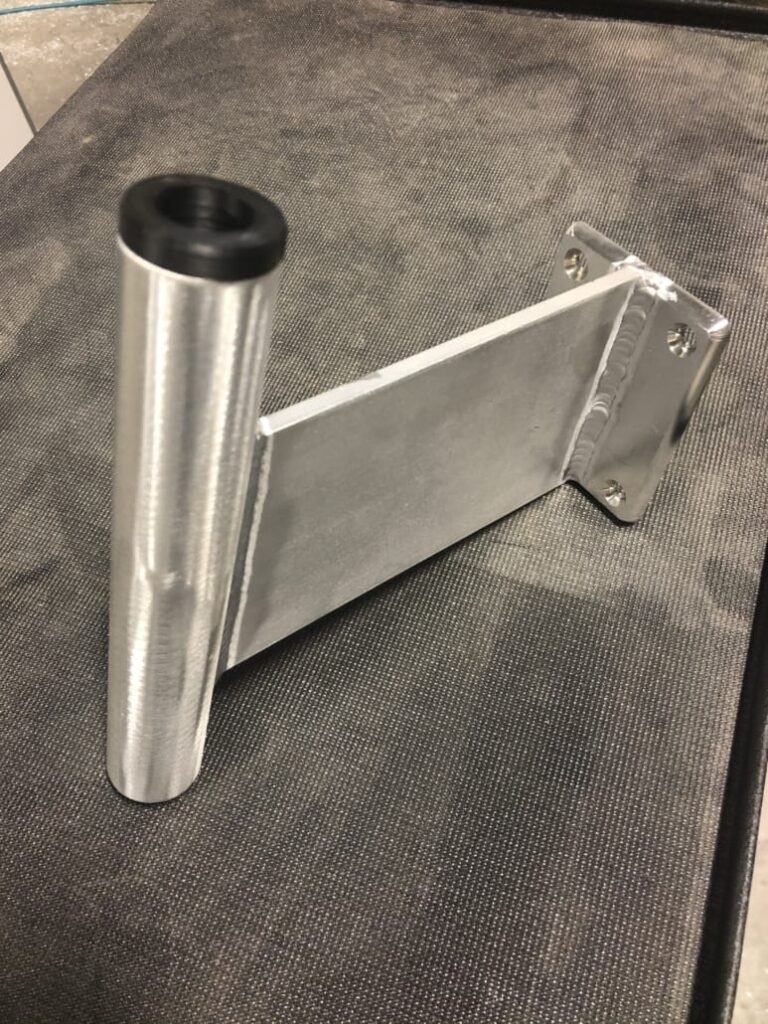
These brackets carry two independent clamps. They have dual attachment points for parallel conductors and a reinforced structure for higher load handling. It allows load sharing and balanced tension distribution to reduce localized stress on the pole.
Pole-mounted anchor brackets
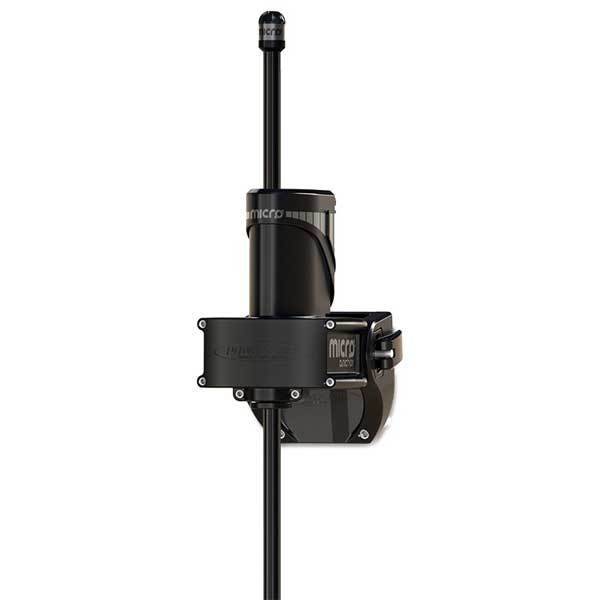
This has a curved or flat backplate to match pole geometry. It is installed using banding straps or through-bolts. The brackets serve in overhead distribution networks in rural and urban settings. This bracket is from hot-dip galvanized steel for high mechanical strength and environmental durability.
Wall-mounted anchor brackets
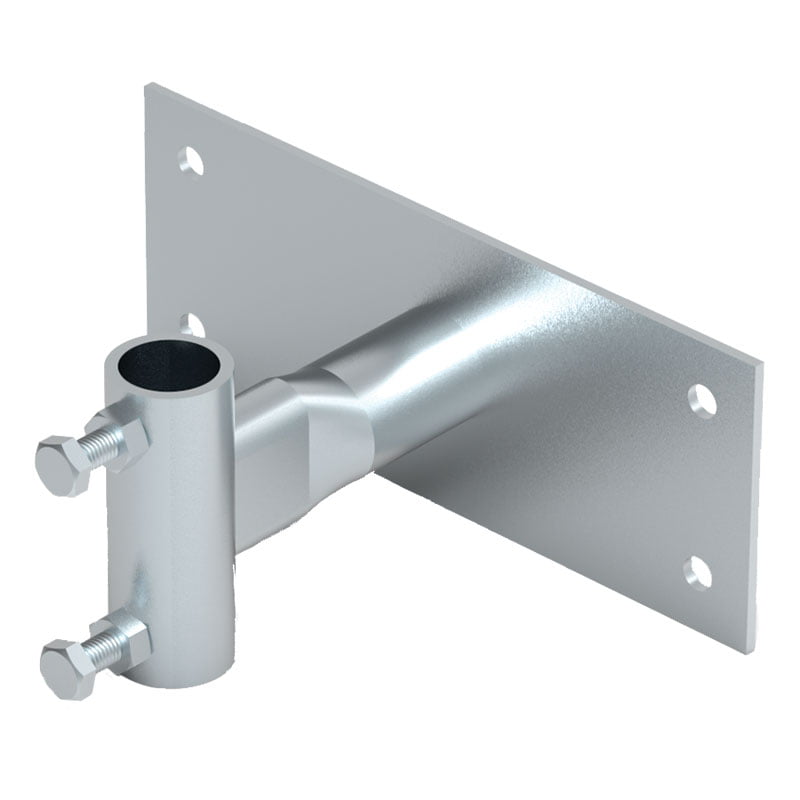
These are designed to terminate ABC cables at buildings or structures. They have a flat mounting base with bolt holes. The brackets also have a compact design for space-constrained installations. They serve the service drop from the distribution line to the premises. The bracket ensures secure anchoring without compromising building integrity.
Heavy-duty brackets
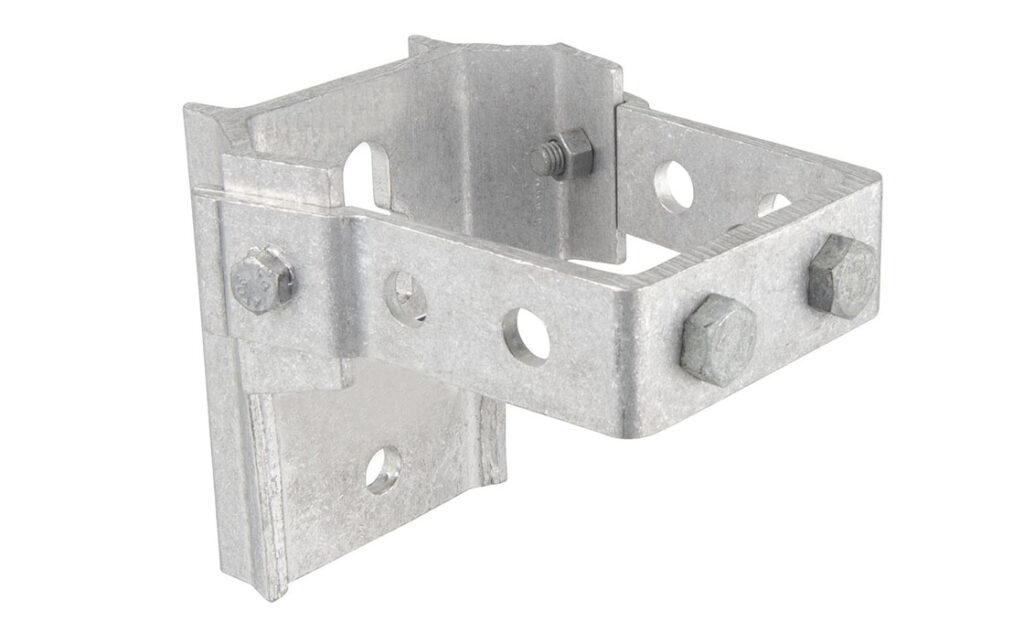
These have thicker cross-sections and reinforced ribs and higher tensile load ratings. They are ideal for areas exposed to strong wind loads or harsh environmental conditions.
Angle anchor brackets
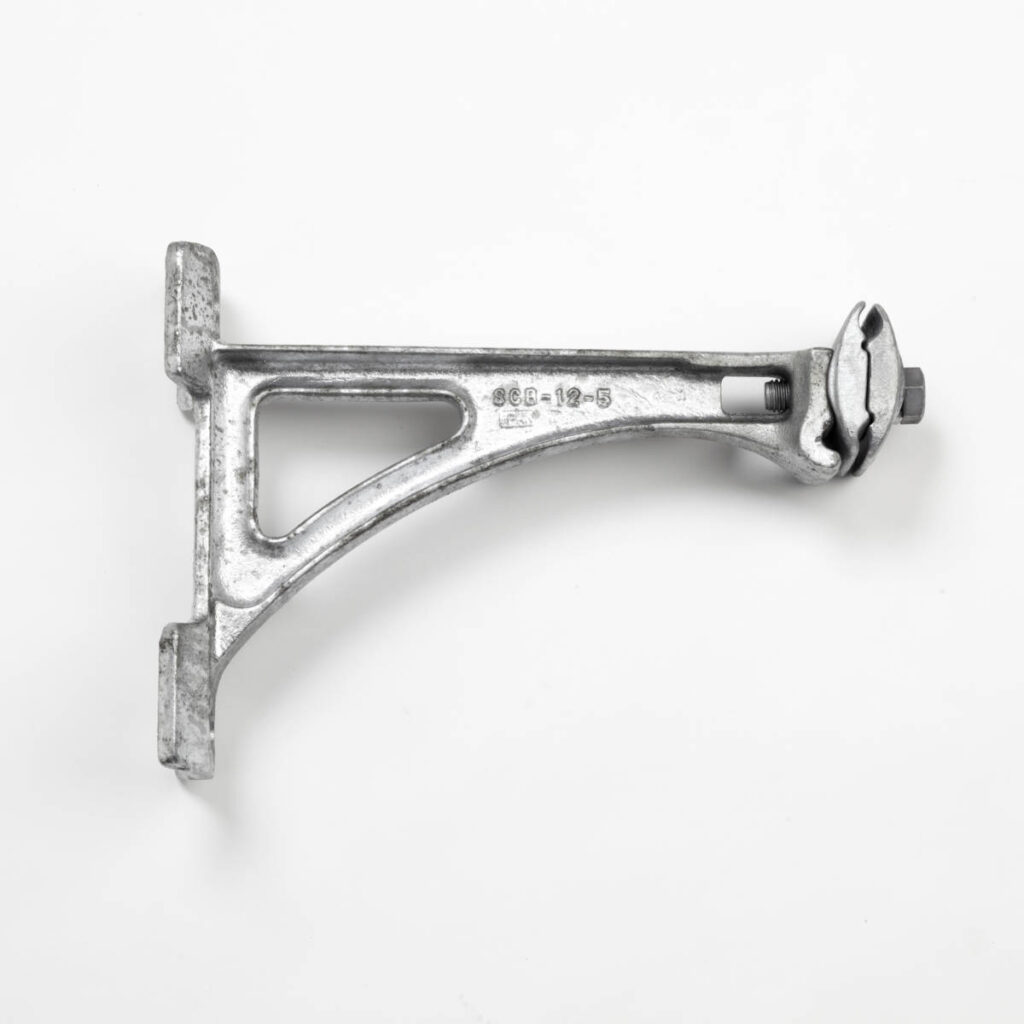
These are specifically designed for directional changes in the cable route. They have multi-point attachment geometry and are compatible with clamp orientations. Angle anchor brackets serve in corners or bends in the distribution network. They reduce mechanical strain concentration at turning points.
Adjustable anchor brackets
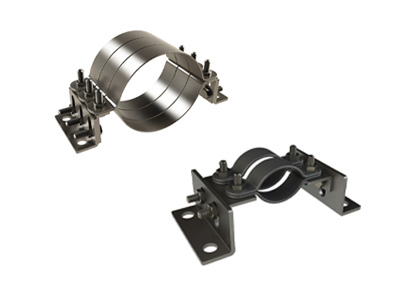
These brackets provide flexibility in installation. They have adjustable slots or modular attachment points. Adjustable anchor brackets are compatible with different clamp sizes and orientations. They serve in projects that need standardization across varying pole types. They reduce inventory complexity and installation time.
Anchor bracket materials and the roles of quality assurance during manufacture
The performance of anchor brackets for ABC systems depends on material selection and the rigor of quality assurance applied during manufacturing. Quality assurance ensures that each bracket meets mechanical, dimensional, and environmental performance requirements. The anchor brackets undergo chemical composition analysis, mechanical property validation, and certification review. This prevents material-related failures such as brittle fracture or premature corrosion. During process control, the brackets undergo monitoring, forming processes, weld inspection, and dimensional checks using gauges and jigs. This ensures structural integrity and proper fit with anchor clamps and poles. Other quality assurance processes include surface treatment inspection, mechanical load testing, corrosion resistance testing, and inspection. Here are the common materials for anchor brackets.
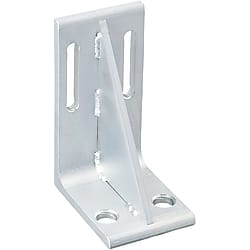
- Hot-dip galvanized steel—this includes low- to medium-carbon steel coated with zinc through hot-dip galvanization. Its key properties include high tensile and yield strength, fatigue resistance under cyclic loading, and a zinc layer. It serves in standard pole-mounted brackets and high-load and long-span ABC lines.
- Aluminum alloy – these are lightweight alloys used in distribution hardware. It has a high strength-to-weight ratio, a natural oxide layer, and good machinability and casting characteristics. Aluminum alloy brackets are ideal for urban networks and wall-mounted or medium-load brackets.
- Stainless steel – this is corrosion-resistant steel with chromium. Stainless steel offers superior resistance to oxidation, moisture, and chemicals. It offers high durability in coastal or industrial environments. Steel brackets serve in coastal regions with high salinity and chemically aggressive environments.
- Polymer materials – these materials consist of glass fiber-reinforced polymers or similar composites. Polymer materials are lightweight and corrosion-proof and electrically insulating. They serve in environments that need electrical insulation.
The role of quality assurance in anchor bracket manufacturing
Quality assurance in anchor bracket manufacturing ensures that the brackets can withstand mechanical loads, environmental exposure, and long-term service conditions in ABC cable networks. Quality assurance influences network reliability, uptime, safety, and lifecycle costs. Here is the role of quality assurance for anchor brackets.
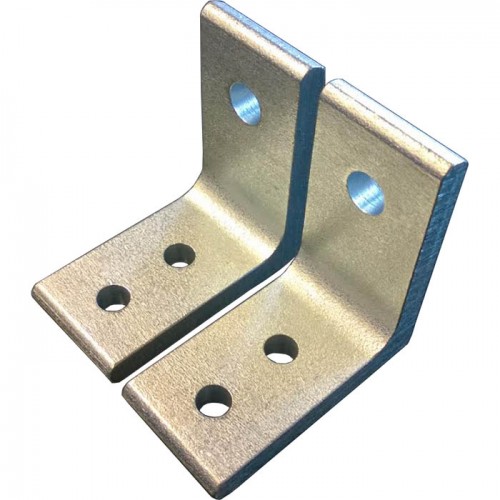
- Ensuring mechanical integrity – anchor brackets face static tension, dynamic wind loads, and thermal expansion forces. Quality assurance verifies tensile strength and yield limits, proof-load testing, and fatigue testing for cyclic loading conditions. This prevents failures such as fracture, deformation, or detachment under load.
- Controlling material performance – The QA process includes inspection of raw materials, validation of material certificates, and detection of inclusions. This ensures predictable mechanical behavior and durability across production batches.
- Verifying corrosion protection systems—anchor brackets face risk of exposure to moisture, UV radiation, and pollutants. Quality assurance measures coating thickness, adhesion and uniformity testing, and corrosion testing. This extends service life and reduces maintenance frequency.
- Monitoring manufacturing processes—QA conducts in-process inspection of stamping, bending, and welding. It also offers non-destructive testing of welds and statistical process control to maintain consistency.
- Validating load transfer and system compatibility – the bracket must transfer loads from the cable system to the supporting structure. Quality assurance provides functional testing with anchor clamps, verification of compatibility, and assessment of stress distribution under real installation conditions.
Applications of anchor shackles in energy systems
Anchor shackles are load-connecting hardware used to join mechanical elements like chains, cables, slings, and fittings. They act as linkage points for load transfer, tension control, and structural stability in various infrastructure types. Here are the common application areas for the anchor shackles.
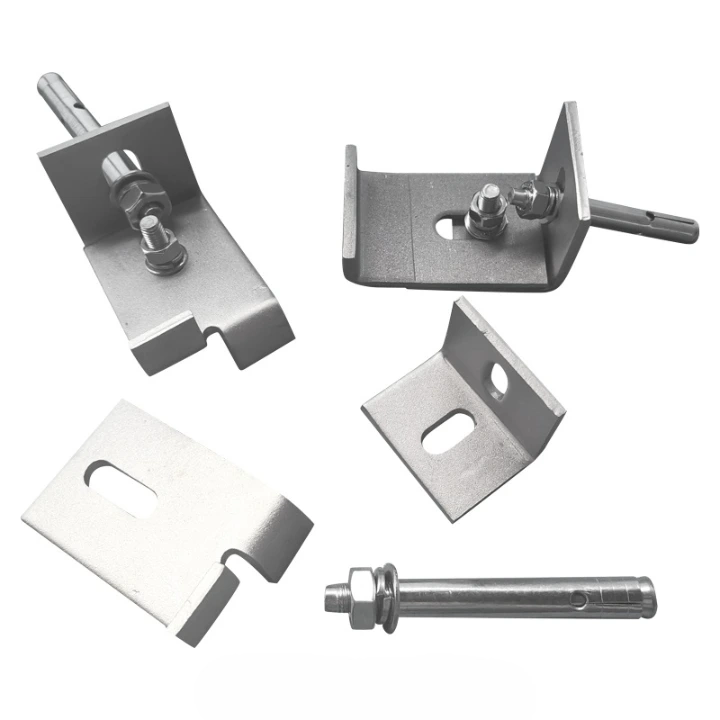
- Overhead power distribution and transmission – anchor shackles connect anchor clamps to brackets, link insulator strings, and secure guy wires to pole anchors. They provide a flexible and detachable connection that accommodates movement and alignment variation.
- Substation infrastructure – the brackets act as mechanical connections that support static loads and dynamic forces. They help in suspension of busbars, connect grounding systems, and secure tensioned conductors. Anchor brackets in substations maintain mechanical continuity and enable easy maintenance and component replacement.
- Renewable energy systems—anchor brackets in solar power installations help mount and secure panel support structures. They also anchor tracking systems exposed to wind loads. The brackets provide robust fastening points in ground-mounted and elevated solar arrays. They also secure guyed masts for wind measurement towers.
- Oil and gas energy infrastructure—anchor shackles are crucial in mooring systems for offshore platforms, lifting pipelines, and securing rigging systems during installation.
- Energy storage and battery installations – large-scale battery systems need secure structural and cable management. They support cable routing systems and anchoring heavy battery modules during installations.
Quality failures in anchor shackles used in power networks
Lack of proper quality assurance for the anchor shackles leads to failures that impact operation of the network. Most failures originate from material defects, manufacturing inconsistencies, surface degradation, or misuse. These failures include:
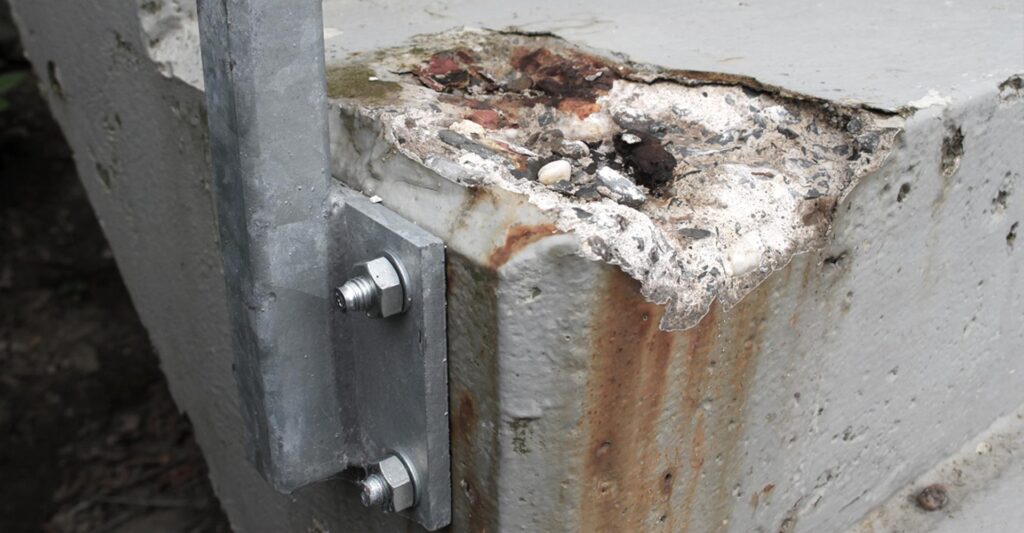
- Material defects and metallurgical failures—this includes cracking or sudden fracture under load that arises from impurities in steel, improper heat treatment, or inadequate control grain structure. This leads to brittle failure without significant deformation.
- Pin failure and thread defects—this affects pin shear or bending and thread stripping or disengagement. These arise from poor machining tolerances, inadequate thread engagement length, and use of low-strength pin material.
- Improper heat treatment—this is excessive brittleness or reduced strength that arises from incorrect quenching and tempering cycles and lack of process monitoring.
- Dimensional inaccuracies—this is the poor fit between the shackle and connected components. It arises from inadequate tolerance control during machining and warping during heat treatment. This leads to uneven distribution, which increases localized stress and wear.
- Fatigue failure under cyclic loading – this includes progressive cracking leading to breakage. These failures occur from repeated loading and unloading cycles, micro-cracks from manufacturing defects, and operation near greatest load capacity.
Best practices for selecting the right anchor brackets
Selecting anchor brackets for an aerial bundled cable system is a specification that should be driven by mechanical loading, environmental exposure, and interface compatibility. Choosing the right bracket includes calculating line tension, span length and conductor weight and temperature effects. It also includes matching bracket type to network geometry. Utilities should ensure the bracket fits with anchor clamps and aligns with bolts, bands, and pole hardware. This is crucial to prevent slippage, uneven load transfer, and installation errors. Choosing the material should match the service environment. It is thus crucial to use hot-dip galvanized steel, aluminum alloys, and stainless steel anchor brackets to withstand diverse environmental conditions. It is also crucial to verify coating thickness and quality in compliance with galvanization standards. Adhering to these factors prevents mechanical instability, accelerated degradation, or costly rework.