
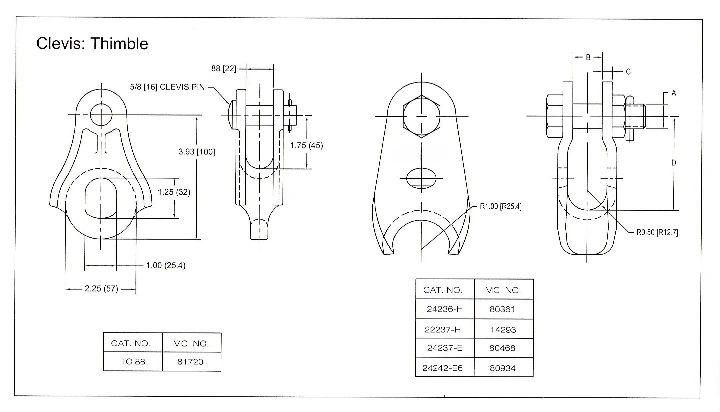
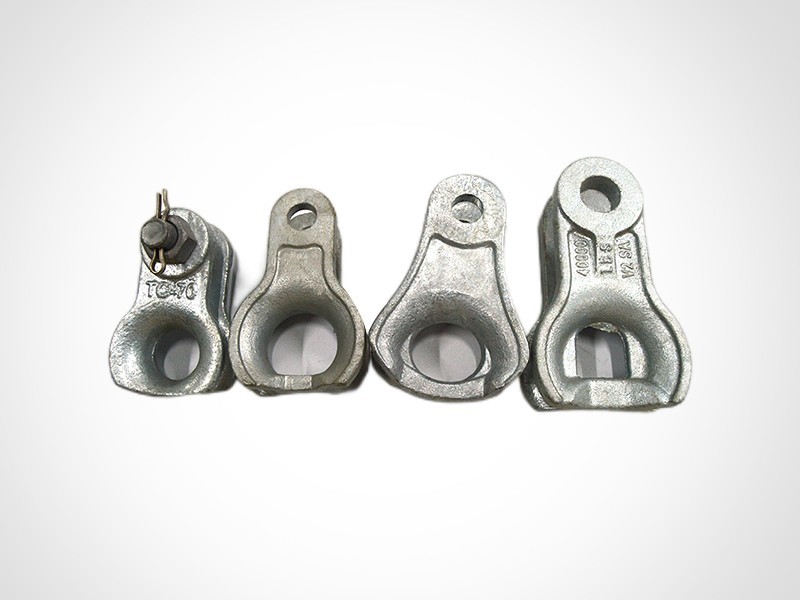
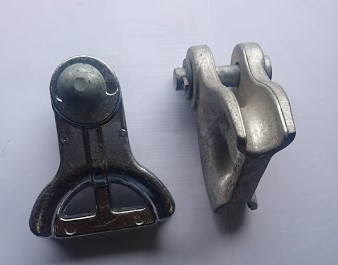
A thimble clevis is a mechanical fitting used in power transmission, distribution, and telecommunication networks to connect guy wires or tension assemblies to insulators, anchors, or pole hardware. It combines the support function of a thimble with the attachment capability of a clevis connection. It also provides a secure pivoting connection point and transfers tensile loads within the line hardware assembly. The thimble clevis consists of a thimble body, a clevis end, a clevis, and a cotter pin. Thimble clevises consist of hot-dip galvanized steel, forged carbon steel, or stainless steel. Galvanization improves corrosion resistance for outdoor installations exposed to rain, humidity, and UV radiation. Thimble clevises serve in power transmission lines, distribution pole lines, telecom aerial cable systems, and renewable energy infrastructure. A high-quality clevis offers high tensile strength, accurate pin alignment, and crack-free forging. Poor quality assurance can lead to guy wire slippage, corrosion, and network outages.
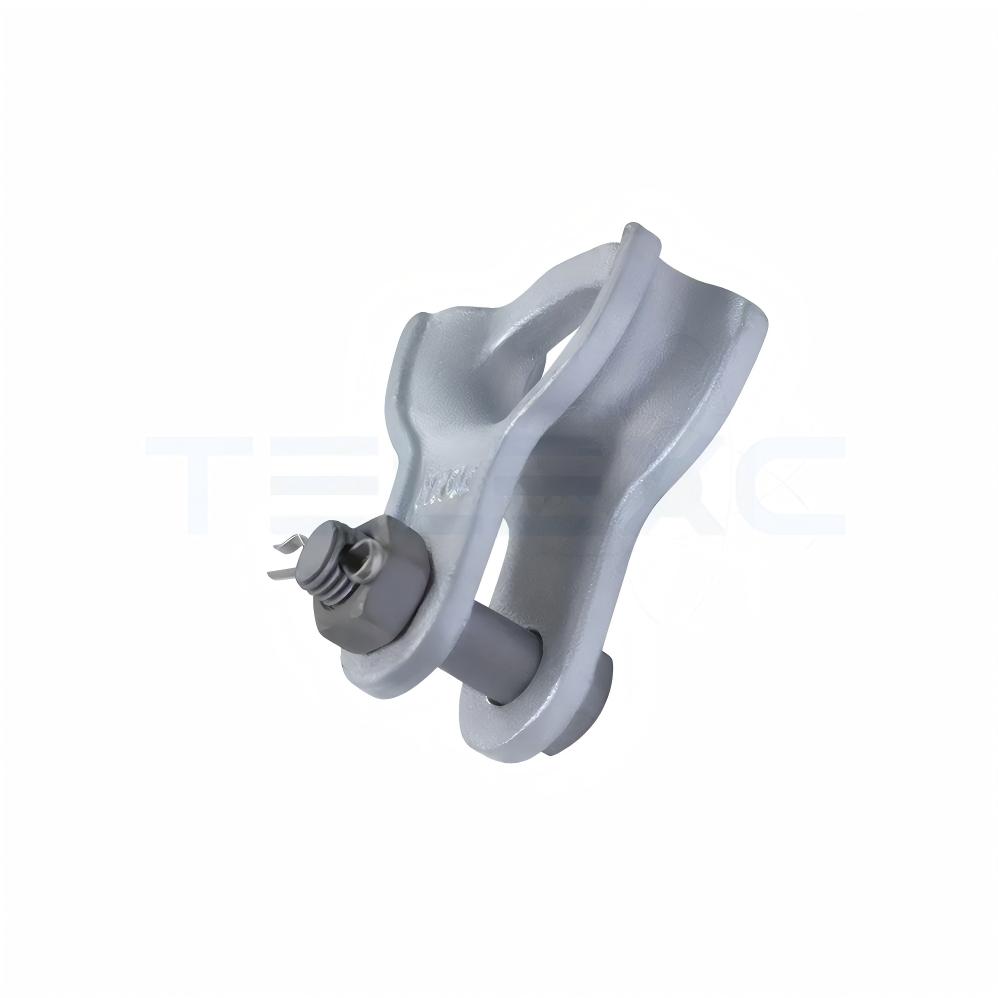
Thimble Clevis for ADSS / OPGW Tension Clamp
Key Features
-
Smooth internal profile to reduce stress concentration
-
High tensile strength for ADSS and OPGW applications
-
Hot-dip galvanized for corrosion resistance
-
Compatible with preformed dead-ends and tension clamps
-
Suitable for poles and transmission towers

Common types of thimble clevis
Thimble clevises are classified based on their mechanical design, installation method, load capacity, and application environment. Different infrastructure projects used specific types depending on conductor tension, environmental exposure, and pole line configuration.
Standard guy wire thimble clevis
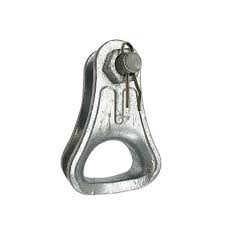
This type is the most used thimble clevis in distribution and transmission networks. It consists of forged steel construction, clevis pin connection, and hot-dip galvanized finish. They serve in utility pole guying, distribution line stabilization, and telecom pole support systems.
Heavy-duty thimble clevis
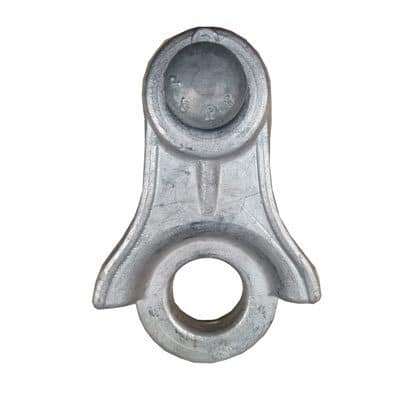
Heavy-duty models serve in high mechanical load transmission infrastructure and industrial projects. They feature larger body dimensions, increased pin diameter, reinforced forged structure, and higher tensile ratings. Heavy-duty clevises serve in long-span guying systems, renewable energy substations, and wind and solar infrastructure.
Ball-eye clevis
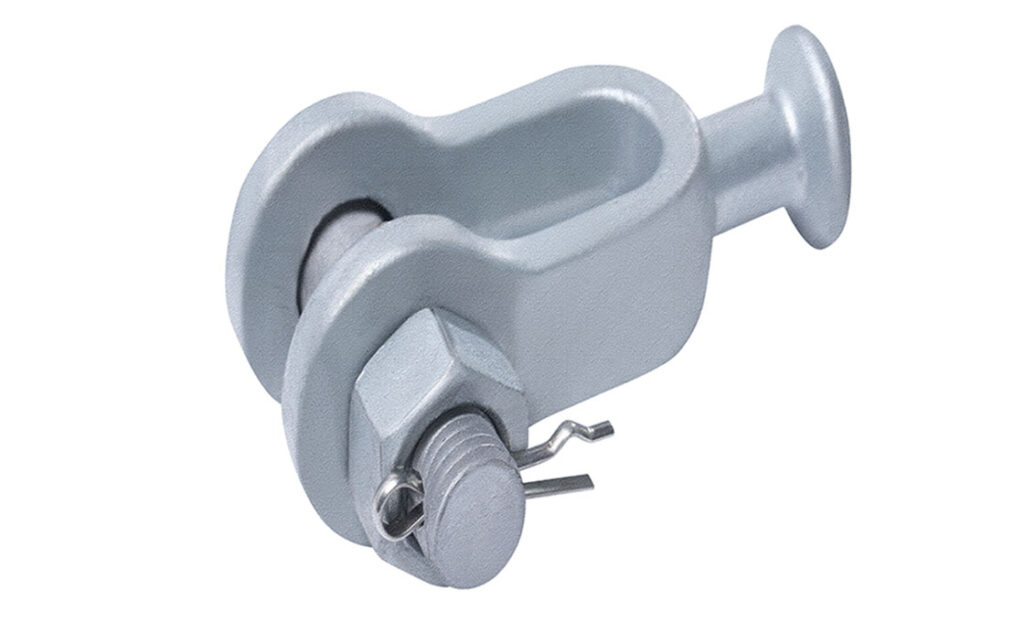
This integrates a ball-eye connection instead of a standard clevis fork. It consists of a ball-and-socket mechanical interface, improved articulation movement, and enhanced flexibility under conductor motion. Ball-eye clevises serve in suspension assemblies, high-movement conductor systems, and transmission string hardware.
Tongue-type clevis
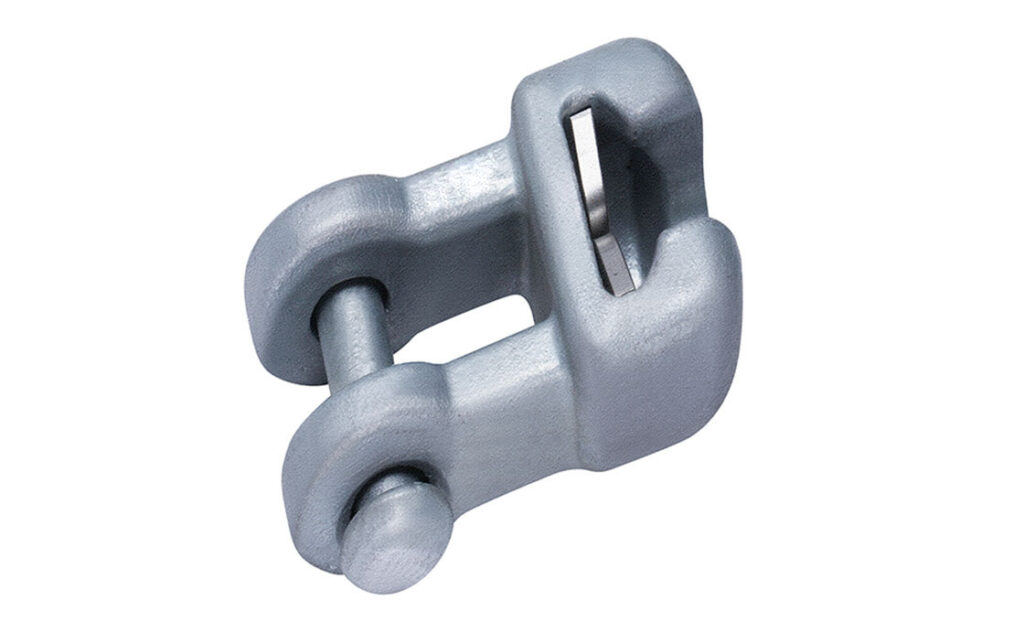
These use a flat tongue connection rather than a U-shaped clevis fork. It consists of a flat attachment end, pin-secured assembly, and compact mechanical profile. The clevis serves in compact pole hardware assemblies, crossarm connections, and limited-space installations.
Adjustable thimble clevis
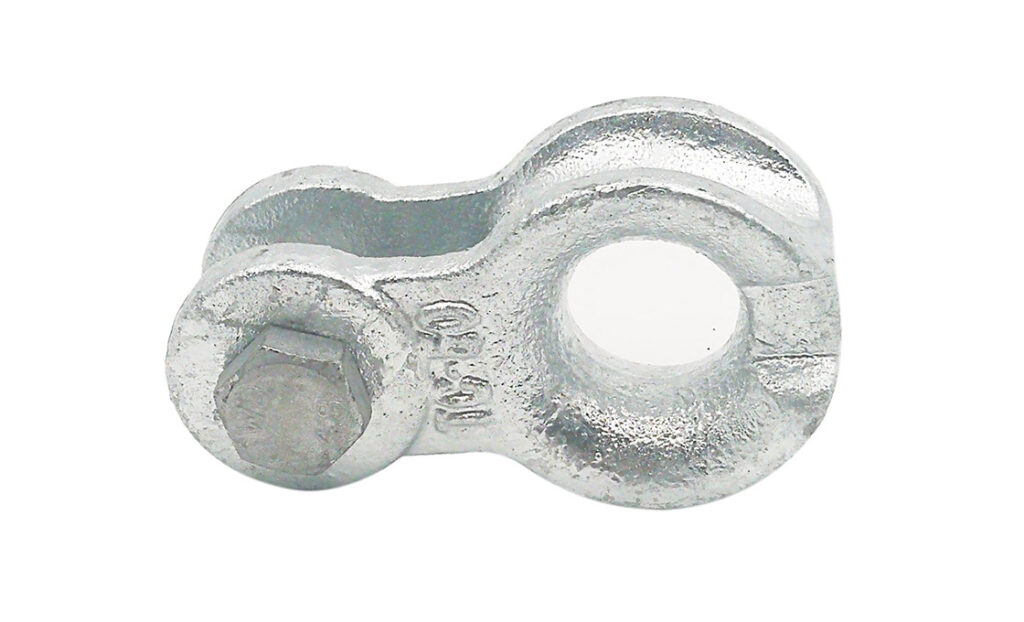
The adjustability design allows modification of cable tension or assembly length during installation. It has a threaded adjustment mechanism, variable connection length, and reusable tensioning capability. The clevis serves in stay wire tension adjustment, telecom line balancing, and renewable energy support structures.
Insulated thimble clevis
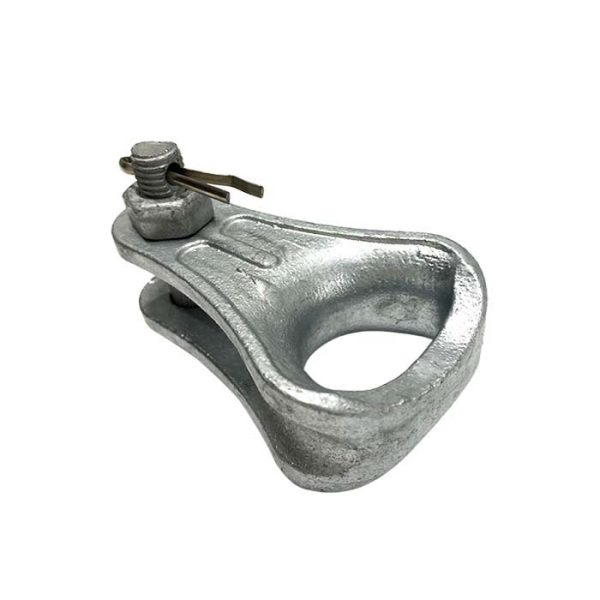
These include nonconductive coatings or polymer inserts for electrical isolation. It consists of dielectric protection, corrosion-resistant coating, and electrical separation capability. These clevises function in electrified rail systems, high-voltage distribution, and grounding environments.
Drop-forged thimble clevis
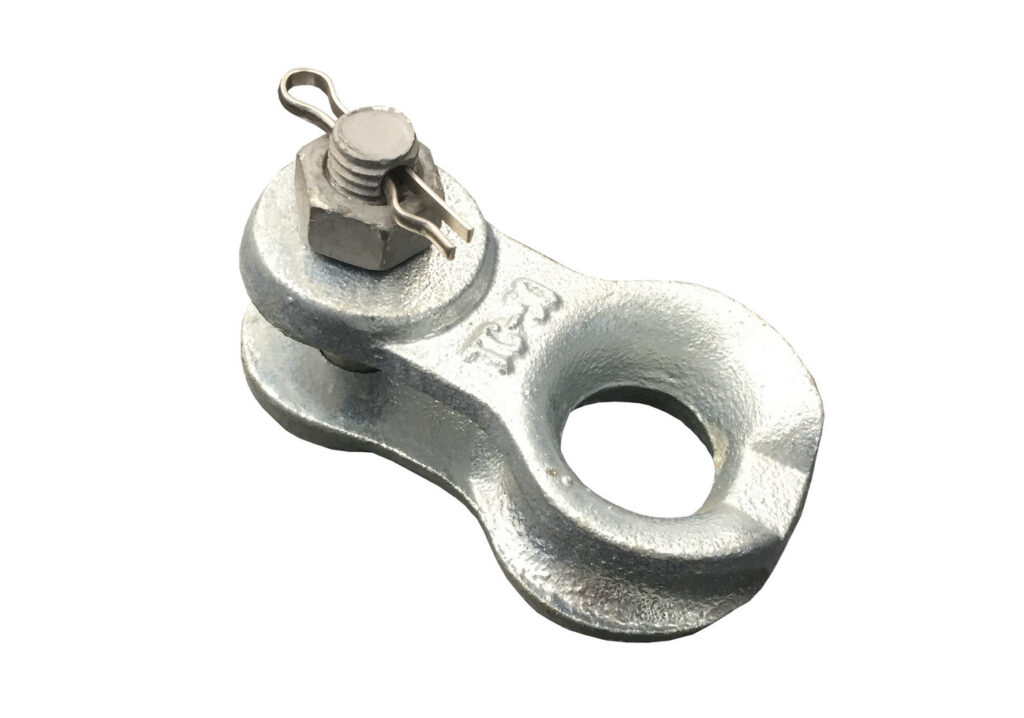
These undergo a forging process to improve grain structure and strength. It consists of a precision-forged body, high mechanical integrity, and smooth load distribution. Forged clevises serve in high-tension guy systems, utility transmission networks, and infrastructure projects.
Materials used for thimble clevis and how quality assurance protects them
Material composition for the clevises affects mechanical strength, corrosion resistance, fatigue life, and reliability in power and telecom infrastructure. Manufacturers apply strict quality assurance procedures to protect material integrity throughout production and service life. Quality assurance ensures that materials maintain their designed performance throughout manufacturing and field operation. The assurance process begins with material inspection, manufacturing inspection, galvanization quality control, mechanical load testing, and corrosion resistance testing. Quality assurance helps corrosion cracking, metal fatigue, brittle fracture, mechanical deformation, and pin shear failure. These can compromise pole stability, transmission reliability, and network continuity. Materials for the thimble clevis include:
- Carbon steel – this is one of the most common materials due to its high tensile strength and cost efficiency. It offers high mechanical strength, good load-bearing capability, forging properties, and heavy-duty applications. Carbon steel thimble clevises are ideal for transmission line guying systems, pole line anchoring, and utility distribution networks.
- Hot–dip galvanized steel – this offers a zinc-coated steel surface, strong corrosion resistance, long outdoor service life, and durability. Galvanized steel clevises serve in overhead transmission infrastructure, renewable energy projects, and humid environments. The zinc coating prevents oxidation, reduces corrosion penetration, and extends operational lifespan.
- Forged steel – these are manufactured through high-pressure shaping processes that improve structural length. Forged steel has a dense grain structure, improved fatigue resistance, enhanced impact strength, and reduced internal defects.
- Stainless steel – this serves where superior corrosion protection is needed. It features excellent rust resistance, high chemical resistance, and attractive surface finish. It serves in coastal power projects, marine infrastructure, industrial zones, and chemical processing facilities.
- Aluminum alloy – this material is lightweight, has moderate corrosion resistance, and is easy to handle during installation. Aluminum alloy thimble clevises are ideal for telecom infrastructure, support systems, and specialized utility projects.
The function of quality assurance during thimble clevis manufacturing
Conducting quality assurance during thimble clevis manufacturing ensures that each component meets mechanical, dimensional, and corrosion resistance requirements before installation in power and telecom infrastructure. Quality assurance prevents manufacturing defects that can lead to structural failure, guy wire instability, and network outages. Here is the role of quality assurance during its manufacture.
- Verifying raw material quality – quality assurance ensures that only approved materials are used in production. This process includes reviewing mill certificates, conducting chemical composition analysis, verifying tensile strength, and checking hardness values. Lack of material verification may cause premature cracking, deformation under load, reduced fatigue life, and corrosion failure.
- Monitoring forging and forming processes – during the forging process, QA ensures manufacturing parameters remain within specification. The QA process includes monitoring forging temperature, inspecting grain flow orientation, detecting forging defects, and checking dimensional tolerances.
- Ensuring dimensional accuracy—dimensional precision is crucial for integration with pins, guy wires, brackets, and insulator assemblies. QA measures clevis opening width, verifies pinhole diameter, and inspects thimble groove dimensions. Accurate dimensions ensure proper hardware fitment, uniform load transfer, and reduced mechanical wear.
- Controlling surface quality – surface integrity affects mechanical durability and corrosion performance. The process includes visual inspection, surface roughness checks, crack detection, and burr and sharp-edge removal. This helps prevent fatigue cracking, corrosion penetration, mechanical wear, and structural failure.
- Validating mechanical strength – QA verifies that the finished thimble clevis can handle specified mechanical loads. The process includes tensile testing, proof load testing, fatigue testing, and impact testing. Mechanical testing ensures the product can withstand guy wire tension, dynamic wind loading, vibration stress, and emergency overload conditions.
- Improving infrastructure reliability – QA ensures that thimble clevises perform reliably throughout their operational lifespan. It helps reduce maintenance frequency, lower failure rates, improve worker safety, and enhance transmission stability.
Common quality failures in thimble clevises
Quality failures in thimble clevises affect the mechanical stability and safety of power transmission, distribution, telecom, and renewable energy infrastructure. Thimble clevises serve under tensile stress and environmental exposure that may lead to manufacturing defects or poor material quality. This can lead to premature failure, pole instability, or network outages. Common failures in the clevis include:
- Corrosion failure – this stems from poor galvanization, thin zinc coating, incomplete surface coverage, and exposure to moisture and salt. These lead to rust formation, material thinning, reduced tensile strength, surface pitting, and premature structural failure.
- Cracking and fracture—structural cracking can occur during manufacturing or field operations. Common causes include improper forging temperatures, poor grain structure, excessive hardness, material impurities, and overloading. These may lead to sudden mechanical breakage, reduced fatigue life, and failure under dynamic loads.
- Poor galvanization quality – this comes from uneven zinc coating, weak coating adhesion, and improper surface preparation. This may lead to early rust development, flaking zinc layers, and oxidation.
- Dimensional inaccuracy – incorrect dimensions can affect assembly performance and load distribution. This arises from poor machining control, worn manufacturing tools, and inadequate inspection procedures. These in turn lead to pin misfit, loose mechanical connections, uneven loading, and installation difficulties.
- Pin failure – this comes from undersized pins, poor heat treatment, weak material strength, and excessive vibration. These may cause pin bending, shear failure, connection separation, and guy wire instability.
- Metal fatigue – this comes from wind-induced vibration, continuous tension fluctuation, dynamic conductor movement, and stress concentration. This may lead to progressive crack formation, reduced structural endurance, and unexpected failure during service.
Application areas for thimble clevis in energy infrastructure
Thimble clevises serve across energy infrastructure because they provide reliable mechanical connections for guy wires, tension assemblies, and structural support hardware. They distribute tensile loads while protecting cable loops. This makes them essential in transmission, distribution, renewable energy, and substation applications. Common application areas include:
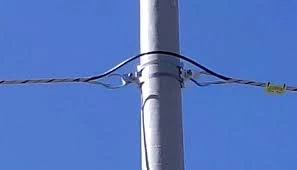
- Overhead transmission lines—the thimble clevis connects guy wires to transmission towers, secures mechanical tension systems, and stabilizes long-span structures.
- Power distribution networks – the clevises anchor utility poles, connect stay wires to anchor rods, and support angled pole structures.
- Renewable energy infrastructure—a thimble clevis serves in solar farm substations, wind turbine transmission connections, BESS, and renewable collector substations.
- Substation infrastructure – substations use thimble clevises in structural support and tensioning systems. They support busbar structures, secure grounding systems, and connect mechanical bracing assemblies.
- Guyed utility pole systems—thimble clevises connect guy strands to anchors, support pole line directional changes, and maintain pole vertical alignment. Guyed systems serve in corner poles, dead-end structures, long-span line sections, and river-crossing infrastructure.