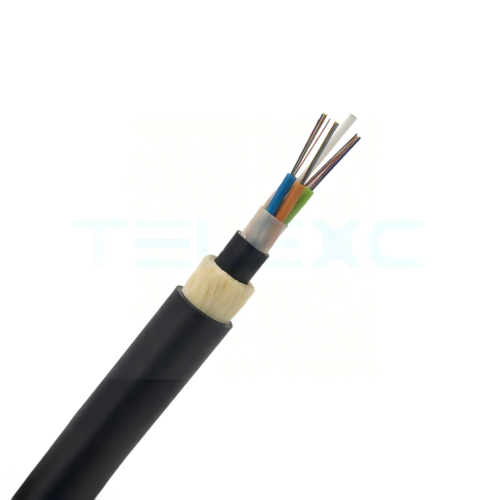
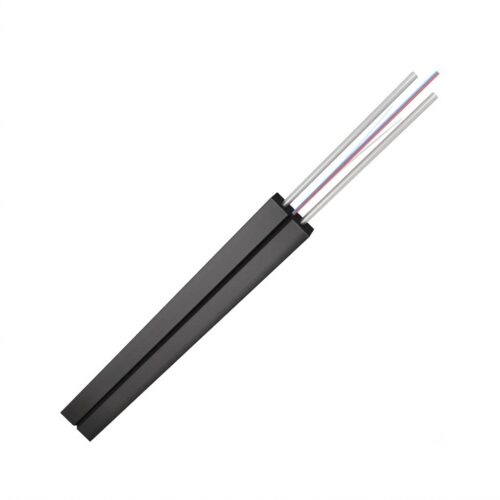
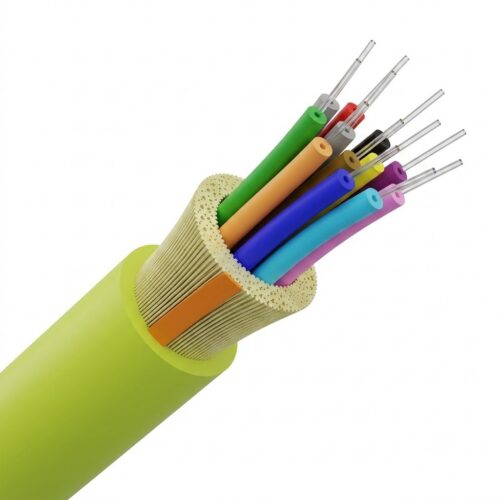
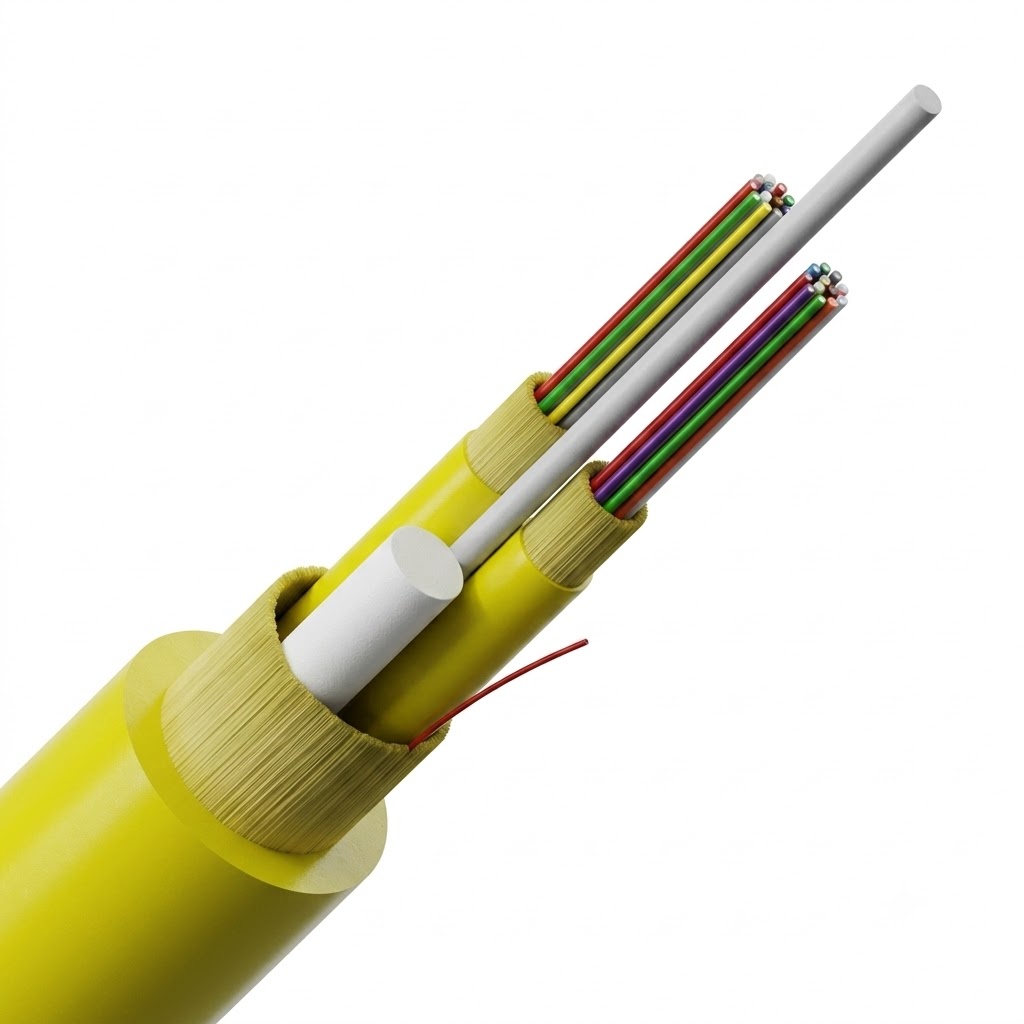
Single LSZH Outer Jacket Fiber Optic Cable with Subunits

  • Available in 24-144 fiber counts
  • Indoor fiber optic cable, Highly flame retardant LSZH outer jacket
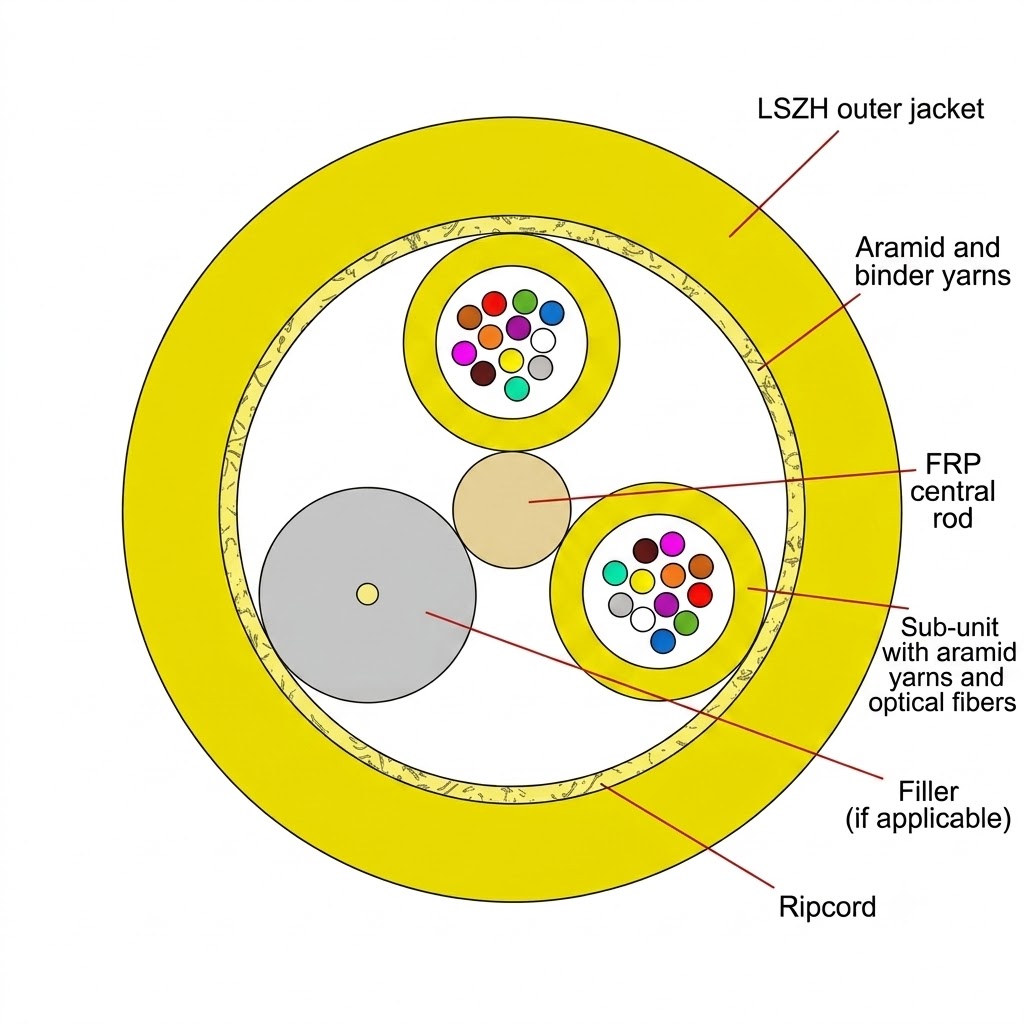
  • 0,079in (2,0mm) sub-units with aramid yarns and 12pcs optical fibers each Filler compound
  • FRP central rod, SZ-stranded
  • Flexibility and easy installation
  • Fully dielectric

https://telexc.com/contact/

General Specifications
Product type  Single LSZH Outer Jacket Fiber Optic Cable with Subunits
Jacket Material LSOH outer jacket
Jacket Marking Feet/Meter
Subunit Type Gel-free
Fiber Coloring Blue, Orange, Green, Brown, Slate, White, Red, Black, Yellow,Violet, Rose, Aqua
Fiber per tube 12
Active tube 2 3 4 6 8 12
Total Fiber Count 24 36 48 72 96 144
Dimensions
Diameter Over Jacket 7.2 mm (0.283 in) 7.2 mm (0.283 in) 7.2 mm (0.283 in) 8.5 mm (0.335 in) 9.5 mm (0.374 in) 10.2 mm (0.402 in)
Mechanical Specifications
Minimum Bend Radius, unloaded 72 mm (2.835 in) 72 mm (2.835 in) 72 mm (2.835 in) 85 mm (3.346 in) 95 mm (3.740 in) 102 mm (4.016 in)
Minimum Bend Radius, loaded 108 mm (4.252 in) 108 mm (4.252 in) 108 mm (4.252 in) 127.5 mm (5.020 in) 142.5 mm (5.610 in) 153 mm (6.024 in)
Tensile Load, Installation, maximum 1500 N (337 lbf) 1500 N (337 lbf) 1500 N (337 lbf) 1600 N (360 lbf) 2500 N (562 lbf) 2800 N (629 lbf)
Tensile Load, Operation, maximum 500 N (112 lbf) 500 N (112 lbf) 500 N (112 lbf) 500 N (112 lbf) 600 N (135 lbf) 600 N (135 lbf)
Compression 5 N/mm | 29 lbf/in
Flex 30 cycles
Impact 2.94 N-m | 26.021 in lb
Twist 10 cycles
Optical Specifications, Wavelength Specifications
Fiber Type G.652.D and G.657.A1
Attenuation, maximum 0.3 dB/km @ 1,550 nm | 0.4 dB/km @ 1,310 nm
Environmental Specifications
Installation temperature -5 °C to +50 °C (+23 °F to +122 °F)
Operating Temperature 0 °C to +70 °C (+32 °F to +158 °F)
Storage Temperature -25 °C to +70 °C (-13 °F to +158 °F)
Cable Qualification Standards ANSI/ICEA S-87-640 | IEEE-1222
Packaging and Weights
Cable weight 46 kg/km (30.911 lb/kft) 46 kg/km (30.911 lb/kft) 49 kg/km (32.926 lb/kft) 78 kg/km (52.414 lb/kft) 96 kg/km (64.509 lb/kft) 99 kg/km (66.525 lb/kft)
  • FTTH & FTTx subscriber network connections
  • ODF connections
  • Distribution network
  • Easy indoor deployment, inside house OLT connection
Q1: What is the primary application for a Single LSZH Outer Jacket Cable with Subunits?

A: This cable is engineered for high-density indoor backbone and horizontal distribution environments, such as data centers, central offices, and multi-dwelling commercial buildings. The subunit design allows clean organizing and routing of high-fiber-count (24 to 144 fibers) infrastructure within tight risers, ducts, and cable trays.

Q2: What is the advantage of the Subunit design in this indoor fiber cable?

A: Subunits group fibers into color-coded 12-fiber tubes (0.079 in / 2.0 mm) with aramid yarns. This modular structure simplifies cable management, speeds up termination/splicing at distribution frames, and protects individual fiber bundles when breaking out cables at different floors or rack locations.

Q3: What is the difference between LSOH and LSZH?

A: There is no functional difference. Both terms—LSOH (Low Smoke Zero Halogen) and LSZH (Low Smoke Zero Halogen)—refer to the exact same flame-retardant jacket material. They are used interchangeably in European, Latin American, and global telecom specifications. During combustion, LSZH materials emit minimal smoke and zero corrosive halogen gases (complying with IEC 60754-1/2), ensuring human safety and protecting electronic equipment.

Q4: Is this fiber optic cable completely non-metallic (Dielectric)?

A: Yes, the cable features a fully dielectric construction utilizing a Central FRP (Fiber Reinforced Plastic) rod as the central strength member and dielectric aramid yarns inside the subunits. This eliminates the need for electrical grounding or bonding, making it safe and immune to electromagnetic interference (EMI) near power distribution paths.

Q5: How does the SZ-stranding design benefit installation?

A: SZ-reverse oscillating stranding allows easy mid-span access to individual subunits without cutting the entire cable core. Technicians can strip the outer LSZH jacket, access a specific 12-fiber subunit for splicing, and route the remaining sub-units through without disrupting active channels.

Engineered for Reliability, Built for Trust

At Telexc, we don’t just supply hardware—we secure your global network deployment. Operating from China’s premier industrial clusters and the Tianjin logistics hub, we act as your private supply chain control tower, ensuring engineering precision and traceably consistent quality for every aerial installation.

Our Core Advantages

  • Full-Scenario Aerial Compatibility: We seamlessly bridge the gap between OSP fiber infrastructure, FTTH networks, and aerial deployment scenarios. Every component is structurally engineered to work harmoniously together, drastically increasing on-site installation efficiency.
  • Strict Engineering Standard Alignment: Our technical design loops strictly align with international benchmarks, including IEC, ITU-T, and IEEE standards. This ensures our hardware excels under extreme environmental stresses—from intense UV exposure to heavy wind and ice loads.
  • Independent Multi-Stage Quality Control: We act as your eyes on the ground. From raw material stress simulations to finished product compliance, our dedicated QC team performs rigorous multi-stage audits so you receive exactly what your engineers approved.
  • Optimized Logistics & Flexible Partnerships: Leveraging the logistics power of the Tianjin port, we guarantee reliable transit, competitive factory-direct structures, and transparent milestone tracking to keep your network projects moving forward without compromise.