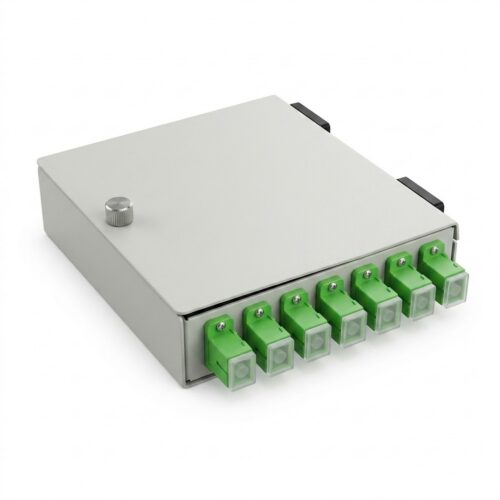
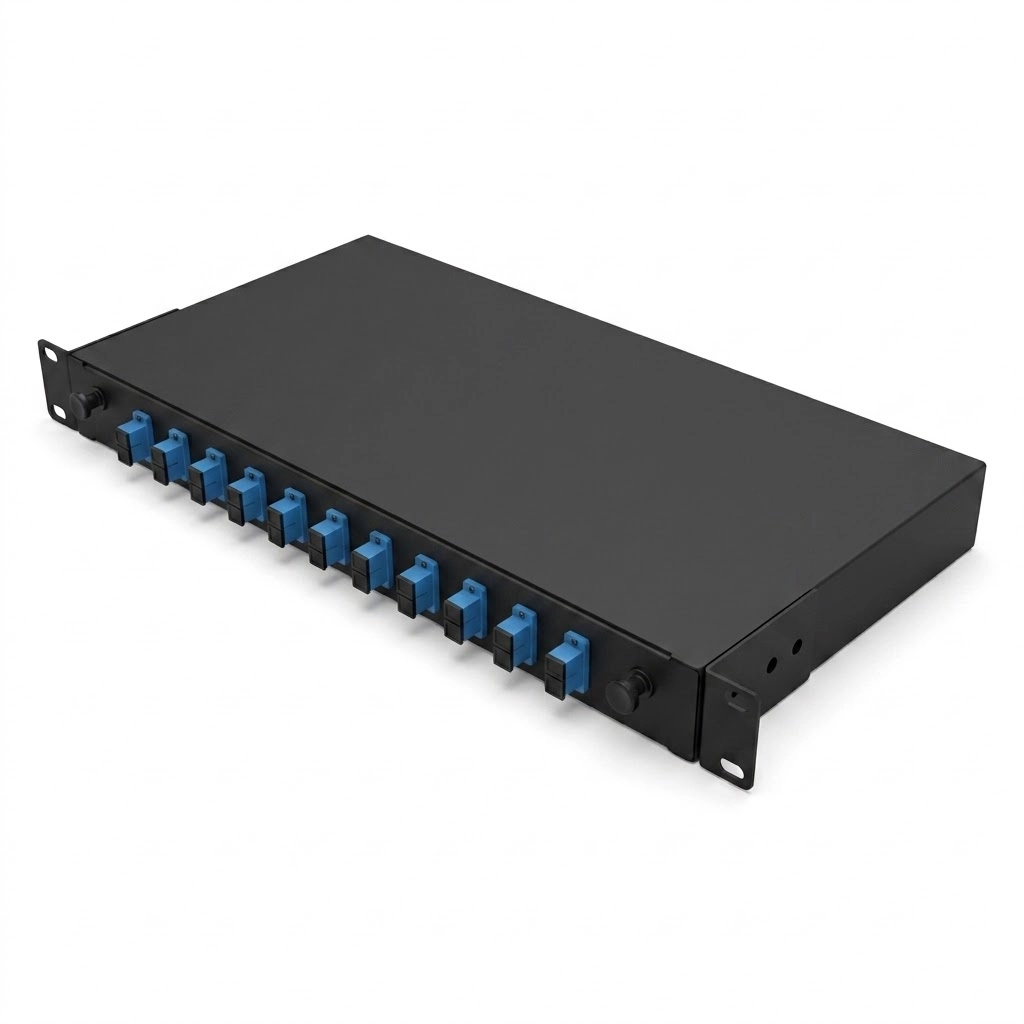
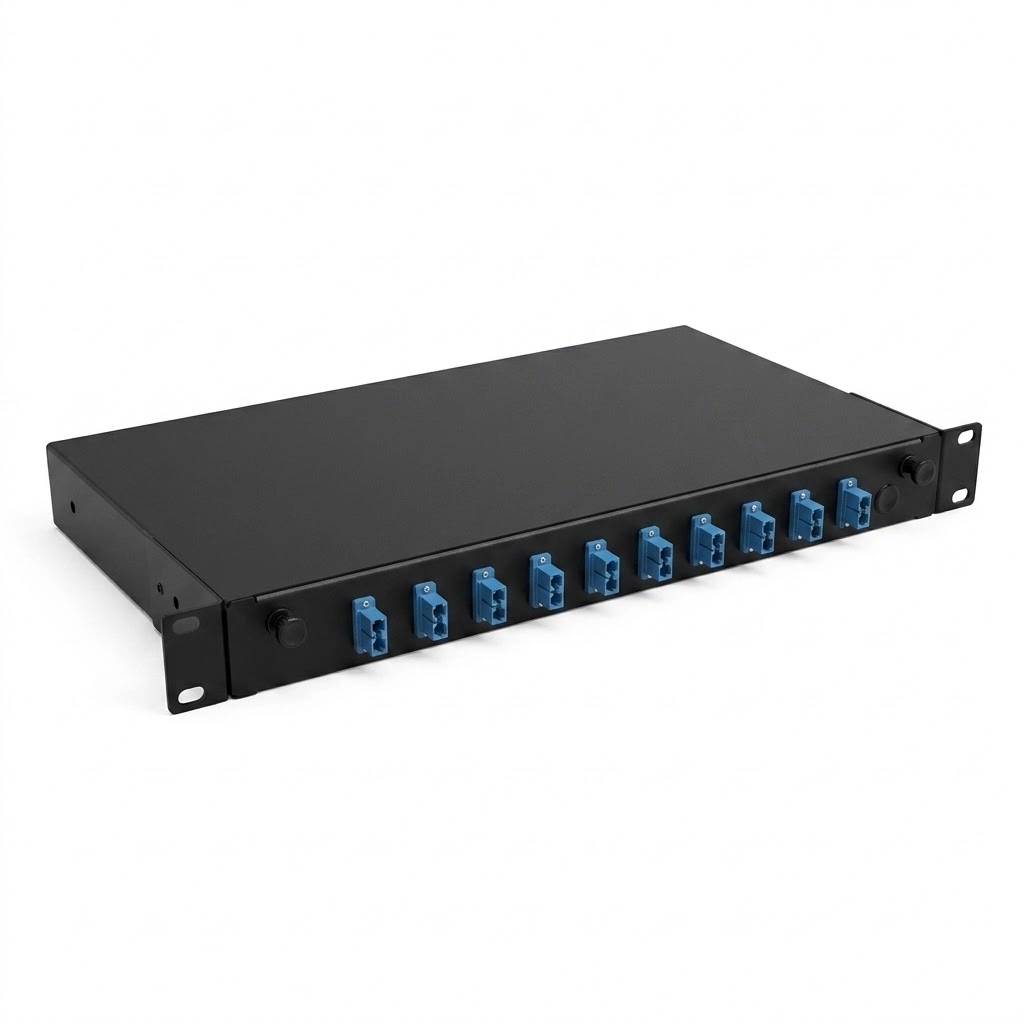
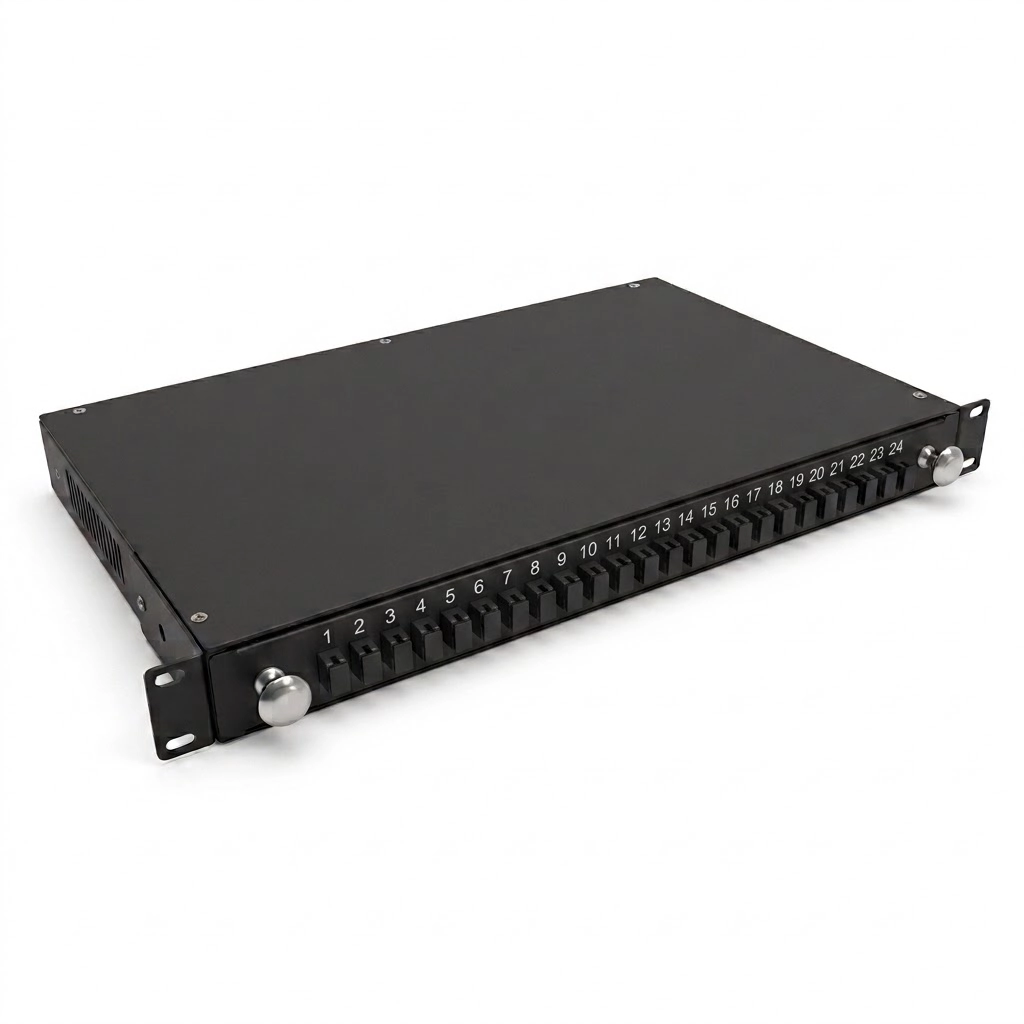

12–24 Core Rack-Mount SC Fiber Optic Patch Panel
A 12-24 core SC fiber optic patch panel protects, organizes, and distributes optical fiber links inside an equipment cabinet. Consequently, technicians use this rack-mounted unit to house optical splices and establish an orderly patching field. The sliding chassis pulls forward smoothly, so staff access internal optical connections without disturbing adjacent equipment. Because this design speeds up network maintenance, enterprise facilities and telecom carrier networks adopt it for standard cross-connect duties.
- System Role: Serves as a centralized termination, distribution, and cross-connect enclosure for optical networks.
- Cabinet Integration: Fits standard 19-inch racks, so it integrates directly into established telecom distribution frames.
- Termination Range: Accommodates 12 to 24 fiber terminations when operators install 24 SC simplex adapters.
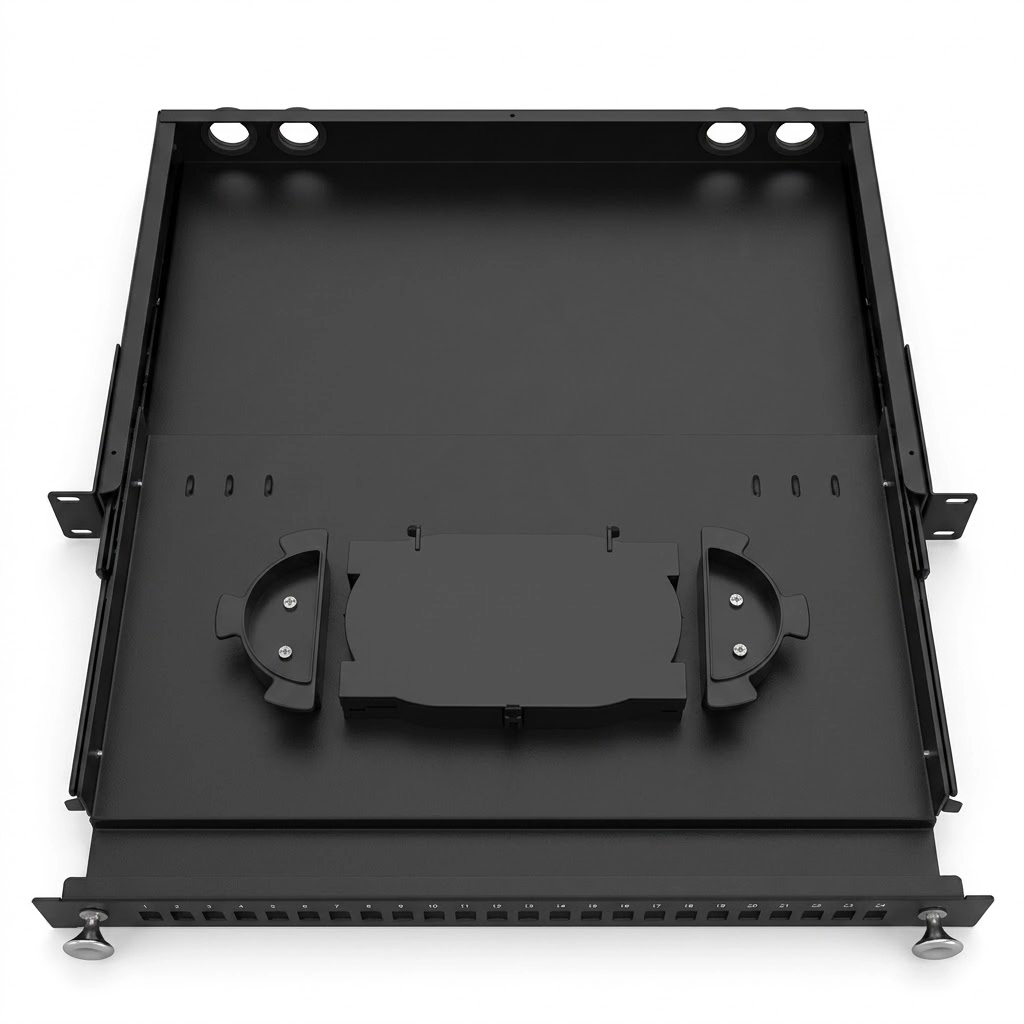
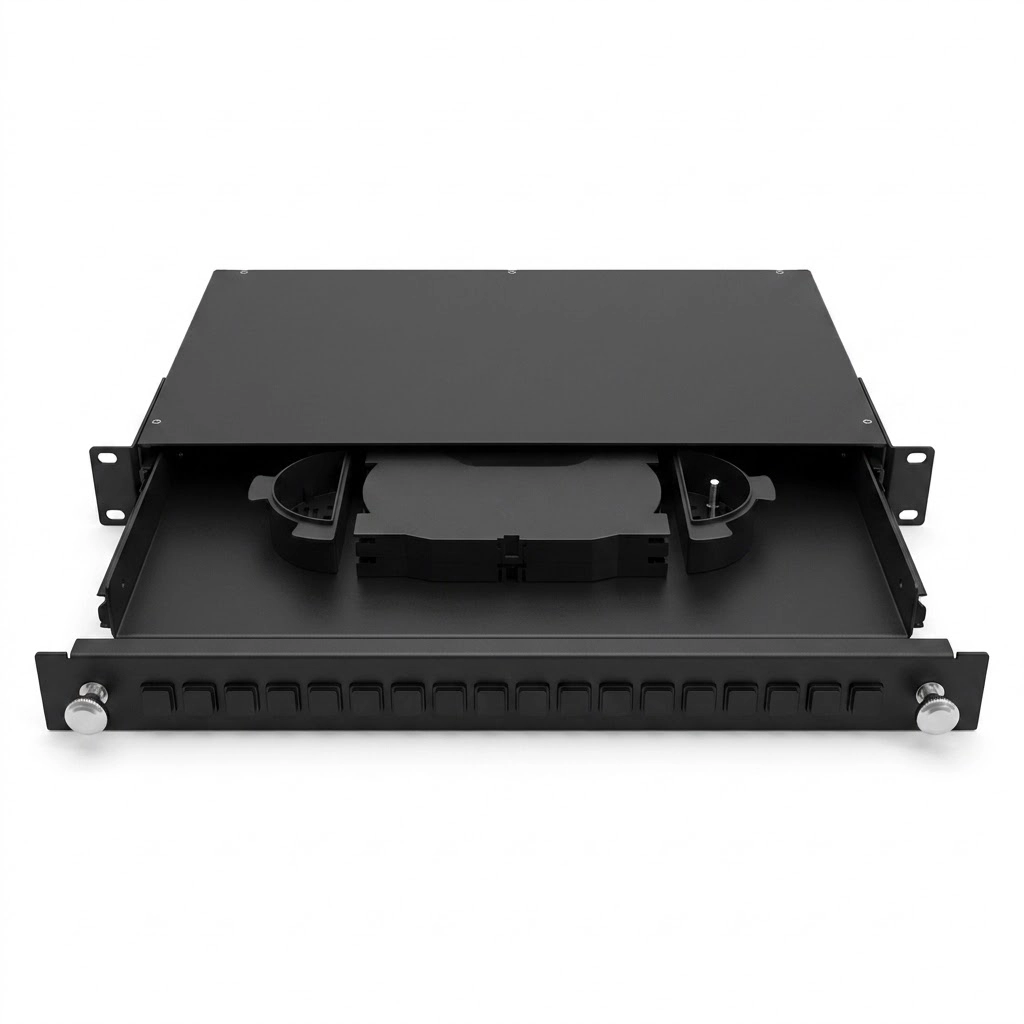
- Access Type: Employs a sliding drawer mechanism on rails, so field engineers inspect or dress fibers from the front.
Key Features
-
-
Housing Material: Cold-rolled steel plate finished with protective powder coating. Therefore, the enclosure withstands mechanical stress and resists corrosion in indoor facilities.
-
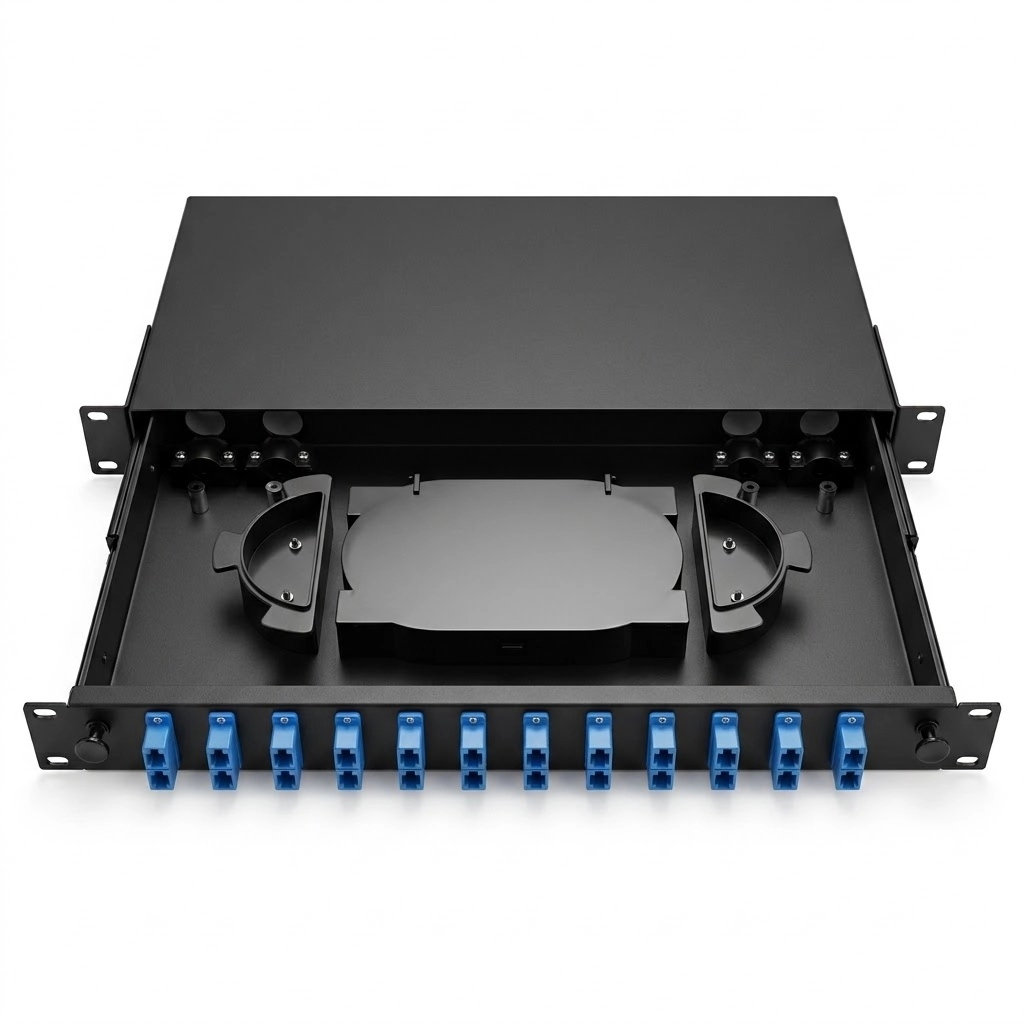
Sliding Tray Structure: Sliding design for easy access and efficient connector patching. As a result, technicians complete splicing and maintenance work without unmounting the chassis from the rack.
-
Modular Adapter Interface: Compatible with FC, SC, ST, and LC adapters for versatile connectivity. Consequently, network teams install 24 SC simplex ports or 24 LC duplex ports to match current plant layouts.
-
Port Identification: Clear labeling for organized fiber routing and identification. Because each port displays a distinct label, operators troubleshoot circuits accurately.
-
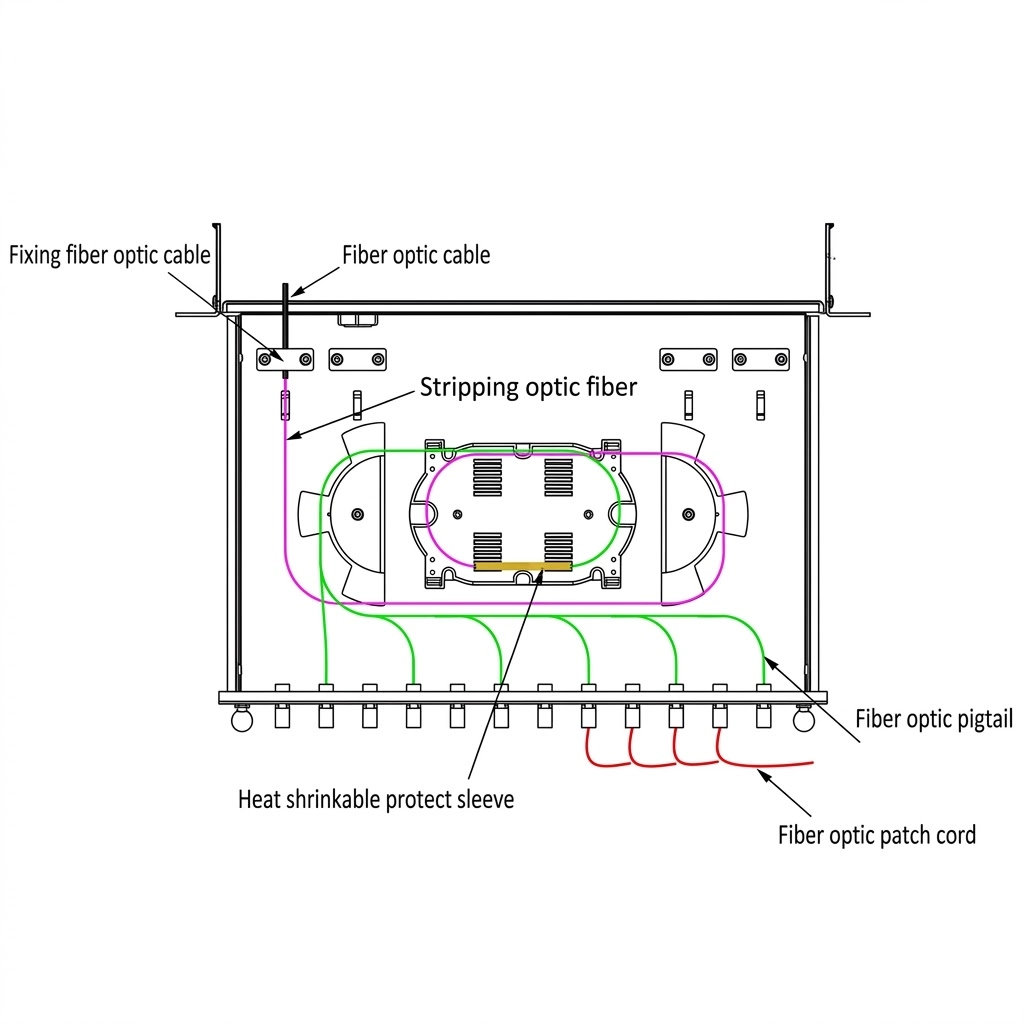
Splice Organization: Contains 2 internal splice trays. Thus, the interior secures fusion protection sleeves and preserves safe fiber routing paths.
-
Chassis Customization: Can be customized according to drawings. In addition, factories build specific bracket positions or hole arrangements upon request.
-
Applications
-
FTTH and FTTx Networks: Provides optical fiber termination and distribution for subscriber lines, so service crews deploy connections quickly.
-
Central Offices: Telecom central office and backbone fiber management. Thus, technicians link outside plant cables to internal active switches.
-
Data Centers: Data center fiber cabling and structured networks. Because ports remain clearly organized, operations teams handle high-density cross-connects cleanly.
-
Enterprise Infrastructure: Enterprise LAN/WAN systems for secure connectivity across corporate campus networks.
-
CATV Systems: CATV, broadband, and multimedia communication networks.
-
Laboratories: Testing, monitoring, and fiber distribution in laboratories and diagnostic environments.
Frequently Asked Questions
-
What is the maximum optical fiber capacity of this unit?
It terminates up to 24 fibers when fitted with 24 SC simplex adapters. However, it holds up to 48 fibers when configured with 24 LC duplex adapters across its 2 internal splice trays.
-
What front adapter types fit this chassis?
The unit accommodates 24 SC simplex or 24 LC duplex adapters. In addition, the panel cutouts support FC and ST adapters.
-
Does this unit fit commercial equipment racks?
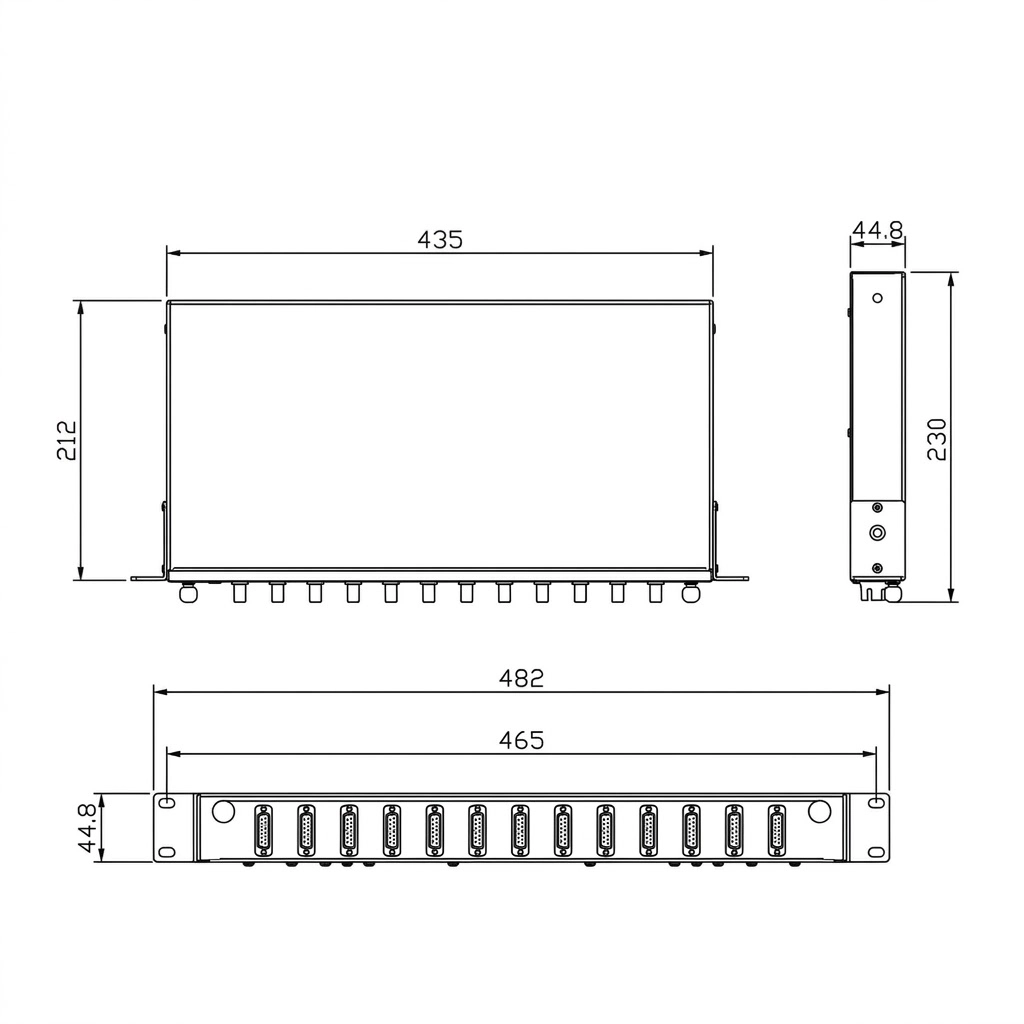
Yes. The 482 mm outer width fits standard 19-inch telecommunications and server cabinets.
-
What material forms the chassis body?
Cold-rolled steel plate forms the chassis, and an outer powder coating shields the metal against mechanical wear and corrosion.
-
Can technicians deploy this unit outdoors?
No. Engineers designed this patch panel for indoor settings, such as central offices, telecom rooms, and data center white space.
-
How do technicians access the internal trays?
A sliding tray pulls forward on built-in tracks, so technicians access internal trays without removing the chassis.
-
Does the front panel include port identification?
Yes. Clear port labels mark each position, so network teams trace and document lines easily.
Installing a 12-24 core SC fiber optic patch panel establishes an orderly, serviceable cross-connect point inside 19-inch equipment racks. Because this unit combines cold-rolled steel construction, 2 internal splice trays, and broad adapter compatibility, it protects critical splices and simplifies routine network maintenance.