
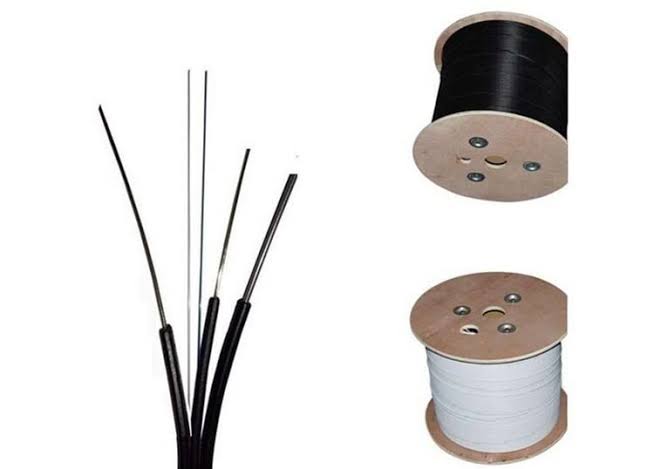
The flat-type FTTH (fiber-to-the-home) drop cable is a specialized optical fiber cable designed to connect a fiber distribution network to a subscriber’s home, office, or building. It is a premium, all-dielectric, and UV-resistant solution. It features a unique arc-runway flat profile designed for reliability and flexibility. The flat profile provides flexibility, ease of installation, and resistance to tensile forces. FTTH drop cables are lightweight and have a compact design. It also has high tensile strength, low installation costs, and is compatible with fusion and mechanical splicing. The cable connects the optical distribution point to the subscriber premises, transmits high-speed internet, and protects fibers from mechanical stress and environmental exposure. Flat FTTH drop cables are crucial for the growth of gigabit broadband, cloud computing, smart homes, 5G backhaul, and IoT services.
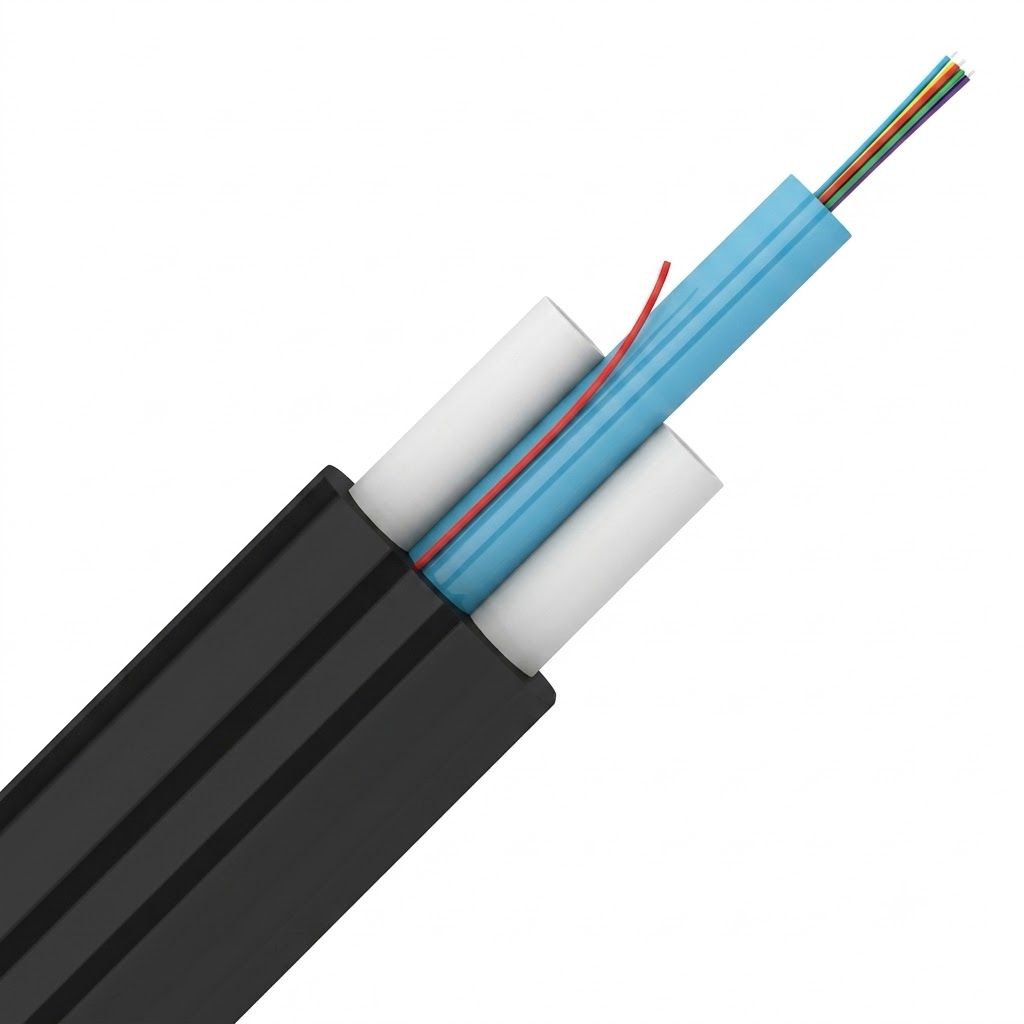

Components of the flat type FTTH drop cables
The flat type FTTH drop cable provides a balance of mechanical strength, flexibility, and ease of installation while protecting the optical fibers from stresses. The drop cables have high tensile strength, lightweight construction, weather resistance, mechanical protection, and low optical attenuation. These features help deliver high-speed broadband while ensuring mechanical robustness and installation efficiency. Common components include:
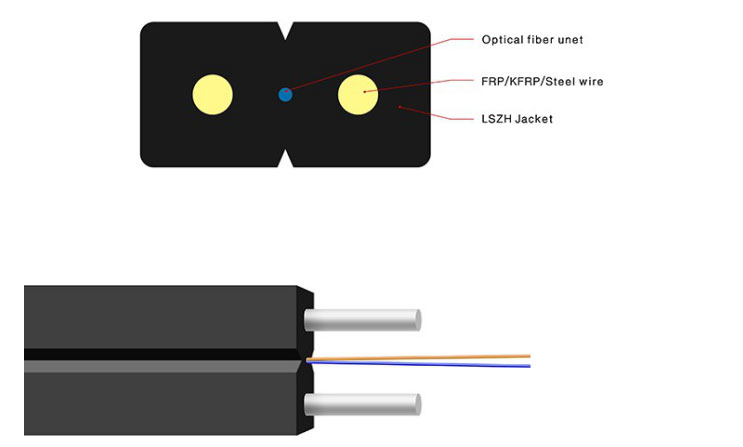
- Optical fiber – this is the medium that transmits high-speed internet and data services. It also maintains low attenuation and supports high-bandwidth applications. It consists of a single-mode fiber, fiber cores, and tight or loose buffer.
- Strength members – these reinforce the cable and protect the delicate optical fibers from tensile stress. They consist of fiber-reinforced plastic, galvanized steel wire, and steel rod. These members prevent fiber stretching, improve tensile strength, protect against deformation, and enhance installation reliability.
- Cable sheath – this is the outer jacket that protects the internal components from damage. It is from low-smoke, zero-halogen polyethylene and flame-retardant PVC. The sheath offers moisture protection, UV resistance, abrasion resistance, chemical resistance, and fire safety.
- Water-blocking materials – outdoor flat FTTH cables may include water-blocking elements such as water-swellable yarn, water-blocking tape, or gel-free water-blocking compounds. These materials prevent moisture migration, improve reliability, and protect optical fibers from water ingress.
- Identification markings—these may include manufacturer name, fiber type, fiber count, production date, and meter markings.
Types of FTTH drop cables
FTTH drop cables are available in different designs to meet various installation environments, mechanical requirements, and network architectures. The choice of cable depends on installation method, distance, environmental conditions, and the level of mechanical protection needed.
Flat FTTH drop cable
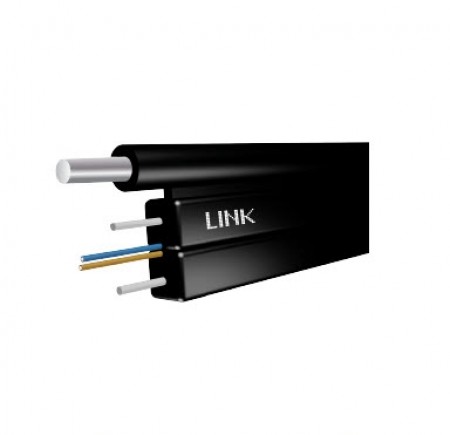
This has a flat and compact profile, one or two optical fibers, two parallel FRPs, a PE outer jacket, and is lightweight. They serve in residential FTT installations, indoor wiring, outdoor wall-mounted installations, apartment buildings, and campus networks.
Round FTTH drop cables
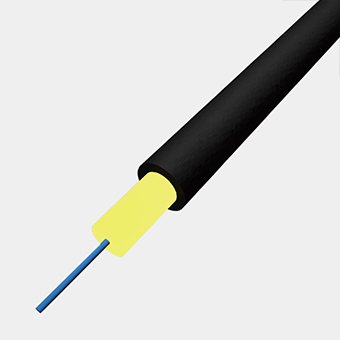
These cables have a circular cross-section and offer greater flexibility for some installation methods. They have circular construction, central optical fibers, aramid yarn, and a durable outer sheath. They are ideal for indoor cable routing, conduits, cable trays, data centers, and office buildings.
Self-supporting drop cables
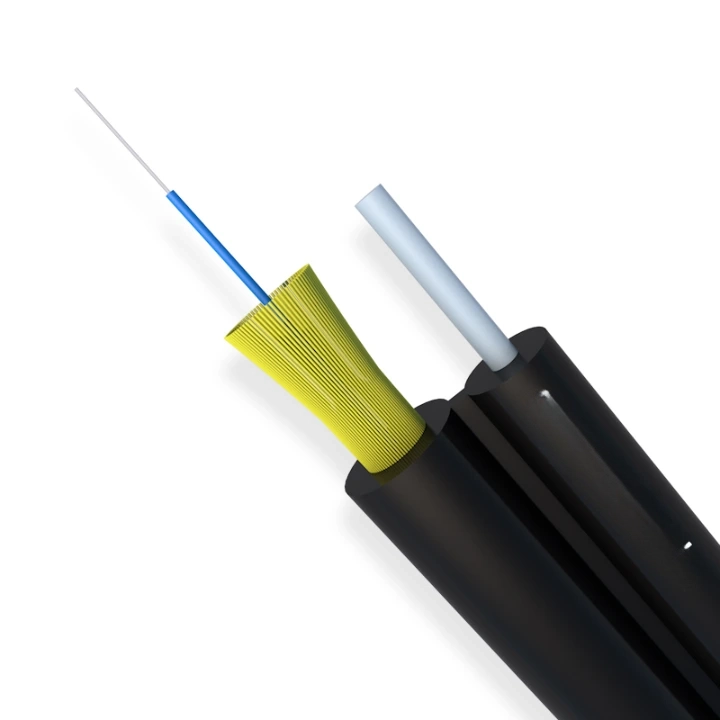
This incorporates a messenger wire that allows it to span between poles without needing a separate support cable. It consists of integrated steel messenger wire, high tensile strength, and a weather-resistant PE jacket. It serves on pole-to-house connections, rural broadband deployment, and utility pole installations.
Figure-8 FTTH drop cable
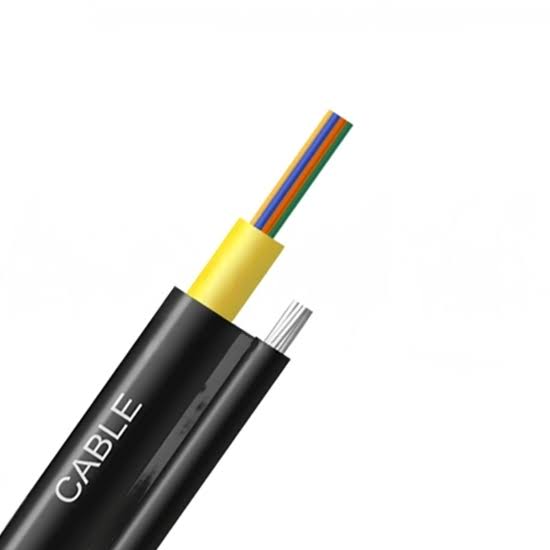
This combines an optical cable and messenger wire in a figure-eight profile. It consists of a steel messenger integrated with an optical cable, high mechanical strength, and UV-resistant construction. Figure-8 drop cables serve in aerial FTTH networks, long-distance subscriber drops, and utility infrastructure.
Armored FTTH drop cables
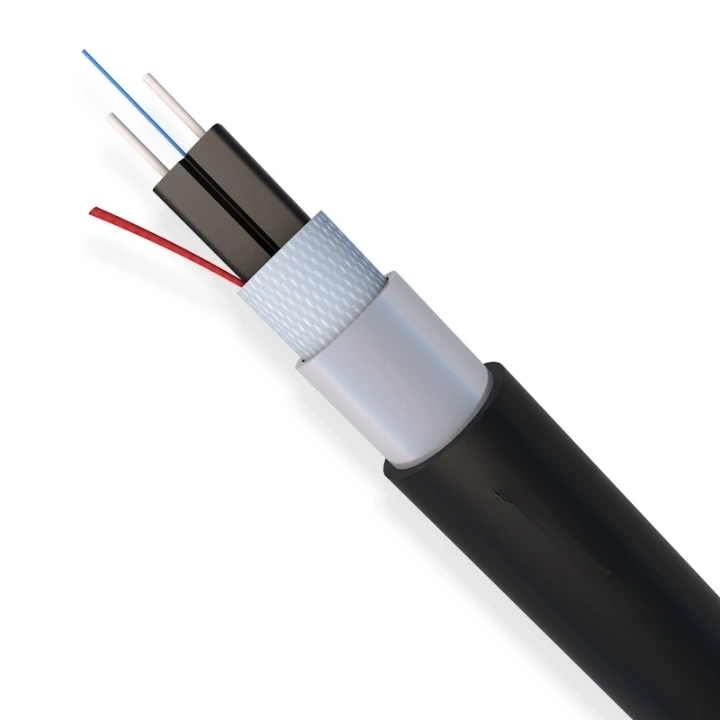
These cables include an extra protective layer to withstand harsh environments. They consist of steel tape, high crush resistance, and a moisture-resistant design. The armored cables are ideal for underground installations, industrial facilities, direct burial, and harsh outdoor environments.
Importance of flat type FTTH drop cables in telecommunication networks
Flat type FTTH drop cables form the last-mile connection between the optical distribution network and the end user. They enable high-speed broadband services for residential, commercial, and industrial customers. Their compact design, mechanical strength, and optical performance make them ideal in FTTH deployments. Here is their role in telecommunication networks.
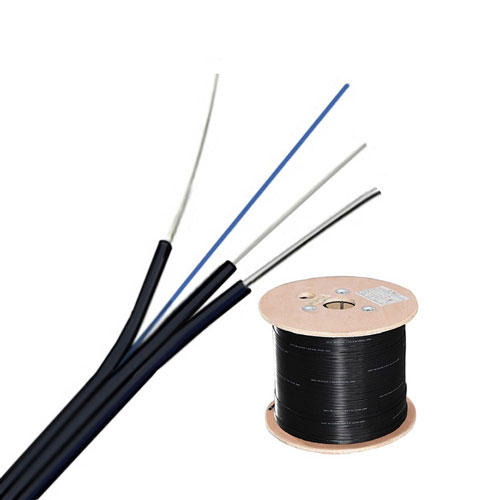
- Enable last-mile fiber connectivity – the FTTH drop cables complete the final connection from the service provider’s network to the customer’s premises. The link enables gigabit broadband internet, voice over IP, IPTV, cloud-based services, and smart home connectivity.
- Support high-speed data transmission – flat FTTH drop cables use single-mode optical fibers that can transmit large amounts of data with minimal signal attenuation. They support Gigabit passive optical networks, XGS-PON, and 10G and higher broadband services.
- Improve network reliability – the combination of bend-insensitive optical fibers and reinforced strength members protects the cable from mechanical stress. This improves signal stability, network uptime, and service reliability and reduces maintenance needs.
- Support digital transformation – flat FTTH drop cables provide the infrastructure needed for digital services. It supports remote work, telemedicine, video conferencing, smart city applications, and the Internet of Things.
- Reduce deployment costs – the flat profile simplifies routing along walls, ceilings, and building exteriors. It offers faster installation, reduced installation equipment, easier cable management, and simplified maintenance.
Selecting the right flat-type FTTH drop cable
Selecting the right drop cable ensures reliable optical performance and cost-effective network deployment. It is crucial to match the cable to the installation environment, network requirements, and applicable industry standards. Here is what to consider when selecting the right FTTH drop cable.
- Installation environment—determine whether the cable will serve indoors, outdoors, or underground. For indoor installations, select a cable with LSZH, flame-retardant properties, and high flexibility. For outdoor installations, choose a cable with a UV-resistant PE jacket, water-blocking construction, weather resistance, and high mechanical strength.
- Fiber type – the optical fiber determines transmission performance. Modern FTTH deployment uses G.657A2 bend-insensitive fiber. This fiber type maintains low optical loss even when routed around tight bends.
- Fiber count – select the fiber count based on current and anticipated service requirements. Most applications use 1 fiber, 2 fiber, 4 fiber, or more fibers.
- Strength members – the members protect the optical fibers during installation and operation. For instance, FRP (fiber-reinforced plastic) is lightweight, nonmetallic, corrosion-resistant, and electrically nonconductive. FRP is ideal for FTTH deployments, areas with electromagnetic interference, and coastal environments. Additionally, steel wire offers higher tensile strength and greater mechanical durability.
- Jacket material – select the right jacket material considering LSZH jackets for indoor installations and polyethylene jackets for outdoor installations.
- echanical performance – consider the tensile strength, crush resistance, impact resistance, minimum bending radius, and flexibility. This is to ensure the cable meets the mechanical demands of the installation.
Flat-type FTTH drop cable advantages in telecommunication networks
The drop cables have a compact structure, high mechanical strength, and superior optical performance, enabling telecommunication operators to deploy reliable, high-speed broadband services. The key benefits include the following:
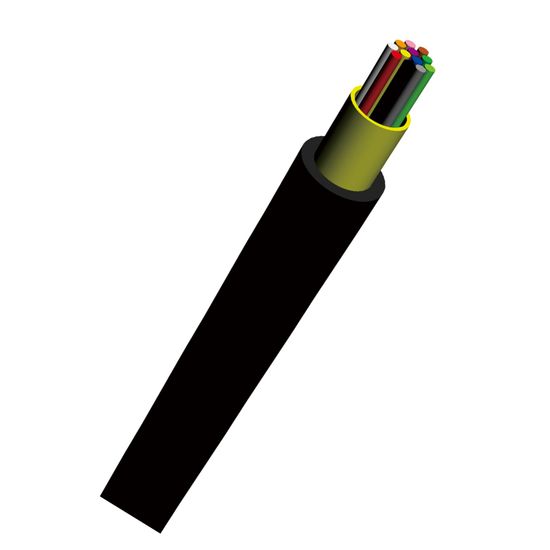
- Flat structure – the FTTH drop cable has a central optical fiber unit with two parallel FRP strength members that enhance protection and structural stability.
- High bandwidth and performance—low-bend-sensitivity fiber ensures data transmission with minimal signal loss. This makes the FTTH drop cable highly reliable.
- Durable LSZH sheath—the low-smoke, zero-halogen sheath is flame retardant. It reduces toxic fumes in case of fire.
- Non-metallic strength members—FRP components protect against lightning and prevent electromagnetic interference to ensure stable fiber optic drop cable data flow.
- High crush resistance – FRP strength members improve crush resistance and protect the cable from mechanical stress.
Technical specifications for the flat-type FTTH drop cable
The flat type drop cable is designed to provide reliable optical transmission while withstanding the mechanical and environmental demands of last-mile fiber deployments. It is crucial to select the cable with bend-insensitive fibers, robust FRP or steel strength members, and a suitable jacket material. This helps ensure dependable operation in residential, commercial, and outdoor fiber access networks. The specifications make a flat type FTTH drop cable a reliable solution for current gigabit broadband deployments and high-capacity telecommunication infrastructure.
| Product Type | Flat Type FTTH Drop Cable |
| Jacket Material | HDPE |
| Fiber Coloring | Blue, Orange, Green, Brown, Slate, White, Red, Black, Yellow,Violet, Rose, Aqua |
| Jacket Marking | Feet/Meter |
| Subunit Type | Gel-filled |
| Installation Methods | Aerial, Duct, Drop |
| Total Fiber Count | 12 |
| Buffer Tube/Subunit Diameter | 3 mm (0.12 in) |
| Diameter Over Jacket | 8.1 mmx 4.5 mm (0.32 in x 0.18 in ) |
Application areas of the FTTH drop cables
The FTTH drop cables are versatile solutions for last-mile fiber connectivity across residential, commercial, institutional, and industrial environments. Their high tensile strength and bend-sensitive optical fibers make them suitable for a wide range of indoor and outdoor telecommunication applications. Their key application areas include:
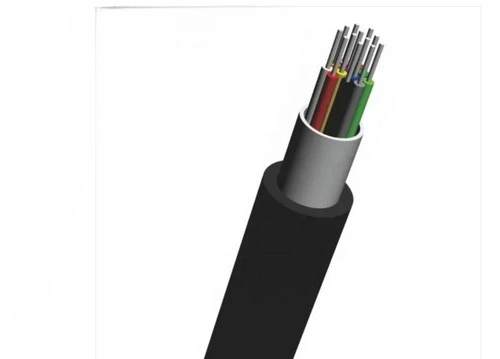
- Indoor cabling for FTTx installations – this is ideal for indoor connections in homes and offices. It provides a stable link from the main network to the end-users.
- Direct cabling for end users – the drop cables are ideal for connecting devices directly. The fiber optic drop cable enhances network performance with minimal data loss.
- Aerial applications – the all-dielectric version fits wedge clamps for aerial spans to provide a cost-effective above-ground solution.
- Underground installations – toneable versions with a 24 AWG conductor allow for accessible location and separation in underground scenarios.
- Access networks – the FTTH drop cable is ideal for access networks in urban and suburban areas. It supports seamless connectivity to homes and businesses.