
Horizontal inline Splice Closure (288 Cores)
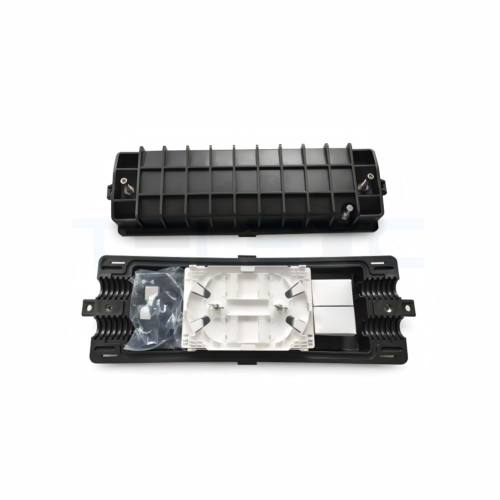
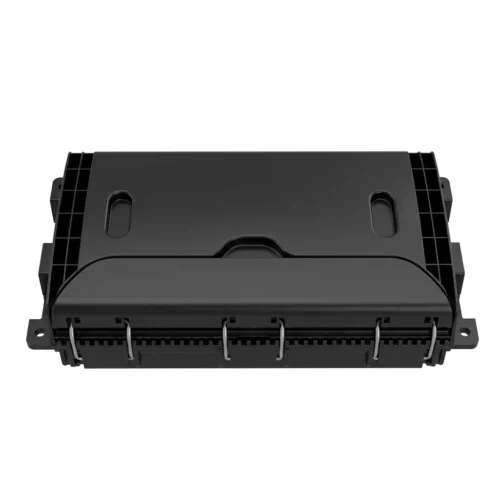
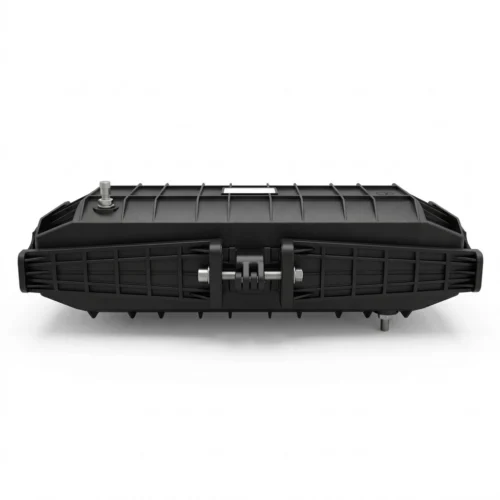
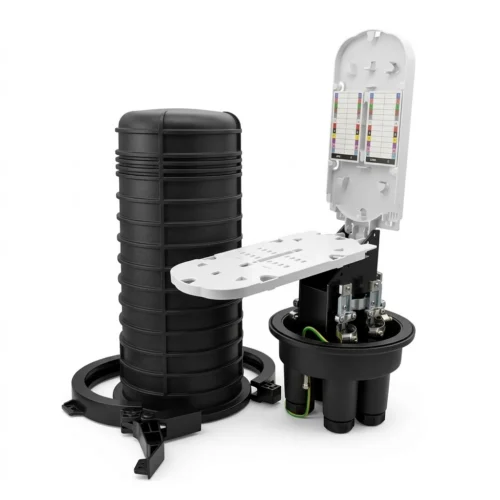
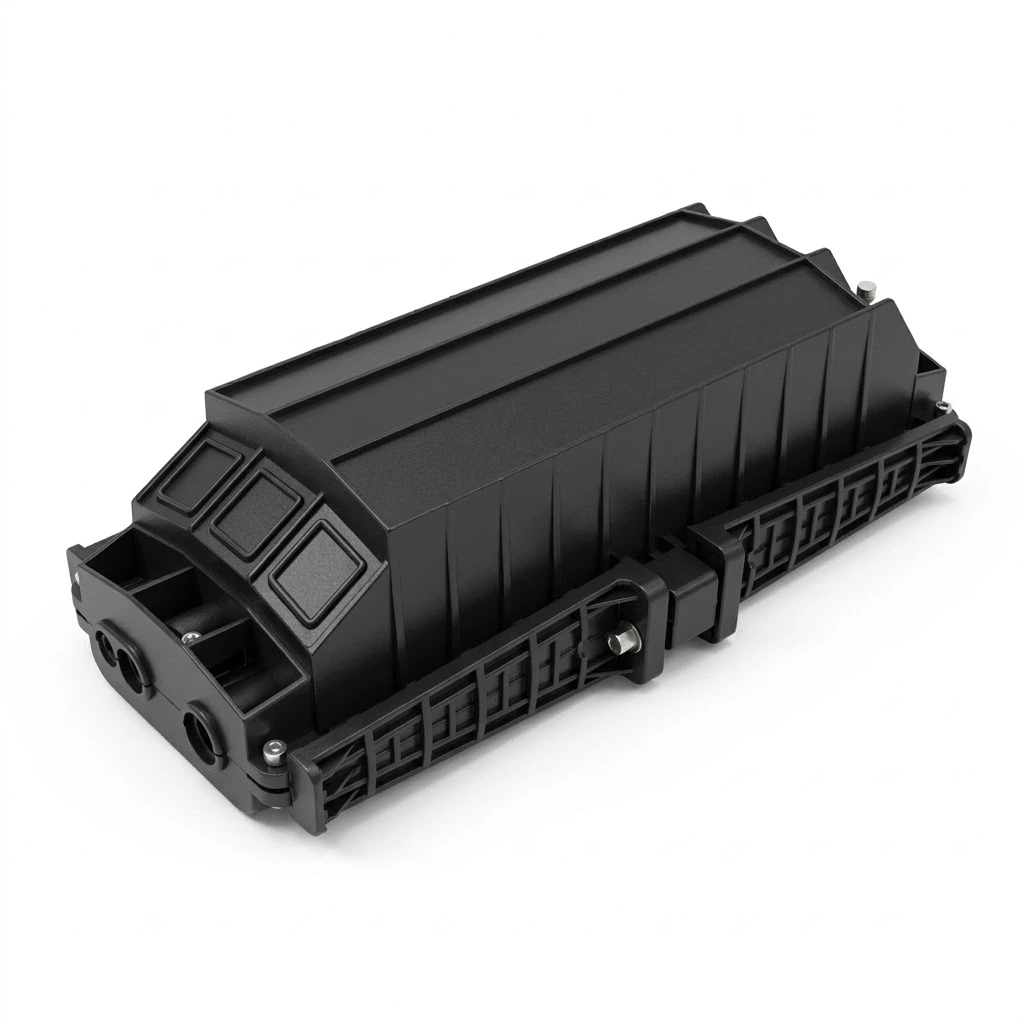
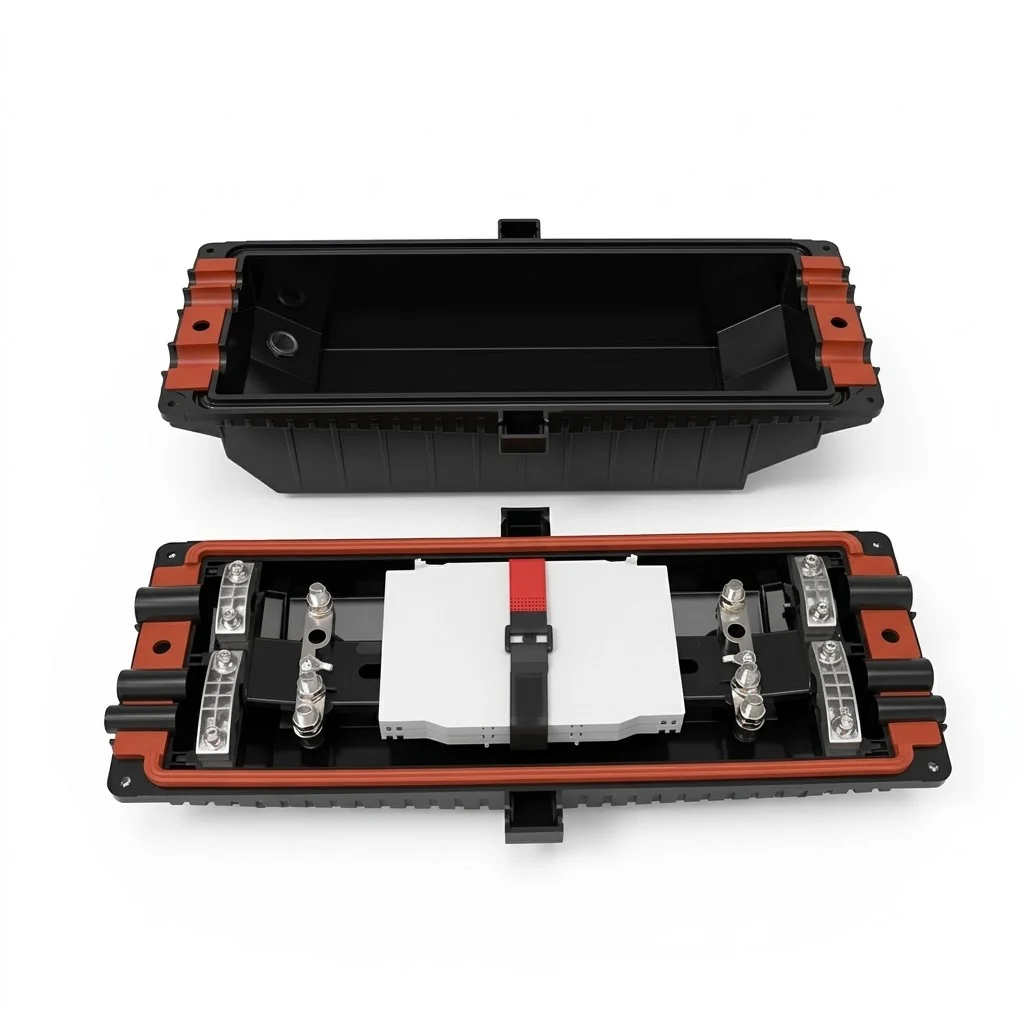
Fiber optic cable reels typically run in standard lengths of 2 km or 3 km, requiring inline jointing enclosures to extend cable spans across outside plant infrastructure. This horizontal inline splice closure provides mechanical protection, cable management, and environmental sealing for fiber jointing, branching, and distribution. Constructed from high strength plastic with an IP68 protection rating, the unit supports inline fiber connectivity in FTTH PON, CATV HFC, and long-haul telecommunications networks. It accommodates up to 288 fiber cores for both bunchy fiber and ribbon fiber configurations across aerial, duct, and direct bury environments.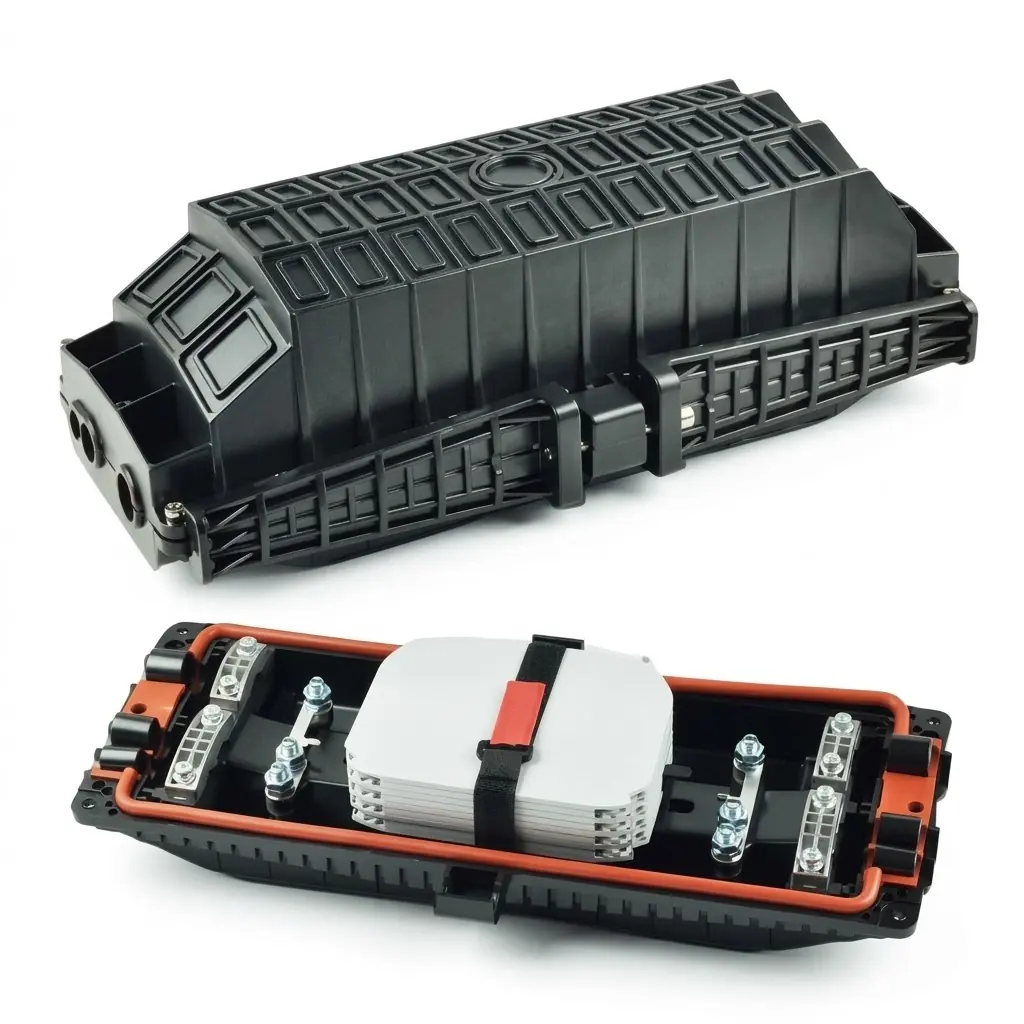
Key Features
-
Housing Material: High strength plastic body. Protects internal optical splices against environmental ingress, water, and dust.
-
Ingress Protection: IP68 rated sealing. Prevents water and particulate intrusion in underground ducts, direct bury trenches, and aerial installations.
-
Splice Capacity: Maximum capacity of 288 cores. Supports high-density trunk splicing and regional cable distribution.
-
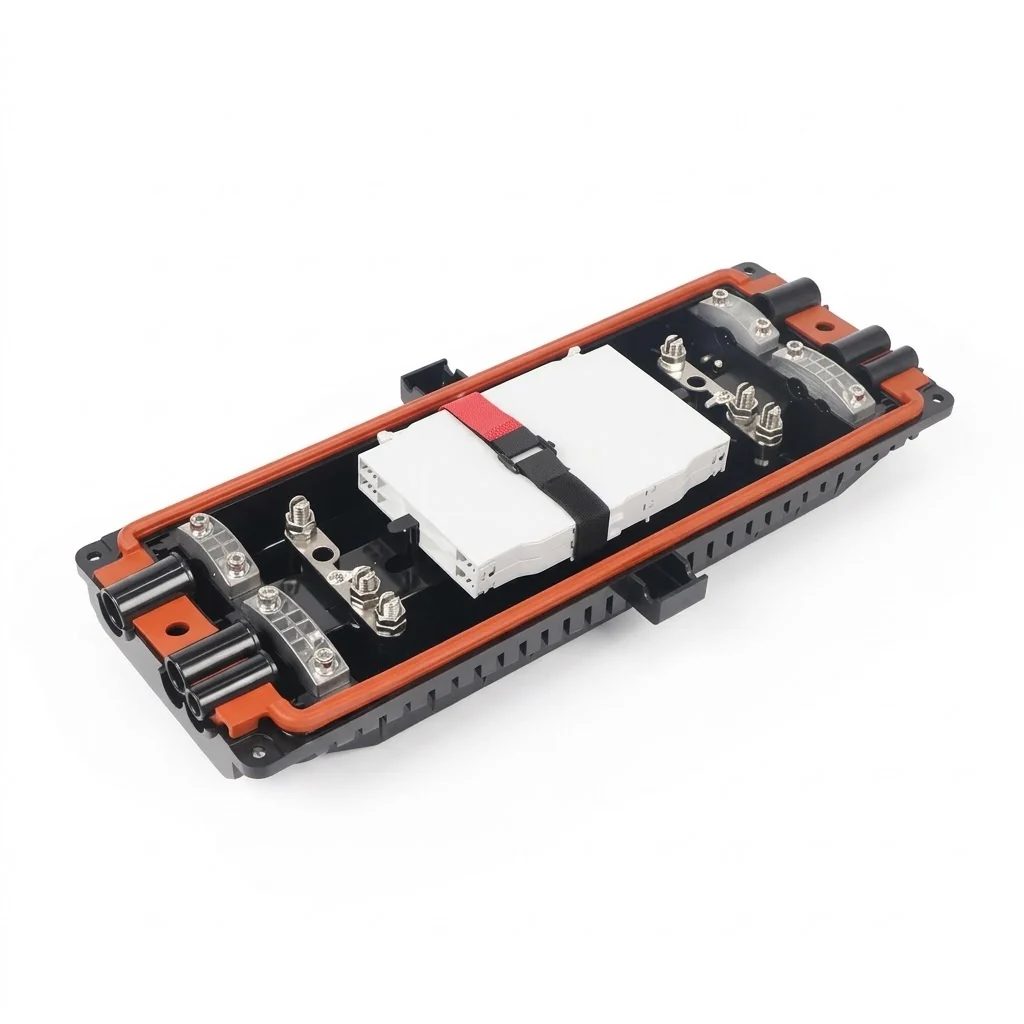
Cable Port Configuration: 6 entry ports arranged as 3 entries on each side. Accommodates inline cable pass-through, branching, and line extension.
-
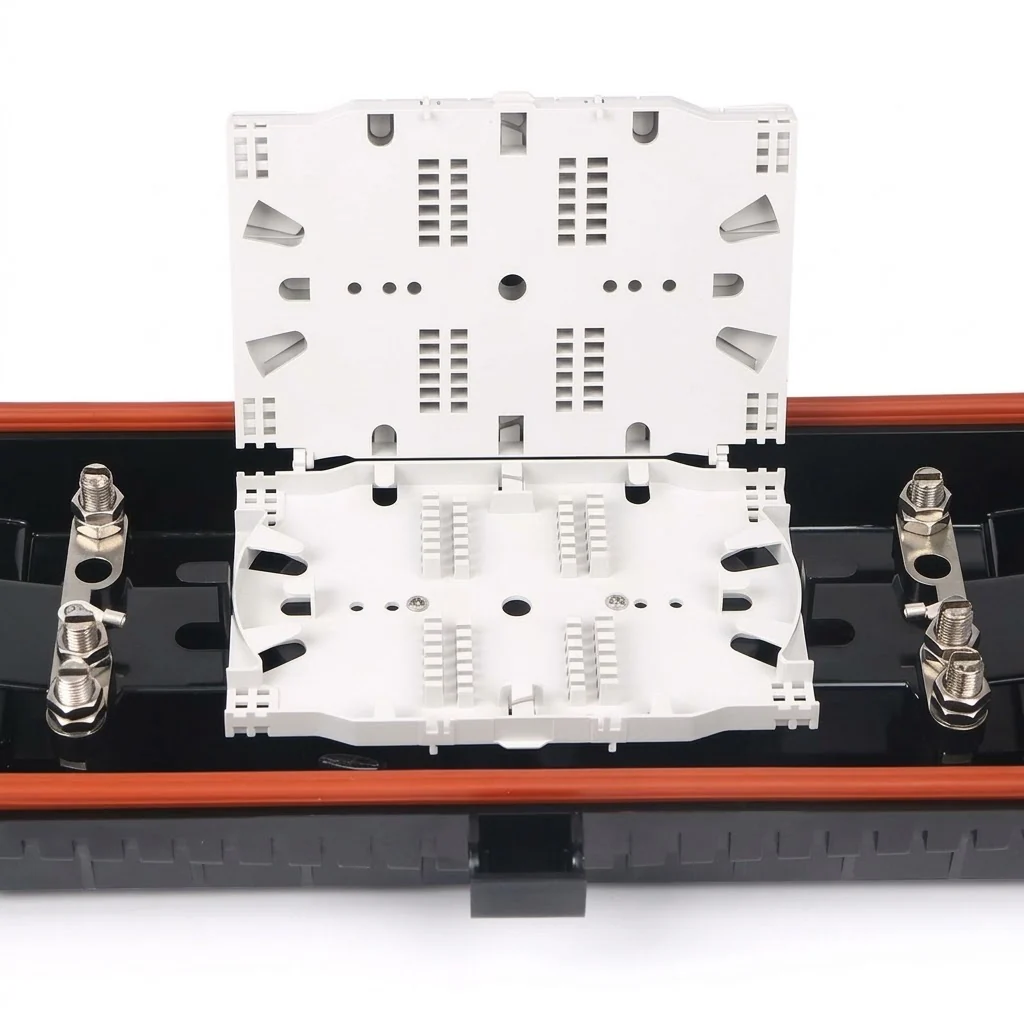
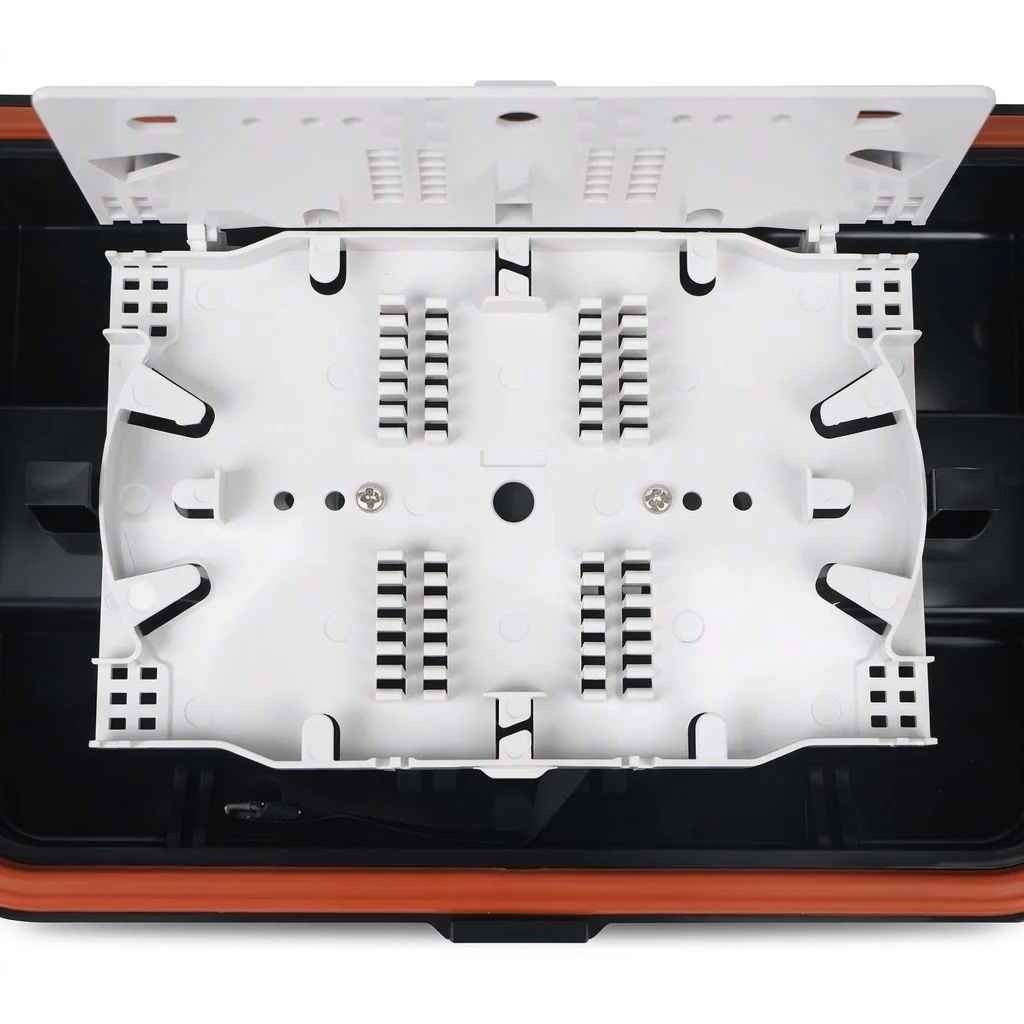
Internal Fiber Management: Layered and detachable splice trays. Simplifies tray installation, fiber routing, and selective access during routine maintenance.
-
Fiber Structure Compatibility: Designed for both bunchy fiber and ribbon fiber. Enables deployment across diverse feeder and distribution cable types.
-
Tool Compatibility: Hardware opens and re-enters using a common can wrench. Simplifies field maintenance without requiring proprietary manufacturer tools.
Product Configuration
-
Splice Tray Options: Available in 12-core or 24-core tray capacities.
-
Cable Diameter Range: Accommodates incoming and outgoing cables with outer diameters from 8 mm to 23 mm (Ф8 – Ф23 mm).
-
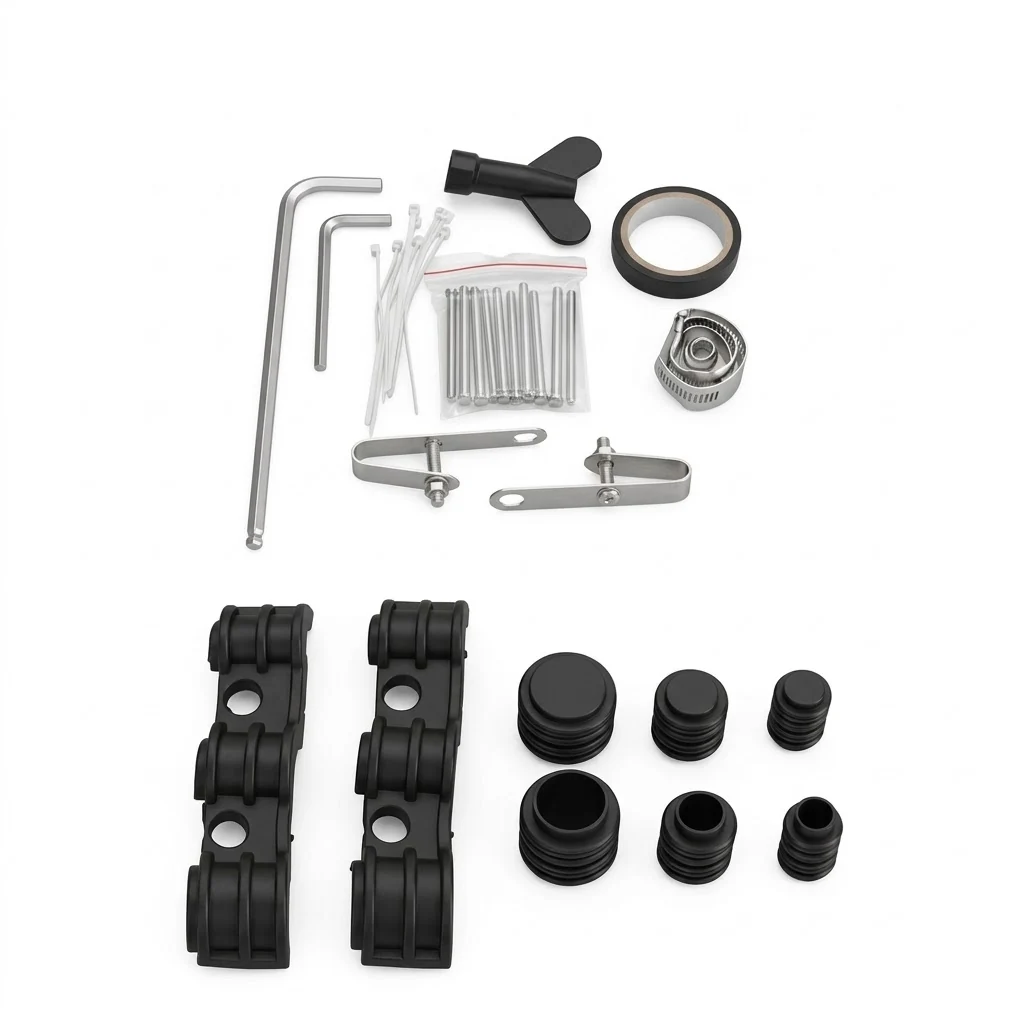
Standard Accessory Kit:
-
Heat Shrinkable Sleeves: Supplied per closure capacity to protect completed fusion splices.
-
Nylon Cable Ties: Included for securing fiber bundles and protective buffer jackets.
-
Insulation Tape: 1 roll supplied to increase cable diameter for secure mechanical clamping.
-
Seal Tape: 1 roll supplied to build cable outer diameter to fit seal fittings.
-
Hanging Hook Kit: 1 set supplied for aerial pole and strand attachment.
-
Earthing Wire: 1 piece included for continuity bonding between grounding devices.
-
Abrasive Cloth: 1 piece included for surface roughening of cable jackets to improve seal contact.
-
Labeling Paper: 1 sheet supplied for fiber and tray identification.
-
Measuring Paper: 1 piece supplied to verify cable perimeter after applying seal tape.
-
Desiccant Pack: 1 bag supplied to absorb internal ambient moisture prior to closure sealing.
-
Buffer Tubes: Supplied according to customer requirements to protect bare fibers routed to splice trays.
-
Applications
-
FTTH PON Deployments: Acts as an optical cable distribution point connecting central offices to field distribution nodes.
-
Long-Haul Cable Networks: Connects standard 2 km and 3 km cable reel segments across continuous long-haul spans.
-
CATV HFC Networks: Houses trunk and feeder optical joints in hybrid fiber-coaxial systems.
-
Aerial Installations: Mounts directly to strand lines or utility poles using the included hanging hooks.
-
Underground Manholes and Ducts: Provides IP68 submersion protection inside underground access chambers.
-
Direct Buried Plant: Installs directly into trench beds without requiring secondary handhole vaults.
Installation and Cable Preparation
-
Jacket Preparation: Roughen the outer cable sheath using the included abrasive cloth to ensure effective adhesion of the sealing materials.
-
Port Sizing: Wrap seal tape and insulation tape around the cable jacket, verifying the final diameter with the supplied measuring paper to match the port fittings.
-
Moisture Mitigation: Place the desiccant bag inside the body base before securing the cover to extract trapped moisture.
-
Fastening: Close and tighten the exterior hardware using a standard can wrench.
Selection Considerations for Horizontal Fiber Optic Splice Closures
-
Entry Port Alignment: Confirm that an inline 3-in / 3-out structure matches your route topology. Branch lines must stay within the 6 available port entries.
-
Splice Tray Density: Select either 12-core or 24-core trays depending on incoming cable buffer tube sizes and operator tray count standards.
-
Cable Sheath Diameters: Ensure all incoming cables fall between 8 mm and 23 mm. Cables outside this range require verification before field deployment.
-
Grounding Configuration: Verify whether internal or external electrical continuity matches the single earthing wire provided in the standard accessory kit.
Frequently Asked Questions
What tool is required to open and secure this closure?
Technicians can open, assemble, and re-enter the housing using a standard can wrench.
Does this unit support ribbon fiber cables?
Yes. The internal layout and splice trays support both ribbon fiber and standard loose-tube bunchy fiber.
How are cable entries sealed against water ingress?
The closure uses a sticky structure sealing system combined with seal tape, insulation tape, and mechanical fittings to achieve an IP68 seal.
Selecting the correct horizontal fiber optic splice closure protects critical optical links against moisture intrusion, mechanical stress, and environmental wear. With an IP68 protection level, 288-core maximum capacity, and multi-environment suitability for aerial, duct, and direct bury runs, this inline enclosure provides dependable mechanical protection across outside plant networks.