
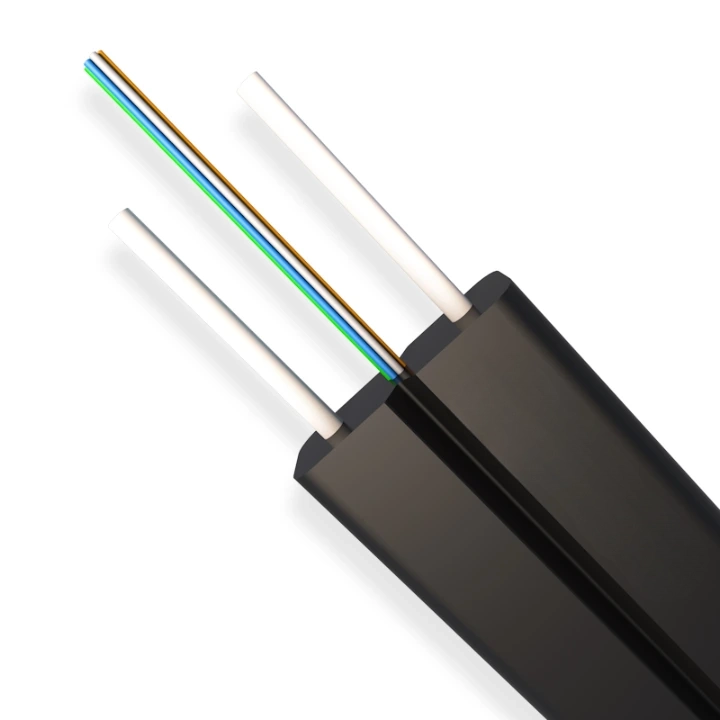
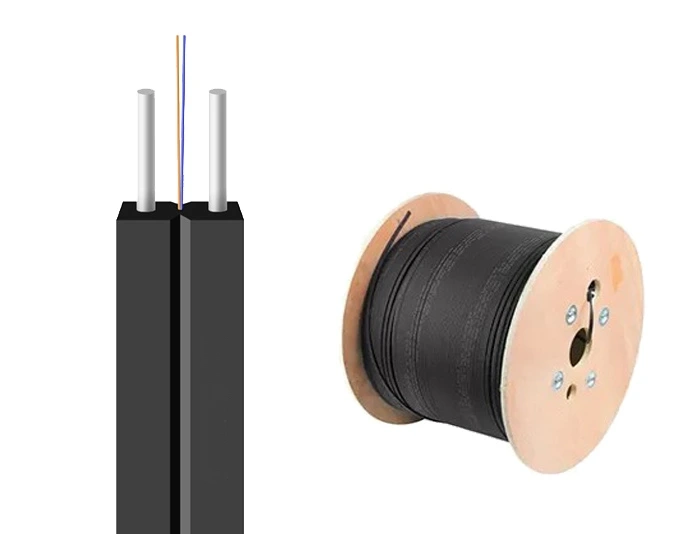
A butterfly flat drop cable is a fiber optic cable used for fiber-to-the-home (FTTH) and fiber-to-the-building (FTTB) networks. It connects distribution points in a telecommunications network to individual homes, offices, and commercial buildings. It has a flat and symmetrical structure that resembles a butterfly’s wings. This structure consists of a fiber unit in the center and two FRP-strength members placed at the two sides. The flat indoor cable has a greater bandwidth to carry data and is less susceptible to interference. Additionally, the non-metallic strength member provides lightning protection and anti-electromagnetic interference. FTTH cables are ideal for indoor cabling, end-user direct cabling, and access networks. Butterfly flat drop cables in FTTH and FTTB offer a compact design, high transmission performance, mechanical protection, and flexible installation. It also eases termination, suitable for connecting telecommunications distribution networks to homes and businesses.
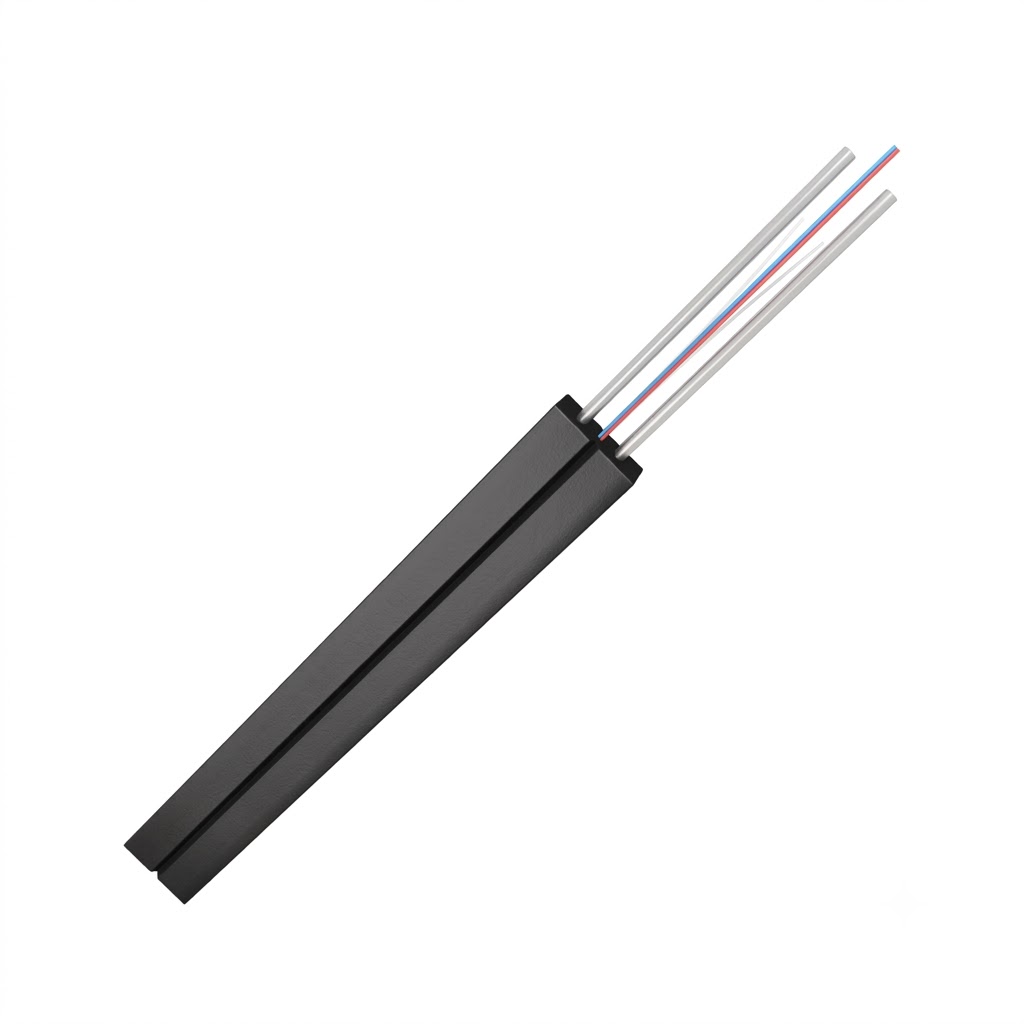

Core structure of the butterfly flat drop cable
The core structure of a butterfly flat drop cable protects optical fibers and maintains signal transmission quality. It provides enough mechanical strength for last-mile FTTB and FTTH installations. It consists of a flat cross-sectional design in which the optical fiber unit is positioned between two parallel strength members. This structure supports straightforward handling, efficient installation, and reliable broadband connectivity. Key components of the cable include:
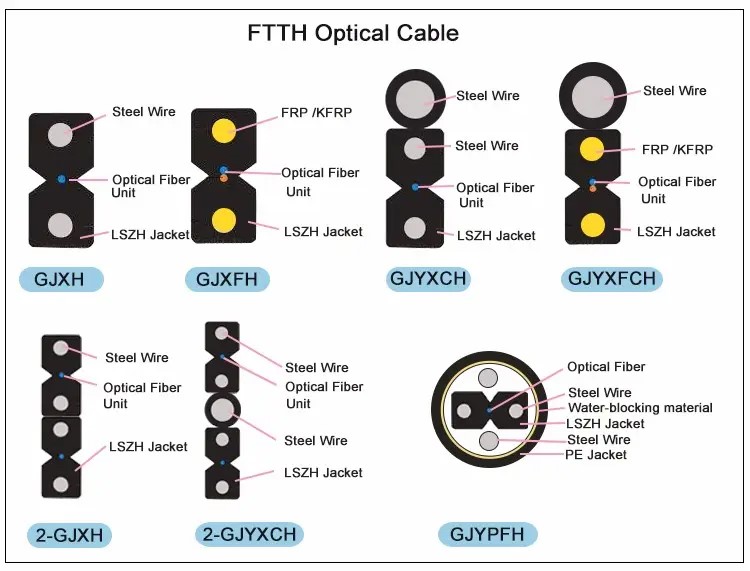
- Optical fiber core—this is the central transmission component that carries data as light signals between telecommunications distribution points and end-user premises. It transmits high-speed data, voice, and video signals over long distances with low attenuation.
- Primary and secondary fiber coatings – the glass fiber consist of polymer coatings that help prevent mechanical damage and preserve its optical performance. The coating settles on the glass cladding while the secondary coating provides protection depending on the cable design. The coatings and buffers protect the glass fiber against moisture, abrasion, and microscopic surface damage. It also reduces the risk of fiber breakage during handling and installation.
- Parallel strength members – the strength members are on opposite sides of the central optical fiber unit that creates the flat-like structure. They absorb the tensile forces during cable pulling, routing, and installation to reduce the risk of excessive stress on the optical fiber. They also improve the cable’s dimensional stability and help maintain its flat configuration.
- Outer jacket and protective sheath – the outer jacket is the protective layer of the butterfly flat drop cable. It surrounds the optical fiber unit and strength members and protects the internal components from damage. The sheath consists of LSZH, PE, and PVC materials.
Types of butterfly flat FTTH optical cable
Butterfly flat drop cables have a compact, flat profile with optical fibers positioned between parallel strength members. This structure allows convenient installation in indoor and outdoor access networks. Their specific types vary according to their optical fiber count, strength-member materials, installation environment, and cable construction.
Single-core butterfly flat drop cable
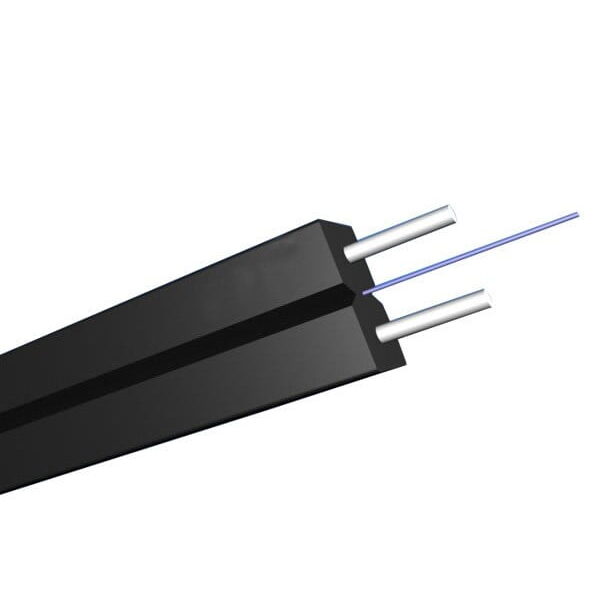
This cable consists of one optical fiber designed for broadband transmission in FTTH networks. The optical fiber is often between two parallel strength members. The single-core drop cable is compatible with FTTH connectors, splice closures, and termination boxes. It serves in residential broadband connections, individual subscriber drops, and last-mile fiber access installations.
Two-core drop cable
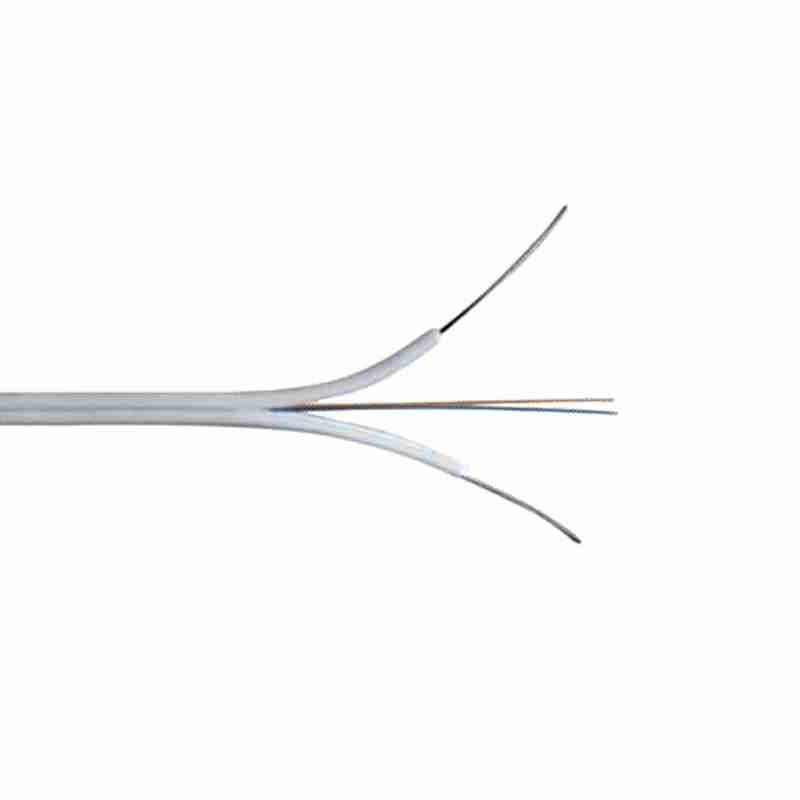
This one consists of two optical fibers within a single flat cable structure. The fibers contain outer jackets and are supported by parallel strength members. This design provides fiber capacity compared with single-core cables without the need for a separate cable. It supports network designs that need a spare fiber for future use. It is ideal for multi-service FTTH connections, small commercial premises, and installations that need a spare optical fiber.
Indoor flat drop cables
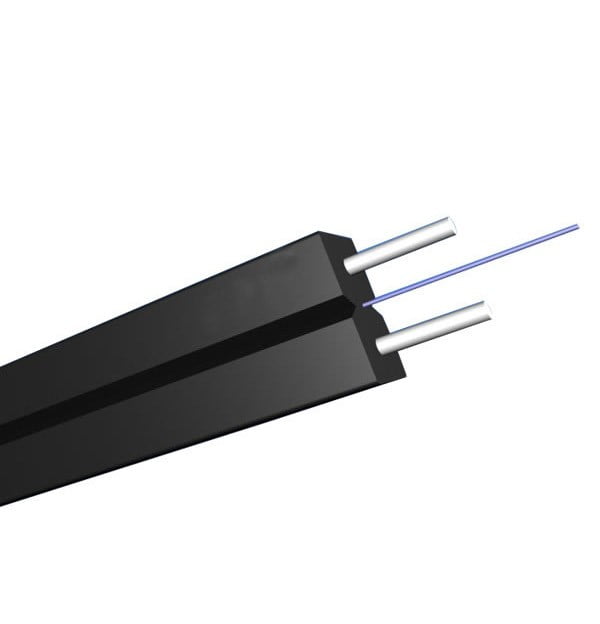
These are designed for routing optical fiber within residential buildings, offices, apartments, and commercial premises. They feature a compact dimension, flexible construction, and jacket materials that help meet applicable indoor fire-safety requirements. They serve in indoor FTTH subscriber connections, apartment buildings, office networks, and connections between building entry points and customer equipment.
Outdoor butterfly cable
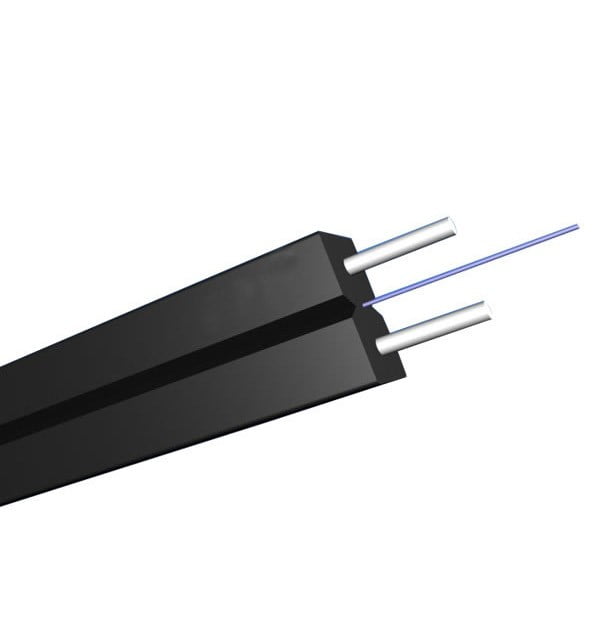
Outdoor flat cables serve in external telecommunication access networks. They connect distribution points, poles, access terminals, and customer premises. They use weather-resistant polyethylene jackets. Outdoor drop cables serve in FTTH distribution, pole-to-building connections, and last-mile broadband infrastructure.
The working principle of the butterfly flat drop cables
A butterfly flat FTTH drop cable transmits data as pulses of light through optical fibers. It also enable high-speed broadband connectivity between telecommunications distribution networks and end-user premises. Its working depends on optical signal transmission, total internal reflection, and the mechanical protection provided by its flat cable structure. The cable connects optical distribution points to customer premises, supporting internet, voice, video, and other fiber-based communication services. At the telecommunications provider’s central office, data signals are converted into optical signals using optical transmitters. These optical signals travel through the fiber-optic network toward the subscribers premises. The butterfly flat drop cable carries the optical signals through its glass fiber core which is surrounded by a cladding layer with a lower refractive index. The reflective index difference between the core and cladding enables light to remain confined within the core through total internal reflection.
Selecting the right butterfly FTTH drop cable
When choosing the drop cables, it is essential to select the right one to ensure reliable optical signal transmission, efficient installation, and long-term performance in fiber-optic telecommunication networks. It is crucial to check the optical fiber specifications, cable construction, mechanical strength, installation environment, and compatibility with existing FTTH infrastructure when choosing the cables. Considering these requirements helps reduce signal loss, installation damage, and maintenance costs. Here are the factors to consider when selecting butterfly flat FTTH drop cables.
- Determine the required optical fiber type—the features of the optical fiber determine its signal attenuation, transmission distance, and resistance to bending. For instance, single-mode optical fibers support high bandwidth and long-distance optical transmission.
- Select the right fiber count—the correct fiber count depends on the number of optical connections needed, future expansion plans, and the network architecture. Fiber count should match the distribution terminal, splice closure, connector, and ONT configuration.
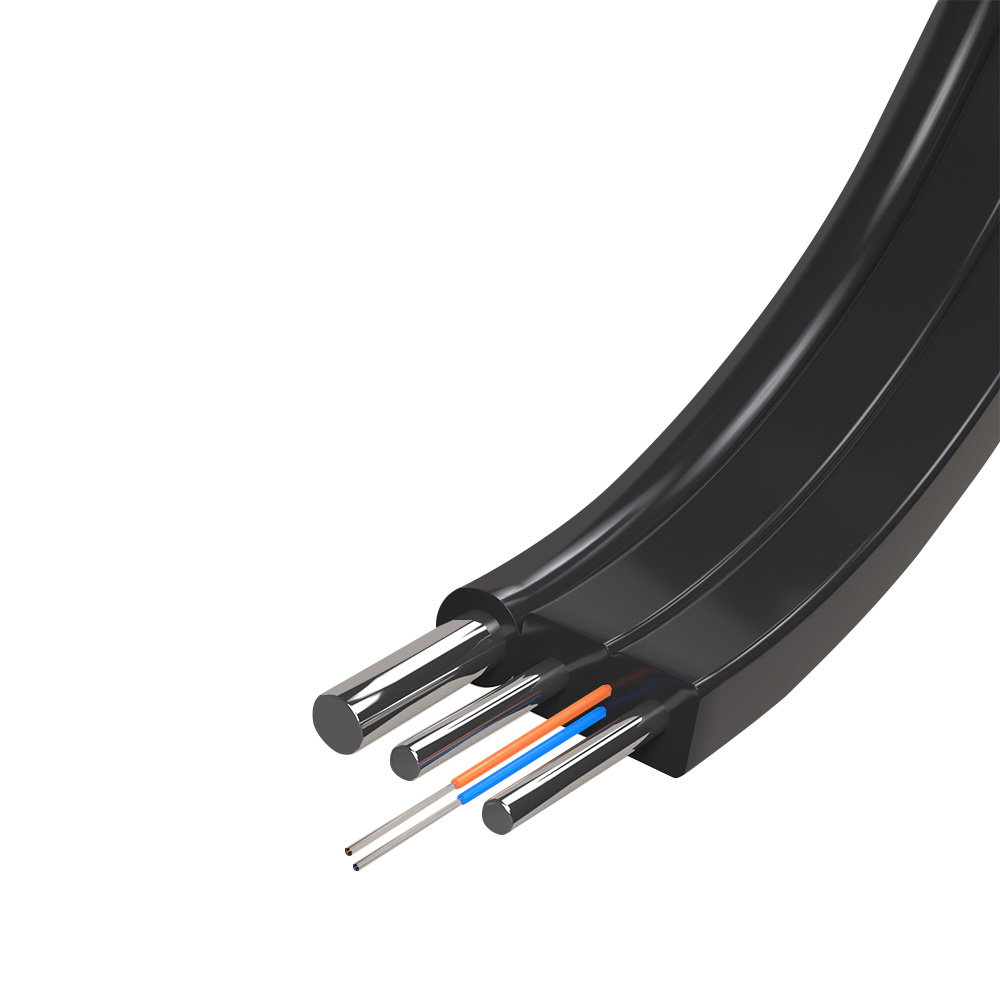
- Check the strength members—strength members protect the optical fiber from excessive tensile forces during cable installation and operation. Butterfly flat drop cables mostly use galvanized steel wires or FRP rods as parallel strength members. It is also important to check the specified tensile load, installation tension, and permissible long-term loading.
- Check mechanical and optical specifications—assess the technical specifications against the requirements of the FTTH network. A cable with optical performance and mechanical ratings helps reduce installation-related failures and supports stable network operation.
- Verify connector and network compatibility—ensure the selected butterfly flat drop cable is compatible with the existing telecommunications infrastructure. It should be compatible with optical distribution terminals, fusion splicing equipment, FTTH termination boxes, SC/APC connectors, and optical network terminals.
Technical specifications for the butterfly flat FTTH drop cables
Checking the specifications for the drop cable determines their optical performance, mechanical strength, installation flexibility, and suitability for indoor or outdoor FTTH deployments. The specifications for the cables cover fiber type, attenuation, and tensile strength. These specifications include:
| Product type | Butterfly flat FTTH drop cables |
| Jacket material | PVC or LSZH |
| Subunit type | Gel-free |
| Jacket marking | Feet/meter |
| Strength member material | FRP/KFRP |
| Installation methods | Outdoor/ indoor |
| Total fiber count1 | 1-2 |
| Strength member | 0.45-0.52 mm |
| Diameter over jacket | (2.0±0.2)×(3.0±0.2) mm |
| Compression | 10 N/mm | 57.101 lb/in |
| Flex | 35 cycles |
| Fiber type | G.652.D and G.657.A1 | OS2 |
| Cable qualification standards | ANSI/ICEA S-87-640 | IEEE-1222 |
Application areas for the butterfly flat drop cable
A butterfly flat drop cable serves in access networks where optical fiber needs extension from a distribution point to a subscriber. Its compact flat profile, bend-friendly construction, and integrated strength members make it ideal for FTTH and FTTB last-mile deployments. Common applications include
- FTTH networks—the drop cable provides the final optical connection between a fiber distribution terminal, optical distribution box, or access point and an individual home. It carries high-speed optical signals for broadband internet, IPTV and video services, voice communication, cloud applications, and smart-home services.
- FTTB networks—the cables serve to connect optical distribution equipment to apartment buildings, offices, hotels, or other commercial properties. The cable provides the connection between the building’s fiber distribution point and selected indoor network equipment.
- Residential broadband connections—drop cables serve where providers need to connect individual subscribers to an existing passive optical network. It forms part of the final section of the optical access network.
- Indoor fiber routing—butterfly drop cables have a flat and lightweight construction that serves along walls and other building surfaces. It serves in apartments, residential houses, offices, hotels, schools, and commercial buildings.
- Building entry connections – drop cables establish the connection between an external fiber distribution point and equipment located inside a building. The application should consider weather exposure, UV resistance, building-entry protection, fire-rating requirements, minimum bend radius, and termination methods.
- Aerial FFTH drop installations—flat drop cables connect a utility pole, aerial distribution terminal, or other network points to a customer’s premises. For aerial applications, it is advisable to consider span length, tensile loading, wind loading, cable sag, UV exposure, temperature variation, attachment hardware, and clearance from other utilities.