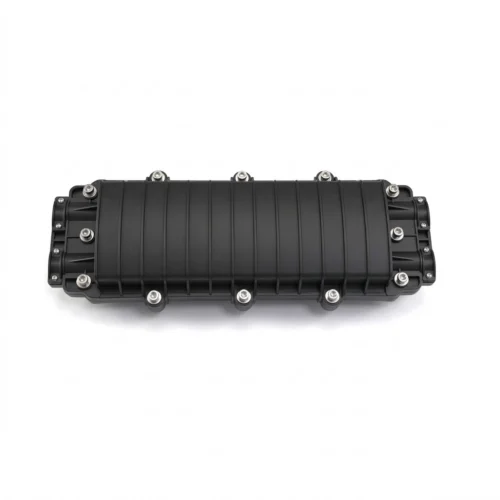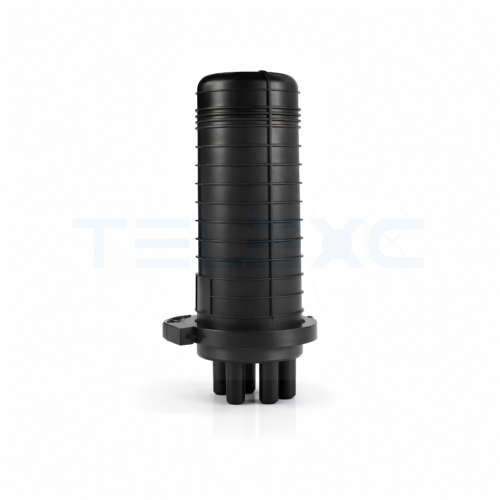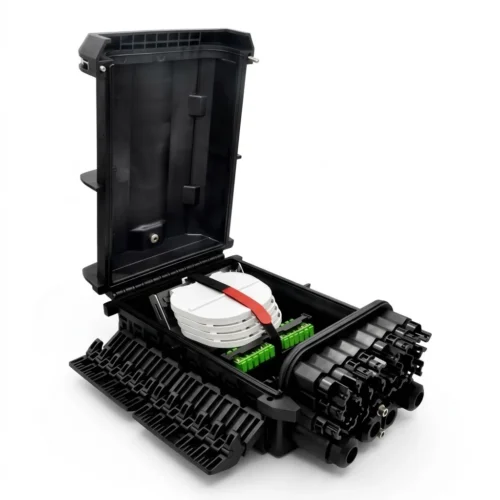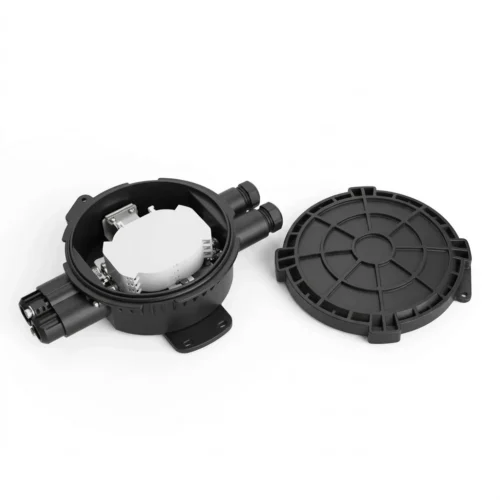
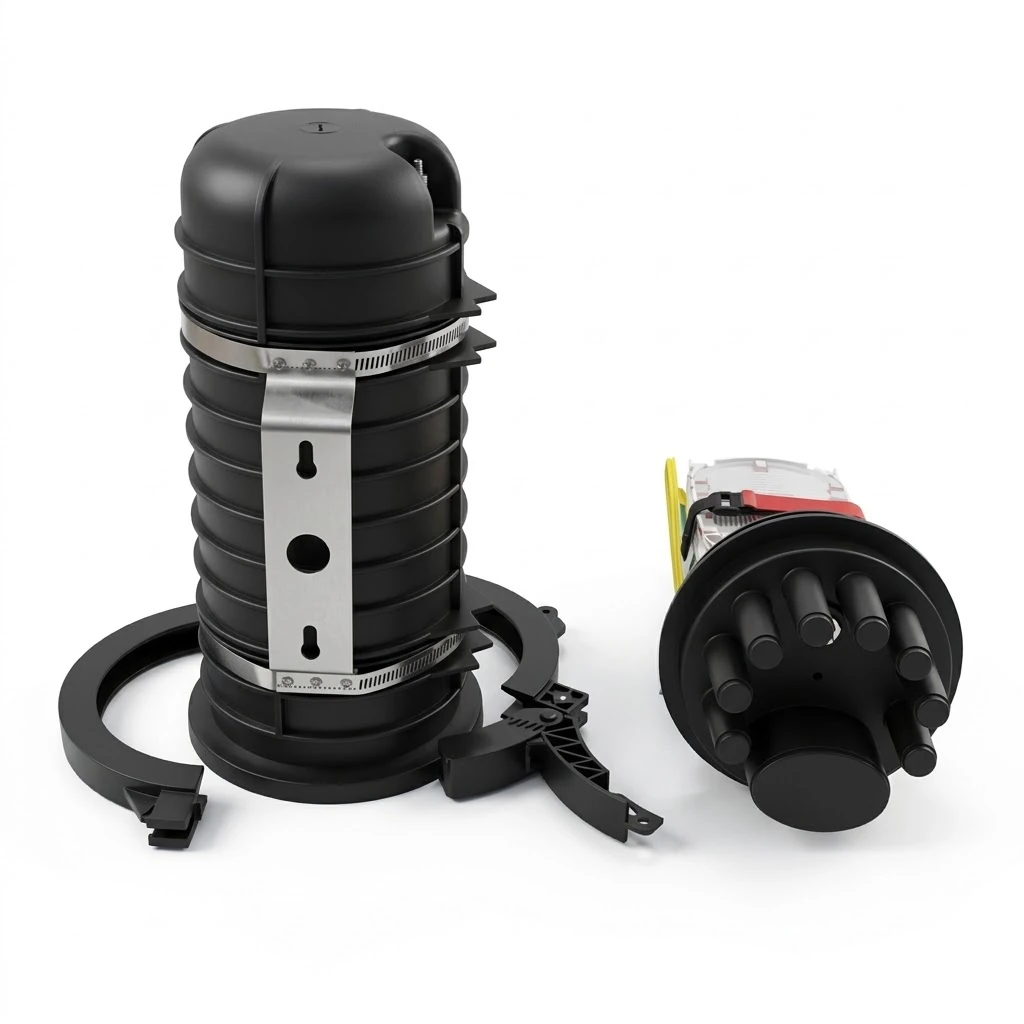

96/144/288 cores Fiber Optic Vertical Splice Closure
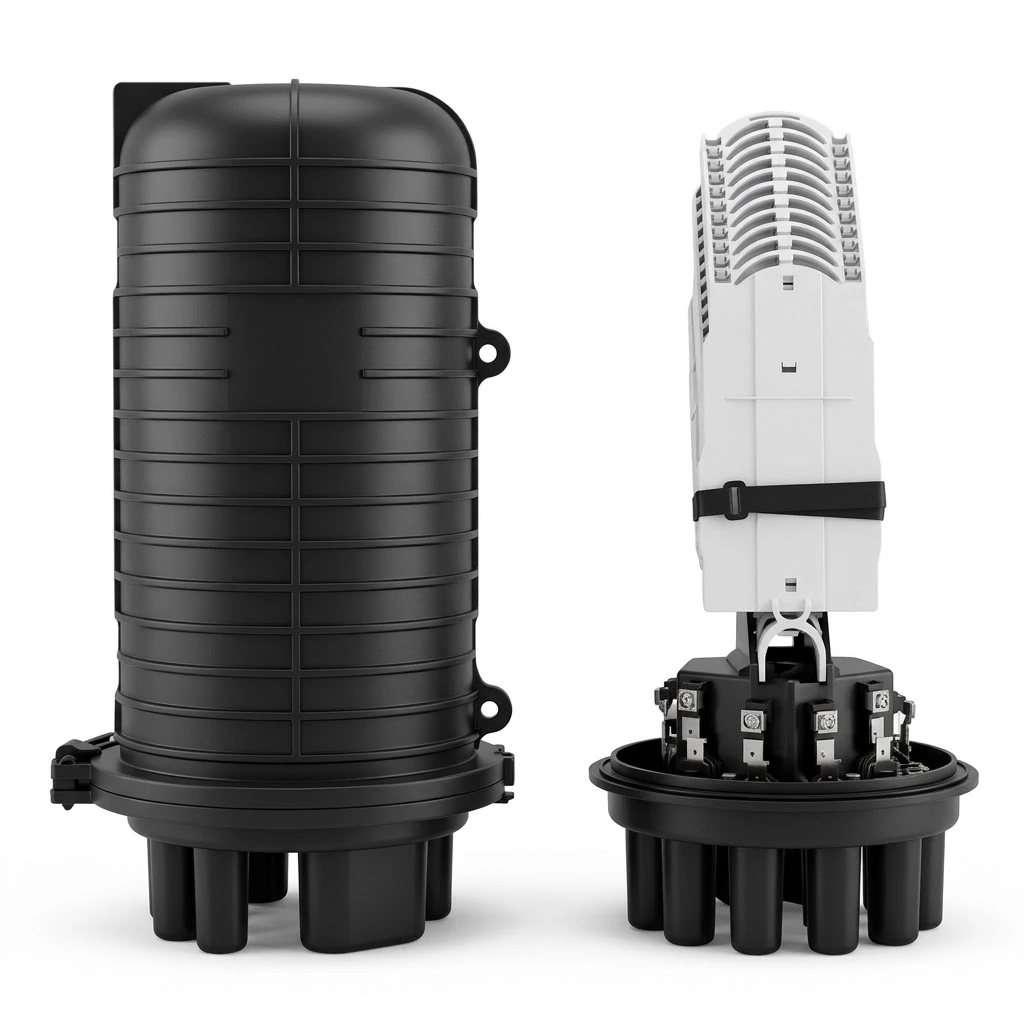
The fiber optic vertical splice closure provides outdoor distribution, splicing, and storage for outside plant optical networks. Designed for user access points, FTTH/FTTB rollouts, and optical distribution networks (ODN), this dome enclosure supports 96, 144, or 288 fiber fusion splices. Built from corrosion-resistant engineering plastic with heat-shrink cable port sealing, it maintains IP68 ingress protection in demanding underground, manhole, and pipeline environments.
Key Features
-
Ingress Protection: IP68 environmental rating prevents moisture and dust ingress in manhole and pipeline deployments.
-
Structural Material: PP (polypropylene) engineering plastic resists chemical exposure from salt, acid, and alkali soil conditions.
-
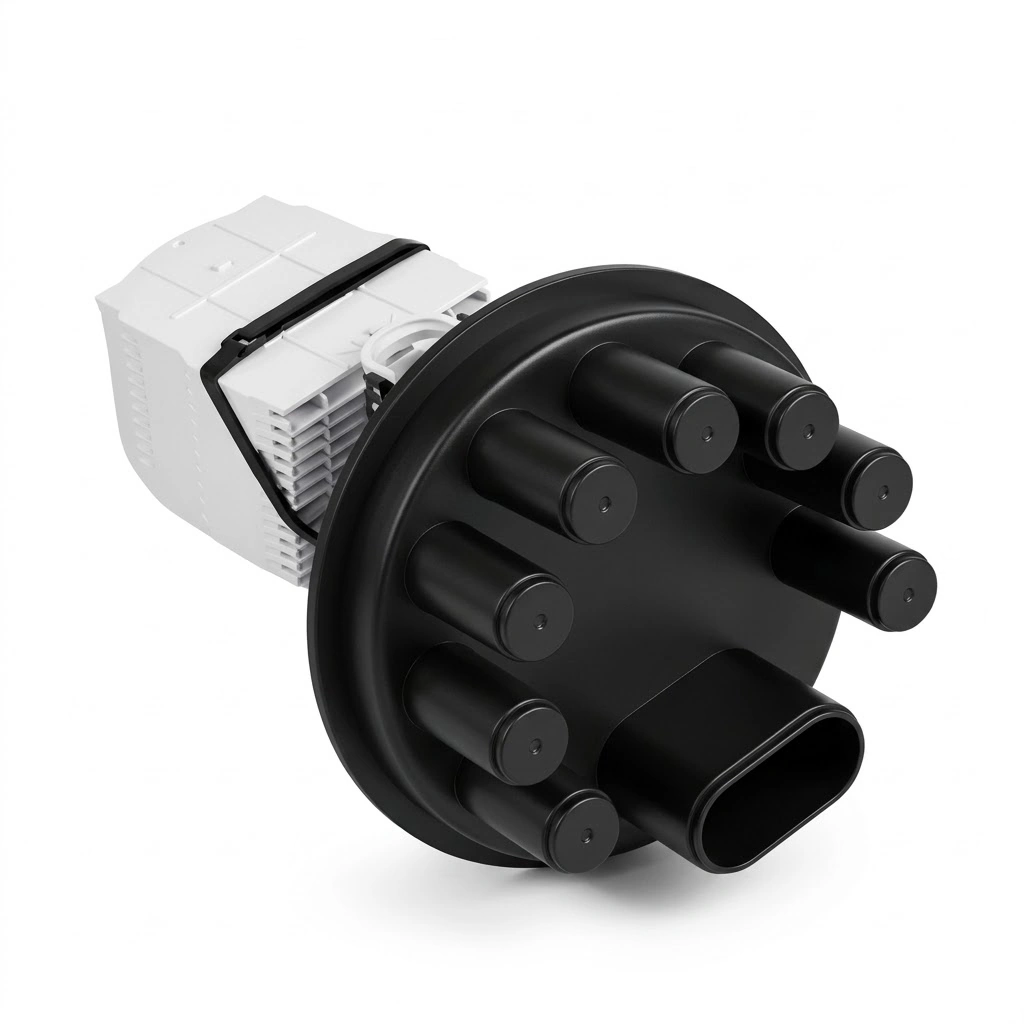
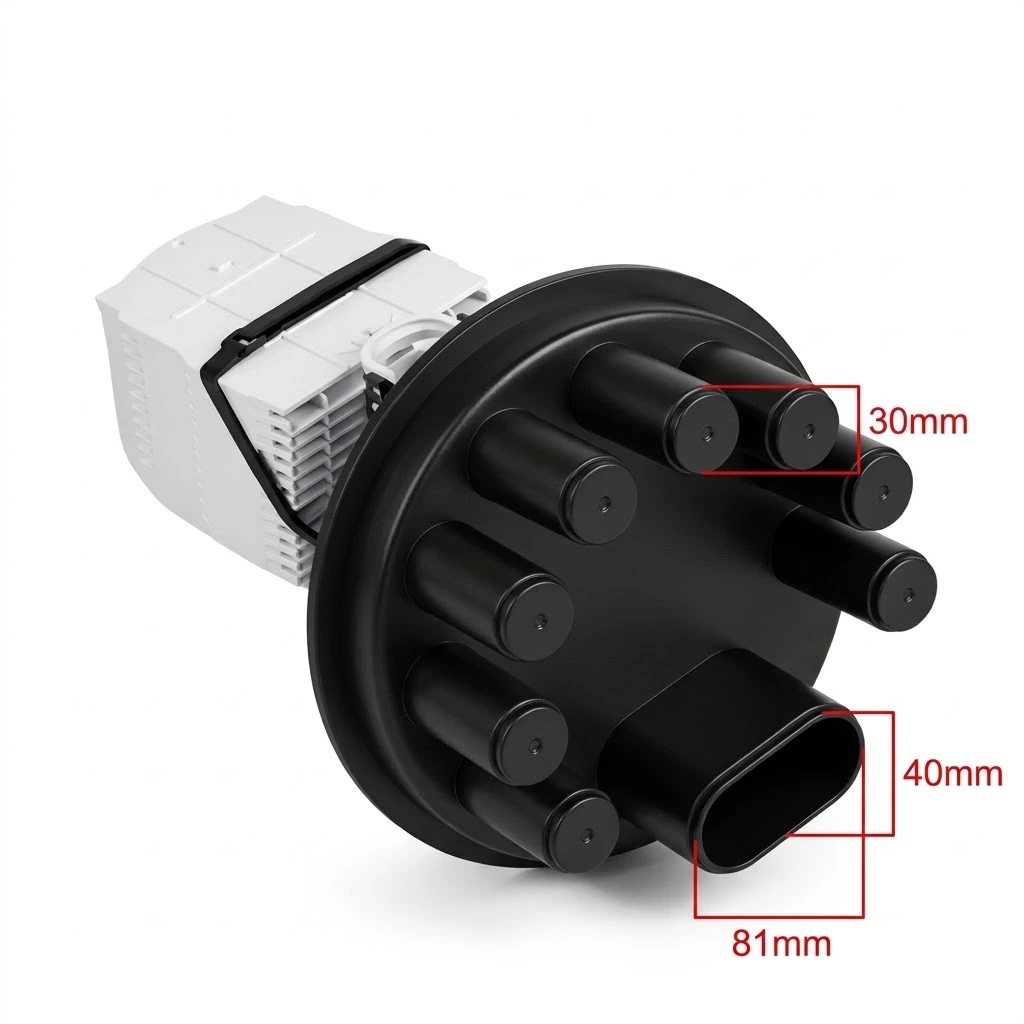
Cable Port Layout: 1 large oval port (81 x 40 mm) and 8 small round ports (OD 30 mm) support 1 main trunk cable and up to 8 branch drop cables.
-
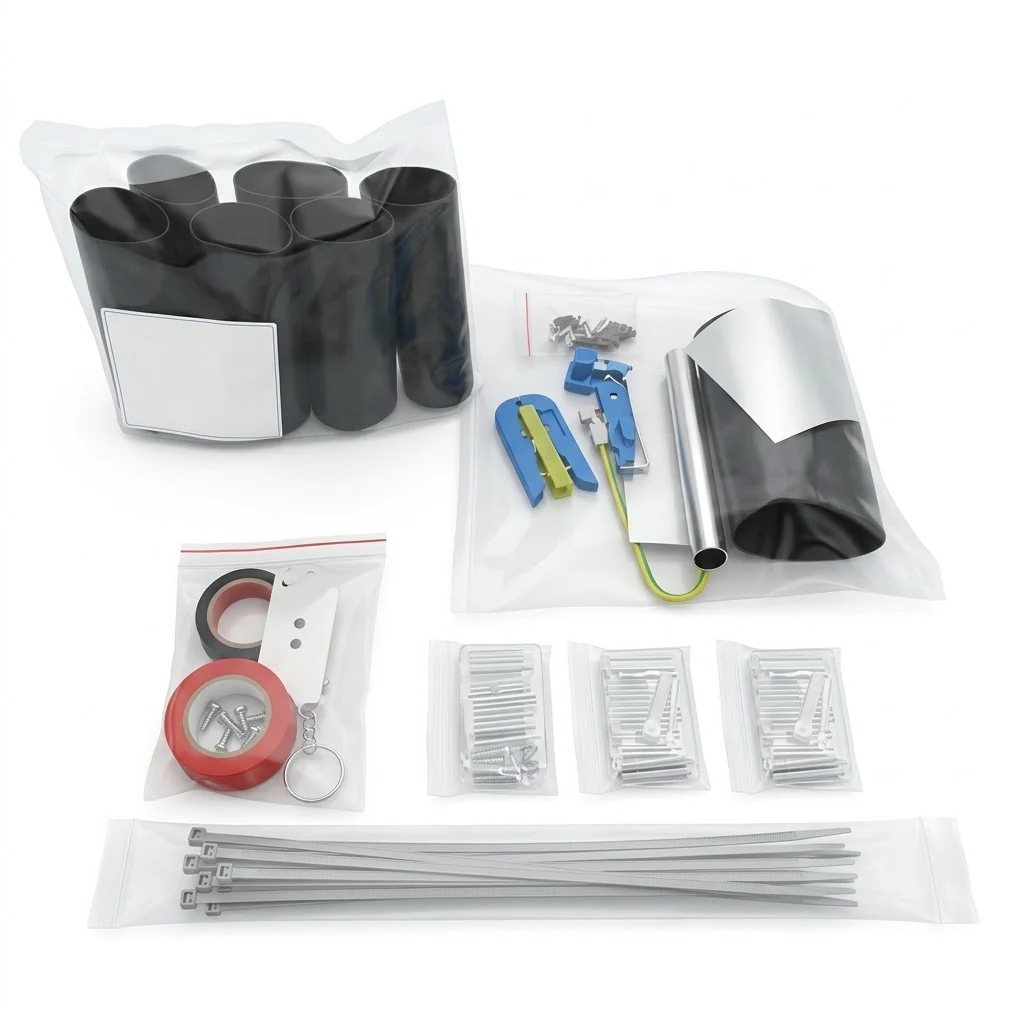
Sealing Method: Heat-shrink seals protect cable entries against moisture under external pressure.
-
Re-entry Design: Dome structure enables repeatable opening without special tools for moves, adds, and changes.
-
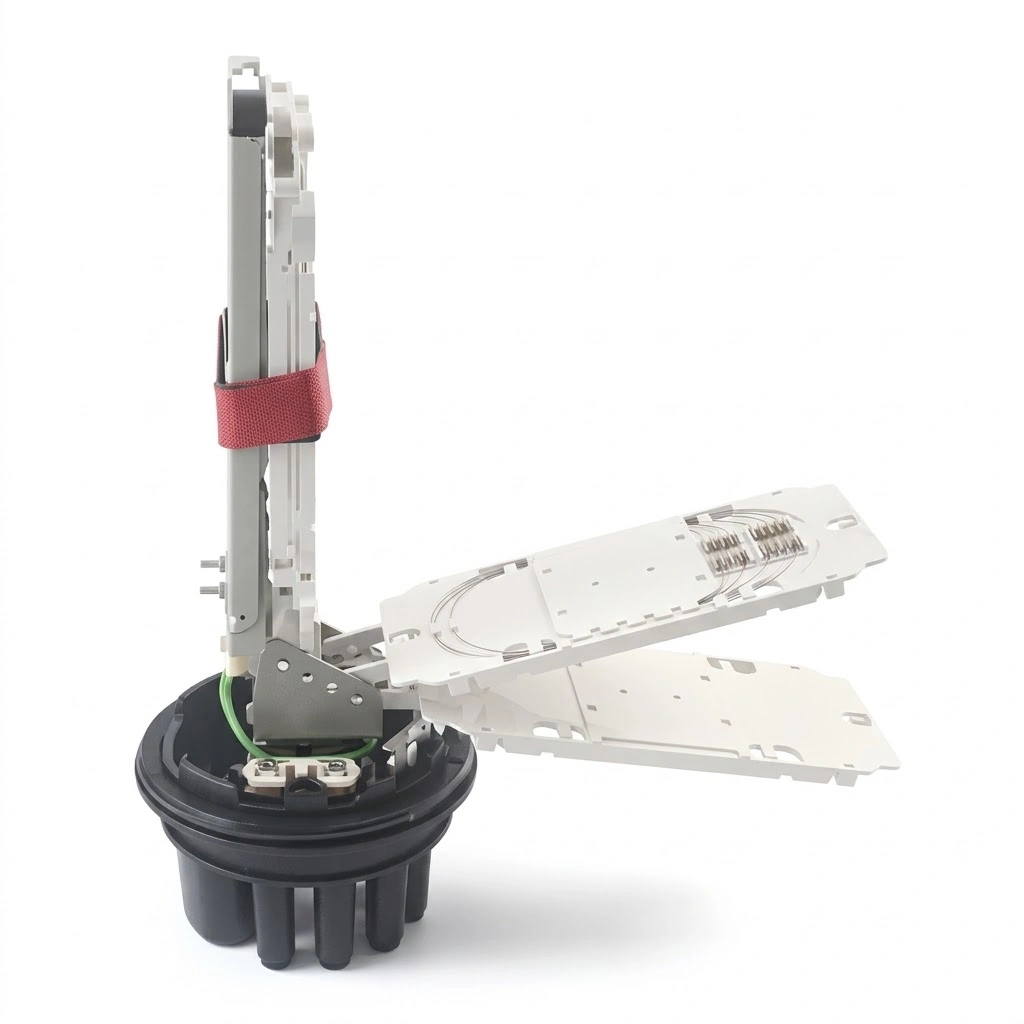
Optical Safety: Internal routing guides enforce a 40 mm fiber bend curvature radius inside splice trays to prevent macro-bending and micro-bending signal attenuation.
Product Configuration
Splice capacity depends on the combination of installed splice trays:
-
96 Cores (48C x 2 trays): Uses 2 units of 48-fiber splice trays. Suited for predictable, stable access nodes with minimal planned intervention.
-
96 Cores (24C x 4 trays): Uses 4 units of 24-fiber splice trays. Suited for modular cable entry and progressive splice additions.
-
144 Cores (48C x 3 trays): Uses 3 units of 48-fiber splice trays. Suited for balanced capacity in standard network distribution points.
-
144 Cores (24C x 6 trays): Uses 6 units of 24-fiber splice trays. Enables staged network rollouts and reduces fiber disturbance during frequent re-entry.
-
288 Cores (48C x 6 trays): Uses 6 units of 48-fiber splice trays. Delivers maximum fiber density for high-count feeder branching points and future-proof expansion.
Applications
-
ODN Branching Points: Acts as a consolidation point linking 1 incoming trunk cable to multiple branch cables using the 1 + 8 port arrangement.
-
FTTH and FTTB Outside Plant: Serves as a sealed user-access node in aerial, direct-buried, or underground conduit networks.
-
High-Density Distribution Cabinets: Houses up to 288 splices in space-restricted utility spaces, reducing the footprint required for high-fiber-count joins.
-
Manhole and Pipeline Infrastructure: Provides water-tight fiber storage in low-lying utility spaces subject to flooding.
Selection Considerations
-
Port Matching: Verify that incoming trunk and outgoing branch cable outside diameters fit within the oval port (81 x 40 mm) and round ports (OD 30 mm).
-
Tray Architecture: Select 48-core trays to minimize total tray stack height during initial builds. Select 24-core trays if routine network modifications or staged subscriber turn-ups require isolated access to individual buffer tubes.
-
Heat-Shrink Tooling: Ensure field installation crews carry matched heat-shrink sleeves and calibrated heating torches or hot-air equipment.
-
Space Constraints: Confirm manhole, handhole, or pole-mount clearance meets the closure envelope of 520 x 305 mm.
Frequently Asked Questions
How do technicians verify the seal integrity of this enclosure?
For units equipped with an air valve, pressurize the interior to 100 kPa and submerge the enclosure in clean water at room temperature for 15 minutes. The seal passes if zero air bubbles emerge.
What is the practical difference between 24-fiber and 48-fiber trays?
A 48-fiber tray configuration maximizes density and reduces overall closure component count. A 24-fiber tray configuration isolates fewer splices per tray, preventing disruption to active circuits during re-entry.
Can this closure accommodate non-cut mid-span express loose tubes?
Yes. The 81 x 40 mm oval port accepts looped, uncut buffer tubes directly into the slack basket below the splice trays.
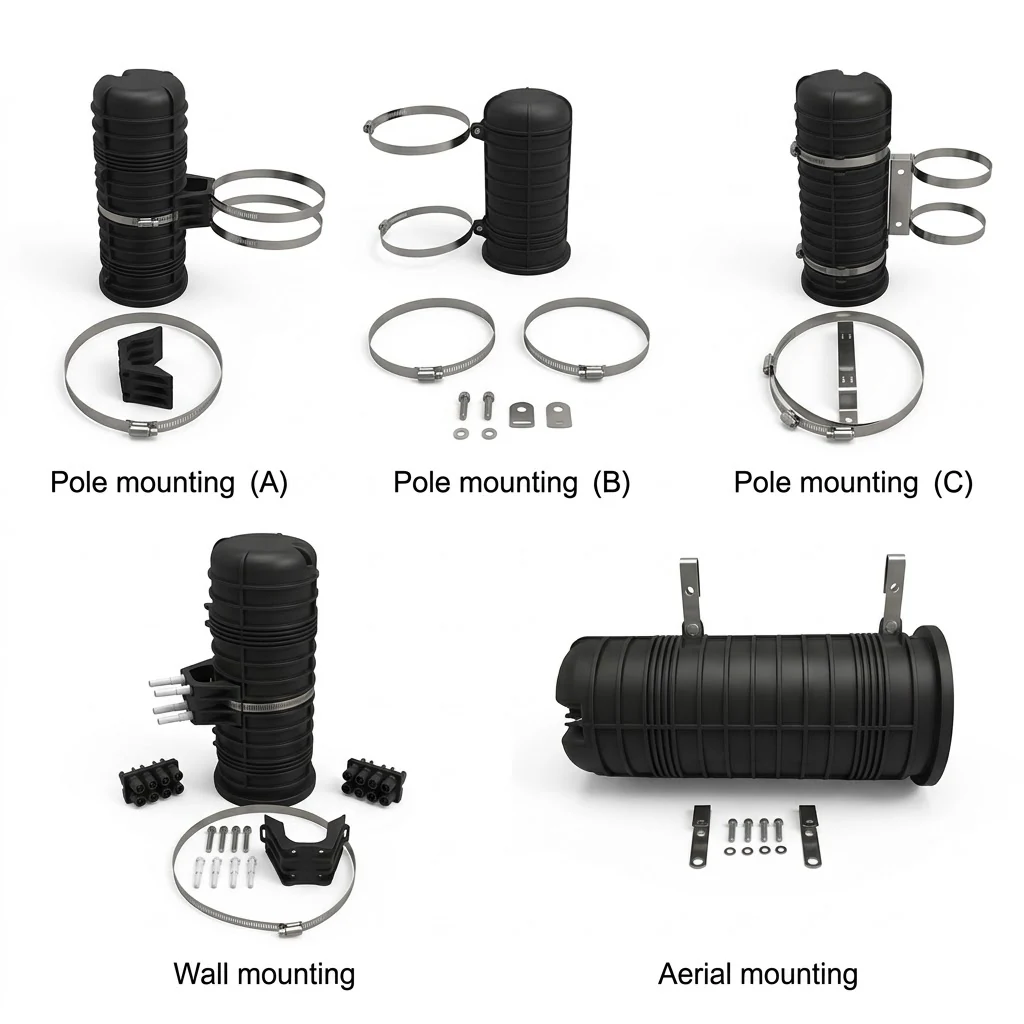
A properly sized fiber optic vertical splice closure establishes a stable, re-enterable junction for high-count outside plant cabling. By matching the 1 + 8 port dimensions and choosing between 96, 144, or 288 core tray counts, operators safeguard optical splices across long operating lifecycles