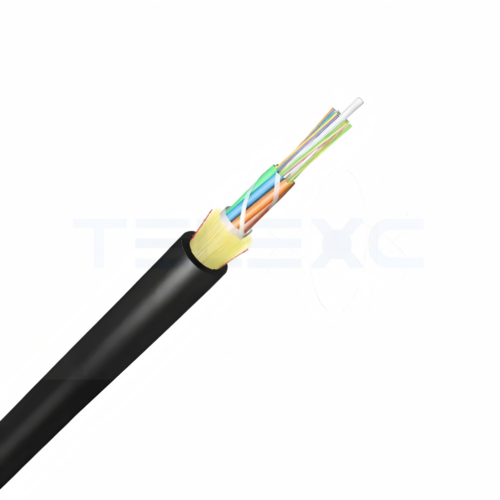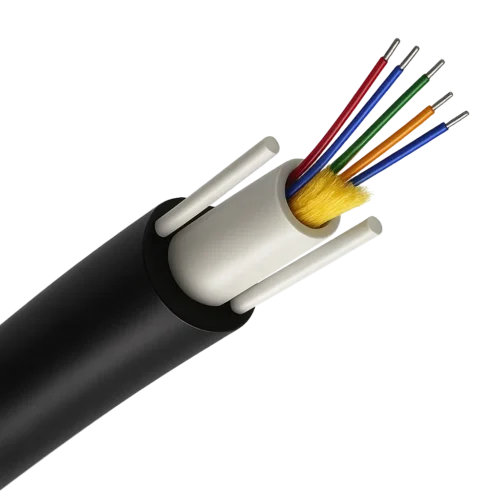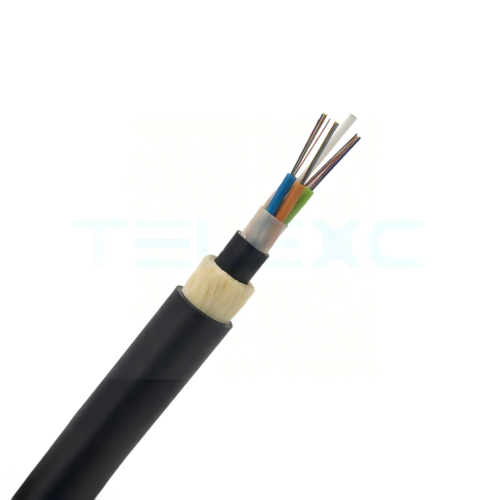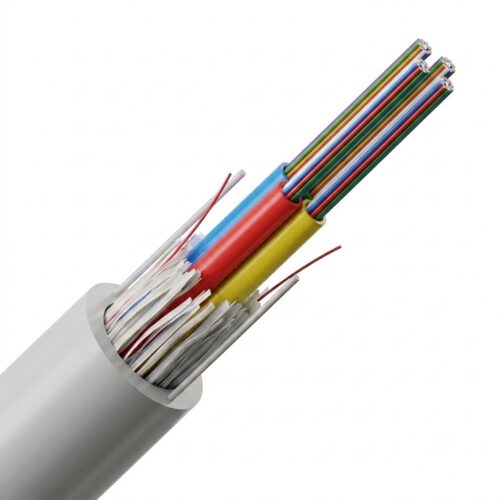
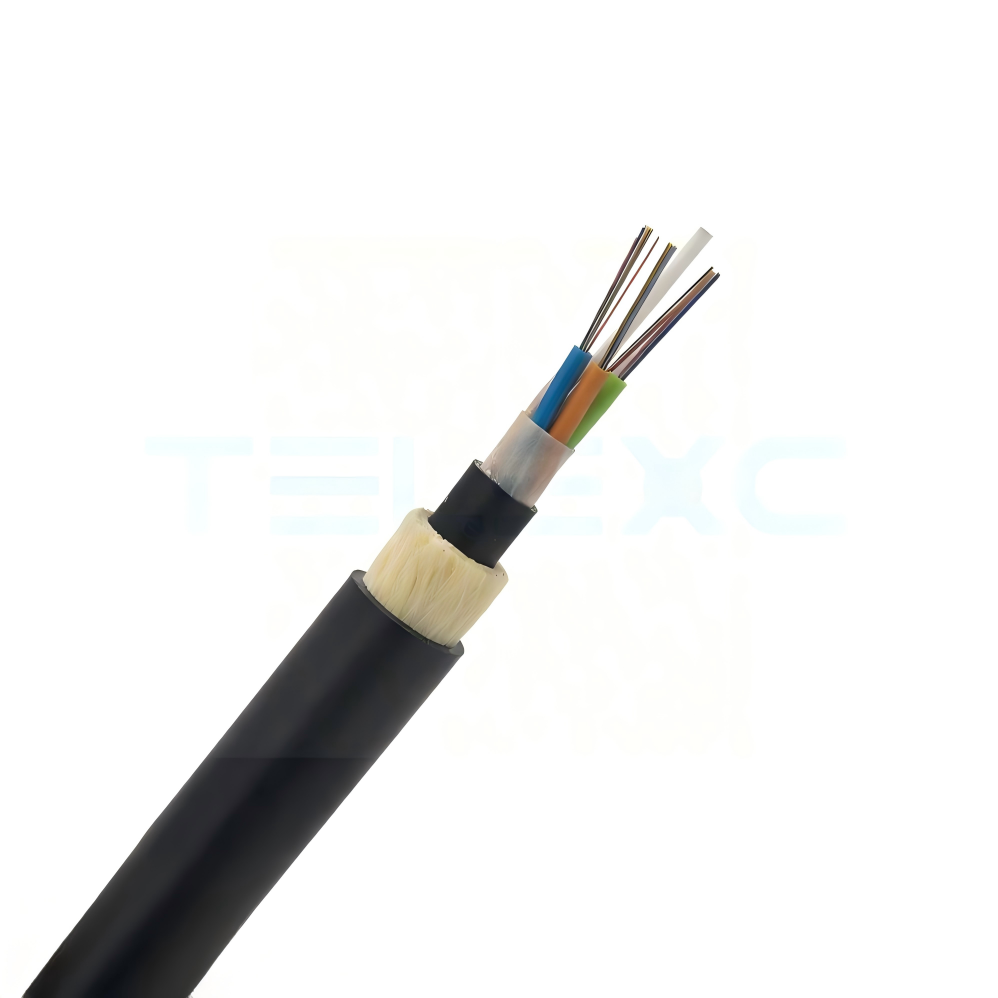

Fiber OSP cable Self-Supporting Medium-Span, ADSS Single-mode (OS2),12-144 Fiber Count

Features:

  • Available in wide range of 12F-144F, in both single-mode and multi-mode fibre variants.
  • Fully self-supporting – no messenger wire or lashing required
  • Lightweight, flexible and easy to install, Hardware & accessories available
  • Operational Temperature -40ºC to +70ºC

Applications:

  • Rural FTTx Deployment: Leverage existing power poles without new infrastructure — the most cost-effective solution for rural broadband expansion.
  • Medium-Voltage Distribution Lines (≤35kV): Safe co-location on power infrastructure with all-dielectric construction.
  • Telecom Backhaul: Shared utility infrastructure for inter-site connectivity.
  • Campus & Industrial Park Networking: Reliable aerial backbone for enterprise and institutional networks.

https://telexc.com/contact/

ADSS Medium-Span Fiber Optic Cable delivers a premium, all-dielectric, self-supporting solution engineered specifically for aerial installations in campus backbones and OSP distribution networks(typically on roadside power distribution poles). Being totally non-metallic, this product is ideal for applications in close proximity to power distribution lines. This product is also suited to single point suspension applications where the product has to support either a higher load than conventional terrestrial cable or a permanent or varying tensile load, applied through the outer sheath. Standard pole-mounting hardware is readily available for this product.

Structure Design:
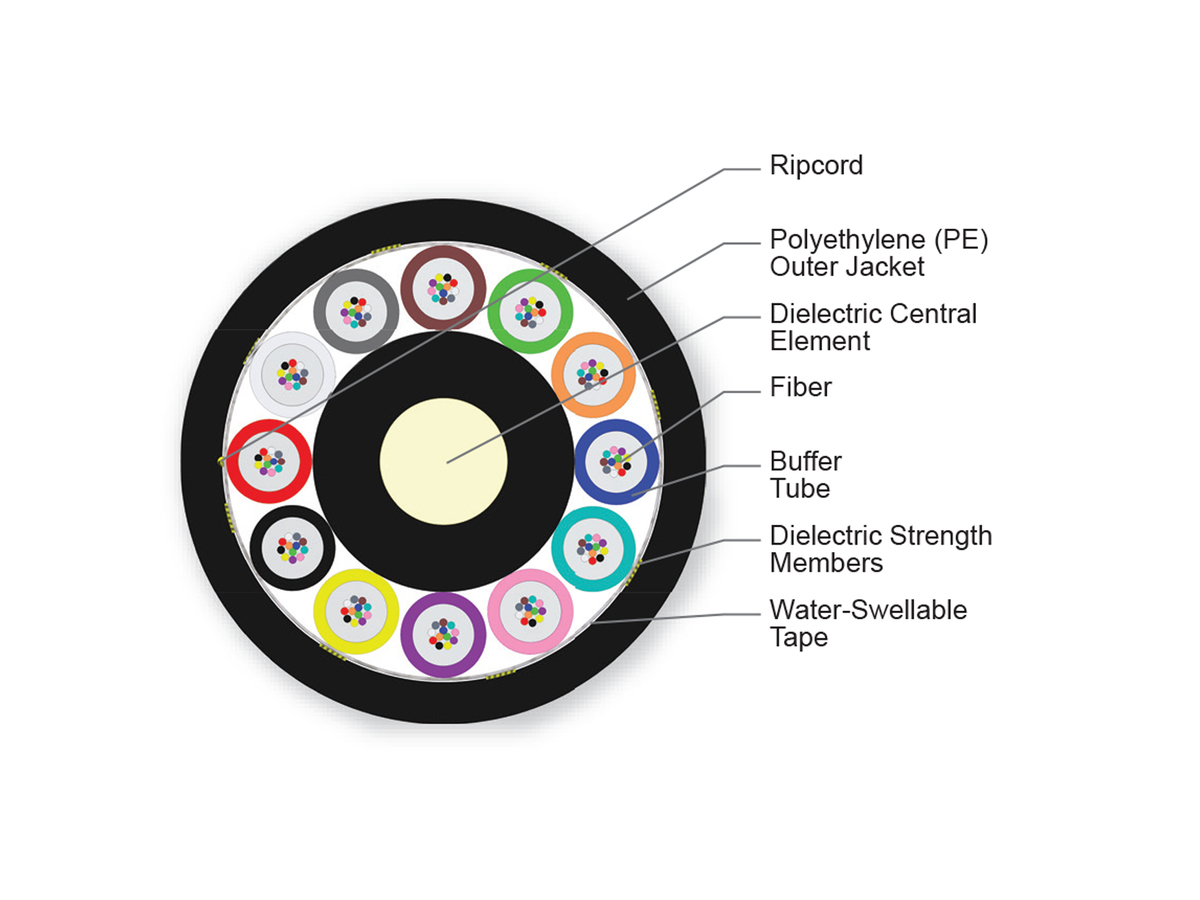
self-supporting-aerial-solutions

Fiber Count Number of Tube Positions Number of Active Tubes Weight Nominal Outer Diameter Min. Bend Radius (Installation) Min. Bend Radius (Operation)
12 – 72 6 1-6 97 kg/km
(65 lb/1000 ft)
11.3 mm
(0.45 in)
340 mm
(13.39 in)
226 mm
(8.9 in)
96 8 8 130 kg/km
(87 lb/1000 ft)
13.1 mm
(0.52 in)
394 mm
(15.51 in)
262 mm
(10.31 in)
144 12 12 201 kg/km
(135 lb/1000 ft)
16.4 mm
(0.65 in)
492 mm
(19-37 in)
328 mm
(12.91 in)
Fiber Count NESC Loading Max Span ft (m) 1% Initial Installation Sag Tension Max Vertical Sag under Load (%) Maximum Loaded Tension

12 – 72 F


(Weight: 97 kg/km

OD: 11.3 mm)

Light 1500 ft (463 m) 1222 lbf (5434 N) 0.80% 1820 lbf (8094 N)
Medium 1100 ft (334 m) 896 lbf (3985 N) 3.30% 1808 lbf (8043 N)
Heavy 700 ft (213 m) 154 lbf (685 N) 4.40% 1783 lbf (7931 N)

73 – 96 F

(Weight: 130 kg/km

OD: 13.1 mm)

Light 1600 ft (485 m) 1745 lbf (7763 N) 0.80% 2398 lbf (10668 N)
Medium 1250 ft (379 m) 1363 lbf (6065 N) 3.20% 2381 lbf (10593 N)
Heavy 850 ft (258 m) 927 lbf (4124 N) 4.30% 2397 lbf (10663 N)

97 – 144 F


(Weight: 201 kg/km

OD: 16.4 mm)

Light 1000 ft (309 m) 1687 lbf (7504 N) 0.90% 2103 lbf (9354 N)
Medium 850 ft (258 m) 1434 lbf (6378 N) 2.90% 2094 lbf (9316 N)
Heavy 600 ft (182 m) 1012 lbf (4502 N) 4.00% 2060 lbf (9164 N)


General Specifications
Product type Fiber OSP cable Self-Supporting Medium-Span, ADSS Single-mode (OS2)
Jacket Material Polyethylene (PE)
Jacket Marking Feet/Meter
Subunit Type Gel-filled
Fiber Coloring Blue, Orange, Green, Brown, Slate, White, Red, Black, Yellow,Violet, Rose, Aqua
Number of Tube Positions 6
Total Fiber Count 12 24 36 48 60 72 96 144
Number of Active Tubes 1 2 3 4 5 6 8 12
Number of Filling Elements 5 4 3 2 1 6 8 12
Number of Tube Positions 6 8 12
Fibers per Subunit, quantity 12
 
Dimensions
Buffer Tube/Subunit Diameter 2.5 mm (0.1 in)
Diameter Over Jacket 11.3 mm (0.44 in ) 13.1 mm (0.52 in ) 16.4 mm (0.65 in )
 
Mechanical Specifications
Minimum Bend Radius, loaded 340 mm (13.39 in) 394 mm (15.51 in) 492 mm (19.37 in)
Minimum Bend Radius, unloaded 226 mm (8.9 in) 262 mm (10.31 in) 328 mm (12.91 in)
Compression 22 N/mm | 125.623 lbf/in
Flex 25 cycles
Impact 2.94 N-m | 26.021 in lb
Twist 10 cycles
 
Optical Specifications, Wavelength Specifications
Fiber Type G.652.D and G.657.A1
Attenuation, maximum 0.3 dB/km @ 1,550 nm | 0.4 dB/km @ 1,310 nm/1383 nm
   
Environmental Specifications
Installation temperature -30 °C to +70 °C (-22 °F to +158 °F)
Operating Temperature -40 °C to +70 °C (-40 °F to +158 °F)
Storage Temperature -40 °C to +75 °C (-40 °F to +167 °F)
Cable Qualification Standards ANSI/ICEA S-87-640 | IEEE-1222
 
Packaging and Weights
Cable weight 97 kg/km (65.18 lb/1000 ft) 130 kg/km (87.36 lb/1000 ft) 201 kg/km (135.07 lb/1000 ft)

ADSS Fiber Optic Cable FAQs

Q: What is the maximum span length for an ADSS fiber optic cable?

  • A: The maximum span length depends entirely on the mechanical design, environmental loads (wind/ice), and sag requirements. Typically, ADSS Medium-span cables are engineered for spans between 200m to 500m .

Q: How do I choose the right span length and sagging for my ADSS cable project?

  • A2: Cable span selection must balance the actual distance between poles with regional environmental loads (such as maximum wind speed and ice thickness). Our short-span ADSS cables are optimized for standard 50m to 200m distributions. For larger spans or extreme weather areas, we customize the tensile rating by increasing the high-modulus aramid yarn layers to maintain safe sagging control.

Q: When should I choose a TRPE (Track-Resistant) jacket instead of an AT jacket?

  • A: It depends on the electric field potential of the space where the cable is installed. For power lines below 110 kV (space potential under 12 kV), a standard Polyethylene (PE) or Tracking-Resistant (TR) jacket is sufficient. For high-voltage lines up to 220 kV (space potential up to 25 kV), a high-grade TRPE (Track-Resistant Polyethylene) jacket is mandatory to prevent dry-band arcing and electrical tracking.

Q: Does ADSS fiber cable need to be grounded?

  • A: No. Because ADSS (All-Dielectric Self-Supporting) cables are constructed with 100% non-metallic materials (such as FRP strength members and aramid yarns), they are entirely non-conductive. Therefore, no grounding or bonding is required, making them completely safe for co-location on high-voltage power utility poles.

Q: What standard accessories are required for ADSS cable installation?

  • A: A standard OSP aerial installation requires specific pole-line hardware to protect the cable from stress:

  • Tension Clamps (Dead-ends): Used at turning points, terminal poles, and large spans.

  • Suspension Clamps: Used on straight-line intermediate poles to support the weight.

  • Armor Rods: Wrapped around the cable to distribute mechanical pressure.

  • Vibration Dampers: To eliminate aeolian vibration caused by crosswinds.

Q: Can ADSS cables withstand heavy ice and extreme wind loads?

  • A: Yes. High-quality ADSS cables are heavily reinforced with Aramid Yarn (Kevlar) as the tensile strength member. During the engineering design phase, the cable’s sag and tension are cross-calculated against regional weather standards (like NESC or IEC) to ensure structural integrity under severe ice accumulation and high wind loading.

Engineered for Reliability, Built for Trust

At Telexc, we don’t just supply hardware—we secure your global network deployment. Operating from China’s premier industrial clusters and the Tianjin logistics hub, we act as your private supply chain control tower, ensuring engineering precision and traceably consistent quality for every aerial installation.

Our Core Advantages

  • Full-Scenario Aerial Compatibility: We seamlessly bridge the gap between OSP fiber infrastructure, FTTH networks, and aerial deployment scenarios. Every component is structurally engineered to work harmoniously together, drastically increasing on-site installation efficiency.
  • Strict Engineering Standard Alignment: Our technical design loops strictly align with international benchmarks, including IEC, ITU-T, and IEEE standards. This ensures our hardware excels under extreme environmental stresses—from intense UV exposure to heavy wind and ice loads.
  • Independent Multi-Stage Quality Control: We act as your eyes on the ground. From raw material stress simulations to finished product compliance, our dedicated QC team performs rigorous multi-stage audits so you receive exactly what your engineers approved.
  • Optimized Logistics & Flexible Partnerships: Leveraging the logistics power of the Tianjin port, we guarantee reliable transit, competitive factory-direct structures, and transparent milestone tracking to keep your network projects moving forward without compromise.