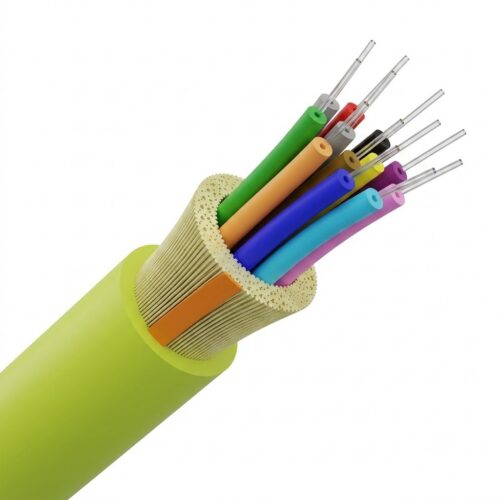
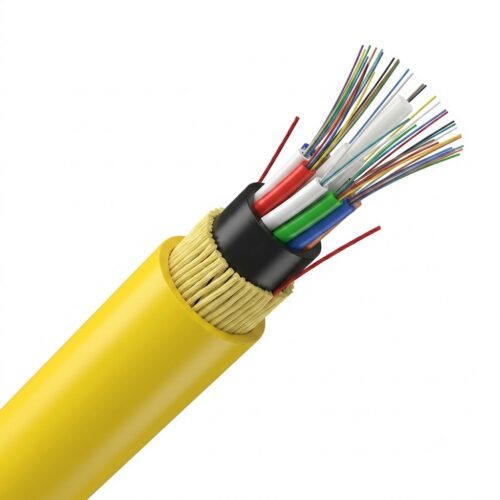
Q1: What type of optical fiber is used in this cable, and what is its maximum attenuation?
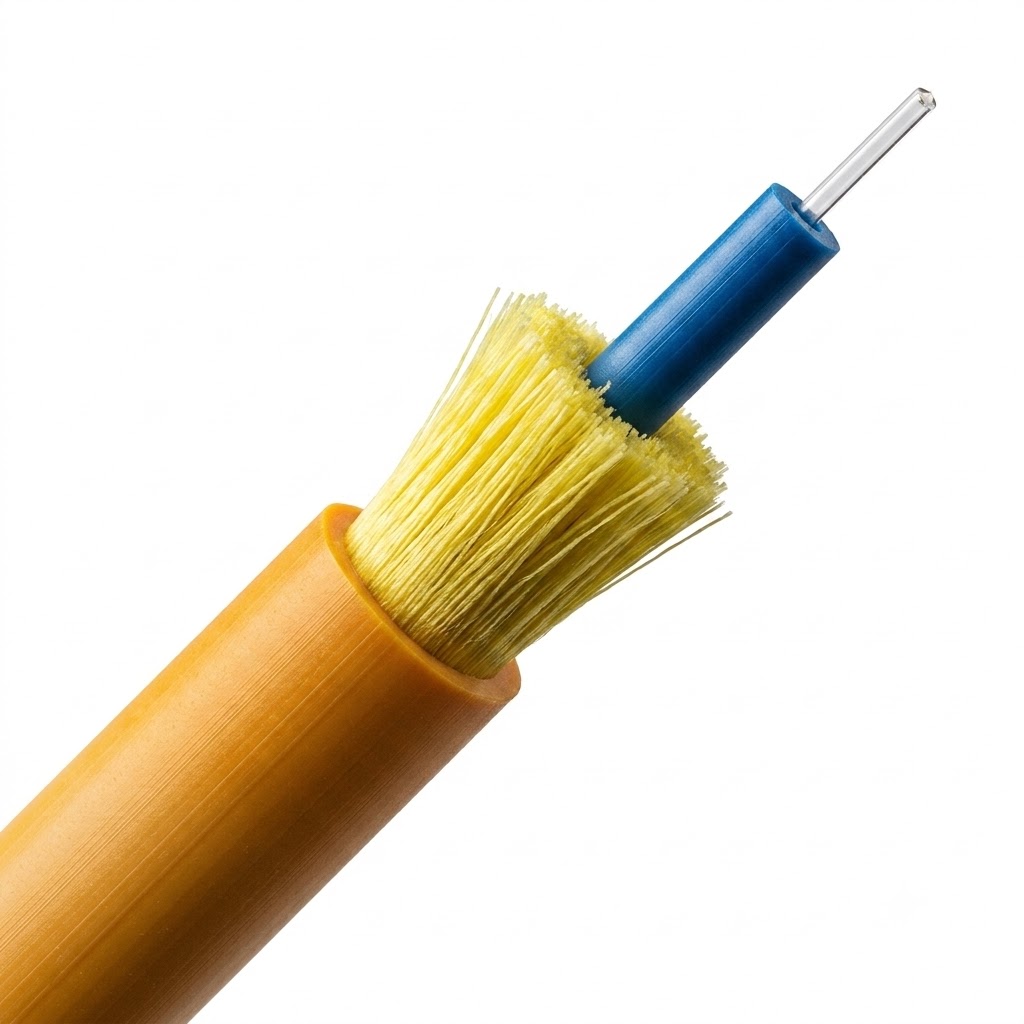
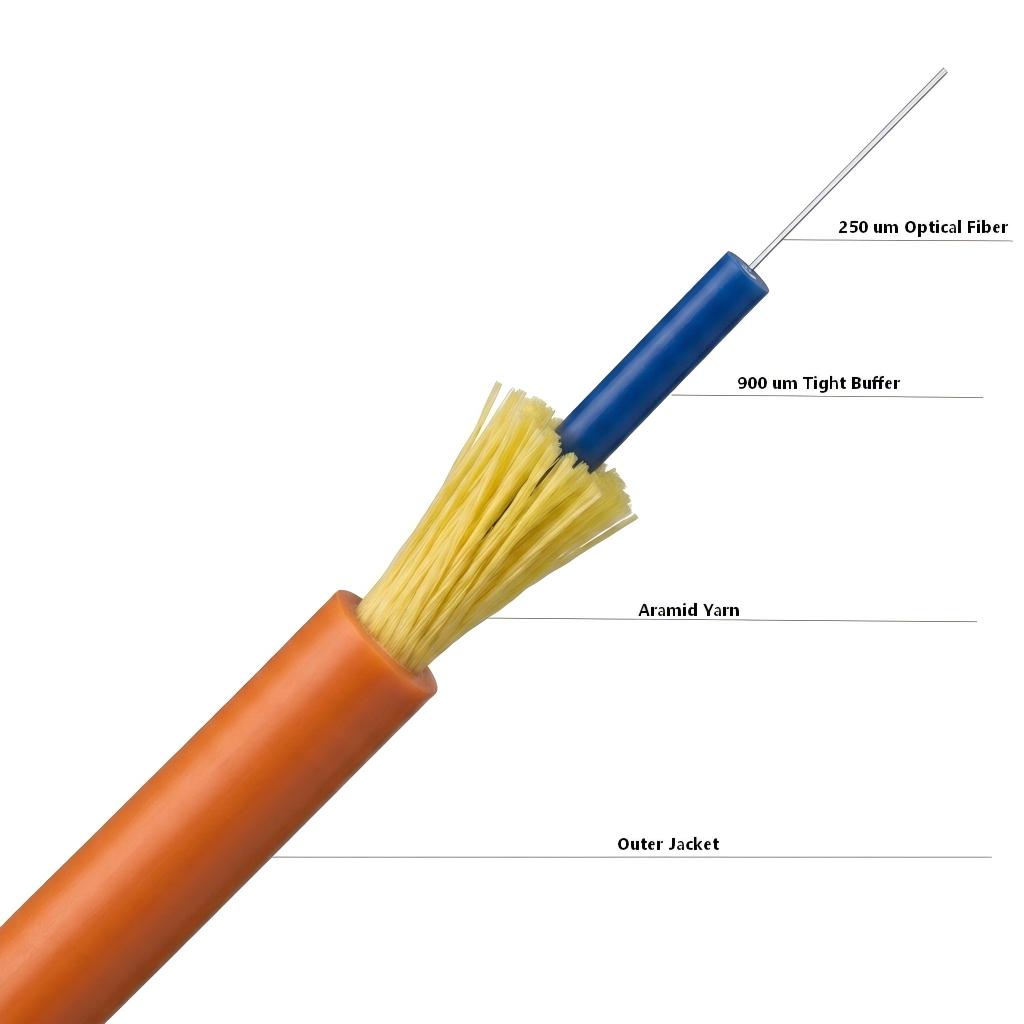
A: This simplex cable features a dual-standard single-mode fiber core compliant with both G.652.D and G.657.A1 standards. The inclusion of G.657.A1 ensures superior bend-insensitive performance for sharp indoor routing. The maximum attenuation coefficients across key operating wavelengths are tightly controlled:
-
≤ 0.36 dB/km @ 1310 nm
-
≤ 0.36 dB/km @ 1385 nm
-
≤ 0.25 dB/km @ 1490 nm
-
≤ 0.22 dB/km @ 1550 nm
-
≤ 0.25 dB/km @ 1625 nm
Q2: What are the specified minimum bend radii for installation and operation?
A: To safeguard the fiber from micro-bending attenuation and physical stress, the cable must strictly adhere to the following bend radius thresholds:
Q3: What is the maximum mechanical pulling tension allowed? A: Reinforced with high-modulus aramid yarn (Kevlar) as the primary strength member, the cable delivers robust tensile protection:
-
Short-Term Tensile Strength (Installation): Max. 267 N (60.024 lbf).
-
Long-Term Tensile Strength (Operation): Max. 80 N (17.985 lbf). Note: Due to its light-duty design for indoor interconnects, steady manual pulling is highly recommended over aggressive mechanical hauling.
Q4: What are the outer diameter and shipping weight specifications?
A: This cable features a highly compact and lightweight architecture, optimizing pathway utilization and freight costs:
Q5: What are the thermal operating limits for this cable? A: Engineered with a premium Riser-rated, Low Smoke Zero Halogen (LSZH) jacket, the cable maintains outstanding structural stability across extreme temperature ranges:
-
Installation Temperature Range: -30 °C to +70 °C (-22 °F to +158 °F)
-
Operating Temperature Range: -40 °C to +70 °C (-40 °F to +158 °F)
-
Storage Temperature Range: -40 °C to +75 °C (-40 °F to +167 °F)
-
Cable Freeze Standard Test: Compliant down to -2 °C (28.4 °F)