
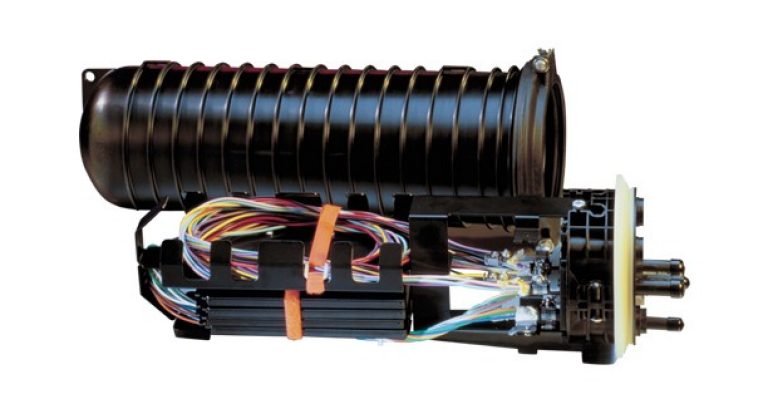
A fiber optic splice closure (FOSC) is a device used in telecommunications and networking to protect and manage fiber optic splices. It provides a protective environment for the delicate and sensitivefiber optic cables to ensure their longevity and maintain optical signal transmission. Fiber optic splice closures serve where the fiber optic cables face harsh environmental conditions such as moisture, dust, temperature variations, and physical stress. The closures are made from durable and weather-resistant materials such as high-strength plastics or metals. The closure houses and protects spliced or terminated fiber-optic cables. It provides a sealed enclosure to prevent moisture or other contaminants entering and damaging the fibers. The closures also feature different sealing mechanisms such as gaskets, O-rings, or heat-shrinkable sleeves. Splice closures ensure that splice fibers remain secure, organized, and operational. Fiber optic closures are available in different designs and sizes to accommodate different installation requirements.
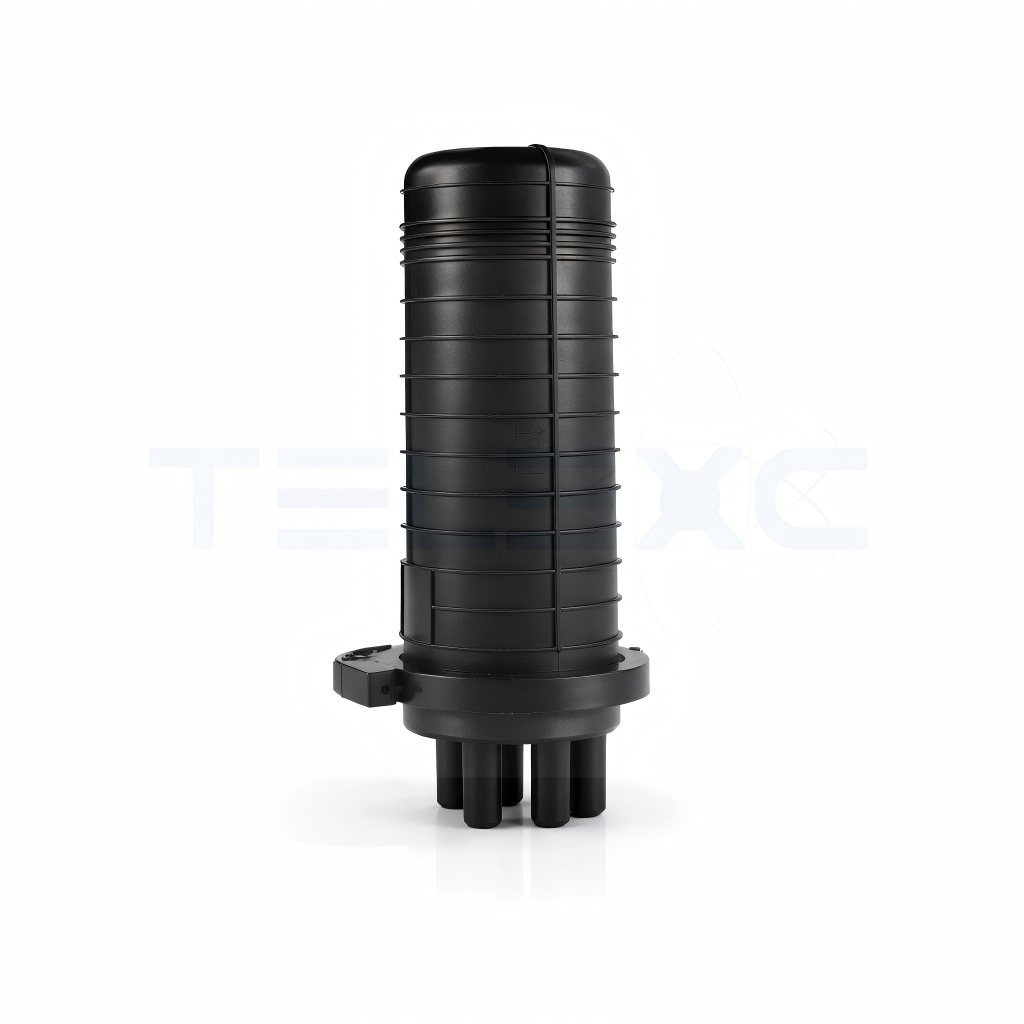
Fiber Optic Splice Closures
Key Features
-
IP66/IP68 rated for dust and water protection
-
Supports up to 144 single fusion splices
-
Modular trays for splitters and adapters
-
Maintains proper fiber bend radius
-
Suitable for aerial, pole-mounted, direct-buried, or handheld installations
-
Durable, weather-resistant materials
-
Easy re-entry and installation

Configuration and components of a splice closure for fiber optics
A fiber optic splice closure is designed to provide a secure environment for fiber splicing while protecting optical fibers from stresses. Its configuration depends on application, fiber count, and installation method. It is also designed to ease fiber routing, splicing, storage, and cable management. It includes the dome-type configuration, horizontal inline configuration, and branching configuration. Its components include:
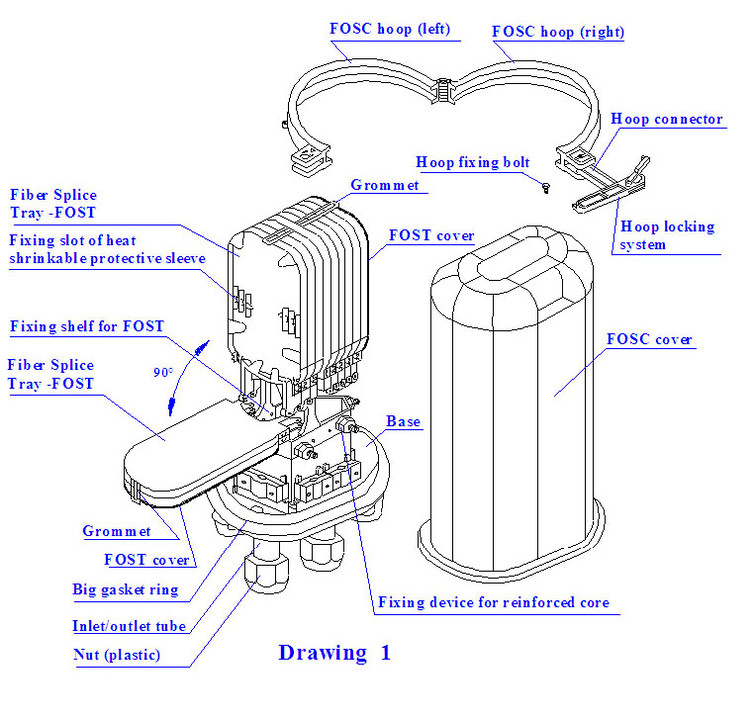
- Outer housing—this is the primary protective shell of the closure. It protects internal components, provides impact resistance, and maintains structural integrity. It consists of UV-stabilized polycarbonate, high-density polyethylene, and glass-fiber-reinforced polymer.
- Cable entry ports—this port allows the fiber optic cables to enter and exit the closure. It secures cable attachment, environmental sealing, and strain relief. It has many port configurations, mechanical sealing systems, and compatibility with cable diameters.
- Sealing system – This mechanism prevents ingress of moisture, dust, and contaminants. It features heat-shrink sleeves, silicone gaskets, rubber compression seals, and mechanical sealing assemblies. These offer waterproof protection, corrosion prevention, and reliability.
- Splice trays – these are internal organizers that hold fiber splices and fiber slack. They protect spliced fibers, maintain proper bend radius, and simplify fiber identification. It has a stackable design, splice capacities, and fiber routing channels.
- Fiber management system—this organizes fibers throughout the closure with routing guides, fiber retainers, and bend radius protectors. They prevent fiber tangling, reduce signal attenuation, and ease maintenance.
- Fusion splice protection sleeves—the sleeves protect individual fusion splices by reinforcing splice joints, preventing fiber breakage, and protecting against environmental damage.
Types of fiber optic splice closures
Dome-type fiber optic closure
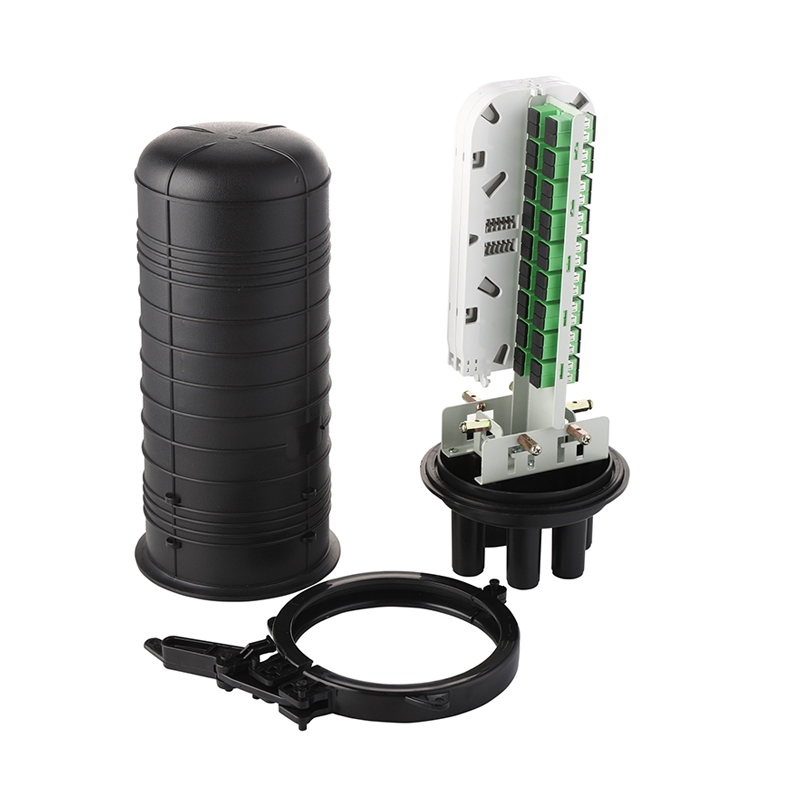
Dome-type closures feature a removable dome cover attached to a base containing cable entry ports. It has excellent environmental sealing, high resistance to moisture and dust, and supports large fiber counts. This closure serves underground networks, pole-mounted installations, and telecommunications backbone networks.
Horizontal fiber optic splice closure
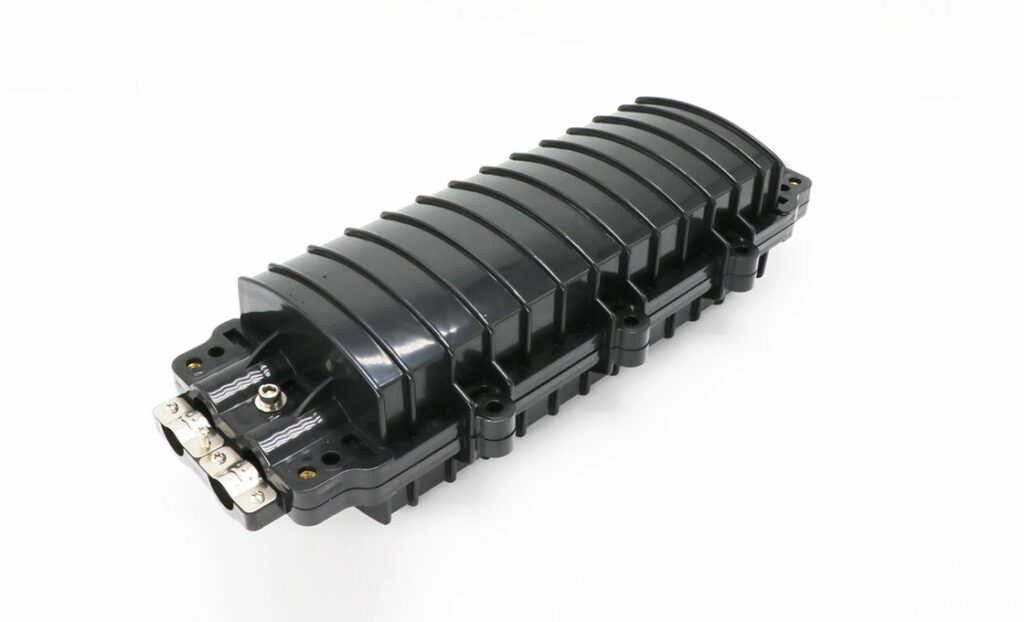
The closures have a rectangular housing with cable ports located at both ends. It has many cable entry and exit points, convenient access to internal components, and is suitable for complex fiber routing. It serves in aerial fiber networks, direct buried cable systems, and utility communication networks.
Inline fiber optic splice closure
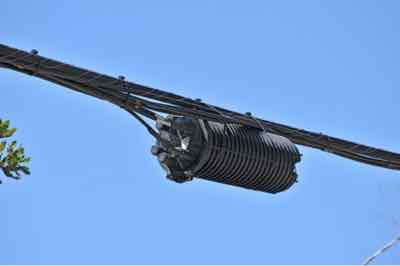
This is designed for straight-through cable connections where fibers continue along the same route. The cable enters and exits from opposite ends, has efficient fiber routing, and has a compact internal structure. Inline fiber closures serve in transmission lines, long-haul fiber networks, and utility and industrial communication systems.
Butt-type fiber closures
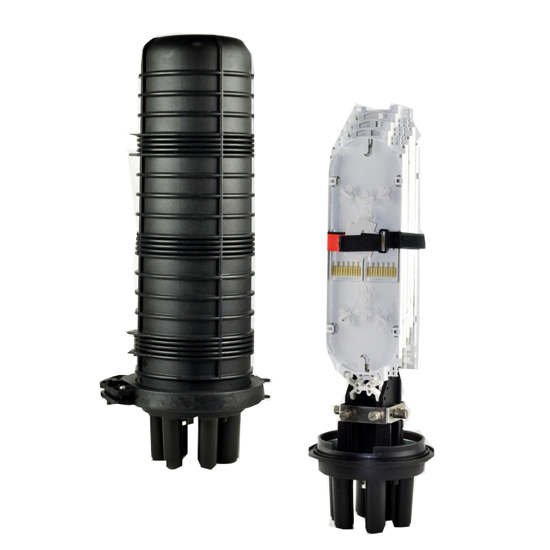
This has centralized cable energy, organized fiber management, and high-density splicing capability. These closures serve in distribution networks, FTTH systems, and local access networks. They offer easy fiber organization and simplified maintenance procedures.
Aerial fiber closures
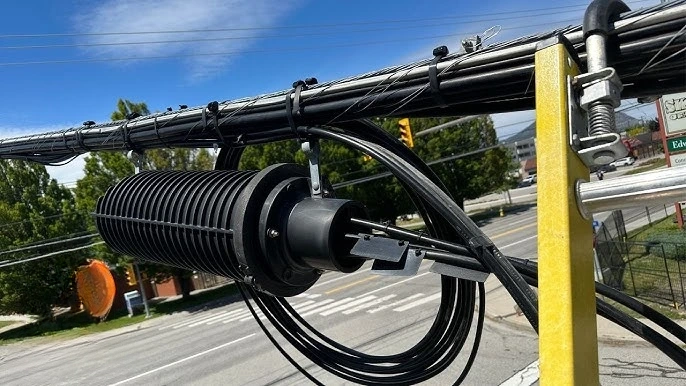
These are designed for suspension on poles or messenger wires. They have lightweight construction, UV-resistant materials, and weatherproof design. They serve in fiber networks, rural broadband projects, and utility communication systems.
Underground fiber closures
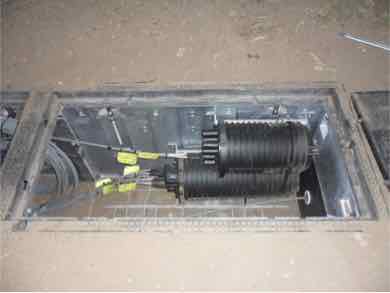
These are engineered to withstand burial conditions and underground chambers. Underground closures have high crush resistance, waterproof construction, and corrosion-resistant materials. These serve in direct-buried fiber networks, manholes, and metropolitan fiber infrastructure.
FTTH distribution splice closure
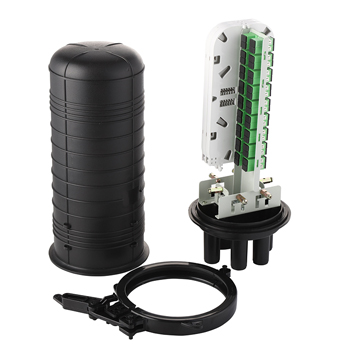
These closures are optimized for access networks and customer distribution points. They have a compact size, integrated splitter support, and low fiber count capacity. The closures serve in FTTH distribution networks, broadband access infrastructure, and last-mile connectivity.
Fiber optic splice closure installation guide
Fiber closure installation involves preparing cables, splicing the fibers, organizing the fiber management system, and sealing the closure to protect the optical connections. Proper closure installation maintains low signal loss, prevents fiber damage, and ensures network reliability. Here is the installation process for the fiber optic closures.
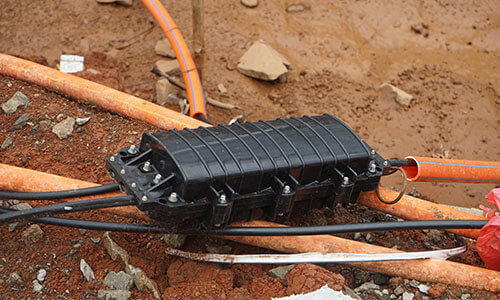
- Open the fiber optic closure and check whether the main components and accessories are well-prepared inside the package. Verify the closure matches the fiber count and cable size requirements.
- Determine the length of the fiber cable to be fixed and stripped inside the fiber optic closure and reserve enough length of fiber cable to be spliced.
- Strip off the protective coat of fiber cable from the temp. Feed the prepared cable through the closure’s entry ports.
- Separate fiber cores and prepare work prior to fixing fiber cable.
- Fix the cable with a clamp; fix the cable’s strengthened core with a core fixing kit.
- Fuse the input and output fibers together. Ensure proper fiber management to simplify maintenance and reduce the risk of signal loss.
- Install a heat shrinkable protective sleeve and house fibers. After the installation is complete, check up comprehensively. Assemble and fix fiber optic closure housing.
Working principle of the fiber optic splice closure
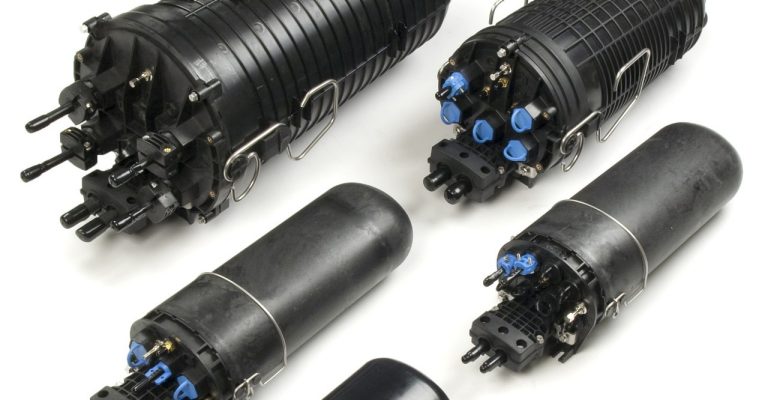
The fiber optic splice closure encloses, protects, and organizes spliced optical fibers while maintaining the integrity of the fiber optic network. It creates a sealed environment that shields fiber connections from moisture, dust, temperature variations, and mechanical stress. When joining the fiber optic cables, the optical fibers inside the cables are spliced together using fusion splicing or mechanical splicing techniques. The splice closure then houses the connections and protects them throughout the network’s operational life. The closure acts as a protective and organizational system rather than an active electrical device. The splice closure provides a protected pathway for optical signals. Fiber optic splice closures manage fiber routing, absorb mechanical stresses, and seal the connections against exposure. It helps maintain low signal loss, network reliability, and performance in telecommunications, FTTH, utility, and data communication networks.
Advantages of a fiber splice closure
The fiber optic splice closure delivers mechanical protection and network reliability by protecting fiber joints and organizing cable splices in a controlled environment. It impacts signal stability, maintenance efficiency, and network lifespan. Here are their key benefits.
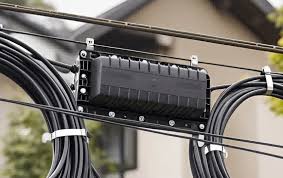
- Environmental protection—the splice closure isolated fiber splices from external conditions. This ensures stable optical performance in harsh environments.
- Mechanical protection of fiber splices—the closure absorbs vibration and shock, prevents fiber bending, protects against cable-pulling forces, and maintains the structural integrity of spliced joints.
- Improved network reliability—the splice closures enhance network performance by reducing the risk of signal loss, reducing attenuation at splice points, and causing fewer network failures in outdoor deployments.
- Organized fiber management – the internal structure improves fiber handling and reduces operational complexity. This organization improves installation quality and maintenance efficiency.
- High capacity for fiber networks—modern closures are suitable for high-density backbone networks, support FTTH distribution systems, and enable branching and splitting configurations.
- Enhanced network security and stability—splice closures provide passive protection against external interference. It protects against unauthorized access and maintains stable routing in critical infrastructure.
Technical specifications of fiber optic splice closures
Fiber optic splice closures depend on specifications that determine their suitability for telecom, FTTH, and backbone networks. The specifications vary by manufacturer and applications. The specifications include fiber capacity, splice tray capacity, cable entry points, protection rating, operating temperature range, mechanical strength, and sealing system specifications.
| Specifications | Value |
| Dimensions | 11.9” × 11.5” × 28.3” (302 mm × 292 mm × 719 mm) |
| Cable ports | 6 |
| Splice capacity | Up to 588 single / 1,152 ribbon |
| Tray capacity | 7 trays total |
| Material | UV and weather-resistant composite |
| Seal type | Silicone compression grommets + dome clamps |
| Applications | Aerial, underground, pole, vault |
| Splicing type | Mass fusion and single fusion |
How to select the right fiber optic splice closure
Selecting the right fiber splice closure depends on network architecture, environmental conditions, fiber count, and maintenance strategy. This helps to match the closure’s mechanical and optical capabilities to the real deployment conditions. Key factors to consider include:
- Define fiber count and network scale—fiber closures categorize into small access networks with 24-96 fibers, FTTH distribution with 98-288 fibers, and metro networks with 200-1440 fibers. It is crucial to select a closure with at least 20-30% spare capacity for future expansion.
- Select the appropriate closure type—various architectures for the closures, like the dome type, are best for underground and aerial installations. Other configurations include inline type, FTTH distribution closures, and horizontal type.
- Match installation environment—fiber optic splice closures serve in aerial installations, underground installations, and direct burial.
- Determine cable entry requirements—it is essential to match closure design with network topology. Check the number of ports required, cable diameter compatibility, branching configuration, and sealing methods.
- Check splice compatibility – ensure compatibility with the splicing method. Check compatibility with fusion splicing, mechanical splicing, and splicing protection sleeves.