
An optical fiber ribbon slotted core cable is a high-density fiber-optic cable that accommodates a large number of optical fibers in ribbon units arranged inside longitudinal slots. It has a high fiber density of ribbon technology with the organized mechanical structure of a slotted-core design. They organize fibers into flat, bonded ribbons that are then positioned in dedicated slots around the core. The slotted cores create designated pathways for the fiber ribbons. During installation, the core maintains the position of the ribbons and limits movement. The ribbon arrangement also allows mass-fusion splicing, where many fibers are spliced simultaneously. The slotted-core design offers high fiber density combined with organized fiber management. The design also offers efficient use of internal cable space, high fiber-count capability, efficient cable installation, and excellent mechanical protection. Slotted-core ribbon cables serve in infrastructure where large fiber counts and efficient splicing are essential.
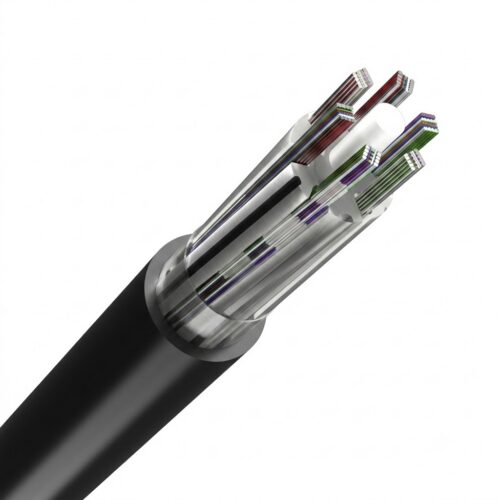
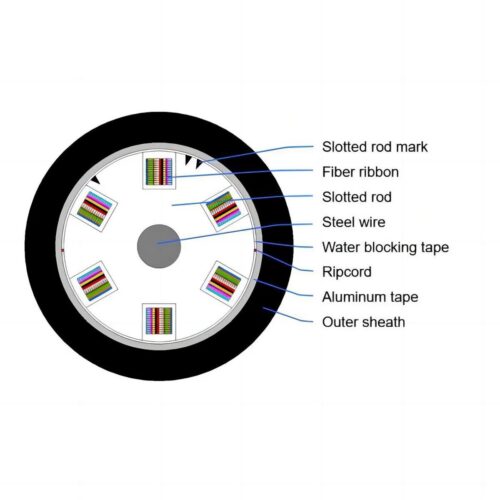

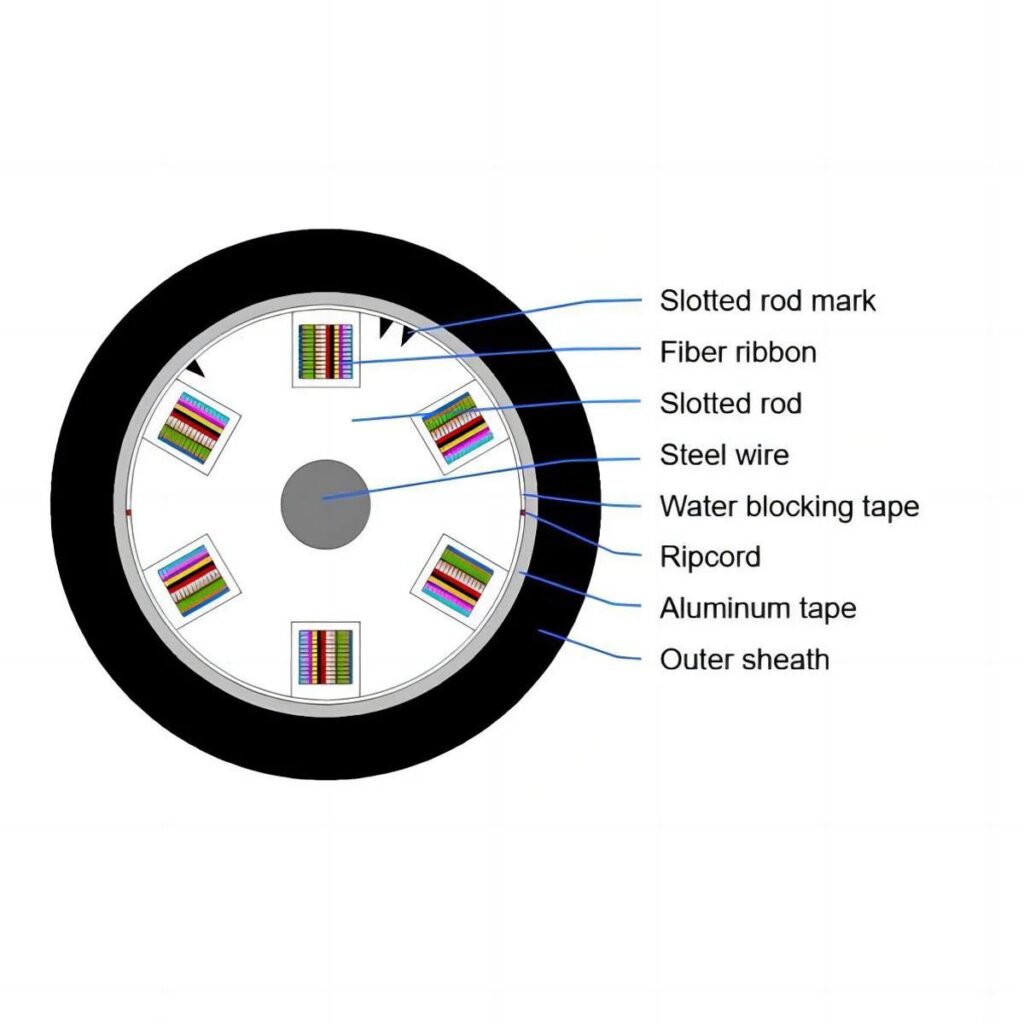

Core structure of the slotted-core ribbon cables
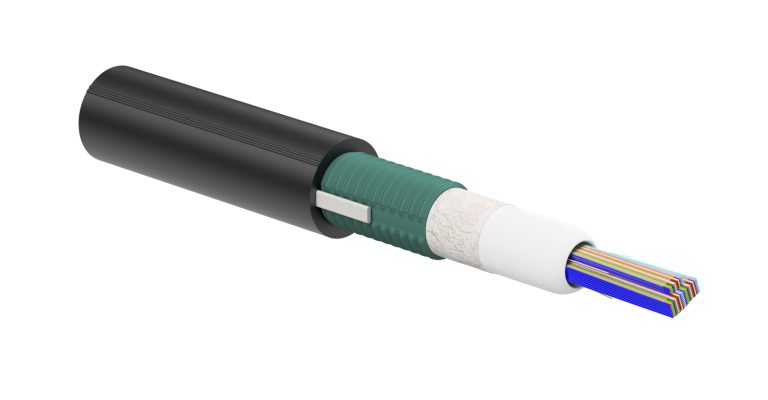
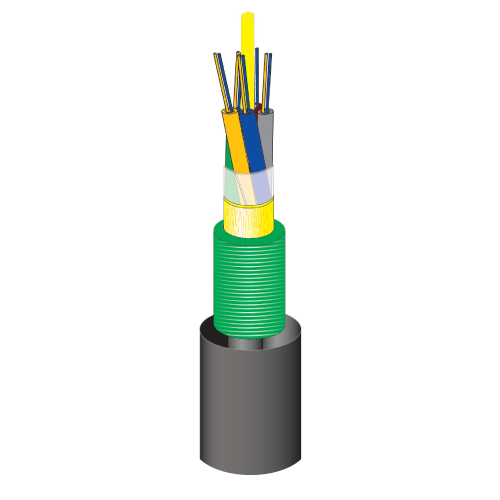
The optical fiber ribbon slotted core cable provides high fiber density while maintaining mechanical protection, fiber organization, and efficient splicing. It has a slotted core that contains longitudinal grooves designed to accommodate fiber ribbons. The construction makes the cables ideal for high-capacity telecommunications, data centers, broadband networks, and other fiber networks that need high fiber counts. Common components include:
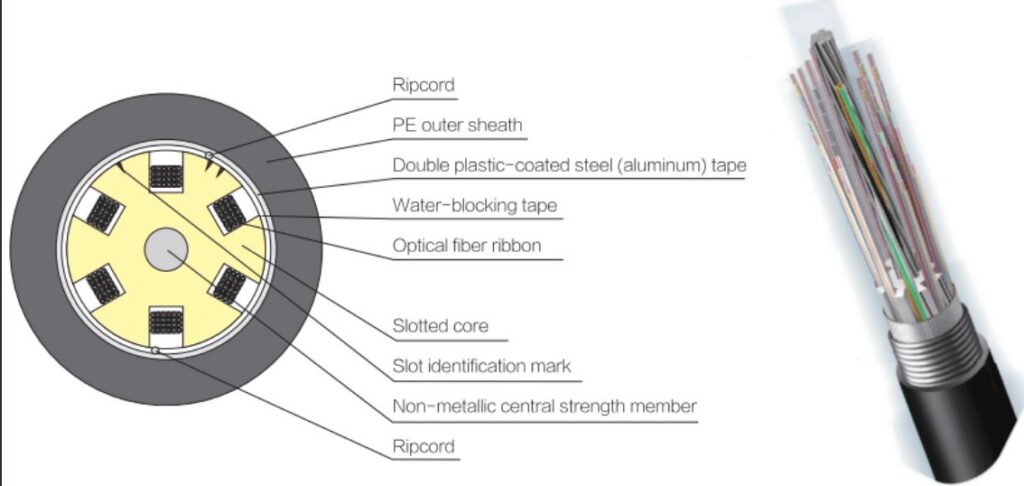
- Slotted ribbon core—this is the core of the cable where each ribbon contains 250 μm fibers arranged side-by-side. The slots provide a controlled pathway for one or more fiber ribbons. They also keep fiber ribbons organized, prevent excessive movement within the cable, and maintain separation between ribbon groups.
- Optical fiber ribbons—the fiber contains optical fibers arranged in a flat, parallel configuration. The ribbons may contain different numbers of fibers depending on the cable design.
- Central strength member—the central strength member provides structural reinforcement to the cable. It consists of a fiberglass-reinforced plastic or another high-strength material. The member carries tensile loads during installation, maintain the cable’s dimensional stability, and reduce mechanical stress transferred to the optical fibers.
- Water-blocking system—the ribbon slotted-core cable can incorporate water-blocking tapes, yarns, gels, or swelling materials. These materials limit longitudinal water migration if the outer sheath is damaged. Water blocking protects fiber coatings, ribbon matrix materials, strength members, and splice points.
- Outer sheath—this is the protective layer manufactured from a durable polymer such as polyethylene. The sheath protects the internal components against abrasion, moisture, UV exposure, mechanical impact, contamination, and temperature variations.
Types of the optical fiber ribbon slotted core cables
Slotted-core ribbon cables are classified according to fiber count, ribbon configuration, mechanical protection, installation environment, and cable construction. Common configurations include central slotted-core ribbon cable, gel-filled ribbon slotted-core cable, and dry water-blocked ribbon slotted-core cable. Here are the most common types used in telecommunications and high-density fiber networks.
4-fiber ribbon
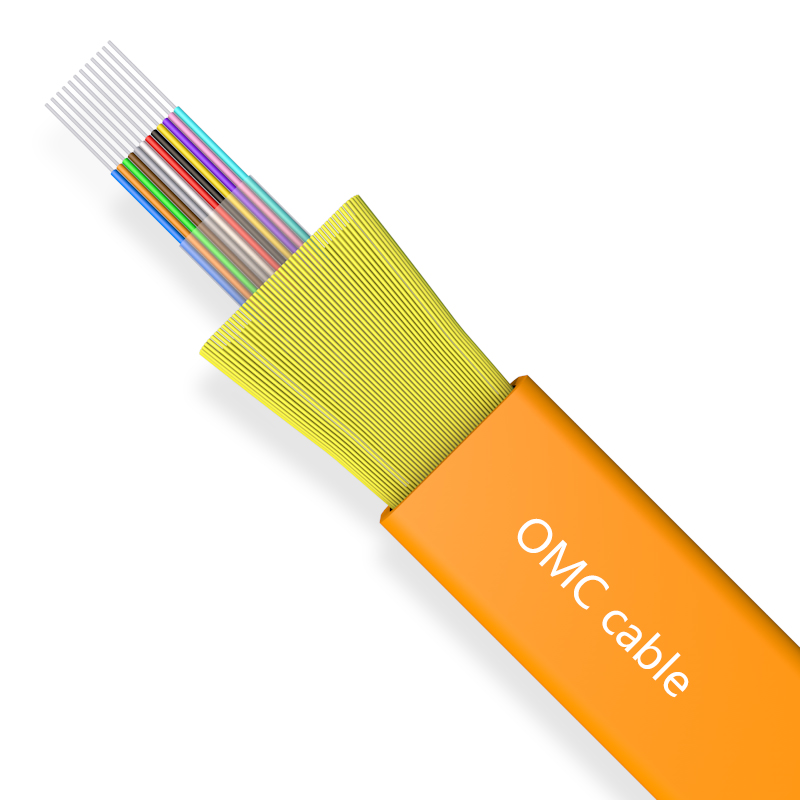
This one includes a fiber count of 48 to 300+. It is common in access networks, FTTH, and general use with moderate fiber counts.
6 fiber ribbon
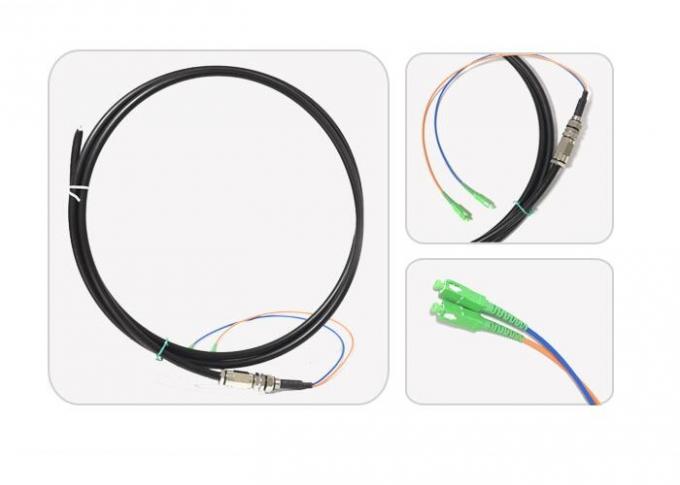
This cable consists of 72 to 432+ fiber counts. It is ideal for high-density applications that need more fibers than a 4-fiber ribbon allows.
8 fiber ribbons
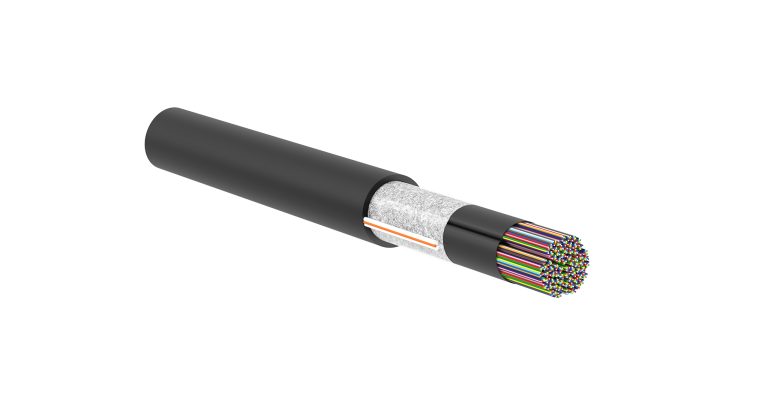
This consists of 400 to 480+ fiber count. It serves in ultra-high-density long-haul or metropolitan networks that need maximum fiber count.
The working principle of the slotted-core ribbon cables
A slotted-core ribbon cable combines the high-density organization of ribbonized optical fibers with a slotted structural core. This core protects and positions the ribbons. The cable maintains optical performance while allowing large numbers of fibers to be installed, managed, and spliced. Data is transmitted as pulses of light through the fiber core of the cable. The fiber’s core and cladding use different refractive indices that allow optical signals to remain confined within the core through total internal reflection. This enables high-bandwidth transmission over long distances with relatively low attenuation.
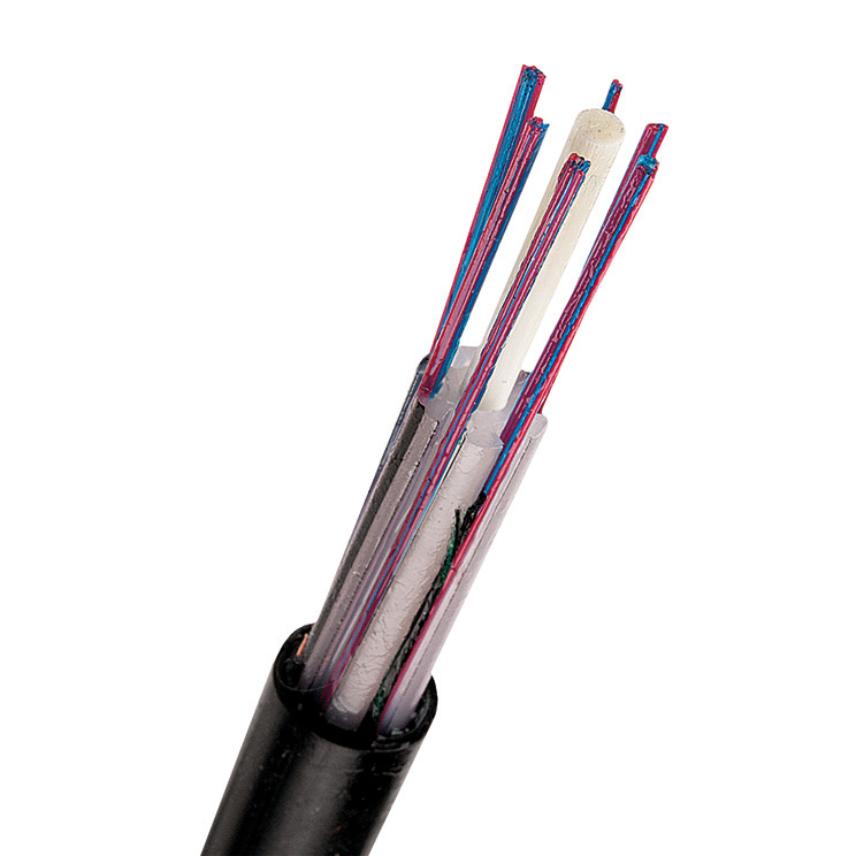
The ribbon provides a standardized arrangement of fibers that makes it easier to identify and process many fibers. The slots maintain the position of each ribbon, separate individual ribbon groups, reduce uncontrolled fiber movement, and protect ribbons from excessive mechanical interaction. The slotted core acts as both a fiber-management structure and a mechanical support system. The strength members, water-blocking system, and outer sheath protect the cable during installation and operation. Slotted-core ribbon cables allow operators to deploy high fiber counts in compact cables while simplifying fiber management and reducing the time needed for large-scale splicing operations.
Selecting the right optical fiber ribbon slotted core cable
When selecting the slotted-core fiber cable, it is crucial to match the network’s transmission needs, installation environment, mechanical loading, splicing method, and long-term operating conditions. It is important to select a cable that provides the needed capacity while maintaining optical performance, mechanical reliability, installation efficiency, and enough room for future network expansion. Here are the factors to consider when selecting the cable.
- Determine the needed fiber count—consider high-density configurations including 144, 288, 432, 576, and 864 fibers. Select a cable with enough capacity to prevent an increase in material and installation costs.
- Select the appropriate fiber type—the optical fiber should match the transmission system and network architecture. Consider operating wavelength, attenuation, chromatic dispersion, fiber compatibility with existing infrastructure, and bend performance.
- Check the slotted-core design—check the number of slots, slot dimensions, number of ribbons per shot, ribbon compatibility, and core diameter. The slots should provide enough space to accommodate the ribbons without excessive compression.
- Consider the installation environment—check whether the cable will be suitable for direct burial, industrial environments, or locations exposed to mechanical damage. Check the cable’s tensile strength, sag characteristics, wind loading, ice loading, and UV resistance.
- Check mechanical performance—the selected cable should withstand the mechanical forces expected during installation and service. It is crucial to check maximum tensile load, crush resistance, impact resistance, bending radius, and cable weight.
- Check water-blocking performance—check moisture protection for outdoor deployments. It can be either gel-filled construction or dry water-blocked construction.
- Consider cable diameter and pathway capacity—verify the cable’s outside diameter, weight, and minimum bend radius compatibility with existing ducts, conduits, trays, handholes, and other infrastructure.
- Verify quality and compliance—check fiber attenuation, optical return loss, tensile performance, crush resistance, water penetration, temperature cycling, bending performance, and dimensional consistency.
Technical specifications for the slotted-core ribbon cable
The slotted-core ribbon cable is specified according to its optical performance, fiber capacity, mechanical construction, environmental resistance, and installation requirements. However, the exact specifications vary depending on manufacture and cable design. These specifications include:
| Cable type | Optical fiber ribbon slotted core cable |
| Construction type | Corrugated steel armor |
| Subunit type | Gel-filled |
| Jacket material | PE (Polyethylene) |
| Central strength member material | Steel wire |
| Slotted core material | Slotted core material |
| Jacket marking | Feet/Meter |
| Ribbon type | 4-fiber ribbon |
| Ribbon number | 10, 25, 50, 75 |
| Total fiber count | 40, 100, 200, 300 |
| Sheath thickness | 1.70 mm (0.067 in) |
| Compression | 3 N/mm | 67 lbf / 3.937 in |
| Flex | 25 cycles |
| Impact | 4.5 N-m | 40 in-lb |
| Fiber type | G.652.D and G.657.A1 |
Application areas for slotted core ribbon cables
Slotted-core ribbon cable serves in high-capacity optical communication networks where operators need to accommodate a large number of fibers in a compact cable. The ribbons support mass-fusion splicing, which is useful where large numbers of fiber connections must be completed efficiently. Common application areas include:
- Telecommunication backbone networks—slotted-core ribbon cables are ideal for telecommunication backbone infrastructure. Their high fiber density allows network operators to increase transmission capacity without increasing cable size.
- Data center networks—large data centers need high-capacity connections between servers, switches, storage systems, and facilities. The slotted-core ribbon cable serves in inter-building data center connections, campus data center networks, high-capacity backbone links, and data center interconnects.
- Metropolitan Area Networks—Fiber cables connect central offices, data centers, aggregation points, enterprises, and access networks. High-fiber-count ribbon cables serve where existing ducts have limited capacity.
- Broadband and FTTx networks—slotted-core ribbon cables form part of the high-capacity distribution infrastructure supporting FTTH, FTTB, and other FTTx deployments. They carry large numbers of fibers from network aggregation locations toward distribution points.
- Outside plant (OSP) networks—the cables serve in outside-plant telecommunications infrastructure. This is including underground ducts, conduits, and other protected pathways.
- Cloud and hyperscale infrastructure—high-density ribbon cable supports connections between data halls, network aggregation areas, data centers, cloud infrastructure facilities, and regional network hubs.
Benefits of using slotted core ribbon cables in telecommunication networks
Slotted-core ribbon cables are ideal for high-capacity telecommunication networks because they combine high fiber density, organized fiber management, mechanical protection, and efficient mass-fusion splicing. Here are their advantages in telecommunication networks.
- High fiber density—the cables can accommodate a large number of optical fibers within a compact cable structure. The fiber’s position and layout allow network operators to deploy high fiber counts.
- Faster mass-fusion splicing—this allows many fibers to be spliced simultaneously. This reduces the number of individual splicing operators needed compared with conventional single-fiber splicing.
- Simplified fiber organization—the slotted-core structure provides dedicated locations for fiber ribbons. This creates an organized internal cable structure.
- High network capacity—telecommunication networks continue to experience increasing bandwidth demand from cloud computing, video streaming, 5G services, enterprise connectivity, and broadband access.
- Mechanical protection—the slotted core helps maintain the position of the fiber ribbons and protects them from movement within the cable. The cable provides resistance to tensile loading, crushing, bending, impact, and vibration.