
A fiber UHD patch panel is a fiber-optic termination and connectivity system that accommodates a large number of fiber connections within a cabinet space. The path panel provides a structured point where fiber-optic cables can be terminated, spliced, organized, patched, and managed. Ultra high-density panels maximize port density while maintaining accessibility and proper fiber management. They serve in data centers, telecom networks, cloud infrastructure, and high-capacity backbone networks. In these facilities, the fiber UHD patch panels provide a centralized interface between fiber cables and active network equipment. Fiber cables are terminated using adapters or connected through modular cassettes and splice modules. The patch cords then connect the panel equipment such as optical transceivers, switches, optical distribution frames, servers, and fiber distribution systems. UHD systems allow network operators to accommodate more connections while preserving an organized physical infrastructure.
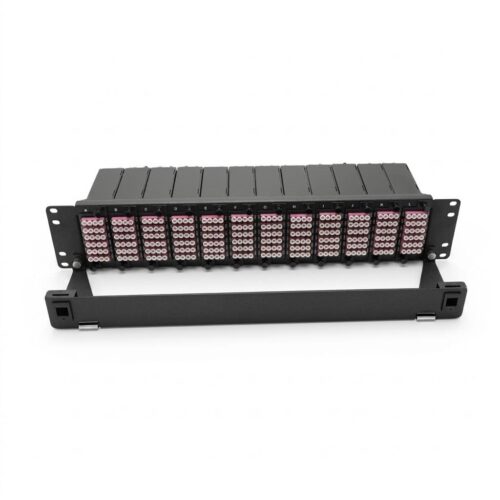
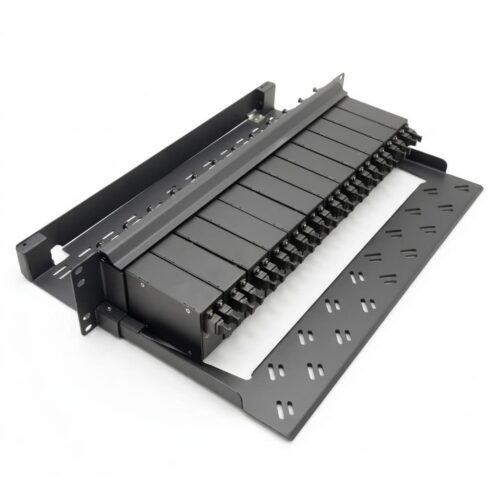
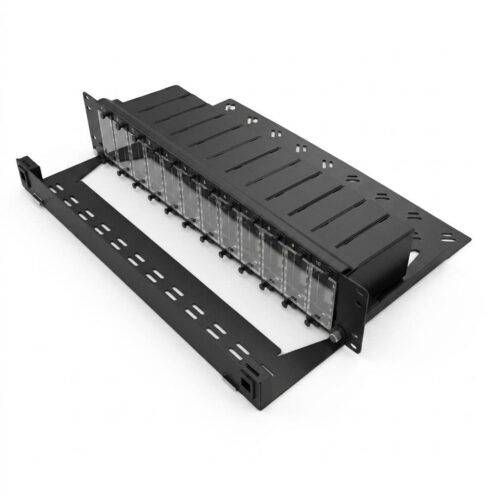
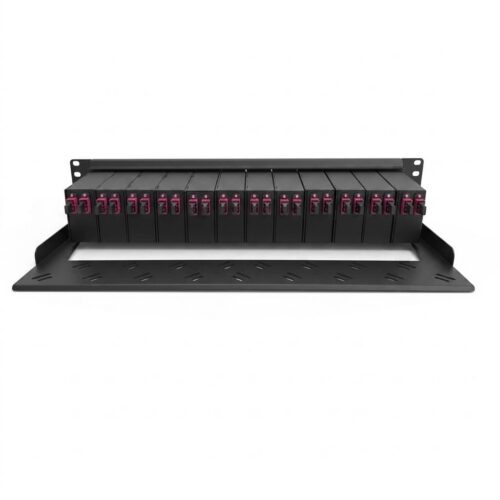
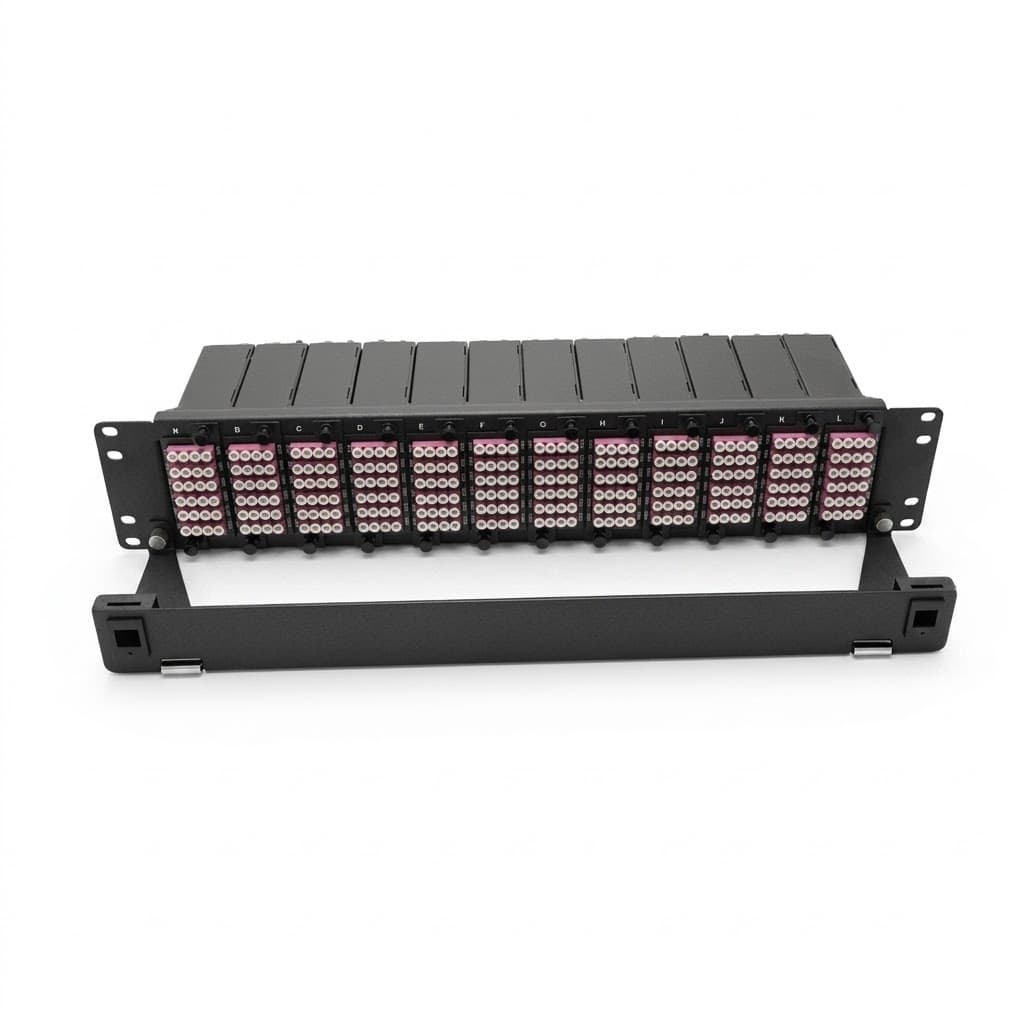
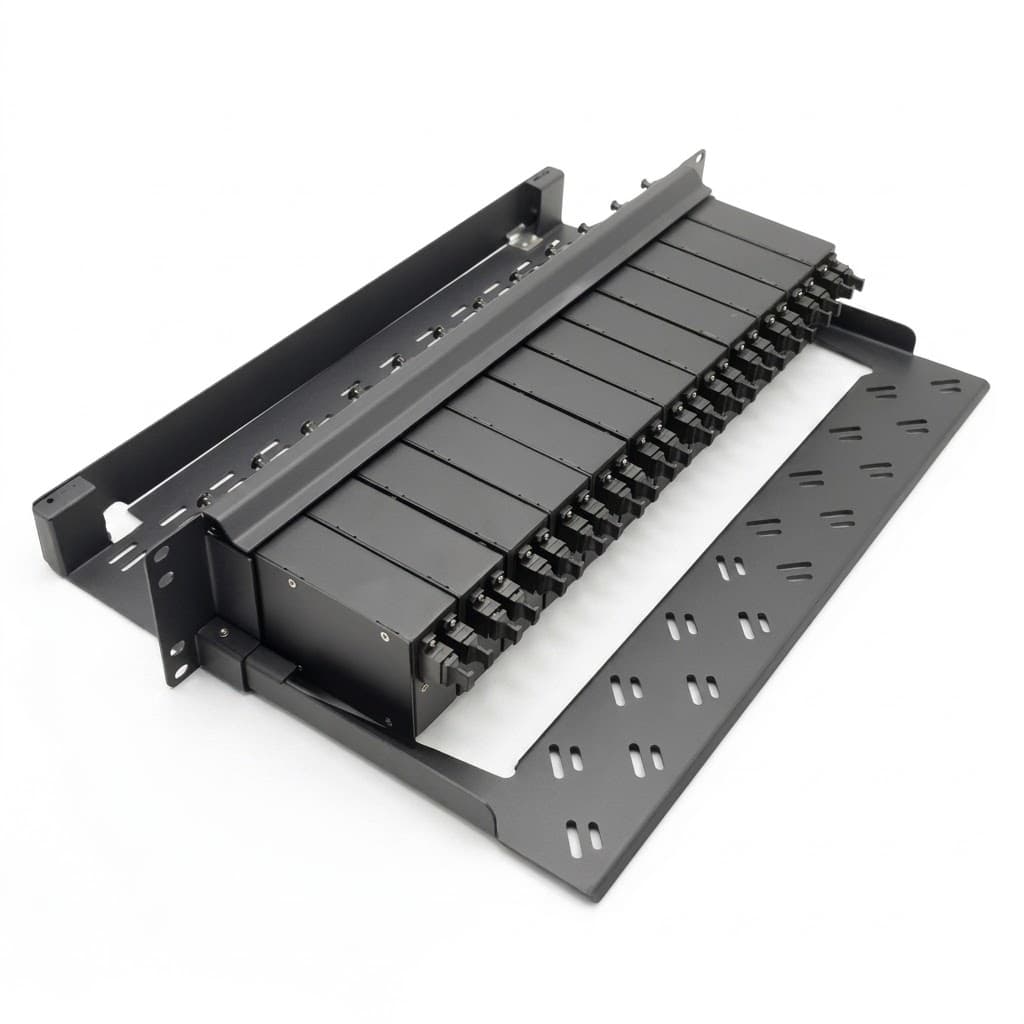
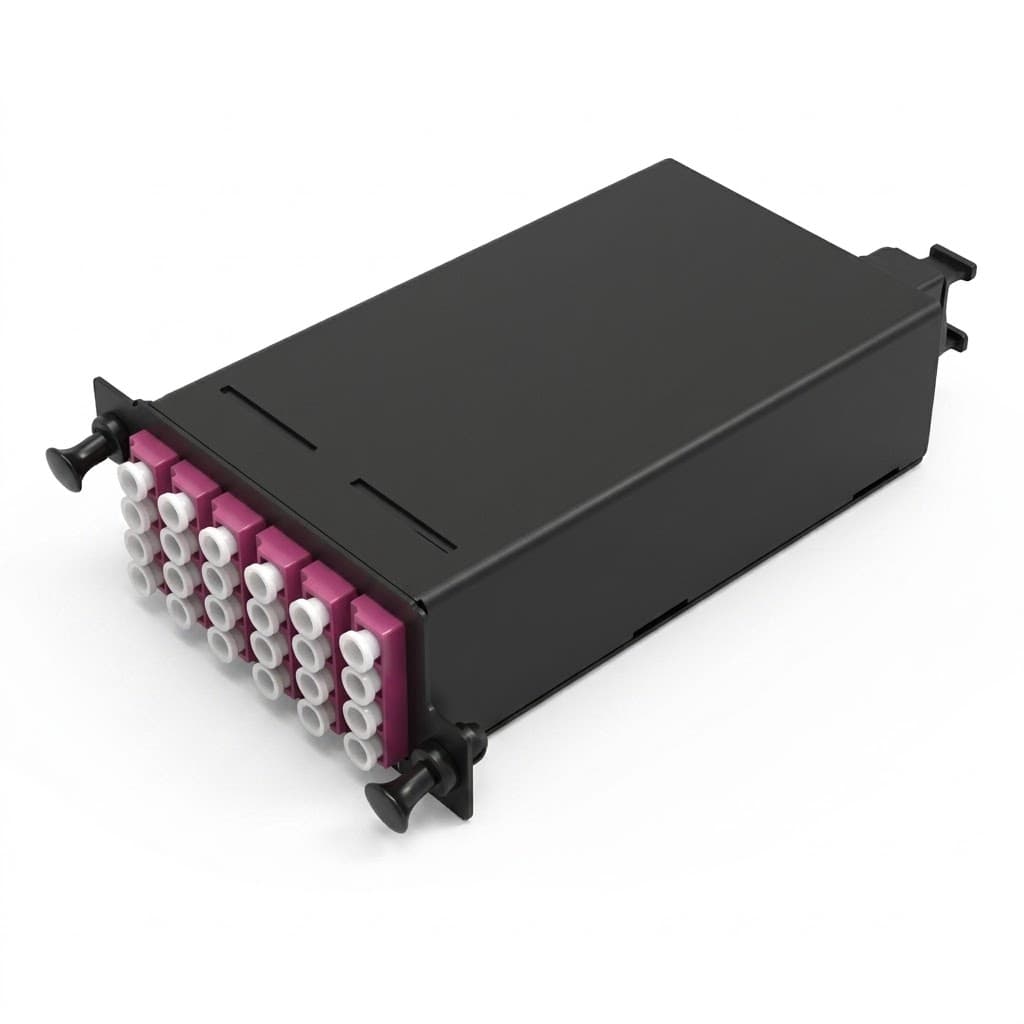
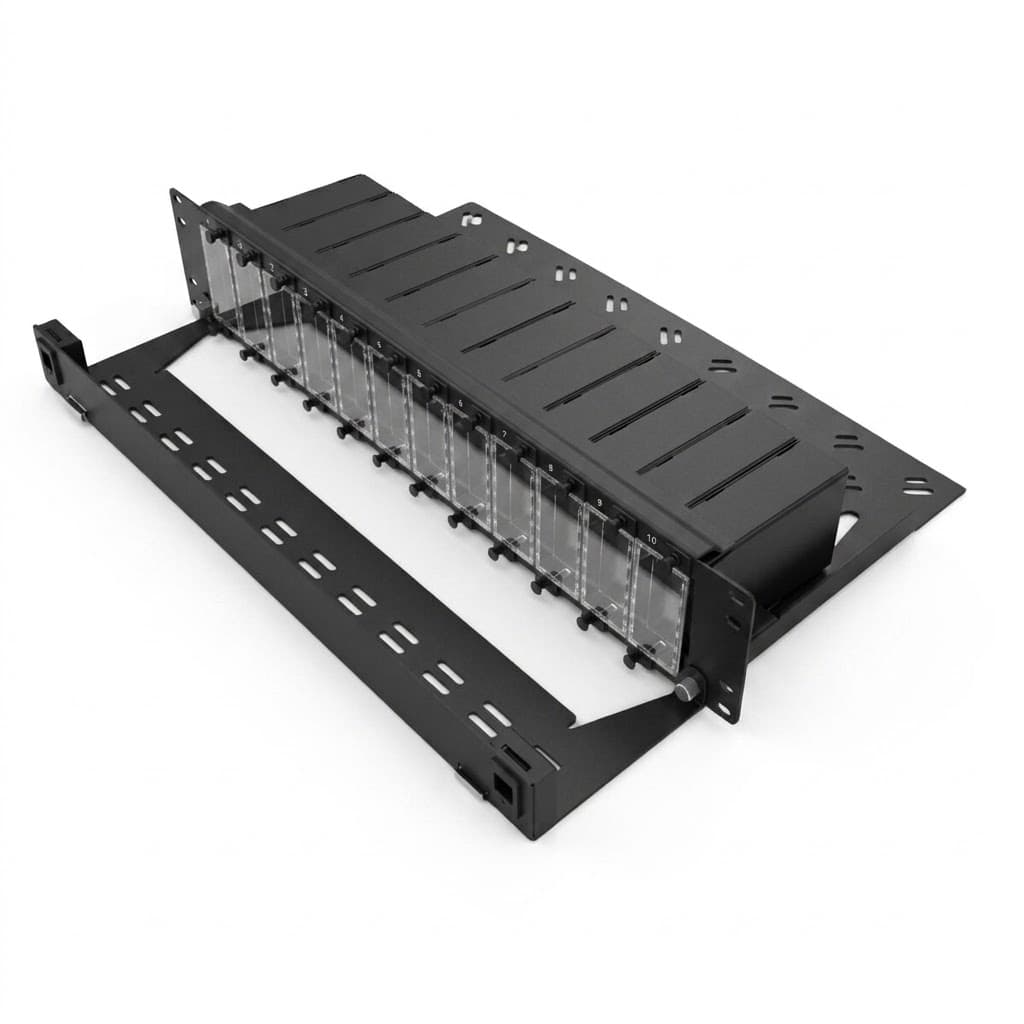
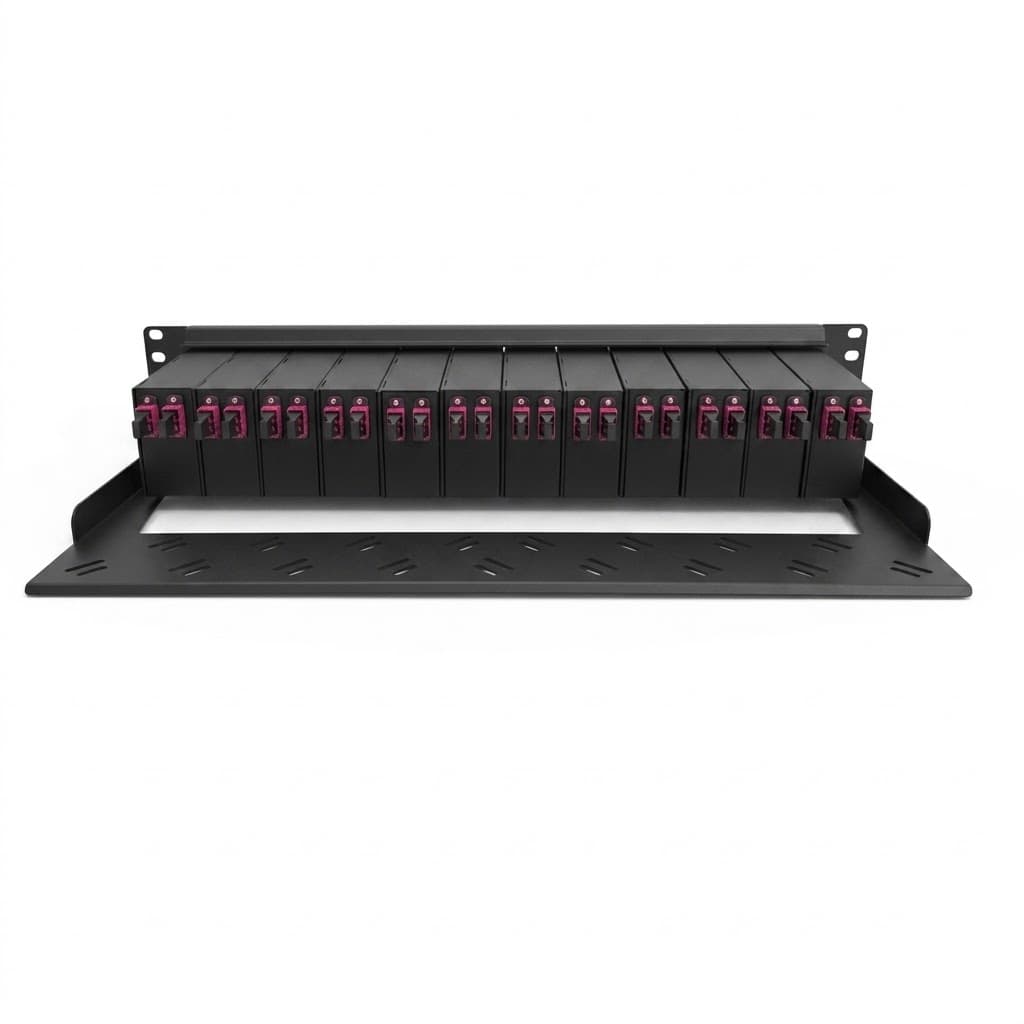
2RU 288 Fiber UHD Patch Panel
2RU 288 Fiber UHD Patch Panel
- Product Type: High-density optical distribution patch panel.
- Rack Unit (RU) Height: 2U.
- Maximum Total Fiber Count: 288 Fibers (288F).
- Front Interface Type: LC (up to 288 ports).
- Rear Interface Type: MPO (12 ports).
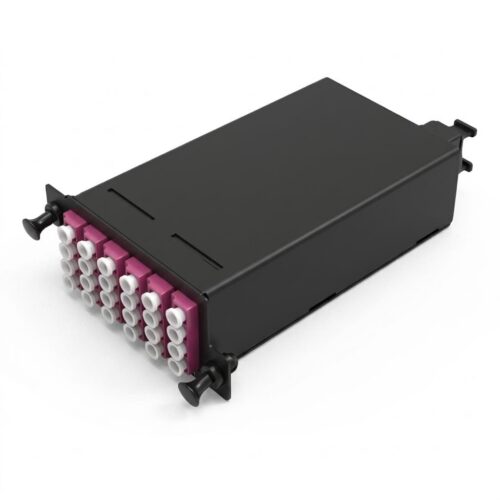
- Modular Interface Support: 12 pieces of 24F MPO to LC cassettes.
- Access Configuration: Front and rear access.
- Supported Network Speeds: 100G and 400G optical architectures.
- Material / Finish: Cold-rolled steel
- Dimensions (L x W x H): 482 × 200 × 90 mm(19.0″ × 7.87″ × 3.54″) (2U Rack-Mount)
- Channel Insertion Loss: <= 0.2 dB (LC UPC)
- Return Loss (LC): Single-Mode >= 55 dB; Multimode >= 35 dB
- Operating Temperature: −40 °C to +70 °C (−40 °F to +158 °F)

Core structure and components of the UHD patch panel
The fiber UHD patch panel has a structure that allows a large number of fiber connections to be terminated and managed within a compact rack space. Its design consists of mechanical protection, fiber routing, adapter interfaces, and modular connectivity components. This design offers maximum fiber density with controlled fiber routing and easy access. Key components include:
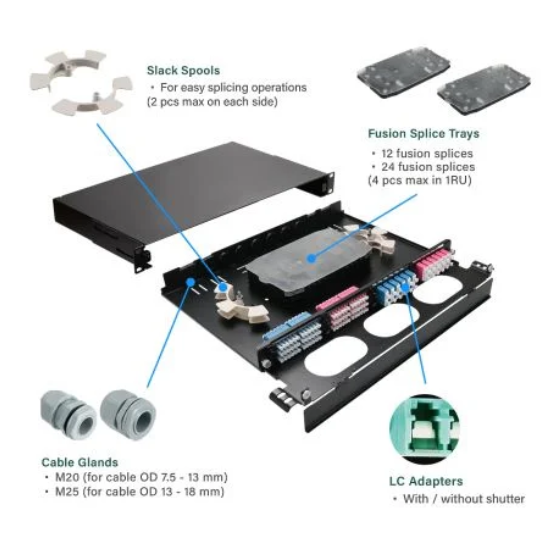
- Rack-mount chassis—this is the main structure of the UHD patch panel manufactured from steel or aluminum. These materials provide mechanical strength and protect internal fiber components. The chassis supports internal fiber modules, protects fiber connections, provides rack installation points, and maintains the structural integrity of the panel.
- Modular adapter panels—these provide the physical interface between the patch panel and the fiber optic connectors. They allow network operators to change connector configurations without replacing the entire chassis.
- Fiber cassettes—fiber cassettes contain pre-terminated fiber connections, splice interfaces, or conversion points between different connector formats. For instance, an MPO/MTP trunk can enter the panel and terminate into a cassette that provides LC duplex ports for connection to network equipment.
- Splice tray—the tray provides a protected location for the fiber splicing. It organizes individual fibers and protects splices from mechanical stress, excessive bending, and accidental damage.
- Fiber management system—this controls how fibers enter, exit, and move through the panel. These include fiber routing guides, cable managers, fiber clips, and separation channels.
- Cable entry and strain-relief system—the system prevents pulling forces from being transferred to the optical fibers. This is important in high-density installations where cables may enter the same enclosure.
Type of fiber UHD patch panels
Rack-mount UHD patch panels
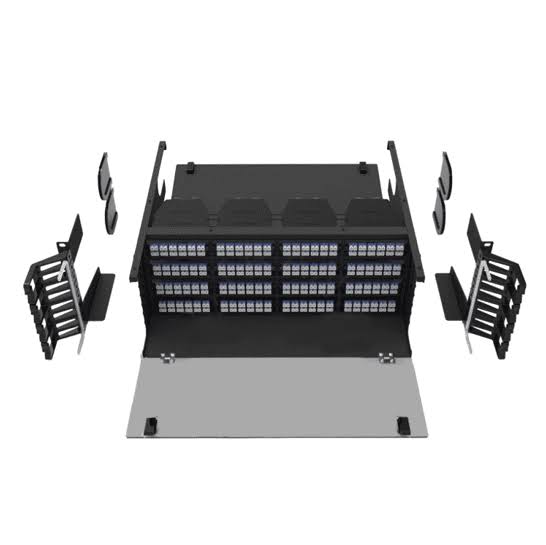
Rack-mount UHD panels provide a centralized location for terminating and organizing high-density fiber connections. They serve in data centers, telecom equipment rooms, enterprise networks, fiber backbone systems, and cloud infrastructure. Their compact design allows network operators to accommodate a large number of fiber ports without consuming excessive cabinet space.
Modular UHD panels
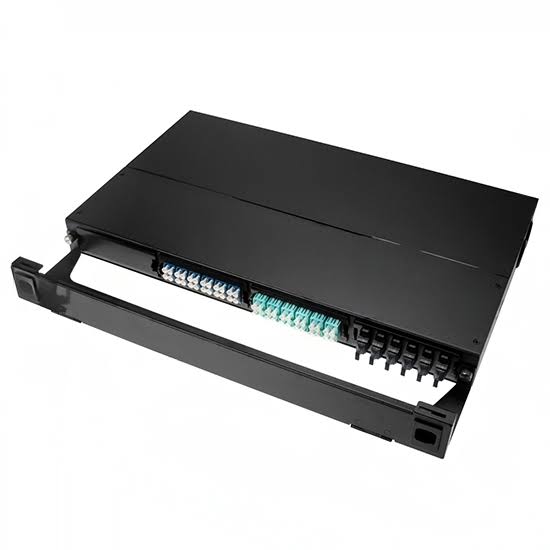
These use removable adapter panels, cassettes, and fiber modules. This allows technicians to configure the panel according to the required connector type and fiber count. They offer flexible configuration, easy upgrades, simplified maintenance, and better scalability.
MPO/MTP UHD panels
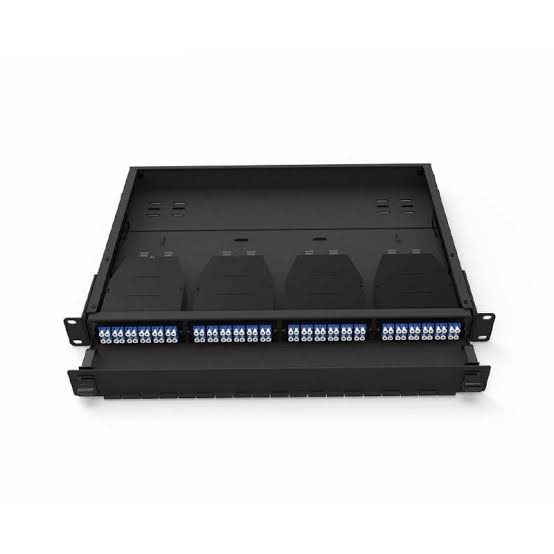
MPO/MTP panels are designed around multi-fiber push-on connections. They are suitable for high-density data center applications.
LC UHD patch panel
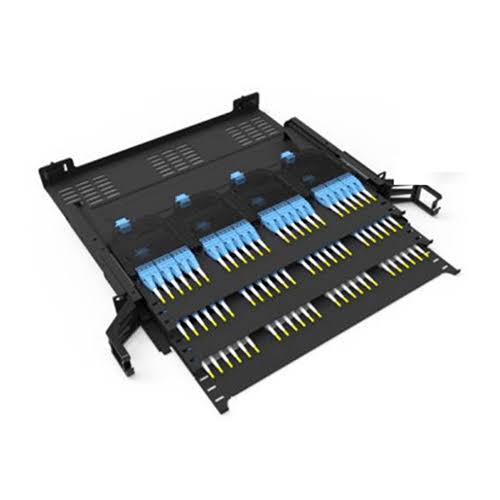
LC UHD panels use LC connectors that have a small form factor, allowing a high number of duplex fiber connections within a limited space. They serve in Ethernet networks, data-center interconnections, fiber-to-the-server deployments, telecommunications, and high-density distribution systems.
Splice UHD panels
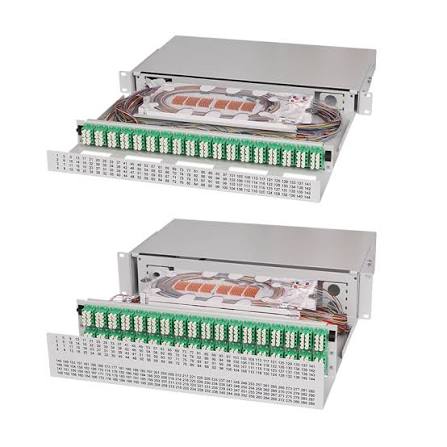
Splice-type UHD patch panels combine fiber termination and splicing functions in a single enclosure. The internal splice-management area protects the fiber joints while maintaining organized routing.
High-count fiber UHD patch panels
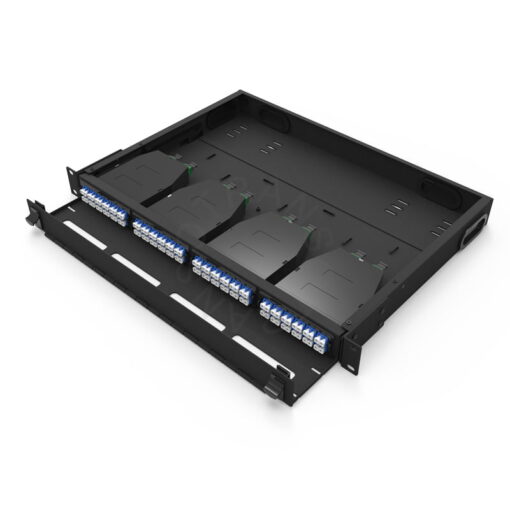
These panels are ideal for networks that need very large numbers of optical connections. They support configurations such as 72, 96, 144, 288, or more fibers depending on the chassis and module design. These are common for use in data-center backbone networks, telecom central offices, cloud infrastructure, carrier networks, and large fiber distribution systems.
Selecting the right fiber UHD patch panel
The fiber UHD patch panel should match the network’s optical architecture, connector system, rack environment, fiber capacity, and expansion needs. The right patch panel should balance port density, optical performance, physical space, maintainability, and future scalability. Here are the factors to consider when selecting the UHD patch panels.
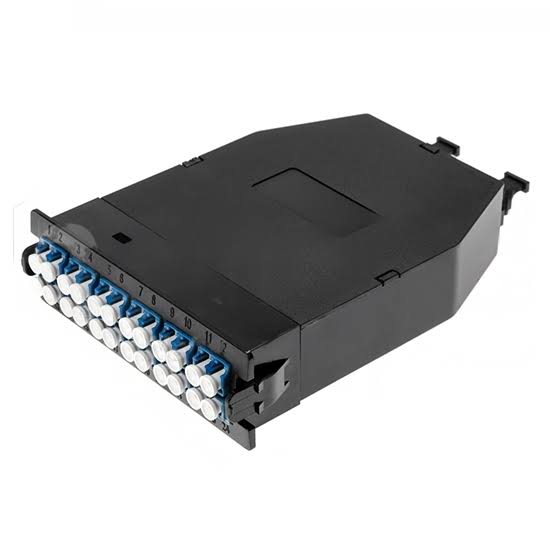
- Fiber count and port density – determine the number of fibers and connections that the panel must accommodate. Consider the current requirement and expected network growth. Select a panel with enough capacity for current deployment while reserving reasonable space for future expansion.
- Connector type—the connector interface must match the equipment and fiber capacity deployed. Connector compatibility affects patching, migration, maintenance, and network architecture.
- Fiber type—confirm whether the panel will accommodate single-mode, multimode, or both. The adapters, cassettes, connectors, and other components should be compatible with the selected fiber type.
- Rack space and physical dimensions—UHD systems maximize connectivity within limited space. Check rack-unit height, panel depth, mounting configuration, clearance for patch cords, and compatibility with existing cabinet.
- Fiber management—high port density increases the risk of fiber congestion. It is crucial to examine the panel’s fiber-routing and management system. Check for bend-radius protection, slack-fiber storage, cable routing guides, strain relief, and fiber separation.
- Modular configuration—modular UHD patch panels are ideal for networks expected to evolve. The modular chassis can accept different adapter panels, cassettes, and splice modules. This allows the network operator to change connector configurations.
- Splicing requirements—determine whether the installation needs fiber splicing. Select a UHD panel with an integrated splice tray.
Technical specifications for the fiber UHD patch panels
A fiber UHD patch panel is specified according to its optical, mechanical, connectivity, and environmental characteristics. The specifications determine how many fibers it can manage, which network equipment it can connect to, and whether it can maintain reliable optical performance in a high-density installation.
| Product type | High-density optical distribution patch panel |
| Rack unit (RU) height | 2U |
| Maximum total fiber count | 288 fibers (288F) |
| Front interface type | LC (up to 299 ports) |
| Rear interface type | MPO (12 ports) |
| Modular interface support | 12 pieces of 24F MPO to LC cassettes |
| Access configuration | Front and rear access |
| Supported network speeds | 100G and 400G optical architectures |
| Material/ Finish | Cold-rolled steel |
| Dimensions (L x W x H) | 482 x 200 x 90 mm (19.0” x 7.87” x 3.54”) (2U Rack-mount) |
| Channel insertion loss | <=0.2 dB (LC UPC) |
| Return loss (LC) | Single-mode>=55dB; multimode>=35dB |
| Operating temperature | −40 °C to +70 °C (−40 °F to +158 °F) |
Applications for fiber UHD patch panels
Fiber UHD patch panels serve where large numbers of fiber-optic connections need to be terminated, interconnected, protected, and organized within limited physical space. Their high port density and modular architecture make them ideal for modern telecommunications and high-capacity data networks. Common application areas include:
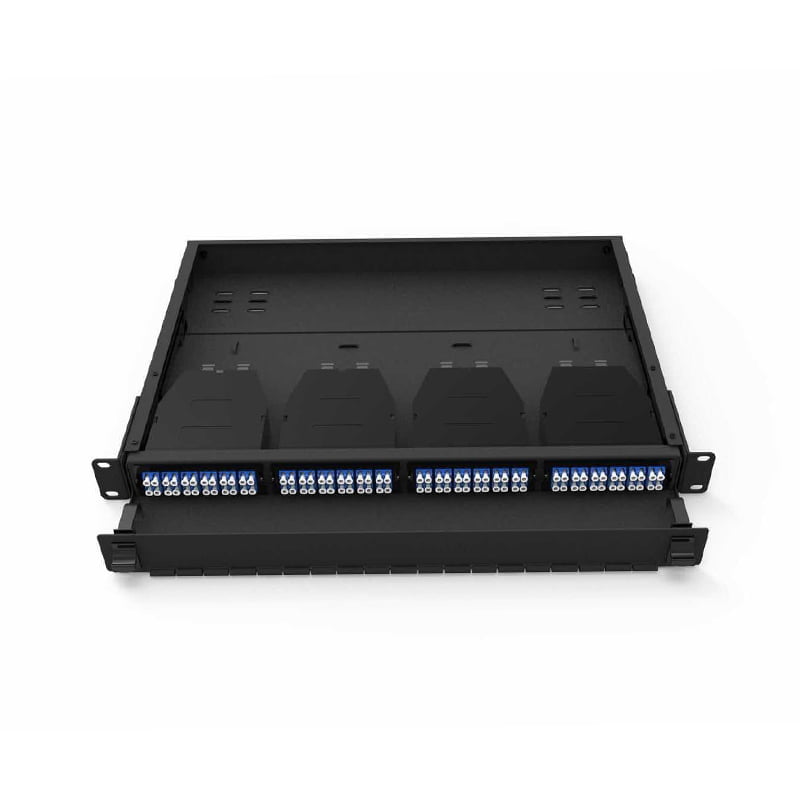
- Data centers—UHD panels provide a centralized point for managing connections in data centers. This is while reducing the rack space needed for fiber distribution. MPO/MTP-based UHD systems serve where high fiber counts and parallel optical transmission are needed.
- Telecommunication networks—telecom operators use UHD patch panels in central offices, equipment rooms, and network distribution facilities. Their high-density design helps operators accommodate network expansion without the need for adding large amounts of rack space.
- Fiber distribution networks—UHD panels serve as centralized termination points within fiber distribution systems. They allow technicians to terminate incoming fiber cables, organize fiber routes, connect distribution fibers, perform testing, and isolate faults.
- FTTH networks—these networks need extensive fiber distribution between central offices, distribution points, and subscribers. UHD patching systems serve in network aggregation and distribution facilities to organize high fiber counts. They support optical line terminals, fiber distribution frames, splitter systems, feeder fibers, and distribution fibers.
- 5G network infrastructure—the patch panels organize the large number of fiber connections. This is crucial for 5G networks that need high-capacity fiber connections for front haul, midhaul, and backhaul infrastructure.
- Cloud computing infrastructure—cloud service providers operate large-scale facilities containing extensive optical connectivity. UHD patch panels allow operators to manage fiber connections between compute infrastructure, network switches, storage systems, and optical transport equipment.
The advantages of fiber UHD patch panels in telecommunication networks
Fiber UHD patch panels provide a structured platform for terminating, organizing, and interconnecting large numbers of optical fibers. The modernization and upgrades of telecommunication networks increase the demand for compact and scalable fiber-management solutions. They offer:
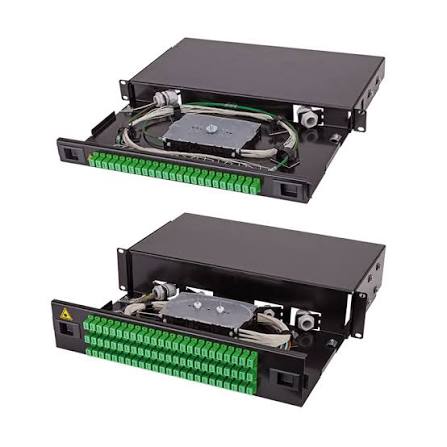
- Higher fiber density—the patch panel can accommodate many fiber connections within a small rack footprint. A high-density panel allows operators to consolidate more connections into fewer rack units.
- Efficient use of rack space—UHD panels use available vertical space more efficiently. This allows operators to install extra optical transport equipment, routers and switches, power systems, fiber modules, and network monitoring equipment.
- Improved fiber organization—the panels provide structured fiber routing, port identification, slack storage, and cable management. This makes it easier for technicians to trace individual fibers, identify connections, perform testing, replace patch cords, and troubleshoot faults.
- Easier network expansion—modular UHD patch panels can accommodate extra adapter panels, cassettes, or fiber modules as network requirements change.
- Support for high-capacity networks—UHD patch panels support architectures using LC and MPO/MTP connectivity. This makes them ideal for dense fiber environments associated with high-capacity transport and data-center interconnection.