
Telecommunications networks rely on high-quality fiber optic cables that match the installation environment, transmission requirements, and equipment interfaces. A duplex indoor tight-buffered fiber optic cable connects network equipment inside buildings, telecommunications rooms, data centers, and utility control facilities. It provides two optical fiber paths in a compact cable assembly. The two fibers provide separate transmit and receive paths for duplex communication depending on the transceivers and network equipment. The two optical fibers carry transmitted data and received data. The tight-buffer cables are ideal for use inside buildings such as telecommunications rooms, equipment rooms, and utility control centers. Each fiber has a coating and a tight-buffer layer that protects the glass from handling damage and helps technicians work with the fiber during installation and termination. The design makes individual fibers easier to route and prepare for connectorization than many loose-tube designs.
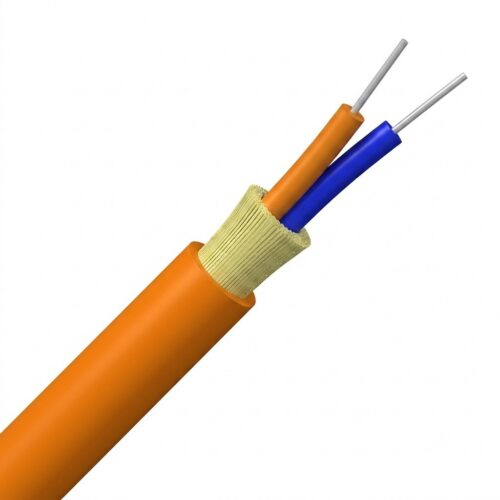
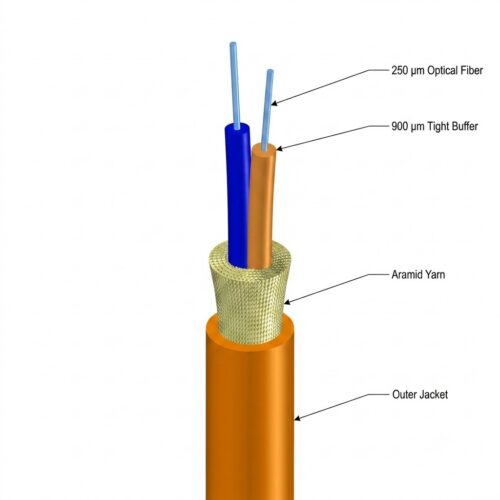
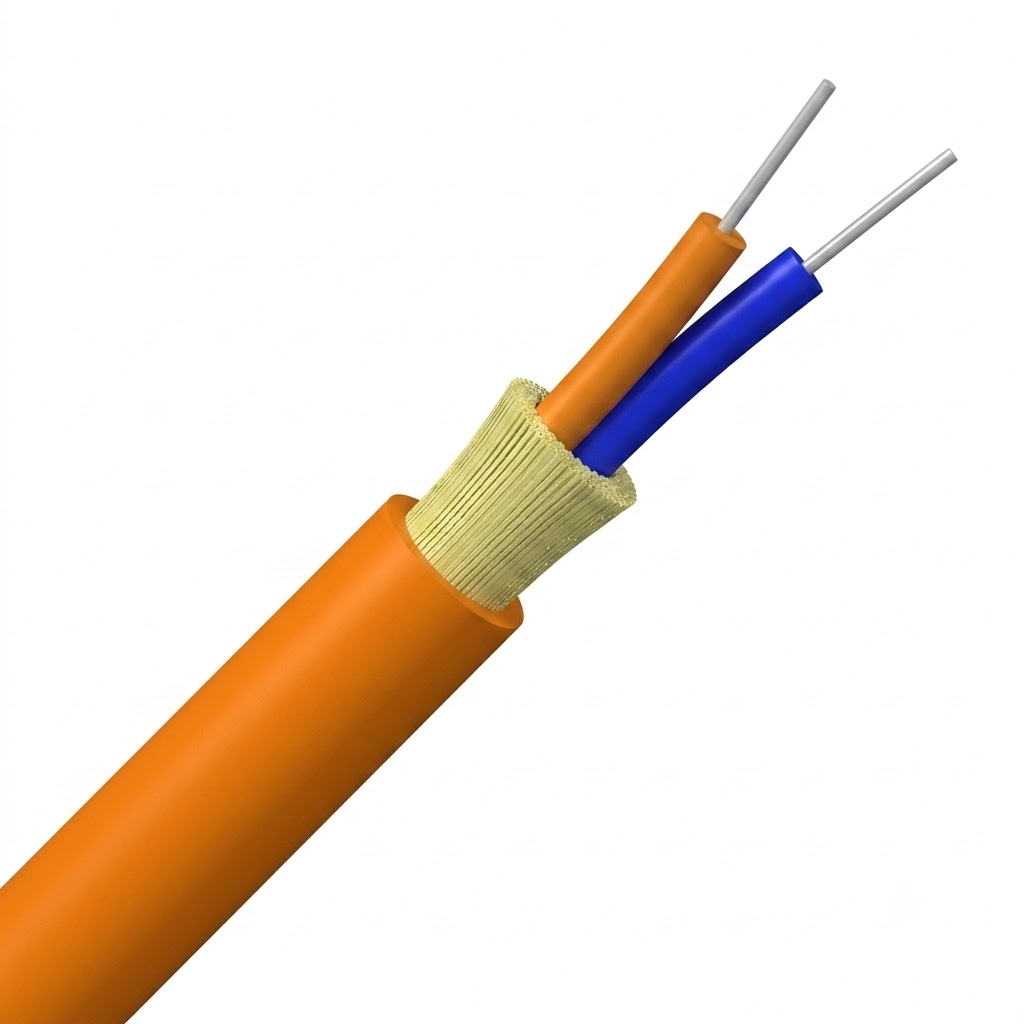
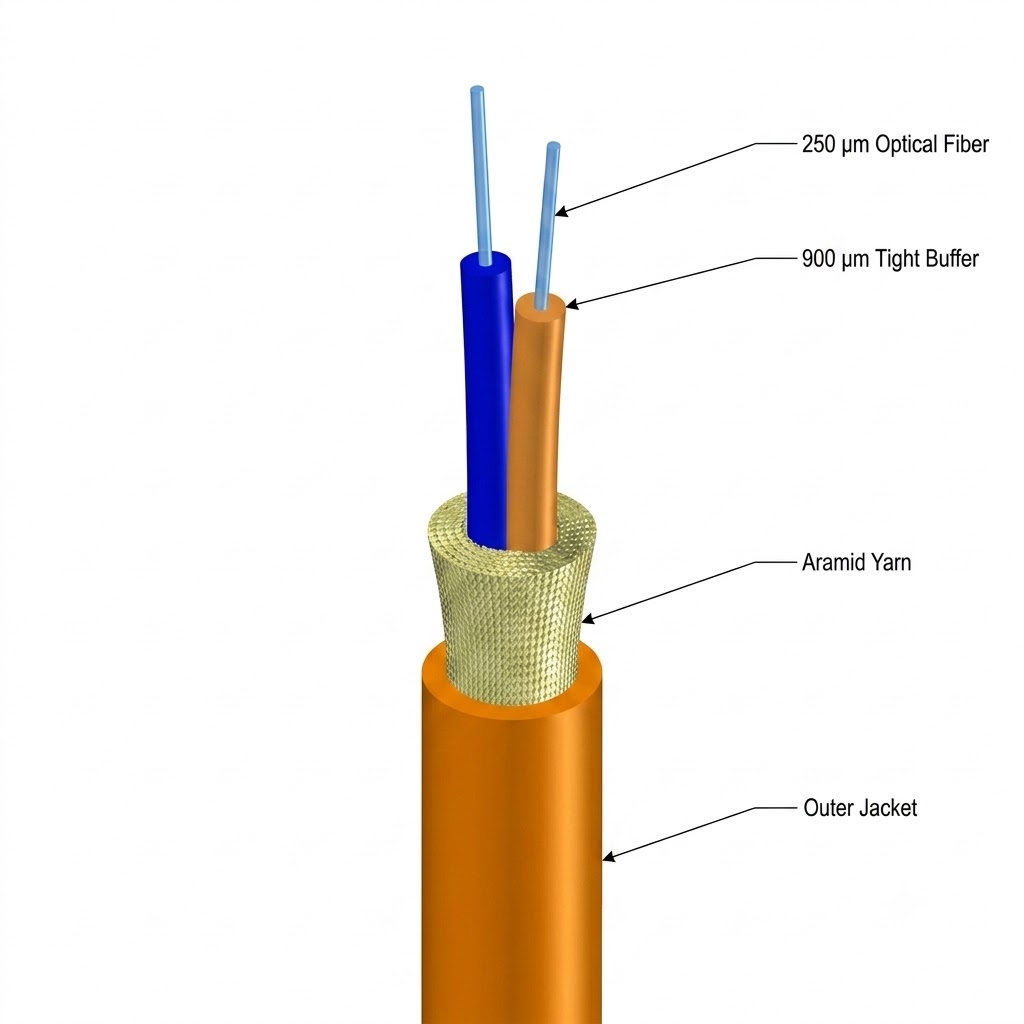

Structure and components of the duplex indoor tight-buffered fiber optic cable
The duplex tight-buffered fiber optic cable consists of two optical fibers, protective buffer layers, strength members, and outer jackets. These components protect the optical fibers, support installation, and maintain reliable data transmission within buildings. The construction determines whether the cable can meet the mechanical, optical, and environmental requirements of an indoor communication network. These components include:
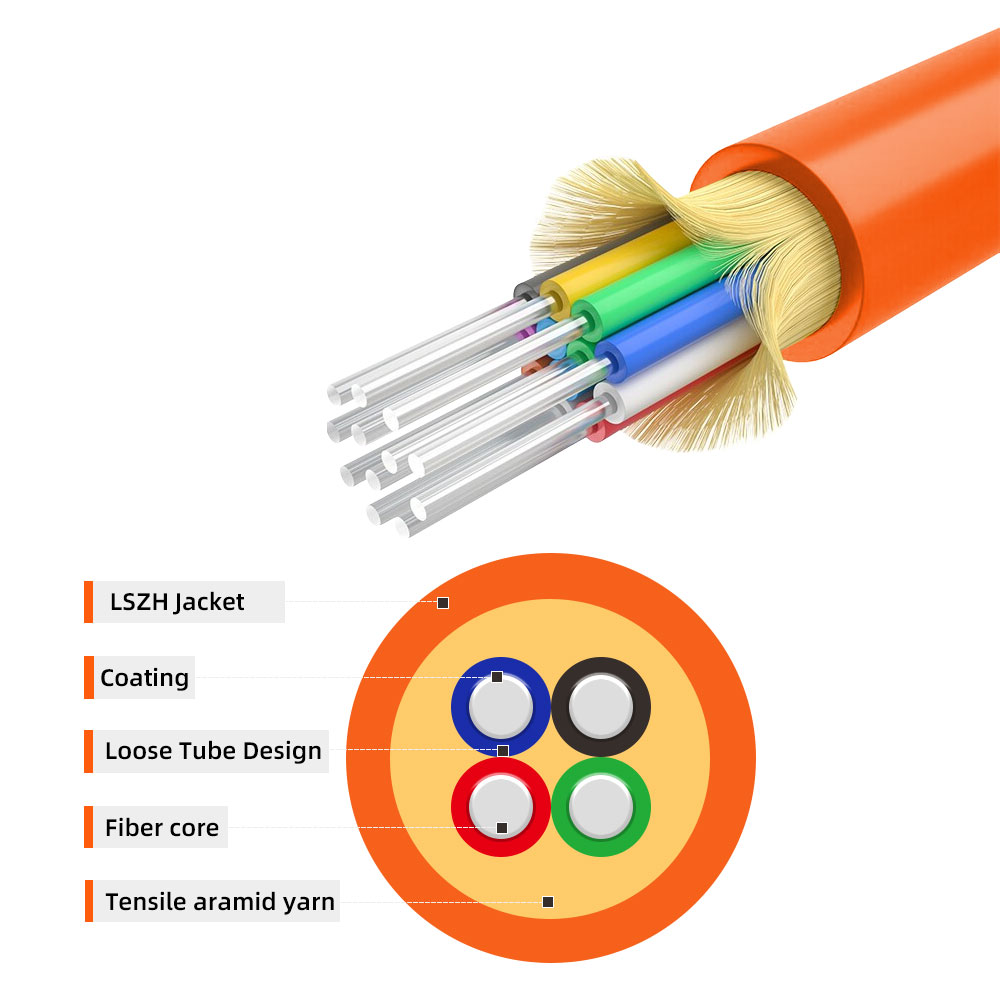
- Optical fiber core: this is the central glass region that carries data as pulses of light generated by an optical transmitter. Single-mode fiber has a core diameter of 8 to 10 micrometers depending on the fiber type. The two optical fibers provide separate transmission paths.
- Optical fiber cladding: The cladding surrounds the glass core and has a lower refractive index than the core. The cladding helps confine the optical signal within the core. It prevents damage to the cladding that increases optical losses and compromises transmission performance.
- Primary coating: this is a thin protective polymer layer applied over the glass cladding. The coating protects the glass against surface contamination, moisture exposure, and minor mechanical damage. It also helps reduce the effects of microbending that occurs when small deformations in the fiber introduce extra optical losses.
- Tight-buffer layer: this layer surrounds the primary-coated optical fiber. The layer provides extra mechanical protection and makes individual fibers easier to handle during termination and installation.
- Strength members: these help the cable withstand tensile forces during installation and reduce the mechanical load transferred to the optical fibers. Common members include aramid yarn such as Kevlar-type fibers.
- Outer jacket: This forms the cable’s external protective layer to protect the internal components against abrasion, routine handling damage, and contact with surrounding surfaces. Indoor duplex tight-buffered cables may use polyvinyl chloride (PVC) or low-smoke zero-halogen (LSZH).
Types of duplex indoor tight-buffered fiber optic cables
Duplex indoor tight-buffered fiber optic cables are available in different configurations to meet the transmission, installation, and safety requirements of telecommunication networks, data centers, and industrial facilities. The fiber optic cables vary depending on fiber mode, physical construction, and jacket material.
Single-mode duplex indoor tight-buffered fiber optic cable
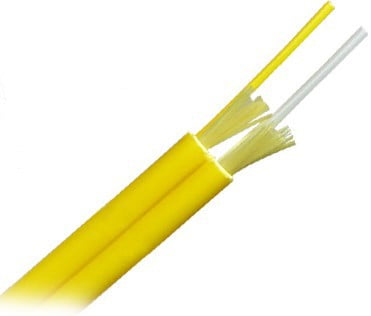
Single-mode duplex cables contain two single-mode optical fibers. Each fiber has a small core that supports a single spatial propagation mode under normal operating conditions. This cable supports high-bandwidth communication, connects equipment using single-mode optical transceivers, and offers low attenuation when the cable and optical components meet the relevant specifications. They are common in telecommunications equipment, optical distribution frames, network switches, and SCADA systems.
Multimode duplex indoor fiber optic cables
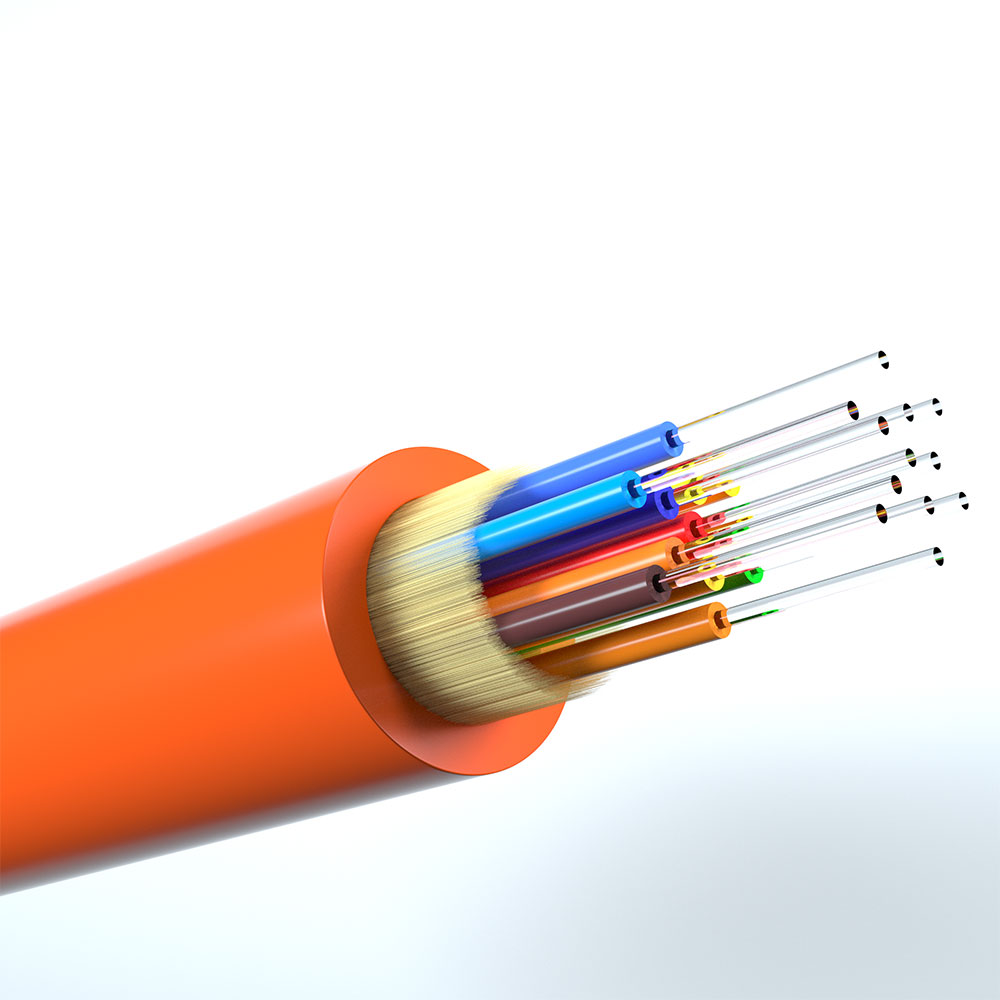
These cables contain two multimode optical fibers. Their cores allow multiple optical modes to propagate through the fiber. Common multimode classifications include OM1, OM2, OM3, OM4, and OM5. They are ideal for short-distance optical connections, and they support connections using compatible multimode transceivers. The cables help connect servers, switches, storage systems, and other equipment within data centers. They also connect network devices in utility control buildings when the required distance and transmission rate fall within the supported limits.
Zipcord duplex fiber optic cables
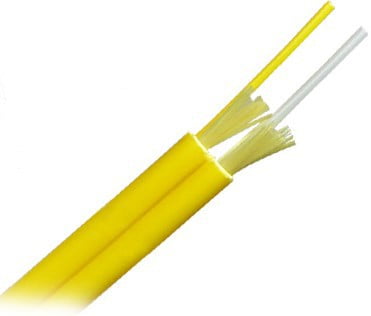
Zipcord is a physical cable construction in which two fiber units are joined side by side along their length. Each fiber unit contains an optical fiber, a tight-buffer layer, strength material, and an individual jacket. These cables have two joined fiber units and allow the two units to be separated when necessary. Zipcord cables serve in equipment patching, telecommunications racks, optical distribution frames, and connections between network switches.
Duplex cable with a shared outer jacket
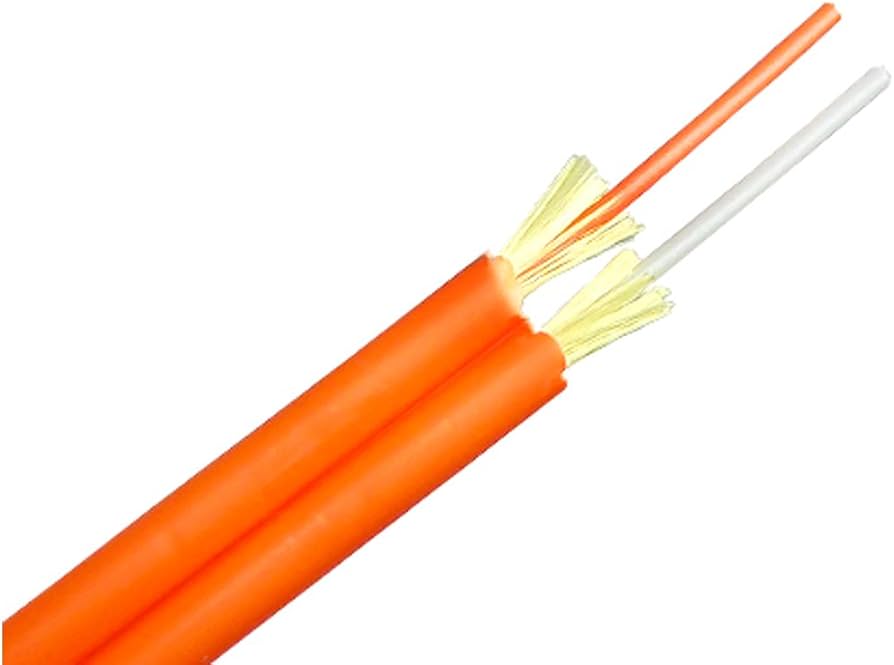
Duplex indoor tight-buffered cables place two buffered optical fibers within an outer jacket rather than using two separately jacketed units joined side by side. The internal construction includes strength members and other protective elements depending on the manufacturer’s design. The cable encloses both optical fibers within a common jacket and provides a unified cable assembly for routing through suitable pathways. The cables serve as outdoor communications links between equipment rooms, optical distribution panels, and network cabinets.
LSZH-jacketed duplex indoor fiber optic cable
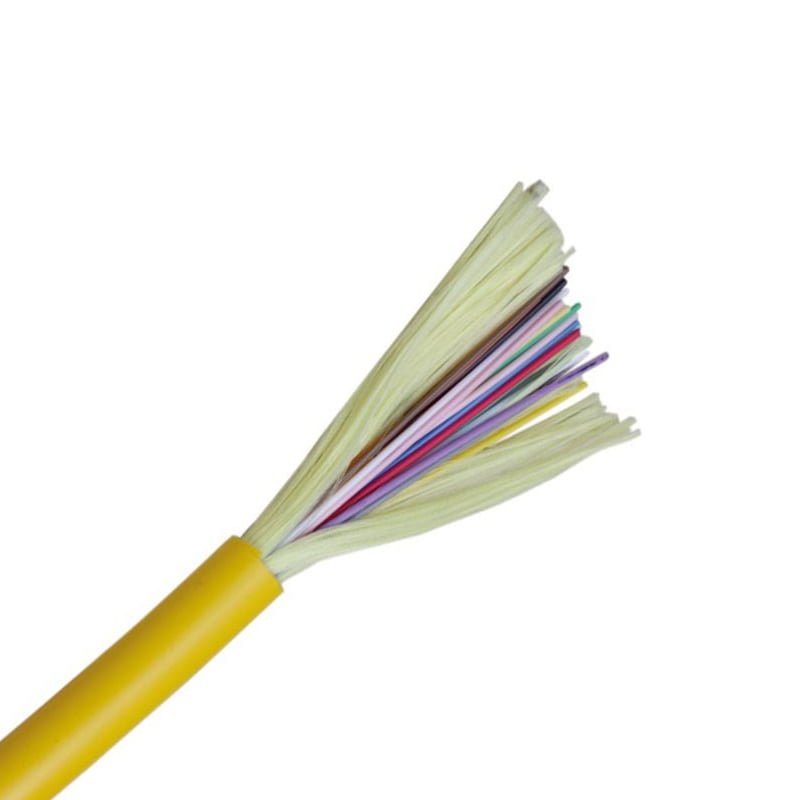
LSZH cable jackets produce limited smoke and avoid halogen acid gases at specified test conditions when exposed to fire. These properties make LSZH-jacketed cables suitable for buildings where smoke emissions and corrosive combustion gases are necessary. The cable can reduce the release of corrosive halogen acid gases during combustion compared with halogenated jacket materials. They serve in utility control centers, telecommunications rooms, commercial buildings, and other enclosed spaces.
The working principle of duplex indoor fiber optic cables
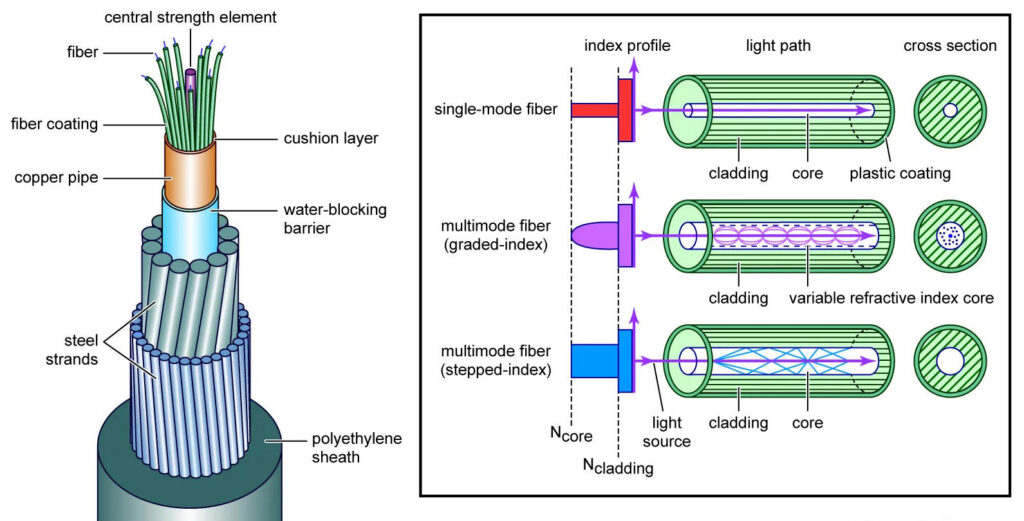
A duplex indoor tight-buffered fiber optic cable works by transmitting data as pulses of light through two optical fibers. Each fiber provides a separate transmission path and allows network devices to send and receive data when connected to compatible duplex optical interfaces. The cables connect switches, optical distribution panels, servers, and control equipment inside buildings. Their operation depends on optical signal transmission, total internal reflection, and the conversion of electrical signals into optical signals and back again. The core and cladding guide the light signals, while the tight-buffer layers, strength members, and outer jacket protect the fibers against mechanical damage. Optical transceivers at both ends convert electrical data into light and recover the information at the receiving end. Reliable operation depends on selecting compatible optical equipment, maintaining acceptable optical loss, using the correct connectors, and following the cable manufacturer’s installation limits.
How network planners and operators select the right duplex indoor fiber optic cable
Selecting the right duplex indoor tight-buffered fiber optic cable needs network planners to assess transmission requirements, optical equipment compatibility, and installation conditions. The cable connects switches, optical distribution frames, SCADA communication equipment, servers, and inside control buildings. The selection process should begin with the intended application and proceed through the cable’s optical, mechanical, and environmental requirements. Key factors to consider when selecting the cable include
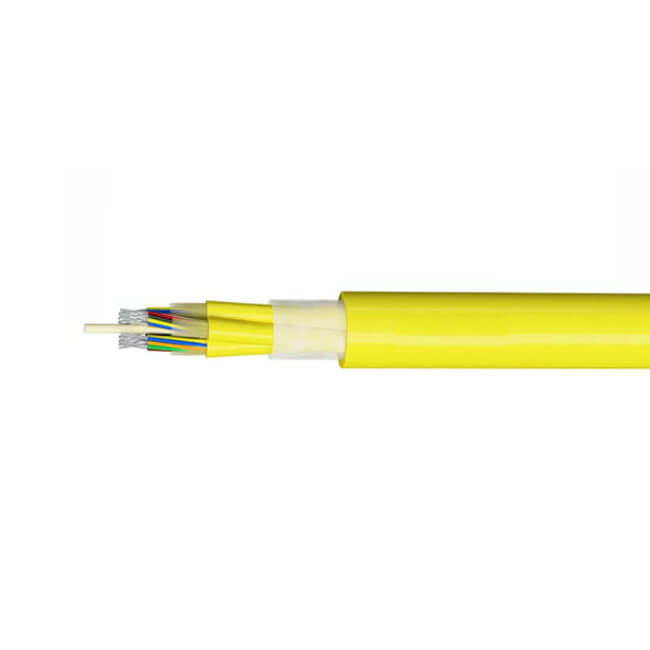
- Determine the network application and transmission requirements: a duplex indoor tight-buffered fiber optic cable connects equipment within a telecommunications room or links a network switch to a patch panel.
- Select the appropriate fiber type: the fiber types differ in their optical characteristics, supported transmission distances, and compatible transceivers. Common modes include single-mode fiber and multimode fiber.
- Verifying compatibility with optical equipment: network operators should verify the compatibility of the fiber type, transceiver, operating wavelength, connector, and required transmission distance.
- Assess the cable’s physical construction: the selection should reflect the routing arrangement, installation space, and termination requirements. They might include a Zipcord construction or shared-jacket construction.
- Evaluate mechanical strength and bend radius: network planners should check tensile strength, minimum bend radius, and crush resistance. This is crucial to confirm that the cable can withstand the installation method and operating conditions without exceeding its mechanical limits.
General specifications for the duplex indoor tight-buffered fiber optic cable
| Product Type | Duplex indoor tight-buffered fiber optic cable |
| Construction type | Non-armored |
| Fiber coloring | White |
| Jacket marking | Feet/meter |
| Subunit type | Gel-free |
| Total fiber count | 2 |
| Diameter over jacket | 1.5 mm | 0.059 in |
| Max. Tensile Strength, Long-Term | 67 N | 15.062 lbf |
| Max. Tensile Strength, Short-Term | 222 N | 49.908 lbf |
| Compression | 10 N/mm | 57.101 lb/in |
| Flex | 30 cycles |
| Impact | 0.74 N-m | 6.55 in lb |
| Twist | 10 cycles |
| Vertical Rise, maximum | 500 m | 1,640.42 ft |
| Fiber type | G.652.D and G.657.A1 |
| Installation temperature | -30 °C to +70 °C (-22 °F to +158 °F) |
| Operating temperature | -40°C to +70°C (-40°C to +158°F) |
| Cable weight | 3.9 kg/km | 2.621 lb/kft |
Application areas of the duplex indoor tight-buffered fiber optic cables
Duplex indoor tight-buffered fiber optic cables establish reliable optical communication links between network devices inside buildings. Their two-fiber construction separates transmission and reception paths, while the tight-buffered design makes the fibers easier to handle, route, and terminate. The cables serve in
- Utility rooms and SCADA communication networks: the cables connect Ethernet switches, optical distribution frames, servers, and communication equipment within the facilities. They support SCADA, equipment status information, alarms, and operational measurements.
- Telecommunication rooms and equipment racks: duple fiber optic cables provide point-to-point connections between the devices.
- Data centers and server connectivity: data centers use fiber optic links to connect network switches, servers, and storage equipment. The cables support Ethernet links and other optical communication systems designed for the selected fiber type.
- Industrial automation and process control: duplex indoor tight-buffered cables connect these devices inside control cabinets and protected equipment rooms. They carry data used for process monitoring, production coordination, equipment diagnostics, and industrial control.