APL Armored Stranded Loose Tube Optical Fiber Cable

 APL Armored Stranded Loose Tube Optical Fiber Cable
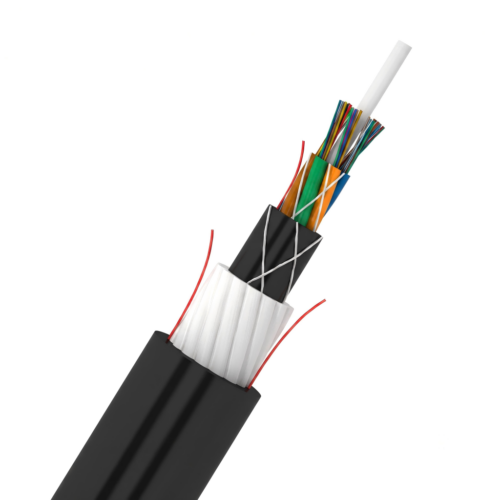
  • Aluminum strip longitudinally wrapped cable core for better moisture blocking effect of optical cables.
  • GFRP strength and anti-buckling element
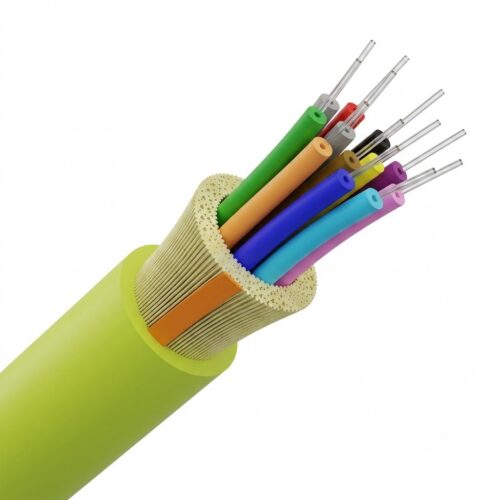
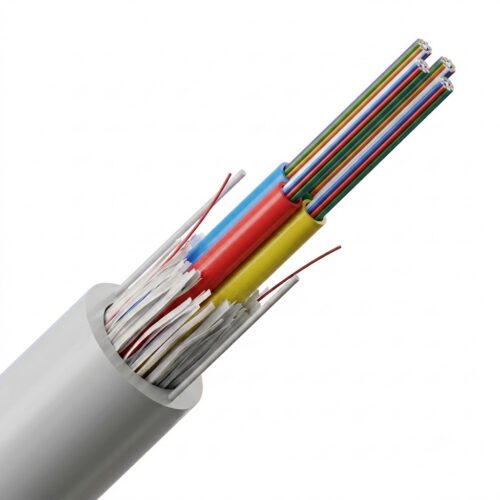
  • Gelly-filled, PBT loose tubes Ø0.094 in (2.4mm) with optical fibers
  • Offers high-density SZ-stranded cores available from 24 to 288 fibers for seamless network expansion.
  • Supports G.652D, G.657A, and G.655C single-mode fibers to meet diverse bend-insensitivity demands.
  • Ensures ultra-low attenuation characteristics (≤0.36 dB/km at 1310 nm; ≤0.23 dB/km at 1550 nm) for long-distance transmission.
  • Provides versatile deployment options for duct, conduit, and aerial installations.
  • Delivers a future-proof, robust infrastructure solution for FTTH and outdoor fiber optic networks.
  • Equivalent to GYFA standard fiber optic cable.


https://telexc.com/contact/


 APL(Aluminum Polyethylene Laminate) Armored Stranded Loose Tube Optical Fiber Cable
General Specifications
Cable Type  APL Armored Stranded Loose Tube Optical Fiber Cable
Construction Type Armored
Subunit Type Gel-filled
Jacket Material PE (Polyethylene)
Jacket Marking Feet/Meter
Subunit, quantity 2 4 6 8 12 24
Total Fiber Count 24 48 72 96 144 288
Fibers per Subunit, quantity 12
Dimensions
Central strength member Material GFPR (Glass Fiber Reinforced Plastic)
Central strength member Diameter 2.25 mm (0.089 in) 2.6 mm (0.102 in)
Buffer Tube/Subunit Diameter 2.4 mm (0.094 in)
Outer Sheath Thickness 1.8 mm (0.071 in)
Diameter Over Jacket 12.0 mm (0.472 in) 12.0 mm (0.472 in) 12.5 mm (0.492 in) 14.0 mm (0.551 in) 17.0 mm (0.669 in) 19.5 mm (0.768 in)
Mechanical Specifications
Minimum Bend Radius, loaded 240 mm (9.449 in) 240 mm (9.449 in) 250 mm (9.843 in) 280 mm (11.024 in) 340 mm (13.386 in) 390 mm (15.354 in)
Minimum Bend Radius, unloaded 180 mm (7.087 in) 180 mm (7.087 in) 187.5mm (7.382 in) 210 mm (8.268 in) 255 mm (10.039 in) 292.5mm(11.516in)
Tensile Load, Installation, maximum 2700 N (607 lbf)
Tensile Load, Operation, maximum 900 N (202 lbf)
Compression 3 N/mm | 67 lbf / 3.937 in
Flex 25 cycles
Impact 4.5 N-m | 40 in-lb
Twist 10 cycles
Optical Specifications
Fiber Type  G.652.D and G.657.A1
Attenuation, maximum 0.3 dB/km @ 1,550 nm | 0.4 dB/km @ 1,310 nm/1383 nm
Environmental Specifications
Installation temperature -15 °C to +55 °C (+5 °F to +131 °F)
Operating Temperature -10 °C to +70 °C (+14 °F to +158 °F)
Storage Temperature -10 °C to +70 °C (+14 °F to +158 °F)
Water Penetration Sample length: 3m | Water head: 1m | Time: 24h
No leakage
Water Test: IEC 60794-1-22 Method F5
Environmental Test Specifications
Environmental Space Duct installation | Outdoor
Packaging and Weights
Cable weight 120 kg/km (80.636 lb/kft) 120 kg/km (80.636 lb/kft) 125 kg/km (83.996 lb/kft) 155 kg/km (104.155 lb/kft) 225 kg/km (151.193 lb/kft) 295 kg/km (198.231 lb/kft)

1. Aerial Installations

Power Lines: Installed along high-voltage power lines without risk of electromagnetic interference (EMI) or lightning strikes, as the all-dielectric design does not conduct electricity.

Telecommunications Towers: Connects aerial towers to deliver reliable data transmission over long distances.

2. Outdoor Backbone Networks

Long-Distance Communication: Forms the core of long-distance fiber networks across remote or rural regions due to strong environmental resistance and durability.

Inter-City Links: Connects neighboring cities to provide high-speed, uninterrupted communication for telecom operators and ISPs.

3. Rural & Harsh Environments

Rural Telecommunications: Ideal for aerial deployment where underground trenching is too costly or difficult due to terrain.

Extreme Weather Zones: Built to withstand high temperatures, extreme humidity, and intense UV exposure without degradation.

4. Transportation & Transit Systems

Rail Networks: Supports communication between railway stations and control centers without interference from high-voltage electrification systems.

Highway Monitoring: Powers roadside traffic monitoring, emergency communication points, and surveillance cameras.

5. Industrial & High-Risk Facilities

Factories & Plants: Ensures stable data transmission in factory environments heavy with electrical noise.

Oil & Gas Fields: Eliminates spark risks caused by metallic components in volatile or hazardous environments.

6. Urban Infrastructure

Smart Cities: Connects urban monitoring networks, traffic control systems, and public Wi-Fi infrastructure requiring fast, dependable connectivity.

Q1: Can this type of cable be buried directly in the ground?
A: Not without extra protection. Because these cables have no metal armour, they are vulnerable to crushing, rocks, and rodent bites. If you need to bury them, you must install them inside a conduit, pipe, or concrete duct to prevent damage.


Q2: Does the cable provide electrical grounding or lightning protection?
A: No. The all‑dielectric (non‑metallic) construction is excellent for avoiding electromagnetic interference, but it cannot be used for grounding. In places where you need a conductive path (e.g., for lightning down‑leads), you will have to choose a cable with metallic elements.


Q3: How strong is it against pulling forces?
A: It has moderate tensile strength, thanks to a central FRP (fibreglass) rod, but it is not as strong as steel‑reinforced or armoured cables. That means it is not suitable for long‑span aerial installations, underwater use, or any situation where high pulling stress is expected.


Q4: Is it resistant to rodents?
A: Not really. The plastic sheath offers little defence against rats or squirrels. In areas with heavy rodent activity, you should either place the cable in a rodent‑proof conduit or choose a cable that has a metal armour layer.


Q5: Can it withstand heavy pressure or impacts?
A: Its crush resistance is limited. Without a steel tape or wire armour, the cable can be easily damaged if run over by vehicles, struck by heavy tools, or pressed against sharp rocks. In industrial or construction zones, protective piping is highly recommended.


Q6: Is it safe to install in high‑traffic areas, such as along roads or busy footpaths?
A: Not if it is exposed. The cable is easily damaged by frequent foot or vehicle traffic. If installation is unavoidable in such places, you must put it inside a strong protective duct or a buried trough.


Q7: Does sunlight affect the outer sheath over time?
A: Yes. The polyethylene (PE) jacket has some UV resistance, but years of direct sunshine, especially in tropical or high‑altitude regions, will gradually make the sheath brittle and cracked. Regular inspections and, if possible, using a cable with enhanced weather‑resistant jacket are advisable.


Q8: Can it be used in rocky, abrasive, or harsh terrain?
A: Not ideally. The soft outer jacket is easily cut or abraded by sharp stones and rough surfaces. In such environments, a double‑armoured cable or a heavy‑duty outdoor cable is a much better choice.


Q9: How do extreme temperatures affect its performance?
A: Wide temperature swings can still cause the jacket to expand and contract, which may increase signal loss (micro‑bending). For areas with severe cold or heat, you should select a cable that is rated for that specific temperature range.


Q10: If the cable itself is inexpensive, why can the total project cost be higher?
A: While the cable is lightweight and cost‑effective for aerial use, the extra protection it needs (conduits, ducts, or special supports) for underground or high‑risk areas often adds significant material and labour costs. In the end, the total installation may become more expensive than using an armoured cable from the start.


Final Recommendation
This type of non‑metallic cable works best in aerial or duct‑based installations where mechanical stress is low. For direct burial, heavy traffic zones, rodent‑prone areas, or rocky ground, you should evaluate stronger armoured alternatives (e.g., steel‑tape or steel‑wire armoured cables) to ensure long‑term reliability.

Engineered for Reliability, Built for Trust

At Telexc, we don’t just supply hardware—we secure your global network deployment. Operating from China’s premier industrial clusters and the Tianjin logistics hub, we act as your private supply chain control tower, ensuring engineering precision and traceably consistent quality for every aerial installation.

Our Core Advantages

  • Full-Scenario Aerial Compatibility: We seamlessly bridge the gap between OSP fiber infrastructure, FTTH networks, and aerial deployment scenarios. Every component is structurally engineered to work harmoniously together, drastically increasing on-site installation efficiency.
  • Strict Engineering Standard Alignment: Our technical design loops strictly align with international benchmarks, including IEC, ITU-T, and IEEE standards. This ensures our hardware excels under extreme environmental stresses—from intense UV exposure to heavy wind and ice loads.
  • Independent Multi-Stage Quality Control: We act as your eyes on the ground. From raw material stress simulations to finished product compliance, our dedicated QC team performs rigorous multi-stage audits so you receive exactly what your engineers approved.
  • Optimized Logistics & Flexible Partnerships: Leveraging the logistics power of the Tianjin port, we guarantee reliable transit, competitive factory-direct structures, and transparent milestone tracking to keep your network projects moving forward without compromise.