


MPO/MTP Connector
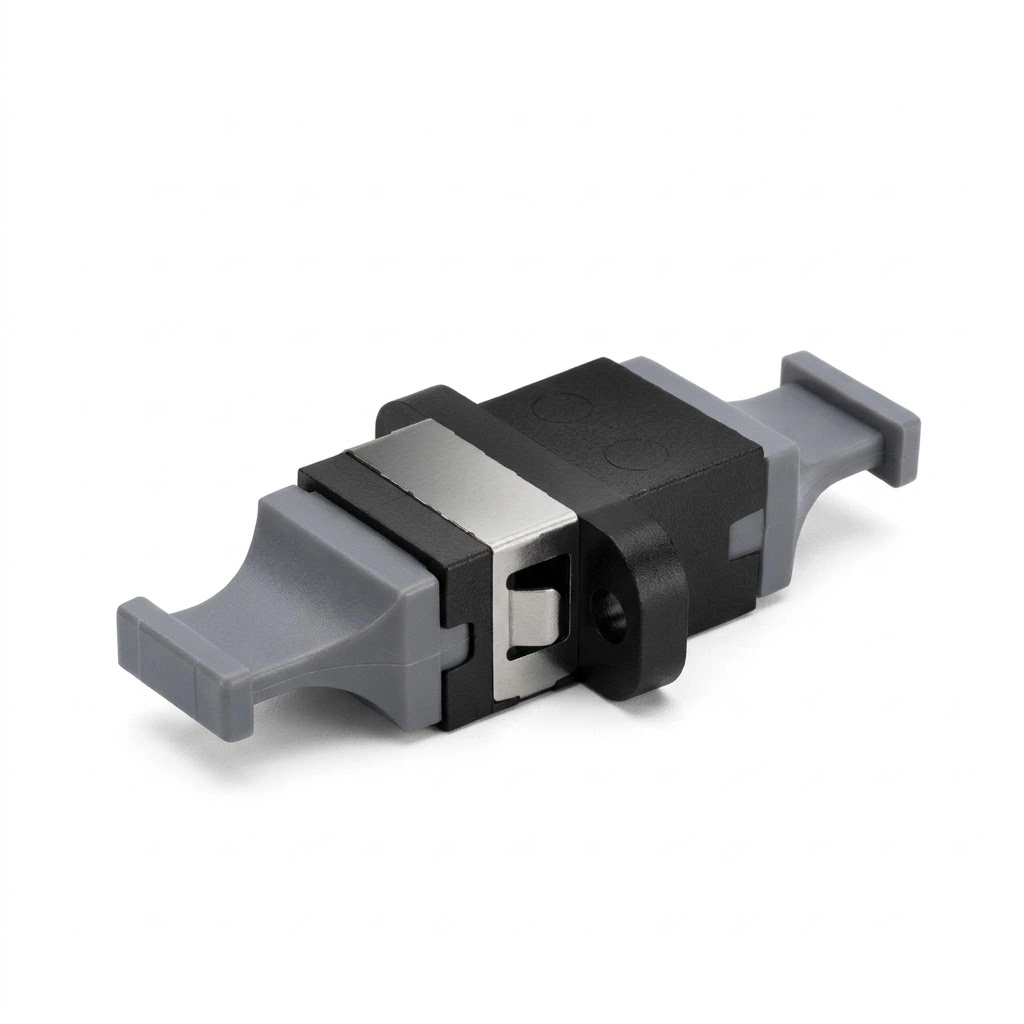
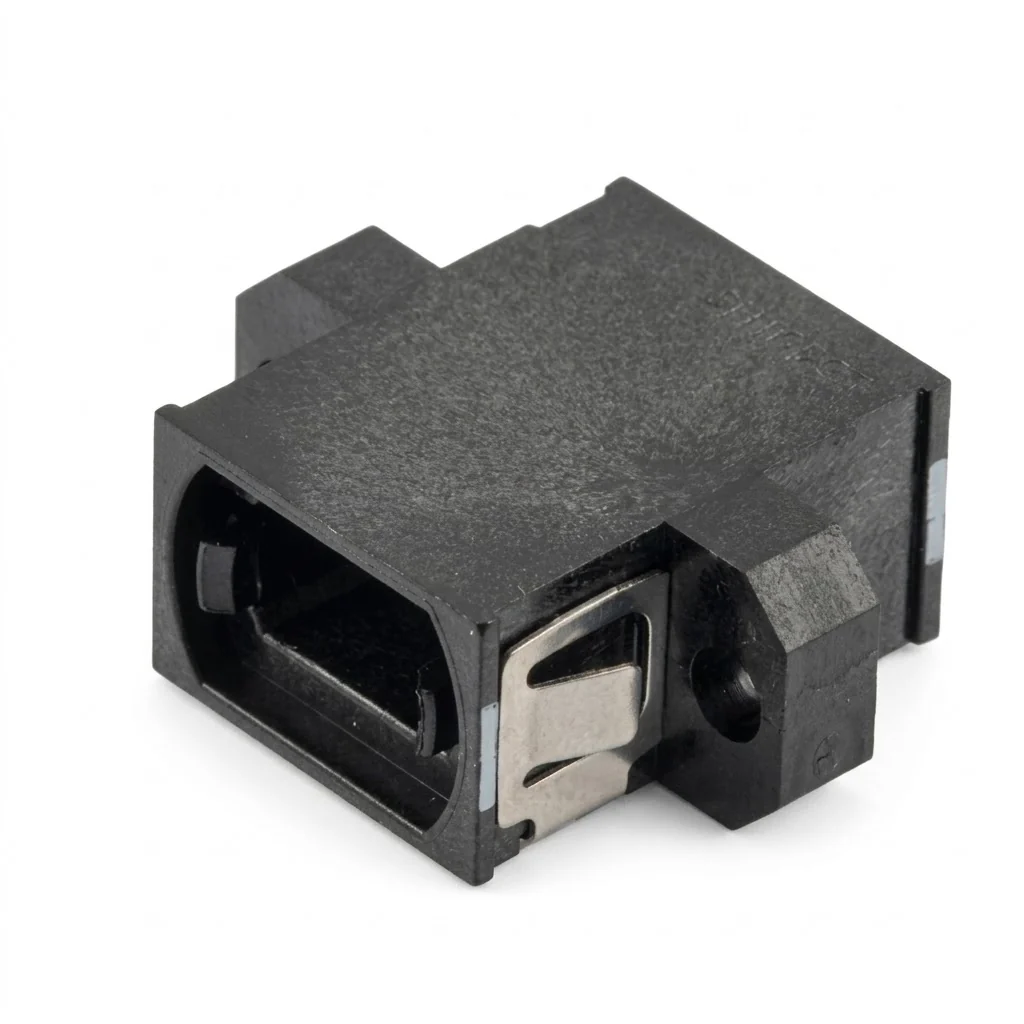
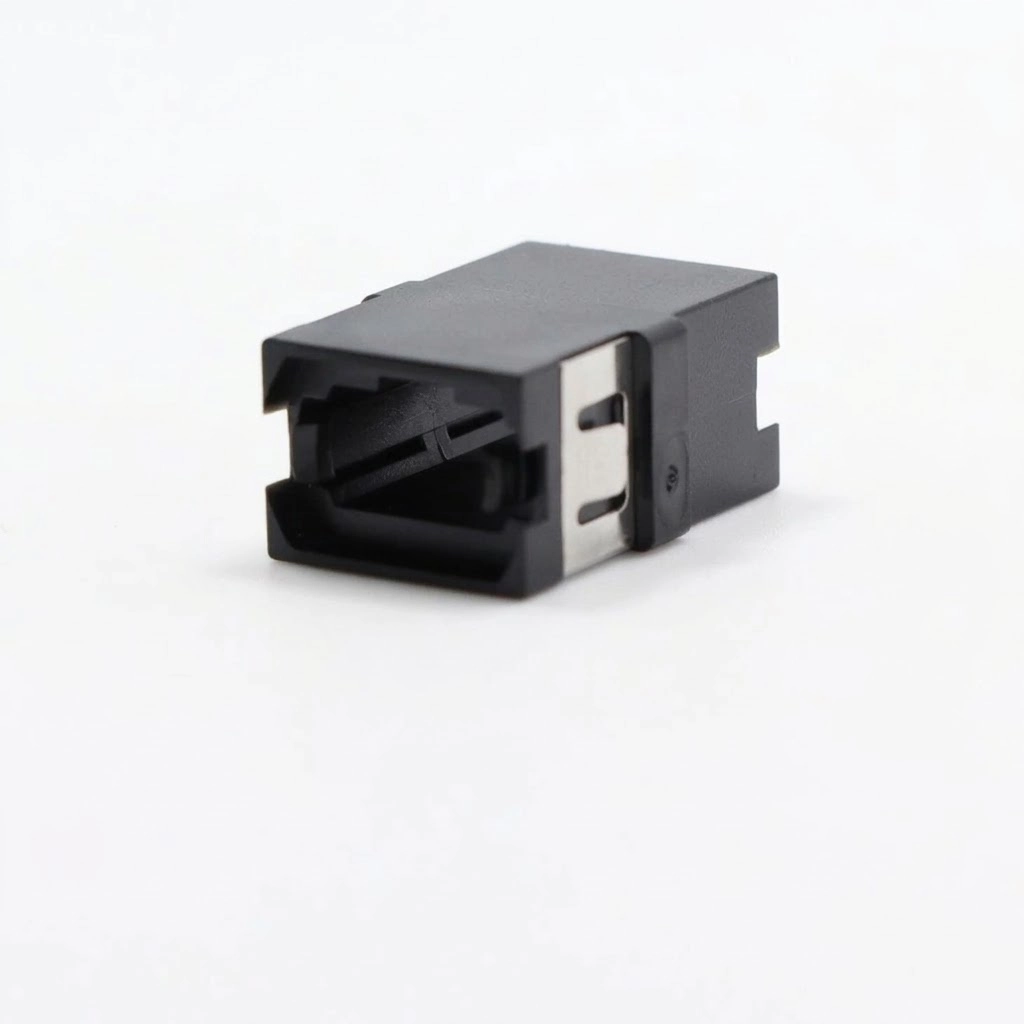
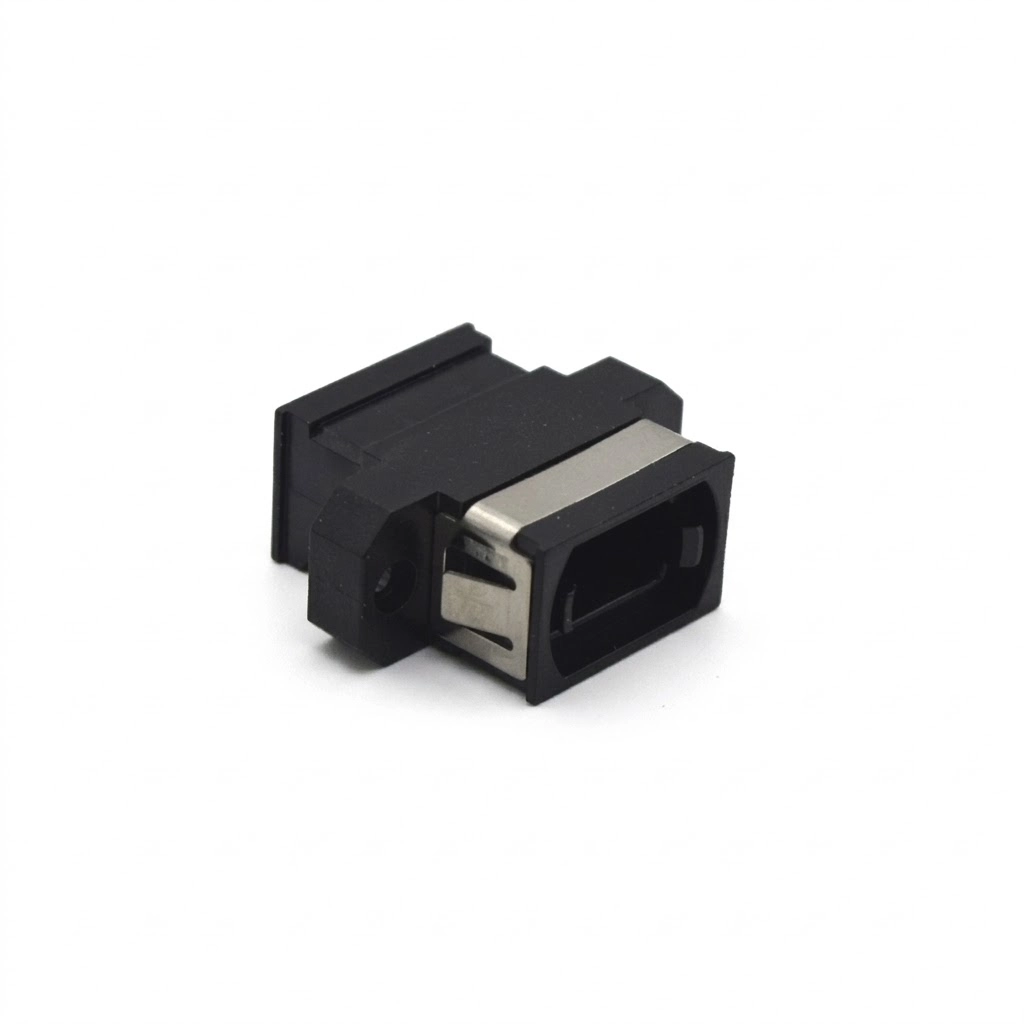
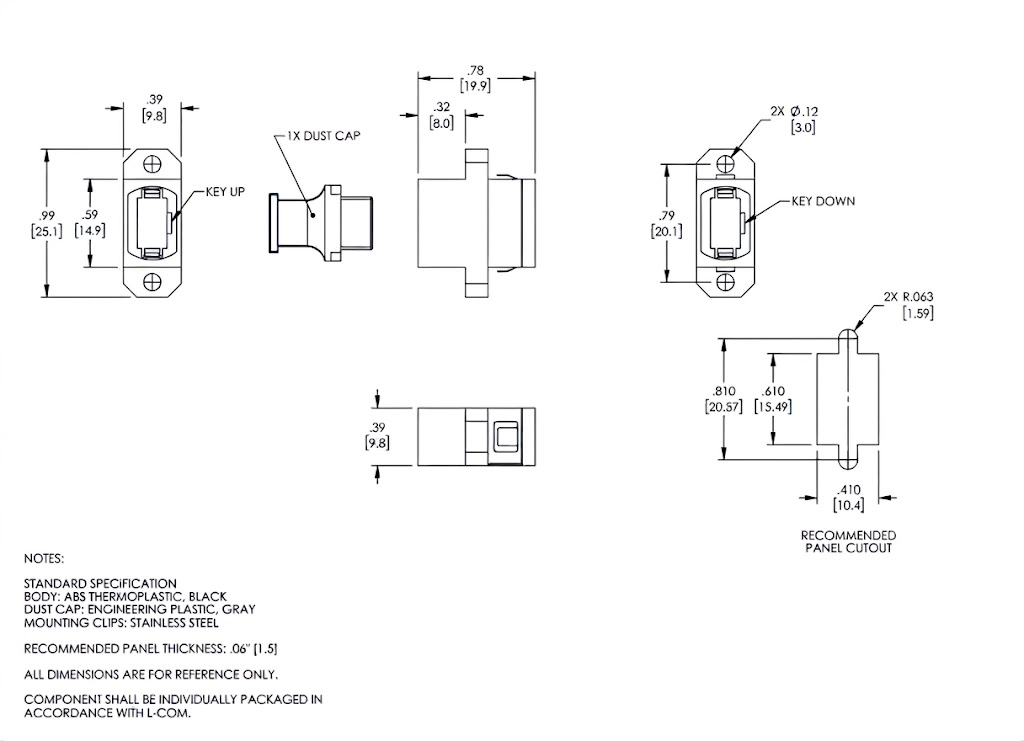
The MPO MTP fiber optic coupler provides precision alignment for high-density multi-fiber connectivity in structured optical cabling. Designed with a key-up to key-down opposed-keyway orientation, this optical adapter mates multi-fiber connectors from 4-fiber up to 72-fiber layouts while maintaining network polarity. Engineers and network technicians deploy this single-port adapter across patch panels, cassettes, and wall-mount enclosures to link cable-to-cable and cable-to-equipment pathways. Available with a standard SC footprint and a full mounting flange, the unit supports permanent mechanical stability across enterprise data centers and telecom backbones.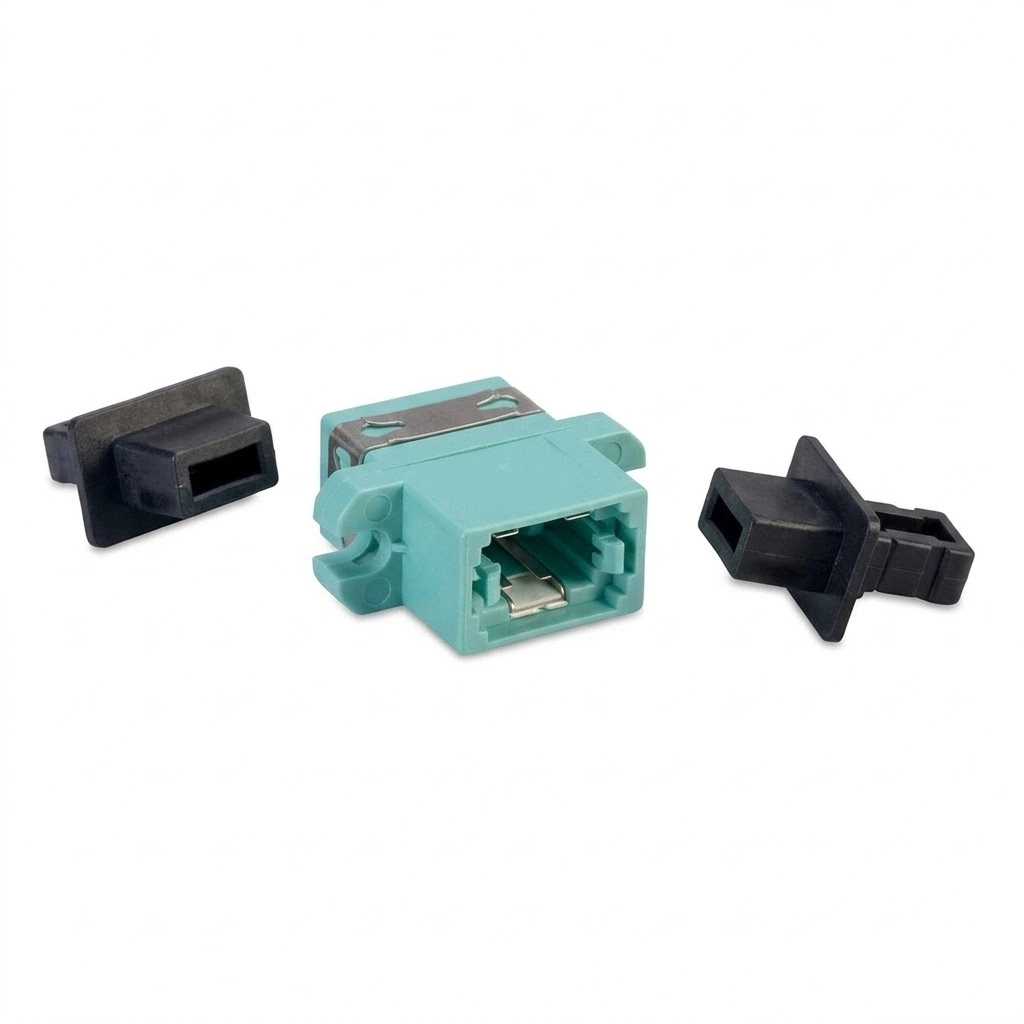
Product Configuration
-
Port Count: Single-port (1-gang).
-
Footprint: SC simplex cut-out profile.
-
Mechanical Flange: Full flange with panel mounting holes.
-
Keyway Alignment: Opposed key (Key-Up to Key-Down / Type A).
-
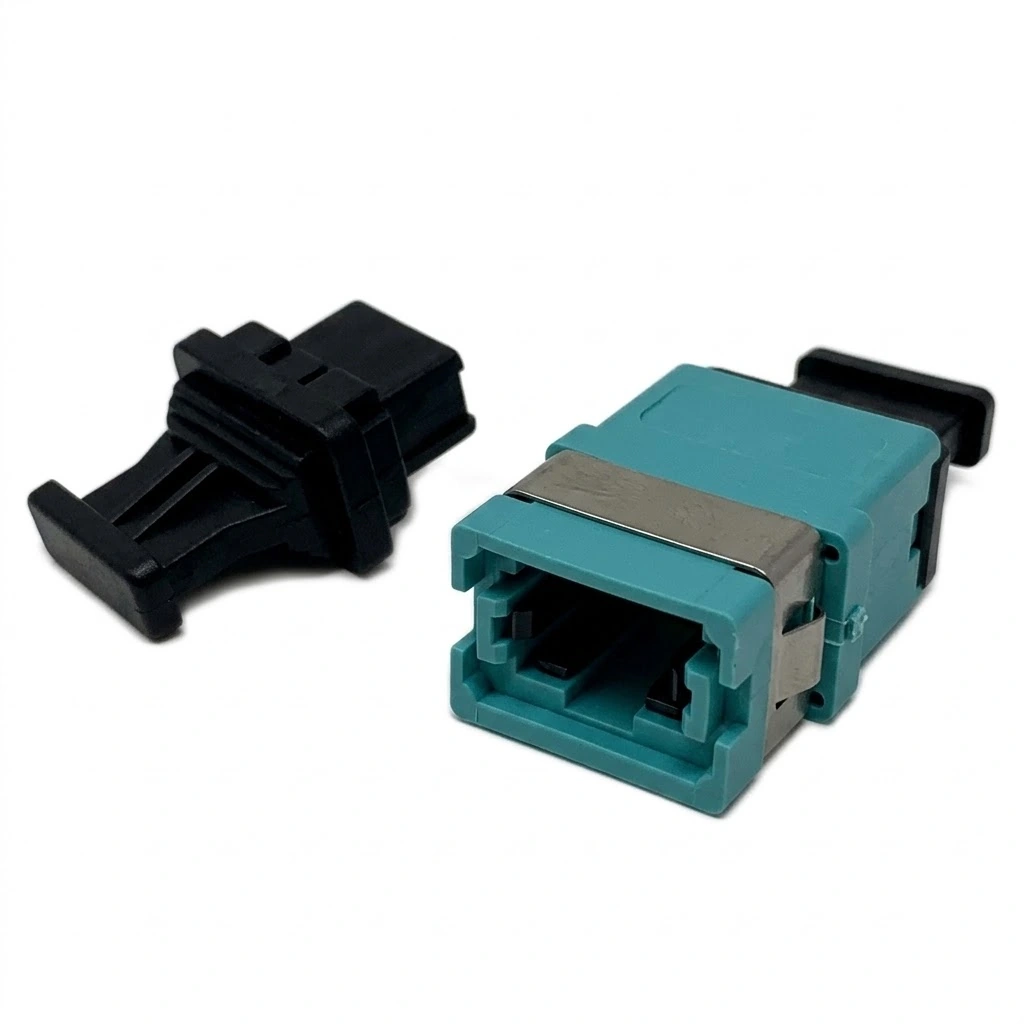
Housing Variants: Black body or Green body (for singlemode APC applications).
Technical Specifications
-
Connector Type: MPO / MTP
-
Optical Fiber Capacity: 4 to 72 fibers
-
Polarity / Alignment: Type A (Opposed Key, Key-Up to Key-Down)
-
Insertion Loss: <= 0.2 dB
-
Mating Durability: 1000 cycles
-
Panel Cutout Footprint: SC simplex
-
Flammability Rating: UL94-V0
-
Operating Temperature: -25°C to 70°C (-13°F to 158°F)
-
Storage Temperature: -25°C to 70°C (-13°F to 158°F)
Applications
-
Data center backbone and horizontal distribution cabling
-
MPO and MTP trunk cable and pre-terminated cassette module patching
-
Telecommunications central offices and optical distribution frames (ODF)
-
Enterprise fiber optic networks and high-density patching environments
-
Wireless base station enclosure wiring and parallel optics links
Selection Considerations
-
Polarity Planning: Type A couplers use opposed keyways (key-up to key-down). Confirm your system design matches Method A polarity rules before deployment, as connecting key-up to key-up requires Type B couplers.
-
Housing Color Identification: Select green housings when terminating singlemode APC lines to prevent mating mismatches. Select black housings for standard plant identification across multi-fiber routes.
-
Fiber Count Scalability: The internal physical channel accepts standard connectors housing 4, 8, 12, 16, 24, or up to 72 fibers, making it practical for standard trunk upgrades without changing adapter panels.
-
Panel Layout Footprint: The adapter uses an SC simplex footprint with a full flange, requiring corresponding SC cutouts on adapter plates, patch panels, or rack enclosures.
FAQ
What is the function of a Type A MPO MTP fiber optic coupler?
A Type A coupler features an opposed keyway (key-up to key-down) configuration. It aligns two MPO or MTP connectors so that Fiber 1 connects to Fiber 1 according to structured cabling polarity standards, preventing lateral channel inversion across trunk links.
What connector types and fiber counts does this adapter mate?
This adapter mates industry-standard MPO and MTP multi-fiber push-pull connectors. It supports connector capacities ranging from 4-fiber up to 72-fiber assemblies.
What optical insertion loss does this adapter introduce?
The adapter provides a precision mechanical mating channel with an insertion loss rated at <= 0.2 dB.
What panel cutout size is required for installation?
The coupler uses an industry-standard SC footprint with a full flange, allowing it to drop into standard SC-sized adapter panel openings and cassette bulkheads.
Why are both green and black housing colors offered?
The green housing visually indicates singlemode APC network paths to prevent improper cross-connections with UPC or multimode links. The black housing provides a neutral color option for standard fiber installations.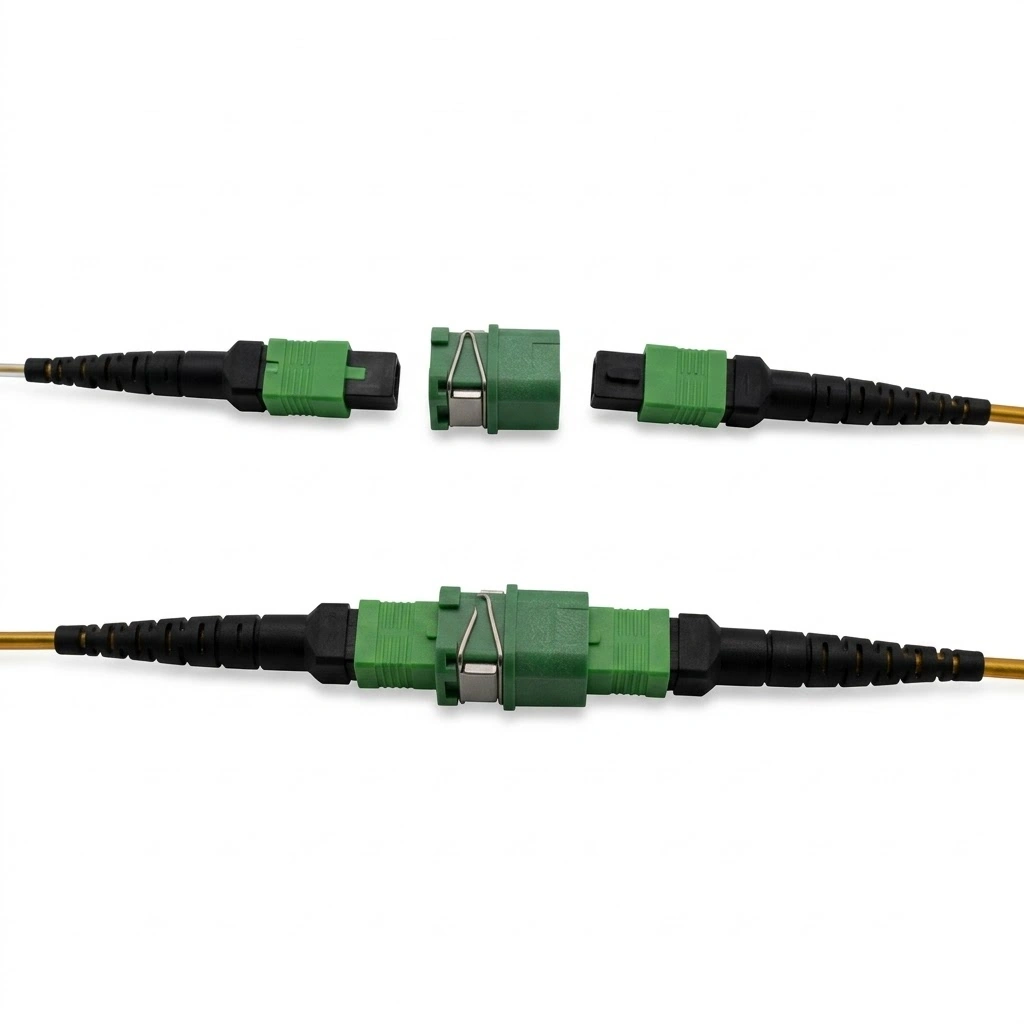
Conclusion
Deploying a reliable MPO MTP Type A fiber optic coupler maintains low insertion loss and strict polarity continuity across high-density fiber networks. With a robust UL94-V0 rated housing, 1000-cycle durability, and full-flange SC footprint integration, this adapter ensures consistent performance in modern data center and telecom infrastructures.