
The fiber optic dome enclosure is a fiber splice closure designed for FTTH, FTTB, and outdoor fiber management applications. The dome enclosure supports up to 48 fiber cores and provides high-capacity protection and stable performance for ISP networks, enterprise fiber links, and long-distance optical installations. Heat shrink dome enclosures seal and protect cable joints, splices, and connections from moisture, dust, corrosion, and other hazards. It consists of a heat-shrinkable polymer sleeve or dome-shaped cover that contracts when heated. The enclosure seals cable joints against rainwater, humidity, groundwater, and condensation. This helps prevent insulation deterioration, signal degradation, and corrosion of metallic components. It is crucial to verify the application’s voltage to ensure electrical insulation, stress control, and voltage ratings. Most of the dome enclosures consist of high-quality materials and construction that protect metallic connectors, conductors, and cable-joint components from corrosion, dirt, and temperature fluctuations.
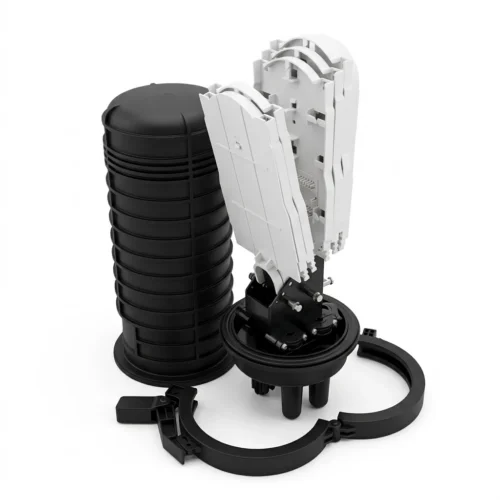
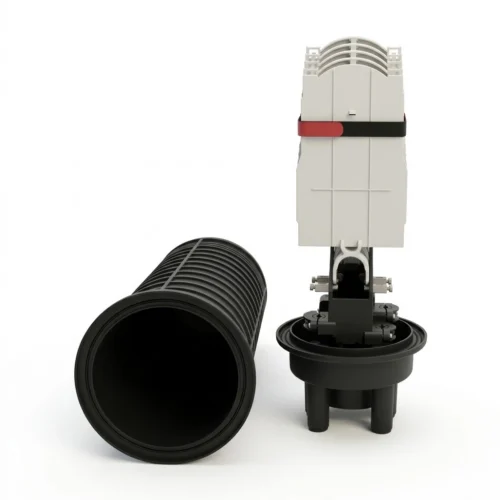
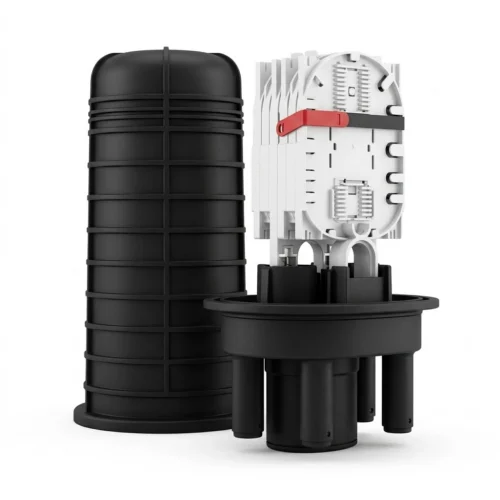
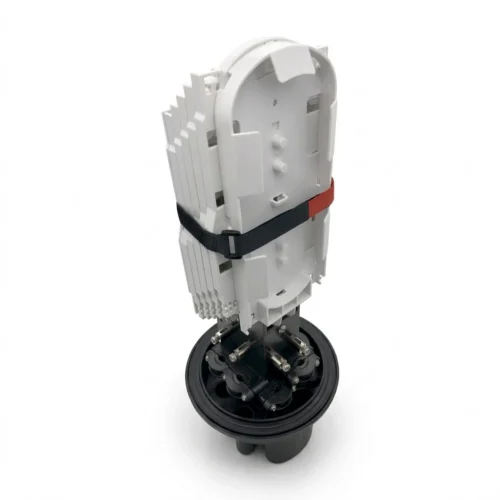
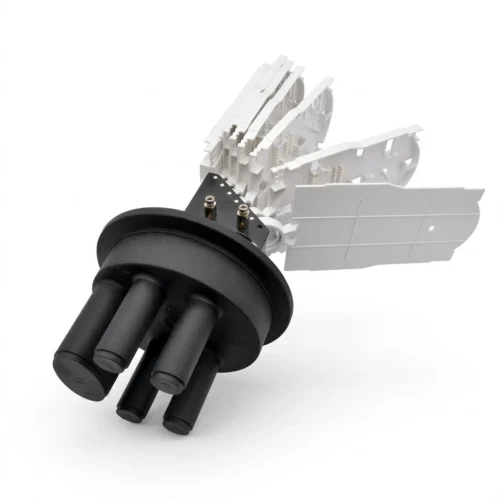
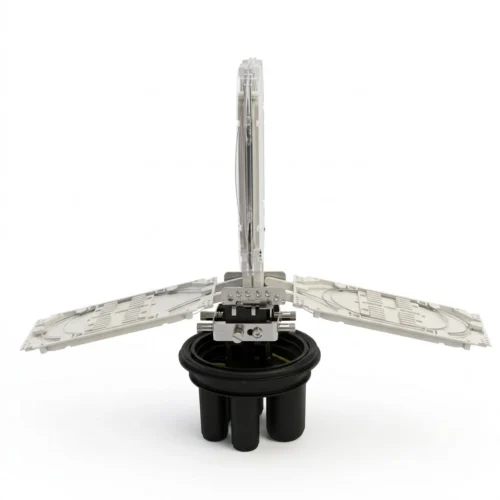
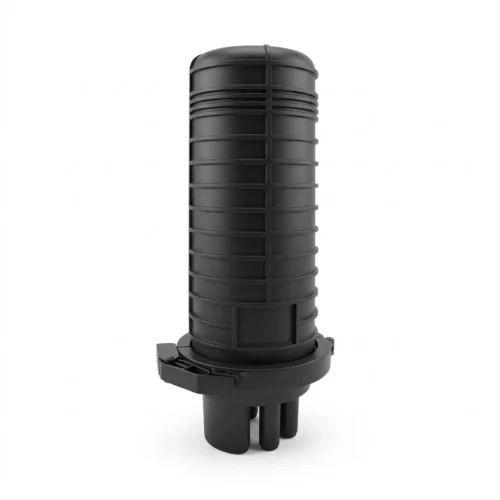
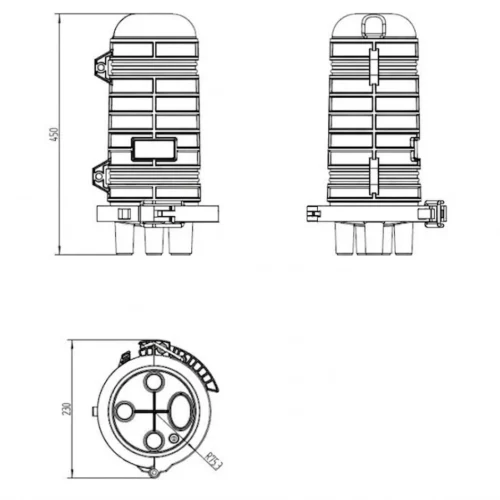
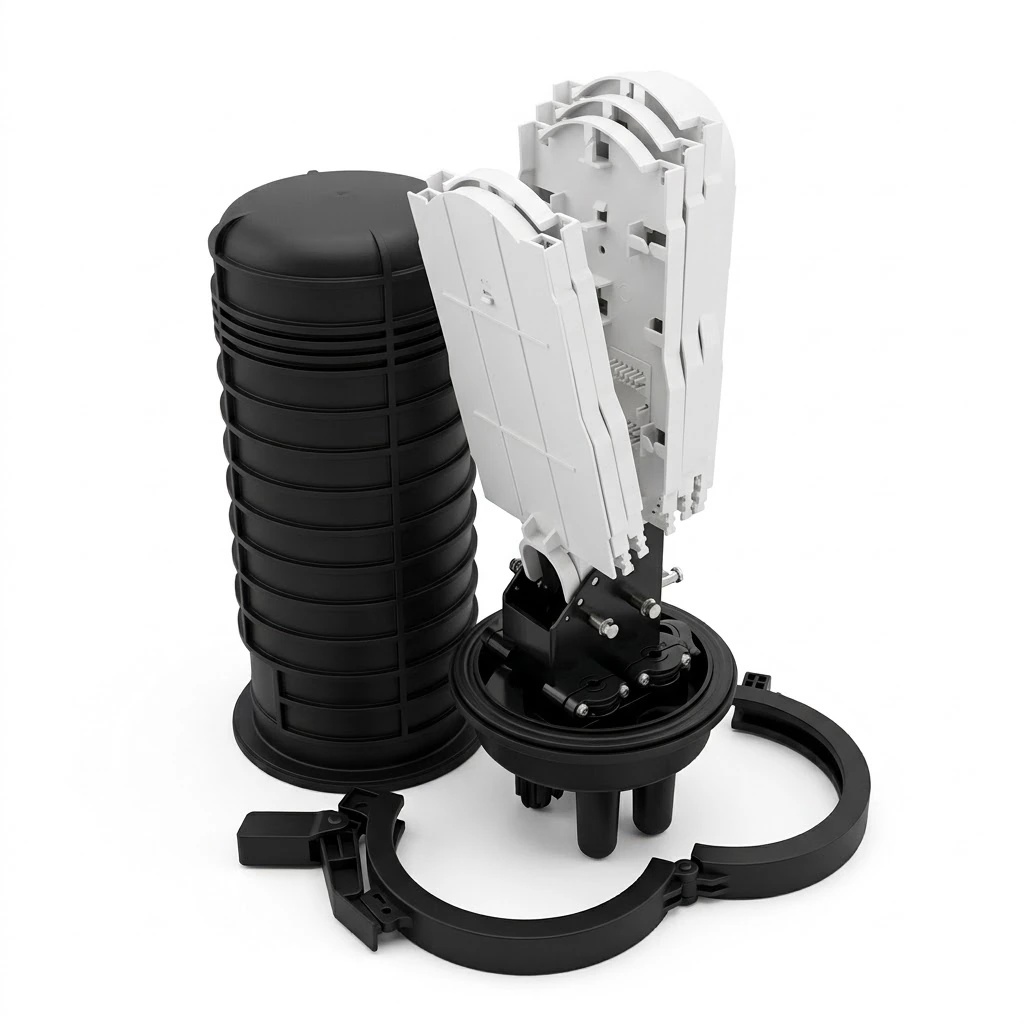
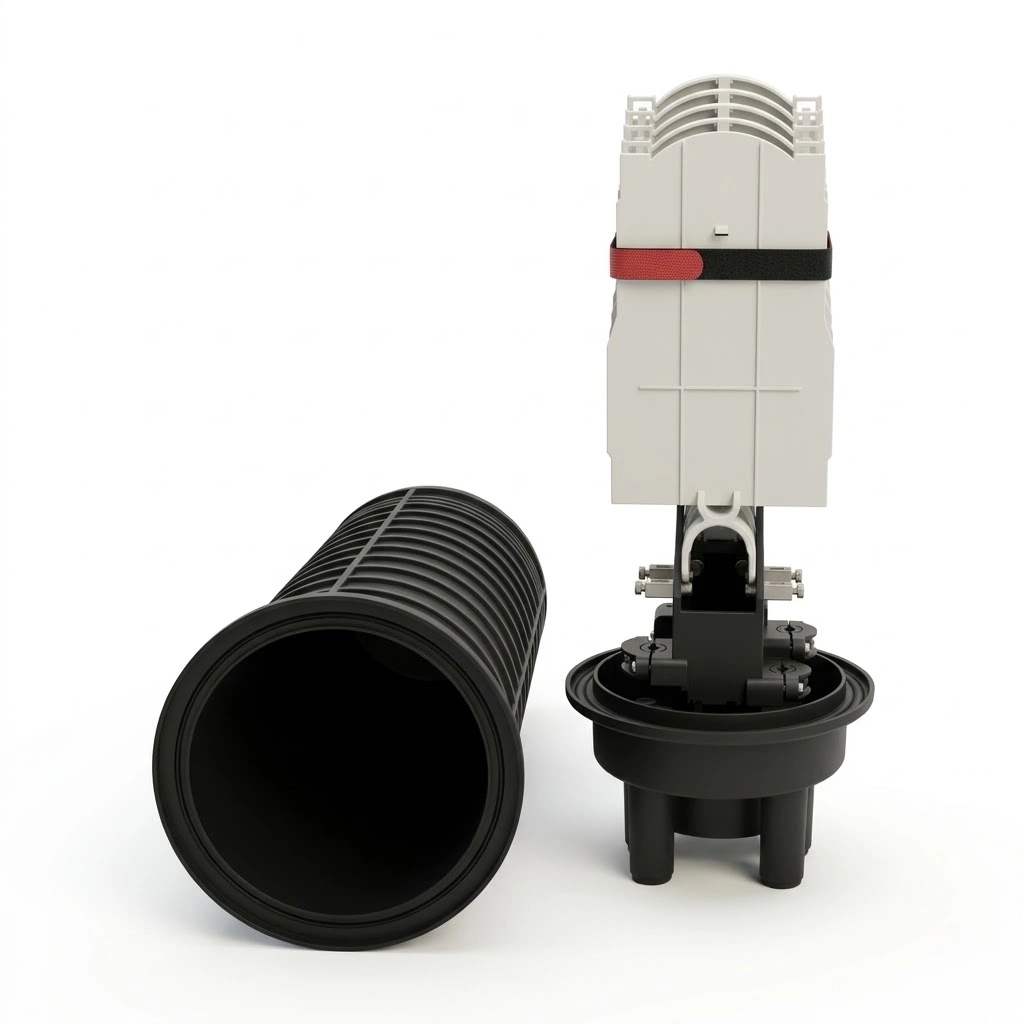
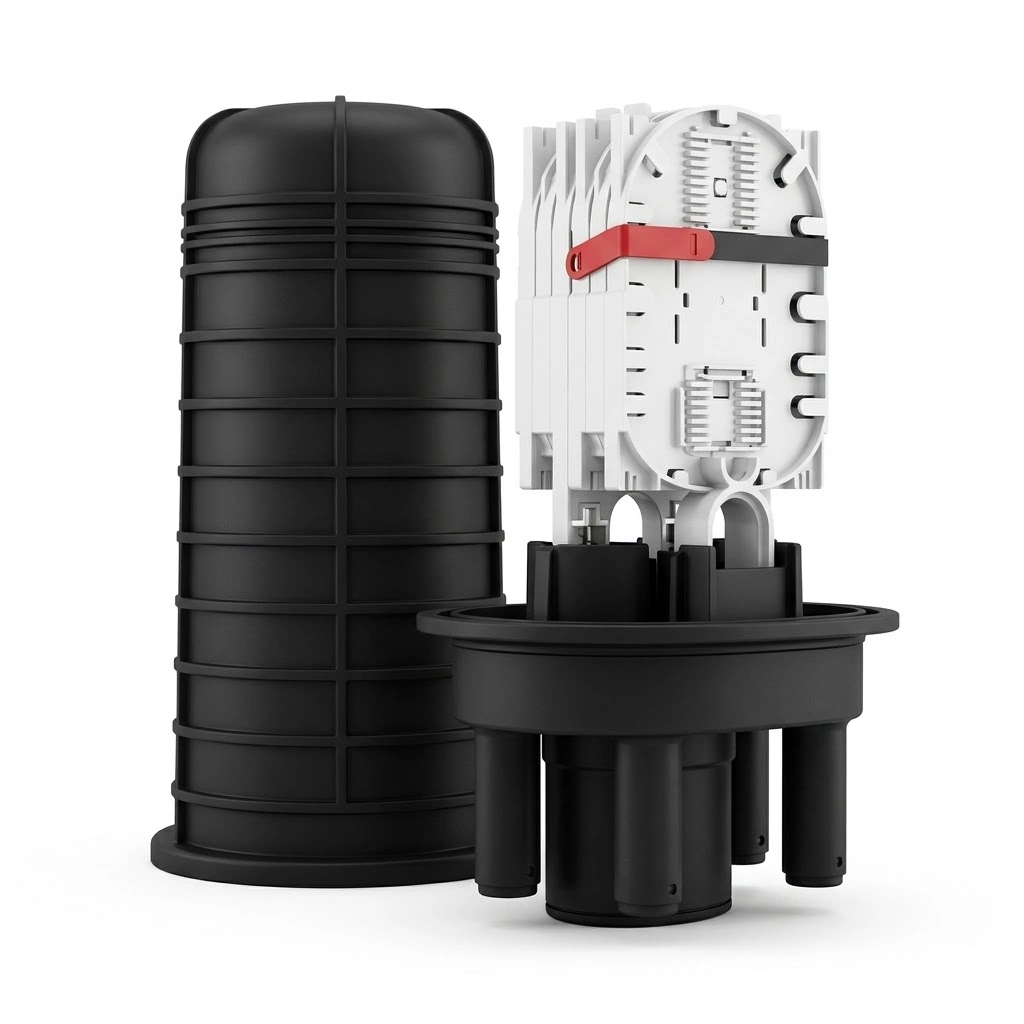
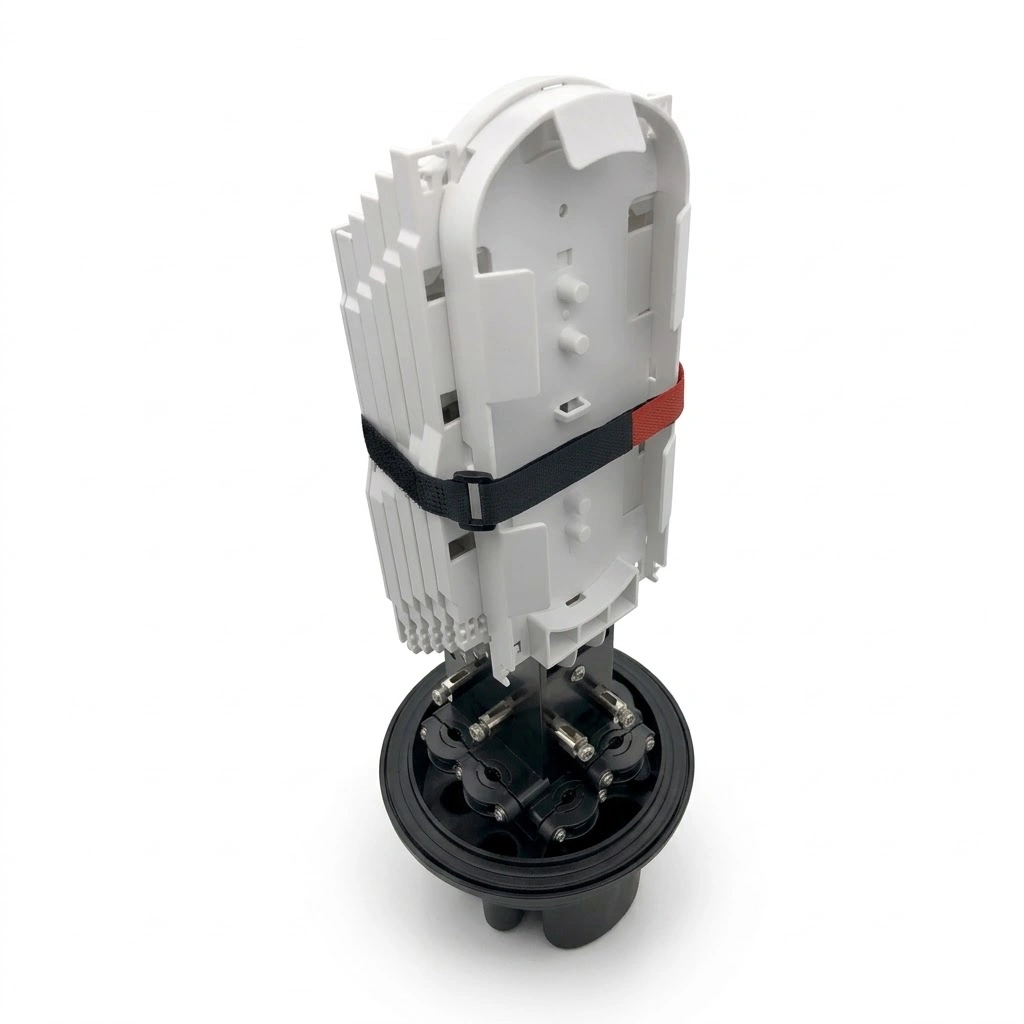
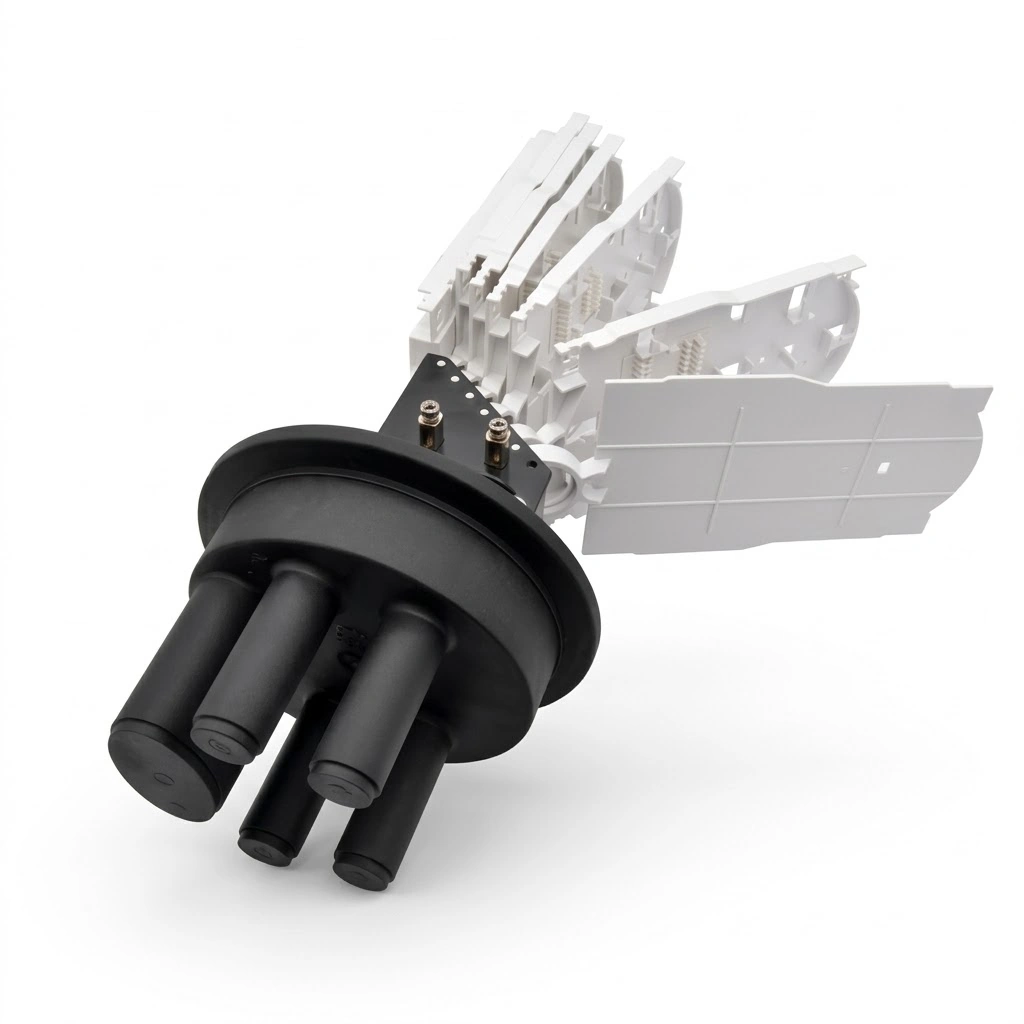
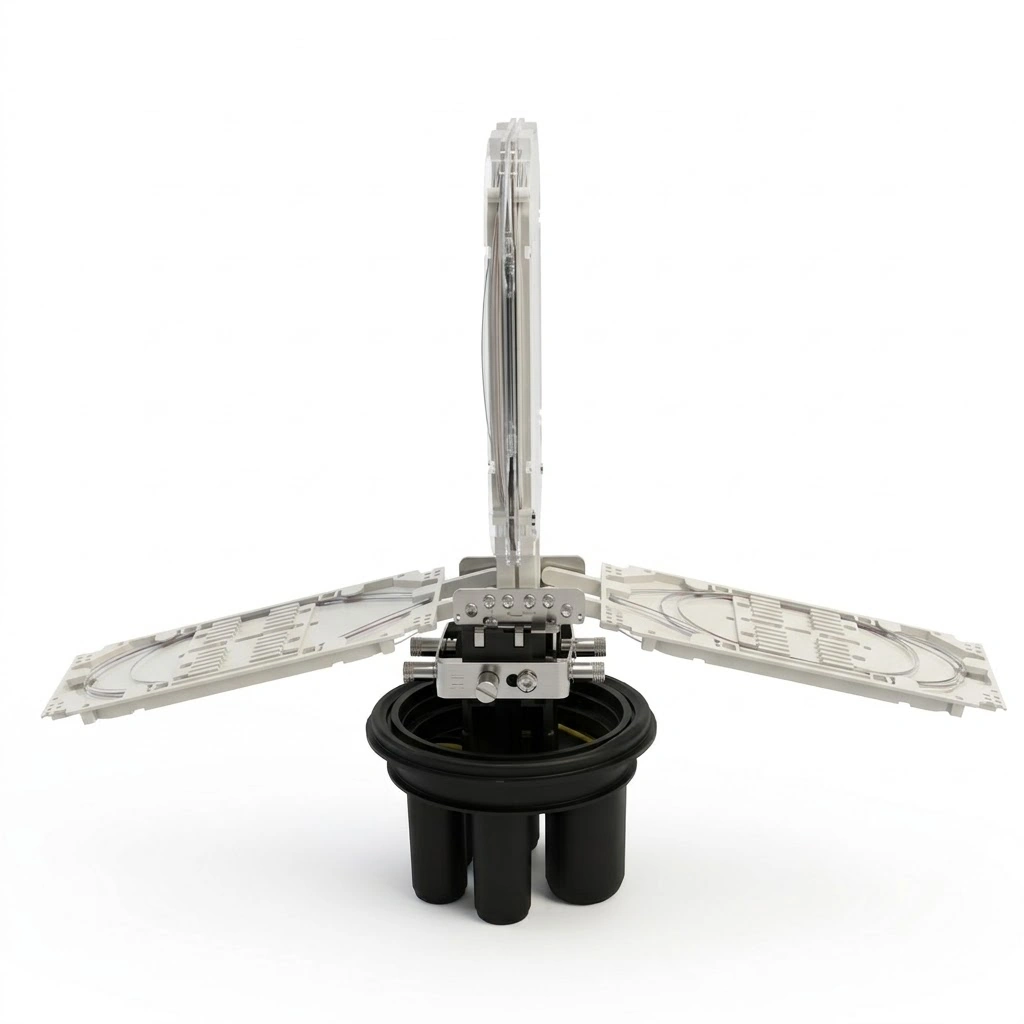
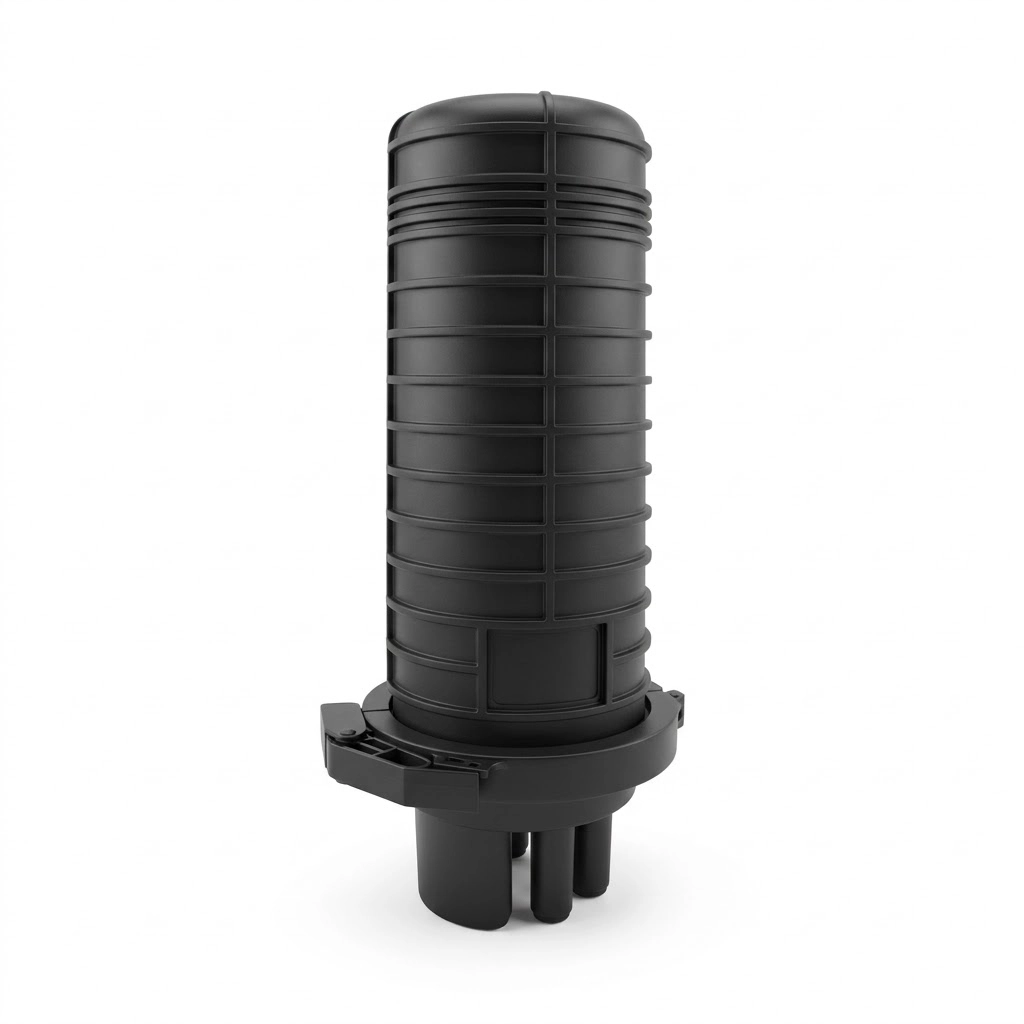
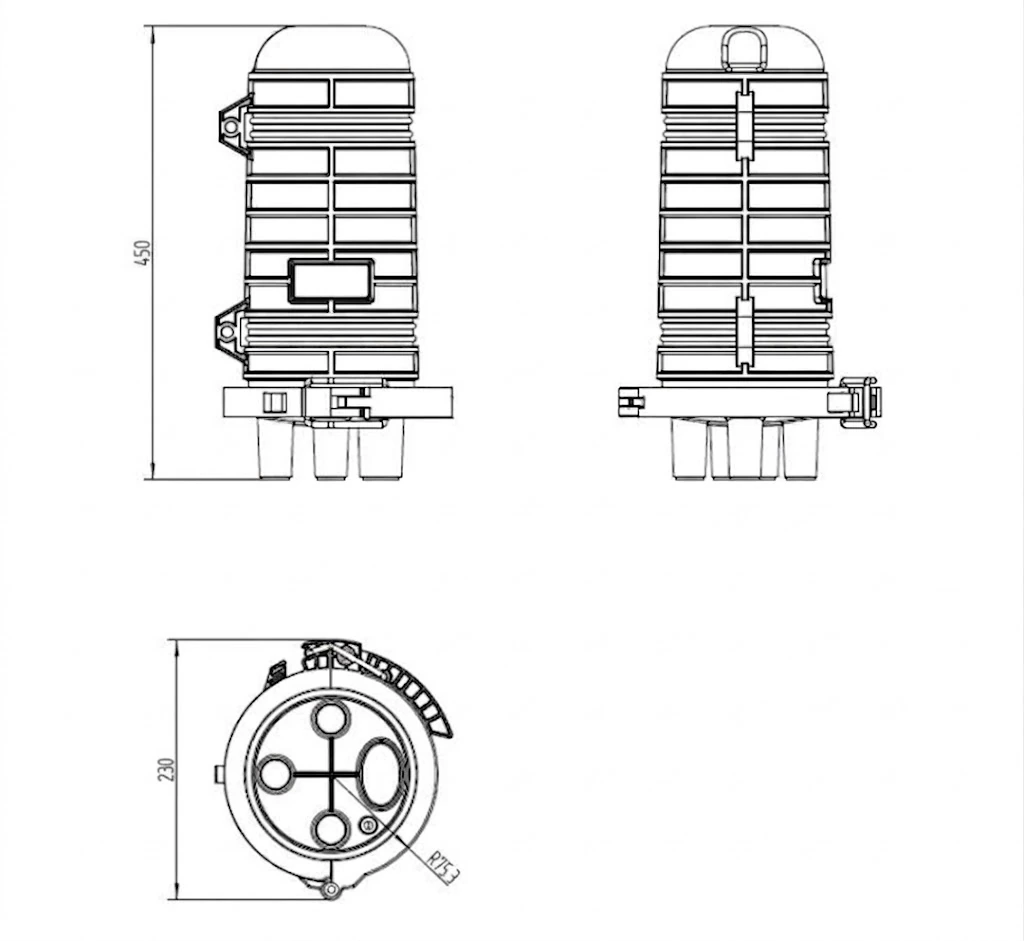
Heat Shrink Dome Enclosure
Heat Shrink Dome Enclosure
- Product Type: Heat Shrink Vertical (Dome) Closures
- Material: PP+GF
- Max. Capacity (Fibers) : 144 fibers
- Capacity of Splice Tray: Max 24 single Fusion splices
- Maximum Number of Splice Trays: 6
- Cable Entrances: 5 (1 oval + 4 circular)
- Dimensions (HxD): 450 x 230 mm(17.72″ × 9.06″)
- Weight (Kg) :3.80-4.20 Kg(8.38 – 9.26 lbs)
- Suitable Fiber Cable OD: Φ8mm~Φ17.5(Φ24)/(Φ0.31″ – Φ0.69″ / Up to Φ0.94″)
- Sealing Structure: Heat Shrink Sealing
- Fiber Radius of Curvature:> 40 mm
- Additional Optical Loss:< 0.01 dB
- Sealing Rating: IP68
- Operating Temperature:-40℃~+55℃ (−40 °F to +131 °F)
- Impact Strength: 16 N.m / IK09

Structure and components of the heat shrink dome enclosure
A heat-shrink dome enclosure is a protective cable-sealing component that protects cable joints, splices, and connection points against moisture and corrosion. Its structure combines a dome-shaped protective cover that creates a secure enclosure around the joint. The design depends on the application intended for the dome enclosure. The structure consists of:
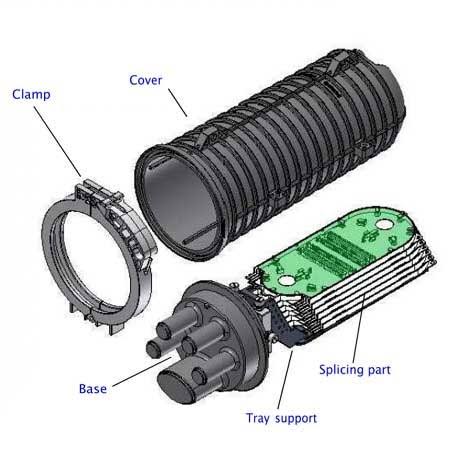
- Dome-shaped protective housing—the dome-shaped housing is the main protective structure of the enclosure. The housing may consist of rigid polymer or a combination of materials. These materials protect the cable splices from physical damage, provide space for organizing internal cables, and help prevent dust, moisture, and contaminants from reaching sensitive connections.
- Heat-shrinkable sleeve—this component contracts when exposed to temperature. This allows it to fit around the cable joint. It consists of engineered polymer materials selected for dimensional recovery, environmental resistance, and compatibility with the sealing system.
- End-cap assembly—the base provides the interface between the enclosure and the incoming or outgoing cables. It may include a cable-entry plate, a dome-to-base connection, or an end-cap arrangement. The base helps maintain the integrity of the enclosure by securing cable entries and supporting the sealing system.
- Sealing mastic and adhesive layers—these layers are crucial for many heat-shrink enclosure designs to fill small gaps and establish a barrier between adjoining surfaces. When heated correctly, the sealing material softens and conforms to the cable surface.
- Cable-entry ports and sealing collars—these are the points through which cables enter and leave the enclosure. They consist of molded openings, heat-shrinkable collars, entry tubes, or sealing sleeves. Their design depends on the number, diameter, and arrangement of the cables being protected. The entry ports help maintain a seal around individual cables, prevent excessive movement, and protect cable jackets from abrasion where the design provides suitable strain relief.
Types of the heat-shrink dome enclosure
Heat shrink dome enclosures are designed to seal and protect cable joints, fiber-optic splices, and connection points against moisture, dust, and corrosion. The types vary depending on their sealing mechanism, cable capacity, installation environment, and intended application.
Dome enclosures with a single cable entry
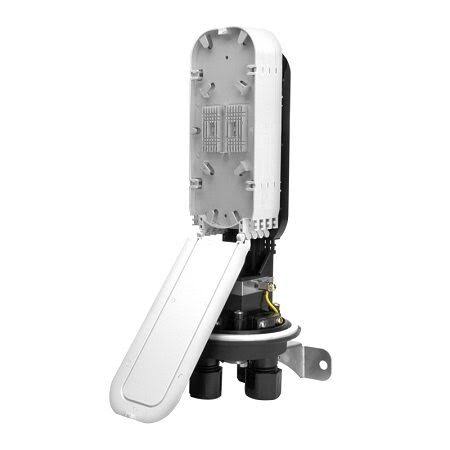
These enclosures are ideal for cable joints where the configuration needs one principal cable entry. The cable may pass through one end of the enclosure while the other end is sealed around the joint. The enclosure consists of a simple cable-entry configuration, heat-shrinkable sealing around compatible surfaces, and compact construction for installations with limited space. These enclosures serve in underground cable joints, cable terminations, and telecommunications connections.
Multi-entry heat shrink dome enclosure
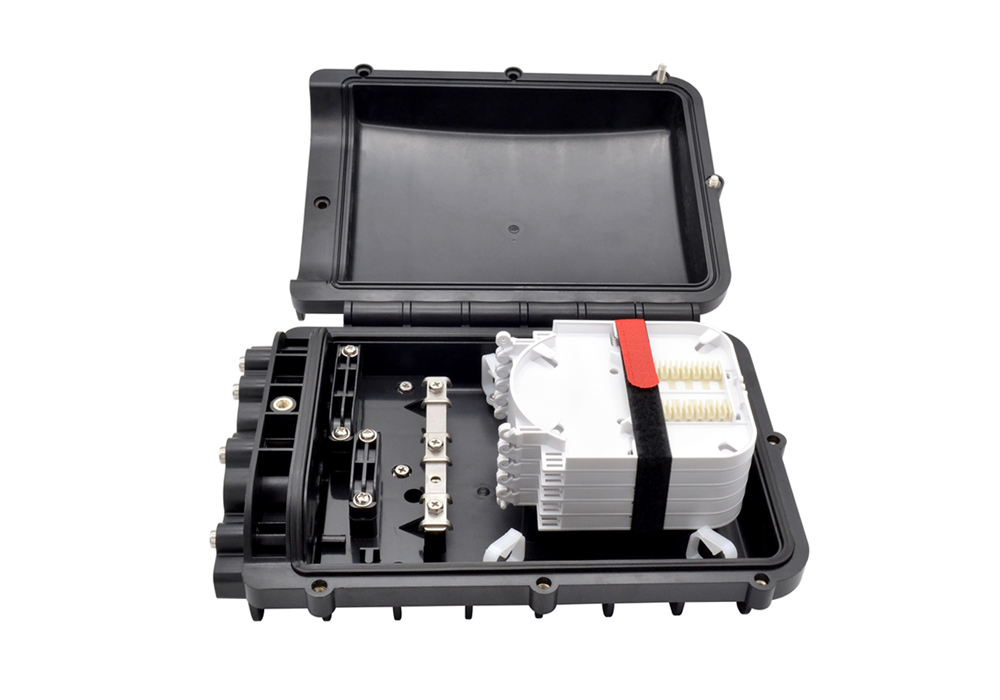
The multi-entry dome enclosure accommodates several incoming and outgoing cables through designated entry ports. These enclosures simplify the management of multiple cable routes. Their performance depends on correctly sealing every entry point. Multi-entry enclosures serve in FTTH distribution, telecommunication junction points, and selected cable distribution installations.
Dome enclosures for fiber-optic splice protection
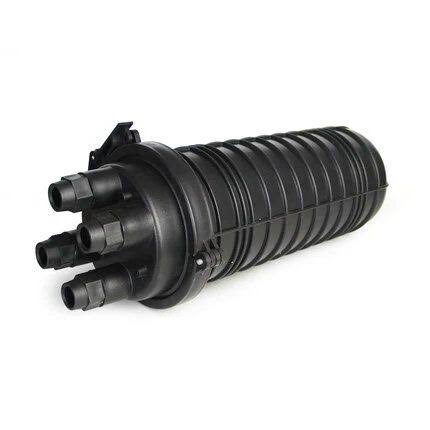
These enclosures protect fiber-optic splices that join optical cables in telecommunication networks. They maintain the physical integrity of delicate optical fibers while protecting the splice area from water, dust, and mechanical disturbance. They offer protection for fusion-spliced optical fibers, compatibility with fiber splice trays, and internal space for fiber management. The enclosures are ideal for FTTH networks, fiber distribution systems, underground optical cables, and aerial telecommunications infrastructure.
Underground heat shrink dome enclosure
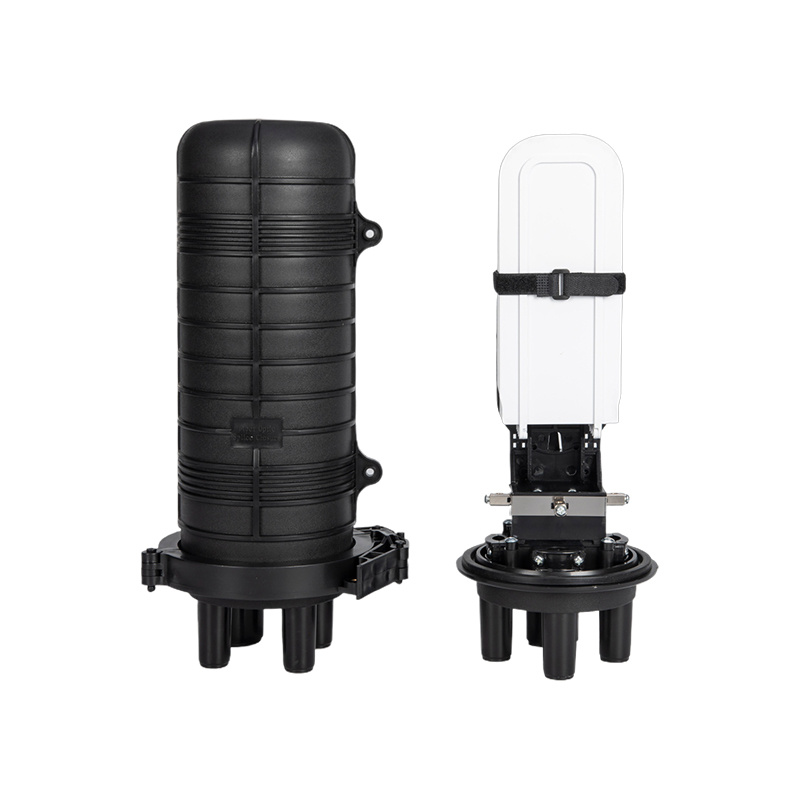
Underground enclosures are ideal for cable connections installed in buried ducts, underground chambers, or other environments. Their sealing systems consider prolonged exposure to damp soil, groundwater, and temperature variations. The enclosures have water-resistant sealing systems, material selected for soil contact, and protection against dirt and contaminants. They are critical in underground telecommunications networks, buried distribution cables, and compatible underground electrical cable joints.
Aerial heat-shrinking enclosures
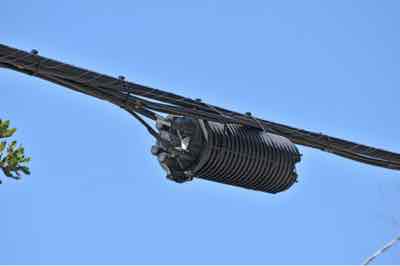
Outdoor enclosures protect cable joints and splices installed on utility poles, communication towers, building exteriors, and other exposed locations. They protect the network connections from changing weather conditions. The aerial enclosures are ideal for outdoor telecommunication distribution and selected exposed cable connections.
The working principle of the heat shrink dome enclosures
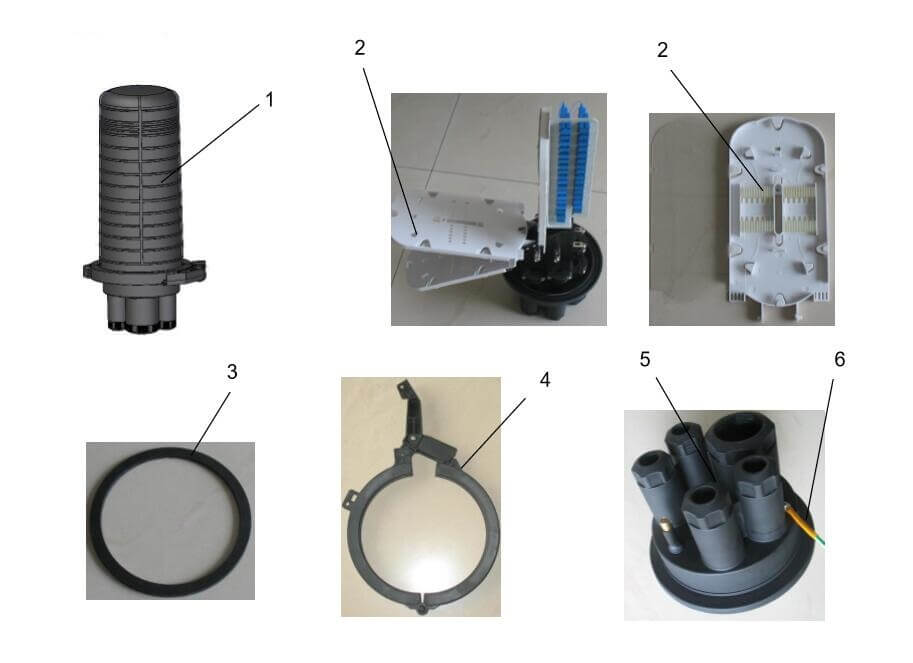
Heat shrink dome enclosures operate on thermal contraction and environmental sealing. Under controlled heat, the material contracts around a cable joint, splice, or enclosure interface. This results in a close fit combined with adhesive or sealing mastic that creates a protective barrier against moisture, dust, and other environmental contaminants. This process protects cable connections, preserves insulation integrity in electrical applications, and maintains the reliability of communication links. The process begins with joint preparation, heat shrink dome enclosure positioning, controlled heat application, and formation of the environmental seal. The effectiveness of a heat shrink dome enclosure depends on the quality of its materials and the installation process. Its performance depends on heating temperature, material quality, adhesive performance, cable dimensions, and environmental conditions. Additionally, it is crucial to ensure quality assurance to verify that the enclosure meets the applicable product specifications and environmental requirements.
How network planners select the right heat shrink dome enclosures
Network planners select heat shrink dome enclosures by checking cable specifications, network requirements, environmental conditions, sealing performance, and installation constraints. They focus on protecting cable joints and splices from moisture, dust, corrosion, and mechanical damage while maintaining the reliability of power distribution and telecommunication networks. The correct enclosure must be compatible with the cable system and suitable for the intended installation environment. Network planners consider the following factors when selecting the enclosures.
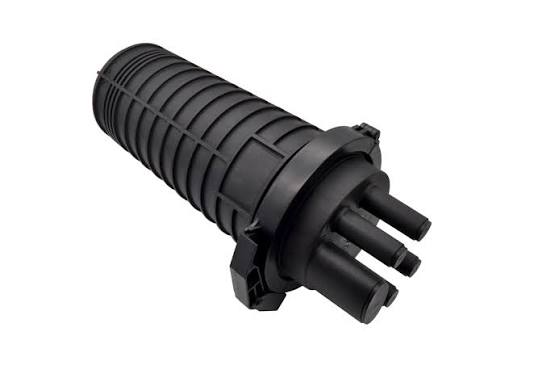
- Identify the network application—determine where and how the enclosure will be used. Planners must select an enclosure designed for the specific application. The enclosures are ideal for power distribution networks, fiber-optic networks, copper telecommunications networks, underground cable installations, and outdoor and aerial networks.
- Evaluate cable dimensions and configuration—cable dimensions determine whether the enclosure can fit around the joint and form an effective seal. Planners check the cable’s outside diameter, joint dimensions, and number of incoming and outgoing cables. They consider the cable diameter, number of cable entries, joint dimensions, cable arrangement, and future expansion.
- Assess environmental protection requirements—planners should verify the manufacturer’s stated performance rating. Different enclosures function differently in various environmental conditions.
- Check the heat-shrink material and sealing technology—the heat-shrink material and its sealing mechanism determine how the enclosure conforms to the cable joint. It is crucial to check polymer composition, shrink ratio and recovery, adhesive compatibility, and sealing consistency.
- Verify electrical and telecommunications performance—network planners should verify the rated voltage, insulation compatibility, conductor temperature limits, and applicable electrical test requirements. For telecommunications networks, planners confirm splice capacity, cable-entry compatibility, fiber bend-radius limits, and protection of individual splices.
Technical specification for the heat shrink dome enclosures
Heat shrink dome enclosures are protective systems designed to seal cable joints, fiber-optic splices, and compatible connection assemblies against moisture, dust, and corrosion. Their technical specifications determine their compatibility with cable dimensions, operating conditions, installation methods, and network performance requirements.
| Product type | Heat shrink vertical dome closures |
| Material | PP+GF |
| Max. Capacity (Fibers) | 144 fibers |
| Capacity of splice tray | Max 24 single fusion splices |
| Maximum number of splice trays | 6 |
| Cable entrances | 55 (1 oval + 4 circular) |
| Dimensions (HxD) | 450 x 230 mm (17.72″ × 9.06″) |
| Weight (kg) | 3.80-4.20 kg (8.38–9.26 lbs) |
| Suitable fiber cable OD | Φ8 mm~Φ17.5 (Φ24)/(Φ0.31″ – Φ0.69″ / Up to Φ0.94″) |
| Sealing structure | heat shrink sealing |
| Fiber radius of curvature | > 40 mm |
| Additional optical loss | < 0.01 dB |
| Sealing rating | IP68 |
| Operating temperature | -40℃~+55℃ (-40°F to +131°F) |
| Impact strength | 16 N·m / IK09 |
Applications of the heat shrink dome enclosures
Heat shrink dome enclosures seal and safeguard cable joints, splices, and connection points against moisture, dust, corrosion, and environmental damage. Their applications depend on the enclosure’s design, cable compatibility, sealing mechanism, and environmental rating. Common application areas include:
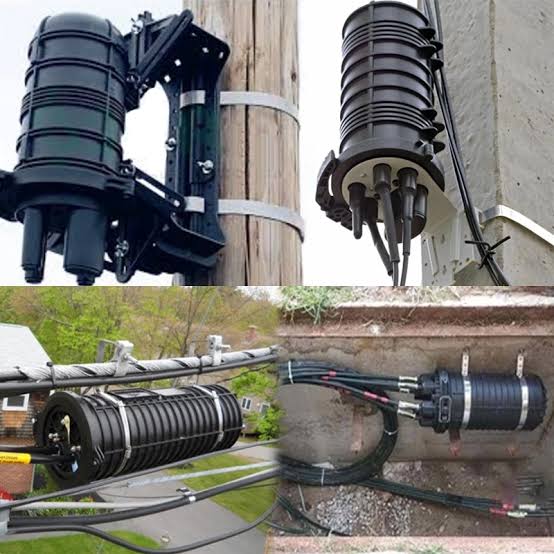
- Fiber optic telecommunication networks—heat-shrink sealing systems and compatible dome enclosures in fiber-optic networks—protect spliced optical fibers from moisture, dust, and physical disturbances. They connect FTTH distribution networks, fiber-optic access infrastructure, and telecommunications cable branching locations.
- Underground power distribution networks—heat-shrinkable cable-joint systems can provide sealing and insulation where specifically designed for the electrical application.
- Aerial telecommunications infrastructure—common applications include pole-mounted fiber-optic distribution networks, aerial communication cable joints, and outdoor broadband distribution infrastructure.
- Renewable energy installations—solar and wind projects contain extensive cable networks connecting generating equipment, collection circuits, control systems, and distribution infrastructure. Heat-shrinkable cable joint component seals and protects the connections exposed to outdoor conditions.